When you hear DOACs, Direct Oral Anticoagulants are a class of blood-thinning medications designed to prevent dangerous clots without the need for frequent blood tests. Also known as novel oral anticoagulants, DOACs have become the go-to choice for millions managing atrial fibrillation or recovering from deep vein thrombosis. Unlike warfarin, which requires regular INR checks and strict diet rules, DOACs work with predictable effects, fixed doses, and far fewer interactions.
DOACs include drugs like apixaban, a commonly prescribed anticoagulant used to reduce stroke risk in atrial fibrillation patients, rivaroxaban, used for treating blood clots in the legs and lungs, and dabigatran, an option that directly blocks thrombin, a key clotting protein. These drugs are part of a shift away from older anticoagulants that demanded constant monitoring. They’re simpler, safer for most people, and backed by large clinical trials showing they’re at least as effective as warfarin—with less risk of dangerous bleeding in many cases.
But DOACs aren’t for everyone. People with severe kidney disease, mechanical heart valves, or certain types of cancer may still need warfarin or other options. And while they don’t need routine blood tests, you still need to take them exactly as prescribed. Missing a dose or stopping suddenly can raise your risk of stroke or clotting. They also interact with some antibiotics, antifungals, and even certain herbal supplements, which is why talking to your pharmacist about what else you’re taking matters just as much as the prescription itself.
Many of the posts below dive into the real-world side of managing these drugs: how to avoid dangerous interactions with other medications, what to do if you miss a dose, how to travel with them safely, and why switching from brand to generic versions requires care—even with DOACs. You’ll also find insights on how they compare to older blood thinners like warfarin, and why some patients still end up on the older drugs despite the advantages of DOACs. Whether you’re taking one of these medications yourself, caring for someone who is, or just trying to understand your treatment options, this collection gives you clear, practical answers without the jargon.
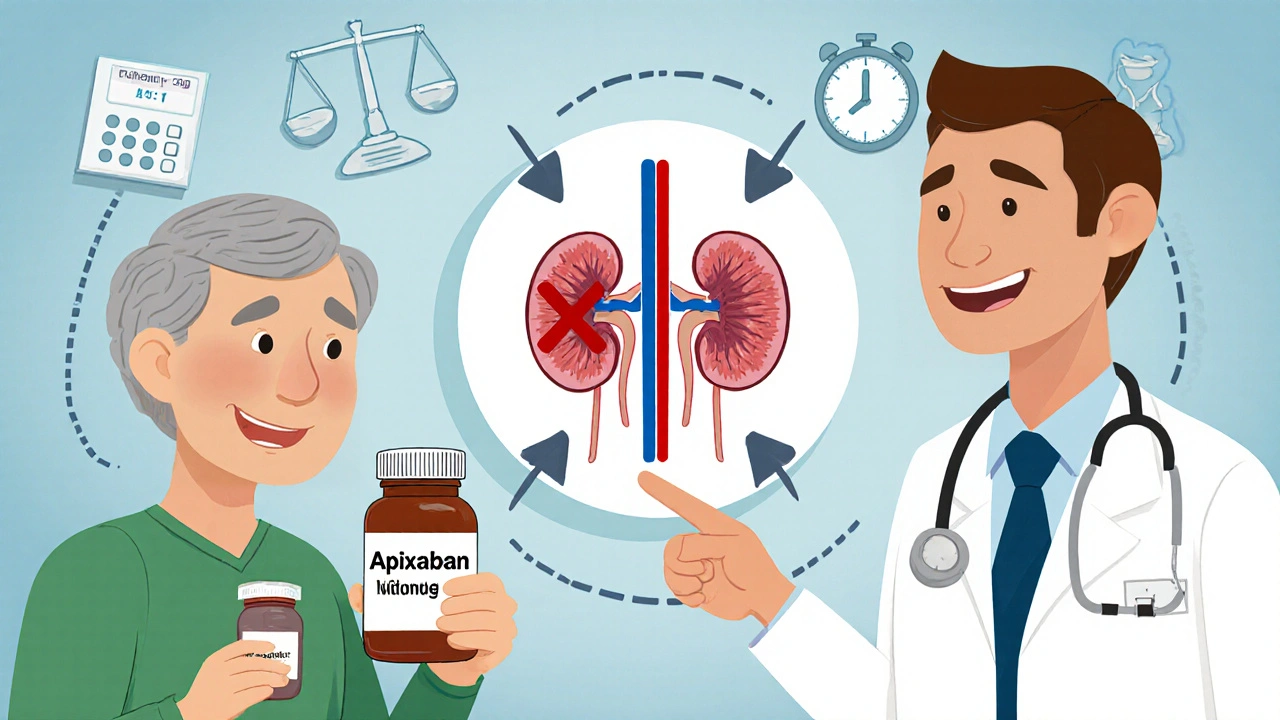
DOACs like apixaban and rivaroxaban require precise dosing in kidney disease to avoid bleeding or clots. Learn how to adjust doses using creatinine clearance and the ABCs rule, and why apixaban is often the safest choice.
read more