
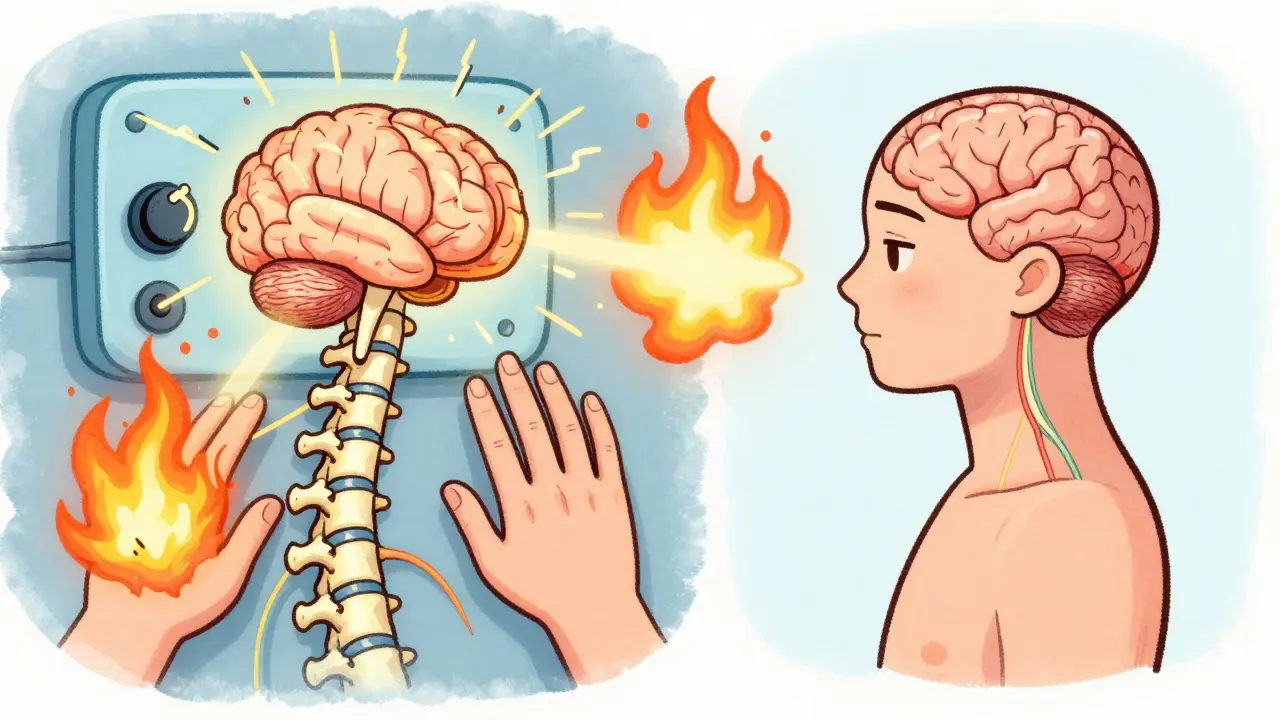
Have you ever been touched lightly and it felt like a burn? Or had pain that spread far beyond where you got hurt-like after a car accident or surgery-and no doctor could find anything wrong? If so, you might be experiencing central sensitization. It’s not in your head. It’s in your nervous system.
What Exactly Is Central Sensitization?
Central sensitization is when your brain and spinal cord get stuck on high alert. Imagine your nervous system as a volume knob. Normally, it turns up the pain signal when you’re injured-like turning up the volume when you hear a siren. But in central sensitization, the knob gets stuck. Even a whisper becomes a shout. A light touch feels like a pinch. A normal movement feels like a stab. This isn’t just about being sensitive. It’s a real, measurable change in how your central nervous system processes signals. Research from the National Center for Biotechnology Information (PMC10716881) in 2024 shows that persistent pain signals from the body-like from an old injury, infection, or even stress-cause lasting changes in spinal cord neurons. These neurons become hyperactive. They start responding to signals they used to ignore. And they stop listening to the brain’s natural “turn it down” commands. It’s why someone with fibromyalgia can feel pain all over their body, even though there’s no tissue damage. It’s why chronic low back pain can last years after a disc injury has healed. And it’s why some people still hurt after surgery, even when everything looks fine on an MRI.How It Works: The Neurobiology Behind the Pain
Your nervous system has two main channels for pain: the “up” signal and the “down” signal. The up signal tells your brain, “Something’s wrong.” The down signal says, “Calm down, it’s fine.” In central sensitization, both go haywire.- The “up” signal gets louder. Brain imaging (fMRI) shows pain-processing areas light up 20-35% more than normal.
- The “down” signal gets weaker. Your body’s natural painkillers-like endorphins-don’t work as well. Studies show mu-opioid receptor binding drops by 15-25% in people with this condition.
- Inflammation plays a role too. After injury or infection, pro-inflammatory cytokines spike by 30-50% in neural tissue, making nerves more excitable.
- Your sympathetic nervous system (the “fight or flight” system) stays stuck on. Norepinephrine levels rise by 25-40%, keeping your body tense and wired.
What Does It Feel Like?
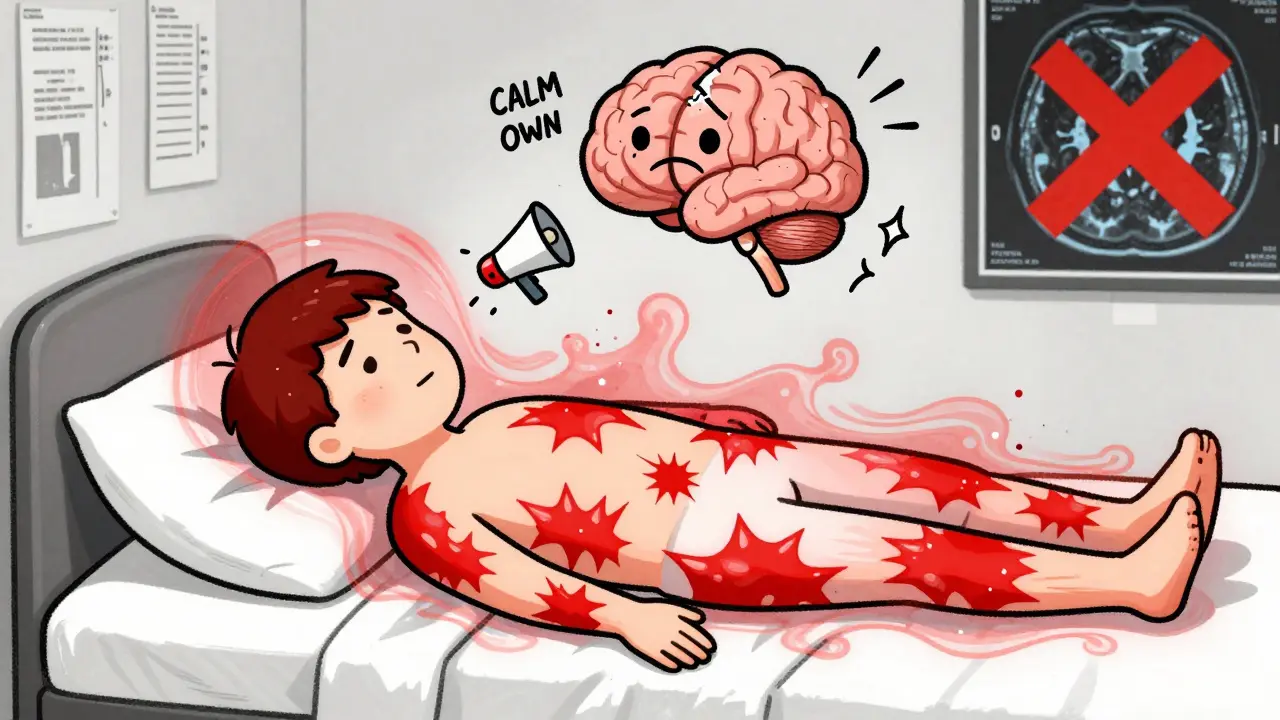
If you have central sensitization, your pain doesn’t behave like normal pain. Here’s what’s common:- Widespread pain-affects multiple body regions, not just one spot. 95% of diagnosed cases show this.
- Allodynia-pain from things that shouldn’t hurt. Light clothing, a breeze, or brushing your hair can feel painful. Seen in 85-90% of cases.
- Hyperalgesia-a normal pinch feels like a deep burn. Happens in 75-80% of people.
- Temporal summation-repeated light touches feel worse each time. Like a “wind-up” effect. Present in 70% of patients.
- Pain spreading-pain moves to areas never injured. Many patients report this on Reddit communities like r/Fibromyalgia.
- Brain fog and sleep issues-87% report mental fatigue, 76% have unrefreshing sleep. This isn’t just from pain-it’s from your nervous system being overworked.
How Is It Diagnosed?
There’s no single blood test or scan. Diagnosis relies on patterns.- Quantitative Sensory Testing (QST)-measures how much pressure or heat it takes to feel pain. People with central sensitization have 20-30% lower pain thresholds.
- Conditioned Pain Modulation-tests how well your body can suppress pain. In central sensitization, this ability drops by 40-50%.
- Pain drawings-patients draw where they hurt. In 80% of cases, the pain pattern doesn’t match nerves or anatomy. It’s scattered, patchy, or full-body.
What Conditions Are Linked to It?
Central sensitization isn’t one disease-it’s a mechanism behind many chronic pain conditions:- Fibromyalgia-90% of cases are driven by central sensitization. It’s the classic example.
- Chronic low back pain-35-45% of cases persisting beyond 3 months show this mechanism.
- Migraines-brainstem and spinal cord sensitization play a major role.
- Chronic pelvic pain and irritable bowel syndrome (IBS)-both show signs of central nervous system hyperactivity.
- Post-surgical pain-15-30% of people develop pain that outlasts healing.
How Is It Treated?
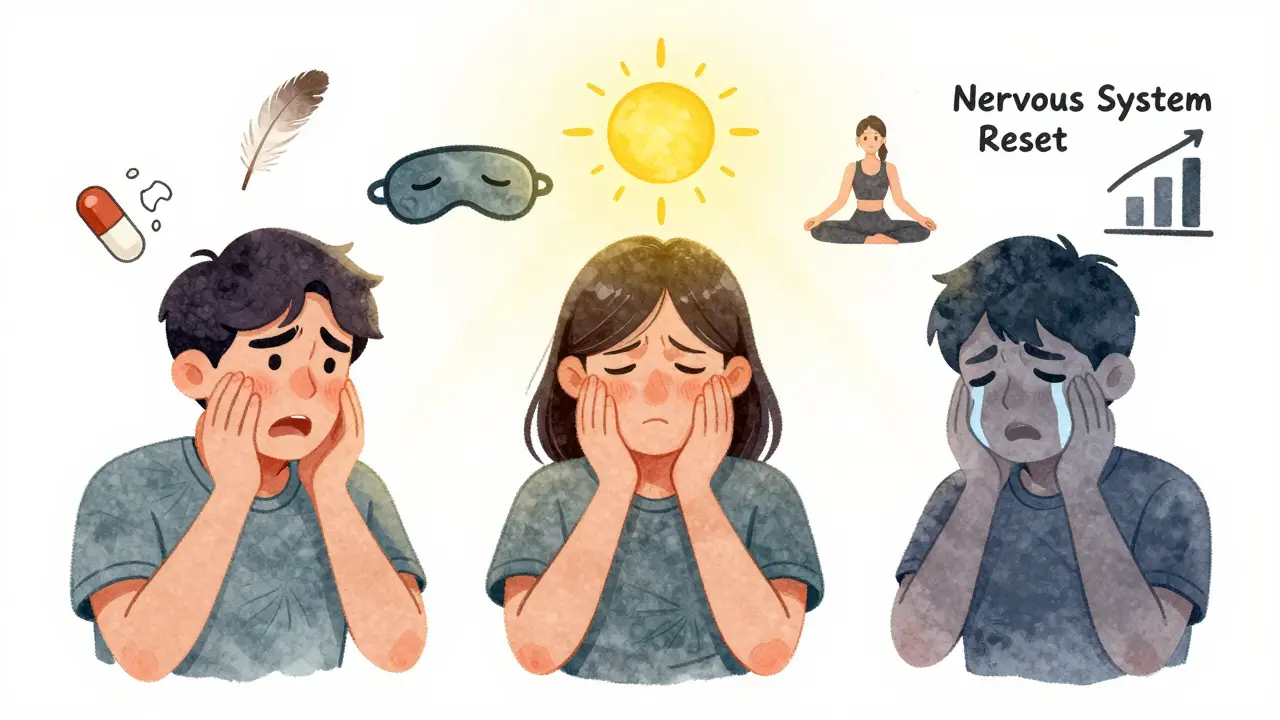
Traditional painkillers like ibuprofen or opioids don’t work well. You need treatments that calm the nervous system. Medications:- Gabapentinoids (pregabalin, gabapentin)-reduce nerve overactivity. 300-1200mg daily helps 55% of patients cut pain by 30-50%.
- SNRIs (duloxetine, milnacipran)-boost brain chemicals that inhibit pain signals. 60mg duloxetine daily reduces pain by 30% in 45% of users.
- Low-dose naltrexone (4.5mg nightly)-modulates immune and nervous system activity. Shows 25-35% improvement in fibromyalgia patients.
- Graded exercise-start slow. Increase activity by 10% per week. Helps rebuild tolerance. 25-40% improvement in function.
- Pain neuroscience education-learning how your nervous system works reduces fear and catastrophizing. Lowers pain scores by 20-30%.
- Mindfulness and stress reduction-8 weeks of practice cuts pain interference by 25%.
- Good sleep hygiene-sleep deprivation worsens sensitization. Prioritizing sleep is non-negotiable.
Why Do So Many People Get Misdiagnosed?
Because doctors aren’t trained to see it. A 2023 survey in the Journal of the American Osteopathic Association found only 65% agreement between clinicians on diagnosing central sensitization. Orthopedists miss it 75% of the time. Rheumatologists catch it in 65% of fibromyalgia cases. Neurologists see it in 55% of migraine patients. But most primary care doctors still think “no structural damage = no real pain.” Patients report seeing 4-6 doctors over 2-5 years before getting the right diagnosis. Many are told it’s anxiety, depression, or “just stress.” That’s changing. The NIH increased funding for central sensitization research from $42 million in 2018 to $63 million in 2023. 78% of academic pain centers now include QST in their protocols. But progress is slow.What’s Next?
Research is moving fast. Scientists are now looking at biomarkers:- Elevated substance P in spinal fluid (25-30% higher in central sensitization)
- Reduced mu-opioid receptor binding visible on PET scans
- Standardized QST protocols from the German Research Network on Neuropathic Pain (DFNS) now have 85% reliability
Final Thoughts: It’s Real. It’s Treatable.
If you’ve been told your pain is “all in your head,” you’re not crazy. You’re not weak. You’re not failing. Your nervous system got stuck in overdrive-and it’s not your fault. The good news? Central sensitization is reversible. Once the nervous system calms down, pain can fade. With the right tools-medication, movement, education, and sleep-you can retrain your brain. You don’t need to live in constant pain. It’s not about finding one magic cure. It’s about understanding the system that’s malfunctioning-and then gently, patiently, fixing it.Is central sensitization the same as fibromyalgia?
No. Fibromyalgia is a diagnosis. Central sensitization is the underlying mechanism. Think of it like this: fibromyalgia is the car, and central sensitization is the engine. Almost all fibromyalgia patients have central sensitization, but not everyone with central sensitization has fibromyalgia. Other conditions like chronic low back pain, migraines, and IBS can also be driven by this mechanism.
Can central sensitization go away on its own?
Sometimes, yes-but rarely without intervention. If the original injury or stressor is removed and the nervous system gets rest, it can reset. But in most chronic cases, the system stays stuck. That’s why active treatment-like graded exercise, sleep improvement, and nervous system-calming medications-is needed. Left untreated, it often gets worse over time.
Why don’t painkillers work for central sensitization?
Most painkillers target inflammation or peripheral nerves. But central sensitization happens in the brain and spinal cord. NSAIDs like ibuprofen or opioids don’t address the hyperactive neurons or broken pain-inhibition pathways. That’s why medications like duloxetine or pregabalin-which work on nerve signaling in the CNS-are more effective.
Is central sensitization permanent?
No. It’s neuroplastic-meaning your nervous system can change. Studies show that with consistent treatment, pain thresholds can return to normal. People have reduced pain by 50% or more after 6-12 months of combined therapy. It takes time, but reversal is possible.
Can stress make central sensitization worse?
Yes. Stress activates the same brain regions involved in pain processing. High cortisol and norepinephrine levels keep the nervous system on high alert. Managing stress through mindfulness, therapy, or sleep improvement isn’t optional-it’s a core part of treatment. Many patients report their pain improves most when they reduce emotional and physical stress.
How do I know if my doctor understands central sensitization?
Ask them: “Do you use quantitative sensory testing or pain neuroscience education?” If they mention tools like QST, conditioned pain modulation, or refer you to a pain psychologist or physical therapist trained in central sensitization, they’re on the right track. If they only order MRIs or suggest more opioids, they’re likely missing the mechanism.





Dan Mayer
March 9, 2026 AT 00:55 AMSo let me get this straight-central sensitization is just a fancy term for being a wimp? I’ve had back pain for 12 years and I never once cried about a breeze. People these days are too soft. You say ‘light touch feels like a pinch’? Maybe you need to stop wearing silk pajamas and toughen up. This isn’t medicine, it’s a cry for attention. And why are we using fMRI like it’s a magic wand? We’re turning chronic pain into a sci-fi movie.
rafeq khlo
March 10, 2026 AT 19:29 PMBased on the data presented the prevalence of central sensitization across chronic pain syndromes is statistically significant p<0.01 however the clinical utility remains questionable due to lack of standardized diagnostic biomarkers. The reliance on QST and pain drawings introduces significant interobserver variability. Furthermore the proposed pharmacological interventions lack long term RCT evidence. This appears to be a paradigm shift driven more by institutional funding than reproducible science. The NIH budget increase from 42 to 63 million is not evidence of efficacy but rather political prioritization.
Morgan Dodgen
March 11, 2026 AT 05:12 AMBro this is literally the government’s way to justify funding for Big Pharma lol 🤡 They’re pushing this so we’ll all be on gabapentin by 2030. Did you know the same people who wrote this paper got grants from Pfizer? 😏 And the ‘neuroplasticity’ stuff? That’s just woke science. Your nervous system isn’t a software glitch-it’s your body screaming you’re living wrong. Sleep? Exercise? Nah. Just take a pill. They want you dependent. Wake up.
Melba Miller
March 11, 2026 AT 13:51 PMI’ve been told I’m ‘too sensitive’ my whole life. My mom said I cried too much. My teachers said I was dramatic. Then I got diagnosed with fibromyalgia and finally someone said ‘your nerves are literally on fire.’ I cried. Not because I’m weak. Because someone finally saw me. This isn’t about pills. It’s about being believed. And if you don’t get that? Then you’ve never been in pain that no one else can see.
Katy Shamitz
March 13, 2026 AT 11:16 AMOh honey, I feel you so hard. I’ve been there-10 doctors, 3 ER visits, 2 MRIs that said ‘nothing wrong.’ Then my pain specialist looked me in the eye and said, ‘Your nervous system is screaming.’ And I finally felt seen. You’re not broken. You’re not lazy. You’re wired differently. And guess what? That’s okay. You’re not alone. I’ve been doing graded exercise for 8 months. It’s slow. It’s frustrating. But I can hug my dog without crying now. You got this. 💕
Janelle Pearl
March 14, 2026 AT 17:55 PMI’ve been living with this for 15 years. I used to think I was crazy. Then I read about conditioned pain modulation and realized-I’m not broken, I’m just stuck in a loop. I started mindfulness. I stopped fighting the pain and started listening to it. It’s not about ‘curing’ it. It’s about changing the conversation with your body. I don’t feel ‘cured’… but I feel like I’m finally home. If you’re reading this and you’re tired? You’re not alone. Breathe. You’re doing better than you think.
Ray Foret Jr.
March 16, 2026 AT 12:45 PMGuys I just started gabapentin last week and holy cow it’s like someone turned down the volume on my brain 😭 I used to scream when my sheets touched my legs. Now I can sleep in cotton. I’m still scared to move too fast but… this is the first time in 7 years I feel like there’s light. Graded exercise is brutal but I’m doing 5 mins a day. Baby steps. You’re all warriors. 🙌
Samantha Fierro
March 18, 2026 AT 03:15 AMWhile the emotional resonance of this topic is undeniable, we must maintain scientific rigor. The conflation of patient narratives with clinical diagnosis risks pathologizing normal human variation. The proposed mechanisms, while biologically plausible, require longitudinal validation. Clinical guidelines must prioritize evidence-based interventions over anecdotal success stories. The absence of definitive biomarkers precludes widespread diagnostic adoption. Caution is warranted.
Robert Bliss
March 18, 2026 AT 12:43 PMI’m not a doctor but I’ve had chronic pain since my car wreck. I’ve tried everything. Pills. Therapy. Yoga. Nothing worked until I found a PT who actually explained how nerves get stuck. It’s like your body’s alarm system got stuck on fire. Now I know it’s not me being weak. It’s biology. And if you’re reading this and you’re tired? You’re not alone. We’re all just trying to get through the day. Take it slow. You’re doing great. 🤝
Peter Kovac
March 18, 2026 AT 18:23 PMIt is imperative to note that the majority of the cited studies originate from institutions with vested financial interests in pharmaceutical development. The elevation of central sensitization as a primary diagnostic category may serve to expand the market for gabapentinoids and SNRIs, which are patented and high-margin drugs. The absence of robust, independent, double-blind placebo-controlled trials validating the efficacy of these interventions in this specific population renders the current paradigm suspect. We must interrogate the source of funding before accepting the narrative.