
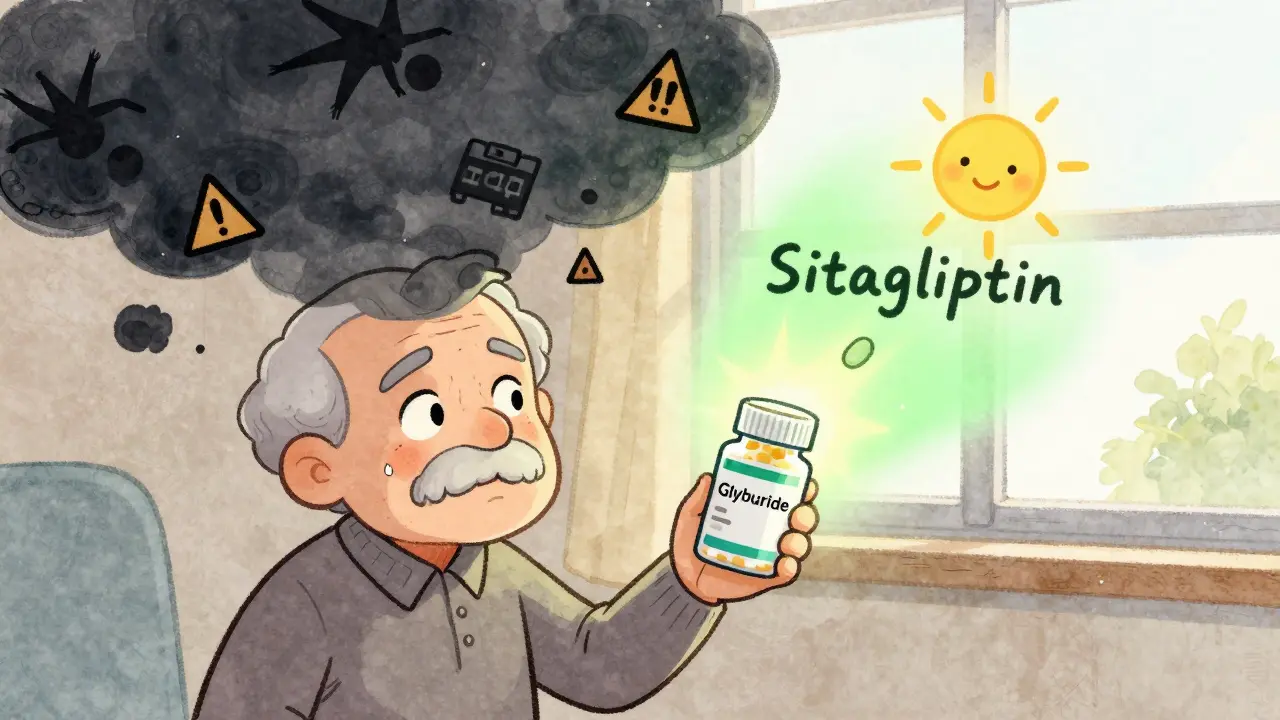
When you're over 65 and managing diabetes, the goal isn't just to lower blood sugar-it's to stay safe. For older adults, a low blood sugar episode isn't just a nuisance; it can mean a fall, a hospital visit, or even death. The truth is, many common diabetes pills and insulin regimens used for younger patients are dangerously risky for seniors. The good news? There are safer options-and knowing what they are can change everything.
Why Hypoglycemia Is So Dangerous for Seniors
Low blood sugar, or hypoglycemia, happens when glucose drops below 70 mg/dL. For a young, healthy person, it might mean feeling shaky and grabbing a candy bar. For someone in their 70s or 80s, it can mean losing balance, hitting their head, or having a heart attack. The body’s natural defenses against low sugar-like releasing adrenaline or glucagon-slow down with age. That means seniors don’t feel the warning signs until it’s too late.Studies show that seniors experience hypoglycemia two to three times more often than younger adults. And it’s not just about feeling bad. One severe episode-where someone needs help from another person-raises the risk of dying within a year by 60%. Falls from dizziness or confusion account for nearly one in five emergency visits by older adults with diabetes. And most of those visits? They’re caused by medication.
Medications That Put Seniors at Highest Risk
Not all diabetes drugs are created equal when it comes to safety. Some are fine. Others? They’re like walking on ice without shoes.Glyburide (brand names: Glynase, Micronase) is one of the worst offenders. It’s a sulfonylurea, a class of pills that force the pancreas to pump out more insulin. The problem? Glyburide sticks around in the body for hours-even days-in older adults whose kidneys aren’t clearing it efficiently. This leads to long, unpredictable drops in blood sugar. Research shows nearly 40% of seniors on glyburide have at least one hypoglycemic episode per month. The American Geriatrics Society calls it a potentially inappropriate medication for older adults and says it should be avoided entirely.
Glipizide (Glucotrol) is slightly better-it’s shorter-acting and less likely to cause prolonged lows-but it still carries a 15-20% risk of hypoglycemia in seniors. Many doctors still prescribe it out of habit, not because it’s safe.
Insulin, especially long-acting types like glargine or detemir, is another major culprit. It doesn’t adjust automatically. If a senior skips a meal, walks too far, or gets sick, insulin keeps working-and blood sugar keeps dropping. One study found insulin use increases fall risk by 30% in older adults, mostly because of dizziness and confusion from low sugar.
The Safer Alternatives: What Doctors Should Be Prescribing
The good news is that safer, modern options exist-and they’re not experimental. They’re FDA-approved, widely used, and backed by years of real-world data.DPP-4 inhibitors like sitagliptin (Januvia), linagliptin (Tradjenta), and saxagliptin (Onglyza) are among the safest choices. These drugs work by helping the body use its own insulin more efficiently-only when blood sugar is high. They don’t force insulin out. As a result, hypoglycemia rates are just 2-5% when used alone. That’s compared to 30-40% with glyburide. Many seniors on DPP-4 inhibitors report feeling more stable, with fewer dizzy spells and no more midnight lows.
SGLT2 inhibitors like empagliflozin (Jardiance) and dapagliflozin (Farxiga) are also low-risk. They make the kidneys flush out extra sugar through urine. They don’t cause hypoglycemia unless taken with insulin or sulfonylureas. In clinical trials, Jardiance had a hypoglycemia rate of only 4.5% in seniors-far lower than placebo groups in older studies.
Metformin is still the first-line treatment for most people with type 2 diabetes. But in seniors, especially over 80 or with kidney issues, it needs careful monitoring. It’s not a hypoglycemia risk by itself-but if kidney function drops too low, it can build up and cause other problems. Doctors should check creatinine clearance regularly and adjust or stop it if needed.
Tirzepatide (Mounjaro), a newer injectable approved in 2022, has shown remarkable safety in seniors. In trials, only 1.8% of older adults on tirzepatide had hypoglycemia-compared to 12.4% on insulin. It’s not yet a first-choice for everyone, but for those who need stronger control without the danger, it’s a game-changer.
What You Can Do Right Now
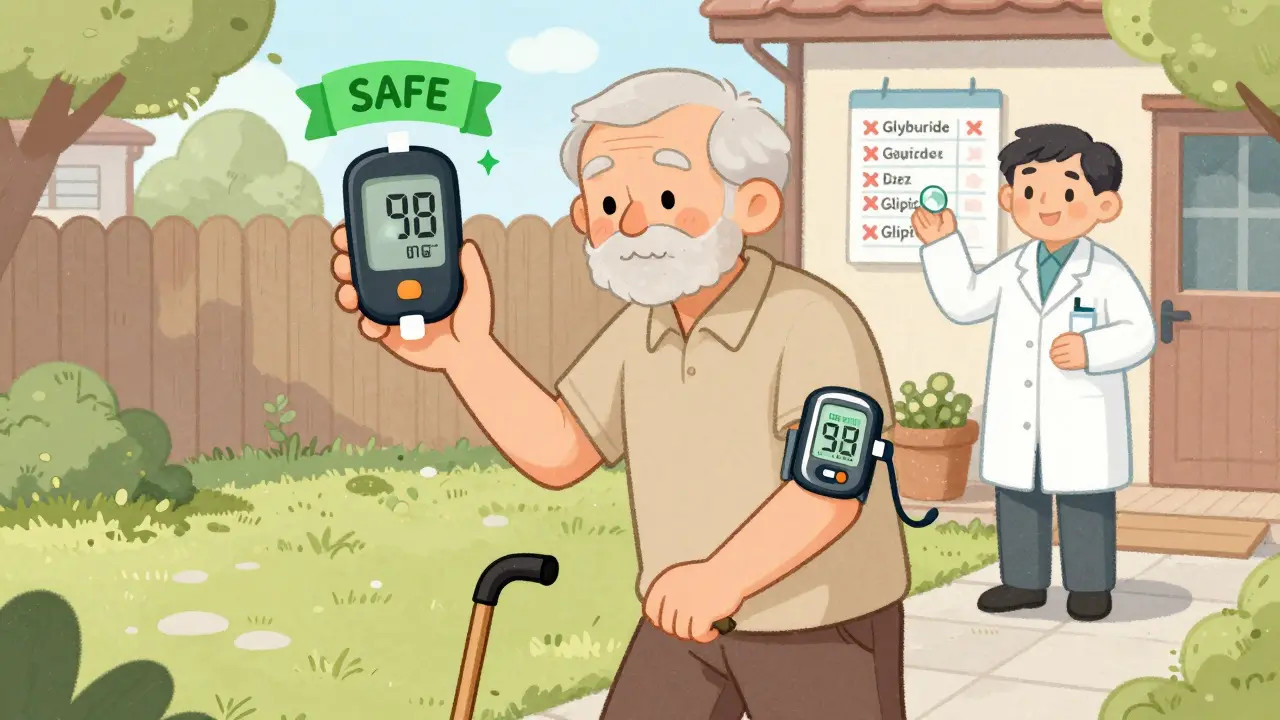
You don’t have to wait for your next appointment to protect yourself or a loved one. Here’s what to do today:- Ask your doctor: “Is my current medication safe for someone my age?” If you’re on glyburide, ask why-not because you’re questioning them, but because you’re asking for the best option.
- Check your pill bottles. Look for glyburide, glipizide, or insulin. If you’re taking more than one diabetes drug, ask if any can be stopped.
- Learn the early signs of low blood sugar. Headache, drowsiness, sweating, confusion, hunger, or a fast heartbeat. Don’t wait for shaking-that’s already late.
- Keep fast-acting sugar handy. Glucose tablets, juice boxes, or even candy in your pocket. Tell a family member or caregiver where they are.
- Consider a continuous glucose monitor (CGM). These devices track sugar levels all day and night. For seniors, they reduce hypoglycemia events by 65%. Medicare covers them if you’re on insulin or have had severe lows before.
Polypharmacy: The Hidden Danger
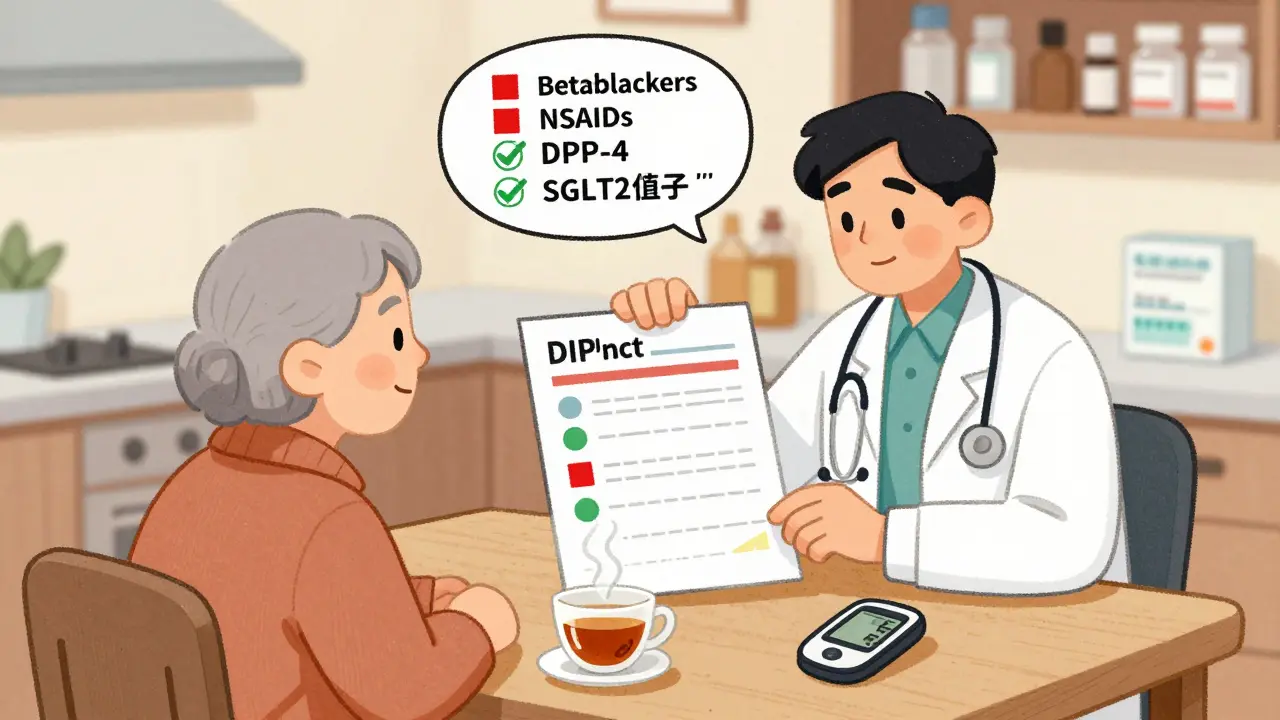
The average senior with diabetes takes nearly five prescription pills and two over-the-counter meds. That’s a recipe for trouble. Some drugs make hypoglycemia worse or hide its symptoms.Beta-blockers (like metoprolol or atenolol), often used for high blood pressure or heart issues, can mask the warning signs of low sugar-like a racing heart. You won’t feel it coming.
NSAIDs (like ibuprofen or naproxen) can boost the effect of sulfonylureas, making lows more likely and longer-lasting.
Antibiotics like sulfamethoxazole/trimethoprim (Bactrim) can also increase hypoglycemia risk.
That’s why a full medication review every 3-6 months is critical. A pharmacist can spot these interactions. Some Medicare Advantage plans now offer free medication therapy management-ask if you qualify.
What Success Looks Like
Real people are making this change-and living better.At 78, Mary Thompson had three falls in six months from low blood sugar on glyburide. After switching to sitagliptin, she had zero episodes in six months. She now walks her dog every morning without fear.
On Reddit, a caregiver shared how their 82-year-old father kept waking up at 3 a.m. with sweating and confusion on glipizide. After switching to linagliptin, his blood sugar stayed steady between 90 and 140. No more midnight emergencies.
These aren’t rare cases. A 2022 study found that when seniors switched from high-risk sulfonylureas to safer alternatives, emergency visits for hypoglycemia dropped by 47% in just one year.
Final Thought: Safety Over Numbers
For too long, the goal in diabetes care has been to hit an HbA1c target-like 6.5% or 7%. But for seniors, that’s the wrong focus. The American Diabetes Association now says clearly: “Avoiding hypoglycemia is a higher priority than achieving near-normal glycemia.”For a healthy 70-year-old, an HbA1c of 7.5% is fine. For someone frail, with memory issues or heart disease, 8% or even 8.5% is safer. Lower numbers don’t mean better health-they mean more risk.
If you or someone you love is on a diabetes medication that’s causing dizziness, confusion, or falls, speak up. Ask for a safer option. The right drug won’t just lower blood sugar-it will let you live without fear.
What’s the safest diabetes medication for seniors?
The safest options for seniors are DPP-4 inhibitors like sitagliptin (Januvia) and linagliptin (Tradjenta), and SGLT2 inhibitors like empagliflozin (Jardiance). These rarely cause low blood sugar when used alone. Metformin is also safe if kidney function is normal. Avoid glyburide and other long-acting sulfonylureas-they’re high-risk.
Can seniors stop taking insulin safely?
Yes-but only under a doctor’s supervision. Insulin can be replaced with safer oral medications like DPP-4 inhibitors or SGLT2 inhibitors in many cases, especially if blood sugar isn’t extremely high. Never stop insulin suddenly. Work with your doctor to taper it while starting a new medication.
Why is glyburide dangerous for older adults?
Glyburide has a long half-life and is cleared by the kidneys. As people age, kidney function declines, so the drug builds up in the body. This leads to prolonged, unpredictable drops in blood sugar-sometimes lasting 24 hours or more. Studies show nearly 40% of seniors on glyburide have at least one hypoglycemic episode per month, making it one of the most dangerous diabetes drugs for older adults.
What are the early signs of low blood sugar in seniors?
Early signs include headache, drowsiness, sweating, hunger, fast heartbeat, dizziness, confusion, irritability, or weakness. Shaking is a later sign. Many seniors don’t feel their usual warning symptoms because aging reduces the body’s ability to release adrenaline. That’s why recognizing subtle signs is critical.
Should seniors use continuous glucose monitors (CGMs)?
Yes-if you’re on insulin, have had a severe low, or take multiple medications. CGMs track sugar levels 24/7 and alert you when levels drop too low, even at night. Studies show seniors using CGMs have 65% fewer hypoglycemic events than those using fingerstick tests. Medicare covers CGMs for people with diabetes who use insulin or have had severe lows.
Can other medications make low blood sugar worse?
Yes. Beta-blockers (for blood pressure) can hide symptoms like a racing heart. NSAIDs like ibuprofen can boost the effect of sulfonylureas. Antibiotics like Bactrim can also increase hypoglycemia risk. Always review all your meds-prescription and over-the-counter-with your pharmacist or doctor.


Bob Hynes
February 2, 2026 AT 15:56 PMbro i had my grandpa on glyburide for years and he kept falling at 3am like a sack of potatoes 🤦♂️ switched him to januvia and now he walks the dog every morning like he’s in a damn commercial. no more ambulance rides. why do docs still push this crap?
Eli Kiseop
February 3, 2026 AT 11:25 AMmy mom’s on glipizide and i just found out it’s risky? she’s 79 and i thought it was fine because her doctor said so. guess i’m calling her pharmacy tomorrow
Ellie Norris
February 3, 2026 AT 18:29 PMoh my gosh this is so important!! i work in a pharmacy and we see so many seniors on glyburide - it’s wild. i always try to gently suggest switching but sometimes the docs don’t listen. please share this with your family!! 🙏
Marc Durocher
February 4, 2026 AT 03:51 AMso let me get this straight - we’re telling old people to avoid the cheapest, oldest meds… because they’re dangerous? but the new ones cost 10x more and aren’t covered by half the plans? yeah real helpful. 🤡
larry keenan
February 5, 2026 AT 14:29 PMthe pharmacokinetic profile of sulfonylureas in geriatric populations is significantly altered due to reduced renal clearance and diminished hepatic metabolism. this results in prolonged drug half-life and increased risk of iatrogenic hypoglycemia. current guidelines from the ADA and AGS support de-prescribing these agents in favor of DPP-4 inhibitors and SGLT2 inhibitors with lower hypoglycemic potential.
Nick Flake
February 6, 2026 AT 11:31 AMimagine being 80 and scared to walk to the mailbox because your medicine might knock you out 😢. we treat diabetes like it’s a math problem - ‘get HbA1c to 6.5!’ - but real life isn’t a lab report. safety > numbers. this post saved my dad. 🙏❤️
Sami Sahil
February 8, 2026 AT 06:14 AMguys pls dont ignore the CGM part!! my uncle was on insulin and kept waking up at 2am screaming he was cold - turns out his sugar was 48. got him a CGM and now he sleeps like a baby. its not expensive anymore and medicare covers it if you ask right. life changer!!
Becky M.
February 9, 2026 AT 18:55 PMi just checked my moms meds and she’s on glyburide… and bactrim for a UTI… and metoprolol… wow. i think i need to schedule a med review before she has a fall. thanks for the wake up call
jay patel
February 11, 2026 AT 13:42 PMso the real issue here isn’t the meds it’s the system - docs get paid to write scripts not to review them, pharmacists are overworked, and families are too busy to ask questions. we’ve turned elder care into a conveyor belt. and now we’re surprised when people fall? 🤦♂️
Ansley Mayson
February 13, 2026 AT 05:12 AMwhy are we even talking about this? seniors should just eat less sugar and stop being lazy. if they can’t manage their meds they shouldn’t be driving or living alone. this is just another liberal panic
phara don
February 14, 2026 AT 04:13 AMis tirzepatide really safe for 85 year olds? i saw a video where someone threw up for a week on it…
Hannah Gliane
February 16, 2026 AT 00:45 AMof course you’re gonna get low blood sugar if you’re eating oatmeal and walking 2 miles a day. maybe stop being so active? 😏
Murarikar Satishwar
February 17, 2026 AT 20:23 PMthe data is clear: DPP-4 inhibitors have the most favorable safety profile in frail elderly patients. Linagliptin is especially useful because it’s primarily hepatobiliary excreted - no dose adjustment needed even with CKD. This makes it ideal for seniors with comorbidities. Always consider renal function before prescribing any agent.
Dan Pearson
February 19, 2026 AT 04:21 AMoh wow look at this post - someone actually did their homework! 🎉 i bet the pharmaceutical reps hate this. glyburide’s been around since the 80s and it’s cheap - why fix what ain’t broke? oh right - because old people keep dying in their bathrooms. 🤡