
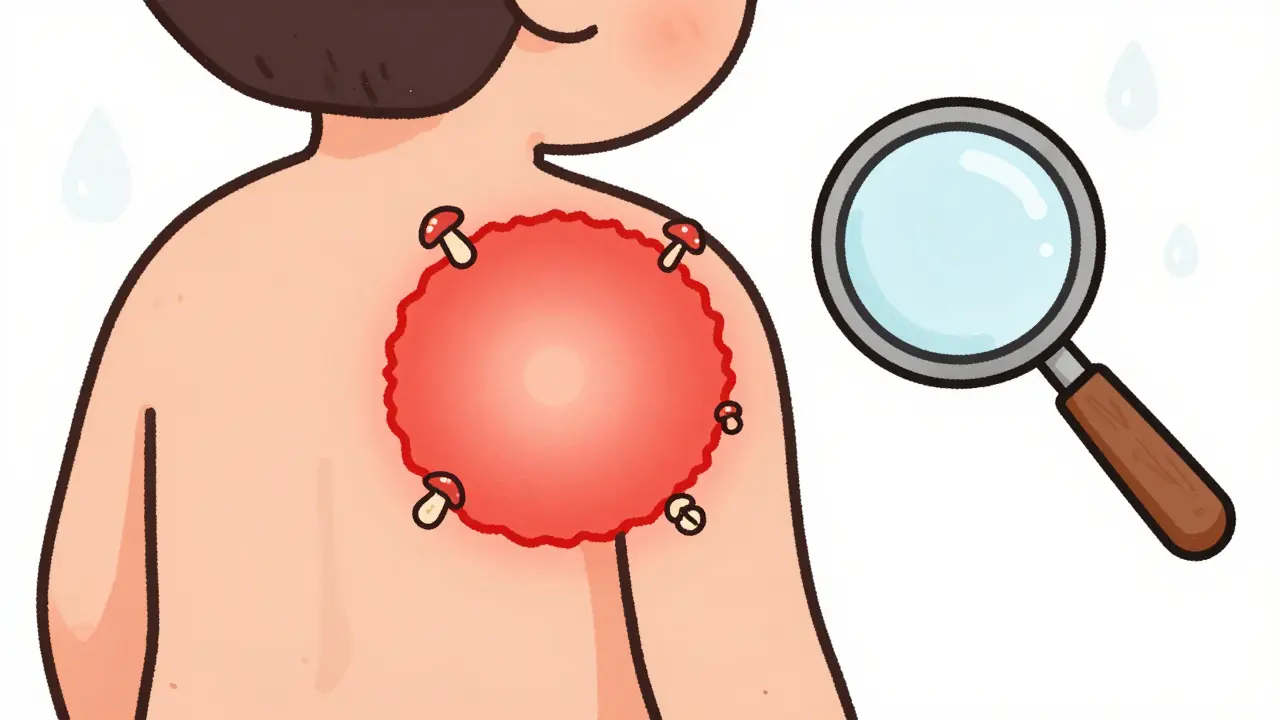
Ringworm isn’t caused by a worm at all. That’s the first thing to know. The name sounds scary, like something crawling under your skin, but it’s actually a fungal infection - simple, common, and treatable. You might see a red, itchy circle on your arm or leg and think it’s a bug bite or an allergic reaction. But if it’s spreading, flaking, or doesn’t go away after a few days, it’s probably ringworm. Also called tinea, this infection is one of the most frequent skin problems doctors see, especially in kids and athletes. It doesn’t care if you’re rich or poor, clean or messy. It just wants warmth, moisture, and skin to grow on.
What Does Ringworm Actually Look Like?
Ringworm shows up differently depending on where it lands. On your body - that’s tinea corporis - it forms a classic red ring. The edges are raised, scaly, and slightly darker. The middle? Often clear or pale, like a bullseye. It starts small, maybe the size of a coin, and spreads outward over days. It itches. Sometimes it burns. You might not even notice it at first, until you scratch and it spreads.
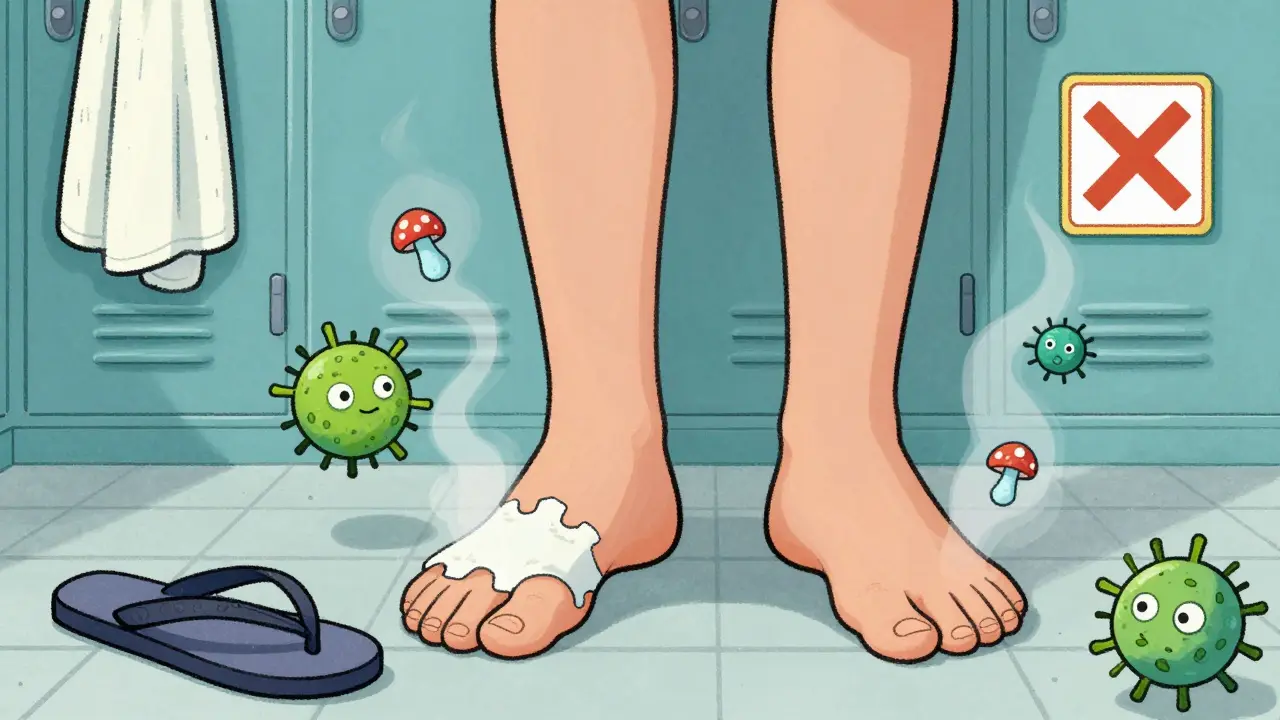
On your feet - tinea pedis, or athlete’s foot - it’s not a ring at all. It’s peeling, cracked skin between your toes, especially the fourth and fifth ones. The skin turns white and soggy, then flakes off. It stings when you step in water. There’s often a weird, sour smell. You get this from walking barefoot in locker rooms, gyms, or public showers. It’s so common, nearly one in seven adults has had it at some point.
On the scalp - tinea capitis - it’s worse. Kids are most at risk. You’ll see patches of hair loss, red bumps, or even a swollen, pus-filled lump called a kerion. It doesn’t just itch - it can leave scars or permanent bald spots if ignored. This is why schools check for it. One outbreak can hit five or ten kids in a class.
Then there’s jock itch - tinea cruris - a red, itchy rash on the inner thighs and groin. It’s not sexual. It’s just sweat. Tight clothes, hot weather, and not drying off after a shower make it worse. And nails - tinea unguium - turn thick, yellow, and crumbly. Toenails get it three times more than fingernails because shoes create the perfect damp cave for fungi.
How Do You Catch It?
You don’t need to be dirty to get ringworm. You just need to be in the wrong place at the wrong time. The fungus lives on skin, hair, and even in the soil. It spreads in three main ways:
- Direct contact - Touching someone who has it. This causes about 60% of cases. Wrestling, hugging, sharing a bed - all risky.
- Contaminated surfaces - Towels, combs, mats, shower floors. The fungus can survive for months on fabric or tile. That’s why 30% of cases come from shared items.
- Animals - Cats and dogs are the usual suspects. Puppies with patchy fur? They might be carrying it. About 10% of human cases come from pets. Veterinarians and pet owners are at higher risk.
Some people are more vulnerable. If you sweat a lot - and about 3% of people do - your skin stays damp. That’s like a five-star hotel for fungi. Kids under 10 are most likely to get scalp ringworm. Athletes, especially wrestlers, have an 84% chance of exposure. And if your immune system is weak - from diabetes, medication, or illness - the infection won’t go away easily. It might spread faster and resist treatment.
What Creams Actually Work?
For most skin and foot infections, you don’t need a prescription. Over-the-counter antifungal creams work - if you use them right. The key ingredients you’ll find are:
- Clotrimazole (1%) - Works in 70-80% of cases. Apply twice daily for 2 to 4 weeks.
- Miconazole (2%) - Slightly less effective, around 65-75%. Still good for mild cases.
- Terbinafine (1%) - The strongest OTC option. Clears up 80-90% of cases. Many users see improvement in just 3-5 days. That’s why it’s the top-rated cream on Amazon with over 4,300 reviews averaging 4.3 stars.
- Ketoconazole (2%) - Works well, but can irritate sensitive skin.
Here’s the catch: you have to keep using it even after the rash looks gone. Most people stop after 5 days because the redness fades. Big mistake. The fungus is still alive under the skin. That’s why 45% of people get it back - they didn’t finish the job.
For scalp ringworm or infected nails, creams won’t cut it. You need oral pills. Terbinafine tablets (250mg daily) are the go-to. For scalp infections, you take them for 4 to 6 weeks. Success rate? 85-90%. But they’re not for everyone. Liver tests are sometimes needed. Your doctor will decide if it’s safe.
Why Do Treatments Fail?
It’s not always the cream. It’s how you use it. The biggest reason treatments fail? Incomplete treatment. People think, “It looks better, so I’m done.” But fungi are sneaky. They hide deep in the skin layers. If you stop early, they bounce back stronger.
Another issue? Misdiagnosis. Some people think it’s eczema or psoriasis and use steroid creams. That makes ringworm worse. Steroids suppress the immune system - exactly what the fungus wants. You end up with a bigger, wilder rash.
And now, resistance is creeping in. A 2022 study found a 12% jump in terbinafine-resistant strains of Trichophyton between 2018 and 2022. That means some infections won’t respond to the usual treatment. Doctors are starting to see cases that need longer courses or different drugs.
Also, natural remedies like tea tree oil? They sound appealing, but studies show they’re half as effective as pharmaceutical creams. A Cochrane Review found only 40-50% clearance with tea tree oil versus 70-90% with clotrimazole or terbinafine. Don’t waste time on unproven fixes.
How to Stop It From Coming Back
Prevention is easier than treatment. Here’s what works:
- Wear flip-flops in showers, pools, and gyms. It cuts your risk by 45%.
- Change socks daily - or twice a day if you sweat a lot.
- Don’t share towels, combs, or hats. That alone reduces transmission by 30%.
- Keep skin dry. After showering, dry between your toes, under your breasts, and in your groin. Use a hairdryer on cool if needed.
- Wash clothes and bedding in hot water. Fungi survive cold washes.
- Check your pets. If your cat has bald patches, take them to the vet. Don’t assume it’s just shedding.
And if you’re an athlete? Shower immediately after practice. Don’t sit around in sweaty gear. Wipe down gym equipment before and after use. Schools that enforce these rules cut outbreaks by 60%.
When to See a Doctor
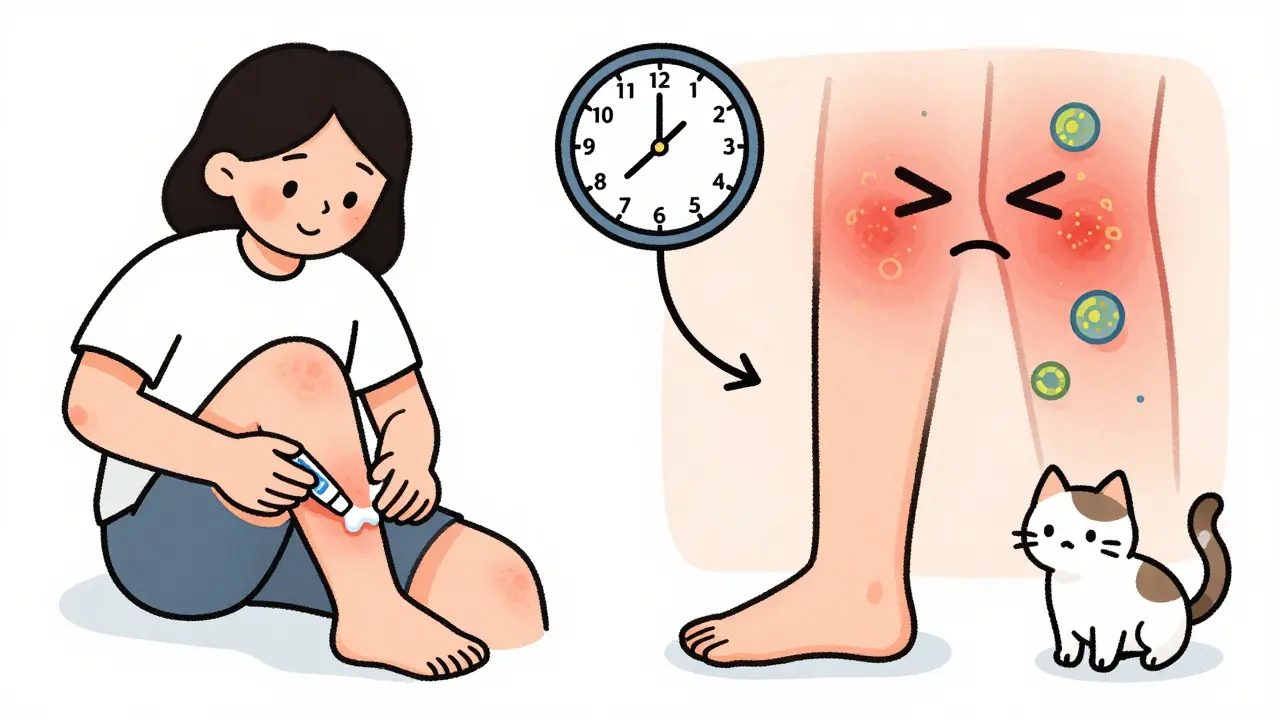
You can handle most cases at home. But call your doctor if:
- The rash doesn’t improve after 2 weeks of cream.
- You have a fever, pus, or swelling - signs of a bacterial infection on top of the fungus.
- It’s on your scalp or nails. These need pills.
- You’re diabetic, pregnant, or have a weak immune system.
- Your child has bald patches on the head. Don’t wait - it can scar.
Doctors can do a quick skin scraping and look at it under a microscope. In minutes, they’ll know if it’s ringworm or something else. No need to guess.
The Real Cost - Not Just Money
Ringworm isn’t just a skin problem. It’s a social one. A 2022 survey found that 73% of teenagers with visible ringworm were teased or avoided at school. Parents hide the rash under long sleeves in summer. Kids miss sports. Adults avoid the gym. The emotional toll is real.
And financially, it adds up. In the U.S. alone, people spend $500 million a year on treatments. OTC creams cost $5 to $15. Oral meds range from $25 to $150. Insurance helps, but not always. The real cost? Lost time, lost confidence, and lost days.
But here’s the good news: ringworm is curable. It’s not dangerous. It’s not permanent. With the right cream and the right patience, it goes away. You don’t need fancy products. You don’t need magic. Just consistency. Keep the skin dry. Use the cream. Finish the course. And don’t let it control your life.
Is ringworm contagious?
Yes, ringworm is highly contagious. It spreads through direct skin contact, sharing towels or clothing, and touching surfaces like gym mats or shower floors. It can also pass from infected pets like cats and dogs to humans.
How long does it take for antifungal cream to work?
You’ll usually see improvement in 3 to 7 days with creams like terbinafine or clotrimazole. But you must keep applying it for 2 to 4 weeks, even if the rash looks gone. Stopping early is the most common reason it comes back.
Can I use steroid cream on ringworm?
No. Steroid creams like hydrocortisone can make ringworm worse by weakening the skin’s immune response. They may reduce itching temporarily, but the fungus spreads deeper and becomes harder to treat. Always use an antifungal, not a steroid, unless directed by a doctor.
Do I need to throw away my clothes or towels?
No, you don’t need to throw anything away. Wash all clothing, towels, and bedding in hot water with detergent. Dry them on high heat. Fungi can’t survive high temperatures and clean laundry. Just avoid sharing items until the infection clears.
Can ringworm come back after treatment?
Yes, if you don’t finish the full course of treatment or if you’re re-exposed. People who sweat a lot, wear tight shoes, or don’t dry their skin properly are more likely to get it again. Keeping skin clean and dry is the best way to prevent recurrence.
Is ringworm more common in children?
Yes, especially scalp ringworm (tinea capitis). Around 60% of all scalp cases occur in children under 10. They’re more likely to share combs, hats, and hairbrushes, and their skin is more vulnerable. Schools often screen for it during outbreaks.



Dana Termini
January 6, 2026 AT 05:22 AMFinally, someone explained this without using medical jargon. I thought I had eczema for months until I read this. Terbinafine worked in 4 days, but I kept using it for 3 weeks like it said. No return. Simple. Done.
Also, pets. My cat had a bald spot. I didn't think twice. Turned out it was ringworm. Now I check her every week. Worth it.
Lily Lilyy
January 7, 2026 AT 08:20 AMThank you for sharing this important information with such clarity and care. It is truly helpful to know that ringworm is not only treatable but also preventable with simple daily habits. Let us all remember to keep our skin dry, avoid sharing personal items, and wash our clothes in hot water. Small actions lead to big health changes. You have made a difference today.
With gratitude and good health to you.
Susan Arlene
January 8, 2026 AT 14:21 PMso like… it’s just fungus. not a worm. got it. i used tea tree oil for a week because i’m cheap and it did nothing. then i bought terbinafine off amazon. 3 days later it looked like it never existed. why do people even try natural stuff when science works?
also my dog had it. she looked like a bald raccoon. vet said same thing. wash everything. no drama.
Ashley S
January 9, 2026 AT 20:40 PMWhy do people still use OTC creams? This is basic hygiene. If you're getting ringworm, you're doing something wrong. Don't share towels. Don't walk barefoot. Don't cuddle your infected cat. Stop being lazy and blame the fungus. It's not magic. It's your fault.
Also, why are you even reading this? You probably still have it.
Jeane Hendrix
January 11, 2026 AT 12:41 PMInteresting how the resistance stats are climbing-especially with terbinafine. I wonder if the over-the-counter availability is contributing to subtherapeutic dosing. I’ve seen cases where patients use it intermittently, like a spot treatment, not a full-course antifungal. That selective pressure is probably driving strain evolution.
Also, the 12% jump in Trichophyton resistance from 2018–2022? That’s not noise. That’s a signal. We need better public education on adherence, not just product access.
Rachel Wermager
January 12, 2026 AT 03:34 AMTerbinafine is an allylamine antifungal that inhibits squalene epoxidase, disrupting ergosterol biosynthesis in fungal cell membranes. Clotrimazole is an azole that targets lanosterol 14α-demethylase. The difference in efficacy isn't anecdotal-it's pharmacokinetic. Terbinafine has fungicidal activity, while azoles are fungistatic. That’s why recurrence drops from 45% to under 15% with proper terbinafine use.
Also, kerions are a type of inflammatory tinea capitis response mediated by Th17 cytokines. Don’t confuse them with bacterial abscesses.
Leonard Shit
January 12, 2026 AT 04:59 AMso i used hydrocortisone on mine because it stopped the itching. then it got bigger. then i cried. then i googled it. then i bought terbinafine. then it vanished in 5 days.
thanks for the reminder that steroids are the devil. also, my dog’s bald spot was ringworm. i thought she was just shedding. we’re all just winging it here.
also… why is the internet so full of people who think tea tree oil is medicine? just use the cream. you’re not in a yoga retreat.
Kelly Beck
January 13, 2026 AT 19:25 PMYou did it! 🙌 This is the kind of post that saves people from months of confusion and shame. I used to hide my ringworm under long sleeves in July because I was embarrassed. Now I tell everyone: ‘It’s just fungus. It’s not you. It’s not dirty. It’s fixable.’
And yes-finish the cream. Even if it looks gone. Even if you’re tired. Even if your skin feels fine. The fungus is still hiding. Be the hero of your own skin story. 💪 You got this!
P.S. Wash your towels. Seriously. I learned the hard way.
Wesley Pereira
January 15, 2026 AT 07:51 AMterbinafine works but the real win is the hygiene stuff. i used to think washing clothes in cold water was fine. then i got ringworm twice. now i wash everything in hot + dry on high. no more guessing. also, i wipe down gym mats now. i used to be lazy. now i’m the weird guy who brings disinfectant wipes to the locker room.
also-don’t let your kid wear a hat that’s been in a shared bin. schools don’t test enough. be the parent who asks.
Isaac Jules
January 15, 2026 AT 10:54 AMAnyone else notice how people still blame the fungus? It’s not the fungus’s fault you live in a swamp. You sweat. You wear tight shoes. You don’t dry your feet. You share towels. You pet a cat with a bald spot and then act surprised. The fungus is just doing its job. You’re the one who failed at basic biology.
Also, tea tree oil? That’s not a treatment. That’s a placebo for people who hate pharmacies.
Pavan Vora
January 16, 2026 AT 13:34 PMin india, we use neem oil and turmeric paste... but honestly? after 3 failed attempts, i switched to terbinafine. it worked in 4 days. my aunt said, 'this is western medicine, it's not natural!' i said, 'auntie, my skin isn't a temple, it's a battlefield.'
also, my brother got it from his football boots. we washed them in hot water with bleach. now he wears sandals in the hostel shower. no more ringworm. simple.
but yes, kids with scalp ringworm? they need pills. not creams. schools here don't test. parents wait too long. shame.