
Every year, millions of people take prescription drugs without a single problem. But for others, the same medications cause serious harm-not because they’re dangerous, but because they’re used wrong. Medication safety isn’t just about what’s in the bottle. It’s about how you take it, what you tell your doctor, and whether you understand what you’re actually taking.
Think about this: 45% of adults in the U.S. report at least one medication-related problem every year. That’s nearly half of us. Missed doses. Confusing instructions. Accidentally taking two pills instead of one. These aren’t rare mistakes. They’re common-and preventable.
Know Your Medicines Inside and Out
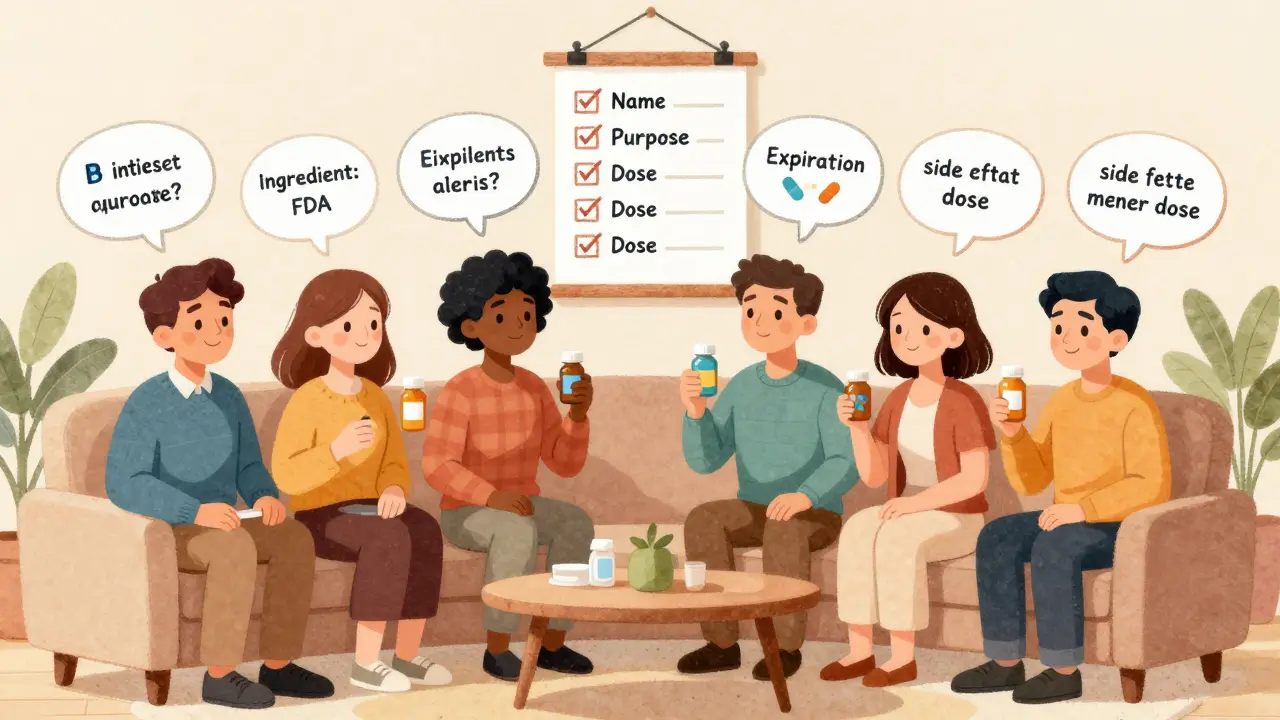
You wouldn’t drive a car without knowing how the brakes work. So why take a pill without knowing what it does? The FDA says patients should ask eight key questions before starting any new prescription:
- What’s the name of this medicine?
- What’s the active ingredient?
- Why am I taking it?
- How much should I take, and when?
- What should it look like? (Color, shape, markings)
- When does it expire?
- What side effects should I watch for?
- What should I avoid while taking it? (Alcohol? Food? Other drugs?)
- What happens if I miss a dose?
Write these answers down. Keep them in your phone or wallet. If your doctor doesn’t explain this clearly, ask again. No shame in it. If you can’t describe your own medication in simple terms, you’re at risk.
The 5 Rights of Safe Medication Use
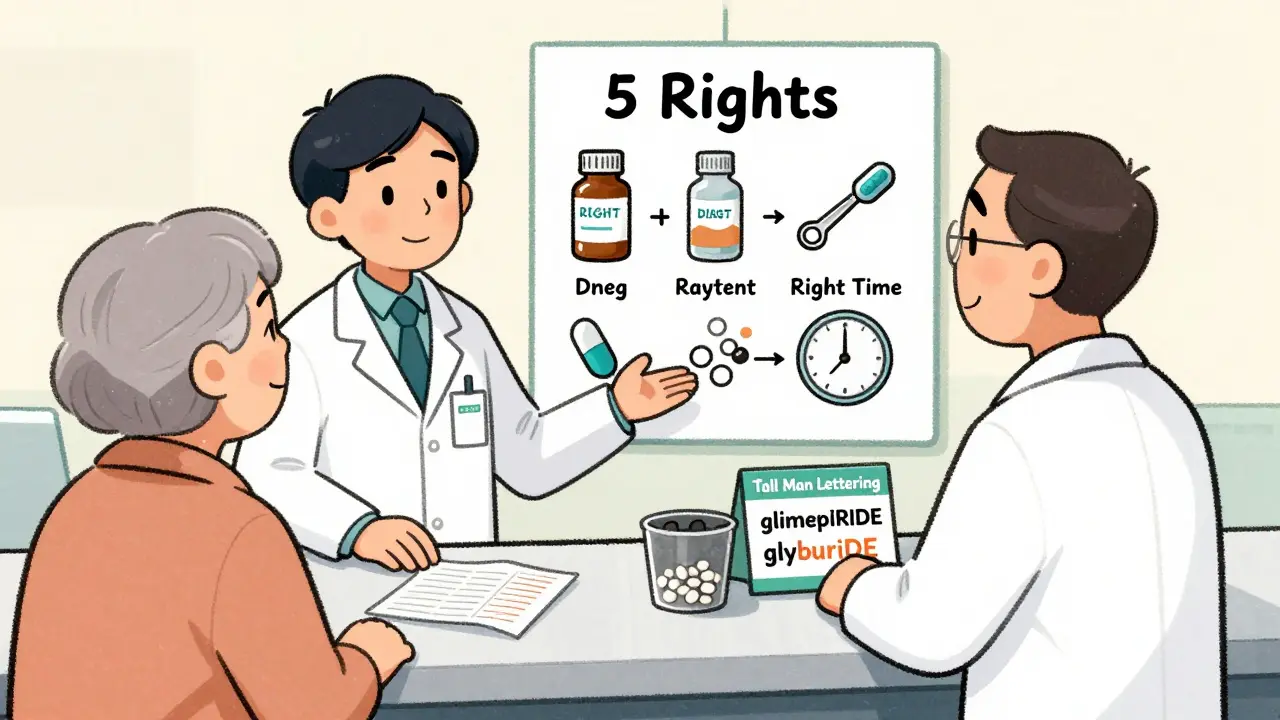
Healthcare workers use a simple rule called the 5 Rights to avoid mistakes. You should use it too:
- Right patient - Is this medicine really for you? Double-check your name on the bottle.
- Right drug - Does it match what your doctor prescribed? Look up the name online if you’re unsure.
- Right dose - Is it the exact amount? Don’t guess. A pill splitter is fine. Eyeing it? Not okay.
- Right route - Is it meant to be swallowed, injected, or applied to the skin? Taking a patch orally can be deadly.
- Right time - Is it morning or night? With food or on an empty stomach? Timing matters.
One study found that patients who followed these five rules reduced their medication errors by over 60%. It’s not rocket science. It’s basic attention.
Keep a Medication List - Always
Most medication errors happen during care transitions - when you move from hospital to home, or switch doctors. Why? Because no one has the full picture.
Here’s what you need on your list:
- All prescription drugs (even ones you don’t take every day)
- All vitamins, herbs, and supplements
- All over-the-counter medicines (ibuprofen, antacids, sleep aids)
- The reason you take each one
- When you last took it
Update it every time you see a doctor or pharmacist. Bring it with you. Don’t rely on memory. A 2023 CDC report found that only 32% of adults bring a full list to appointments. That’s why 50% of errors happen during transitions. You can be part of the 32% who avoid the mistake.
Watch Out for High-Risk Medications
Not all drugs are created equal. Some are called high-alert medications because even a small mistake can cause serious harm. These include:
- Insulin (for diabetes)
- Warfarin (a blood thinner)
- Heparin (another blood thinner)
- Intravenous oxytocin (used in labor)
These drugs are involved in about 30% of all medication errors that lead to patient harm. If you’re taking one, be extra careful. Ask your pharmacist: “Is this a high-alert drug?” If yes, they’ll walk you through extra safety steps.
Also watch out for look-alike, sound-alike drugs. Glimepiride and glyburide? Both treat diabetes. Both sound similar. One mistake, and your blood sugar crashes. That’s why pharmacies use Tall Man Lettering - writing them as glimepiRIDE and glyburiDE - to make the difference obvious. You can do the same. Read labels slowly. Say them out loud.
Don’t Guess. Don’t Skip. Don’t Stop.
People stop taking meds for all kinds of reasons. Maybe they feel better. Maybe the cost is too high. Maybe they’re scared of side effects.
But here’s what happens when you stop without talking to your doctor:
- Antibiotics: 23% of treatment failures happen because people quit early. The infection comes back - stronger.
- Blood pressure meds: Skipping doses raises your risk of stroke.
- Antidepressants: Stopping suddenly can cause withdrawal symptoms like dizziness, nausea, or anxiety.
If you can’t afford a medication, say so. Your doctor can switch you to a cheaper option. If you’re having side effects, tell them. There’s almost always a solution. But never assume silence is safe.
Use Tools - Not Just Memory
Memory fails. Especially when you’re juggling five or more medications. Studies show that people on 5+ drugs make 3.2 times more errors than those on 1 or 2.
Here’s what works:
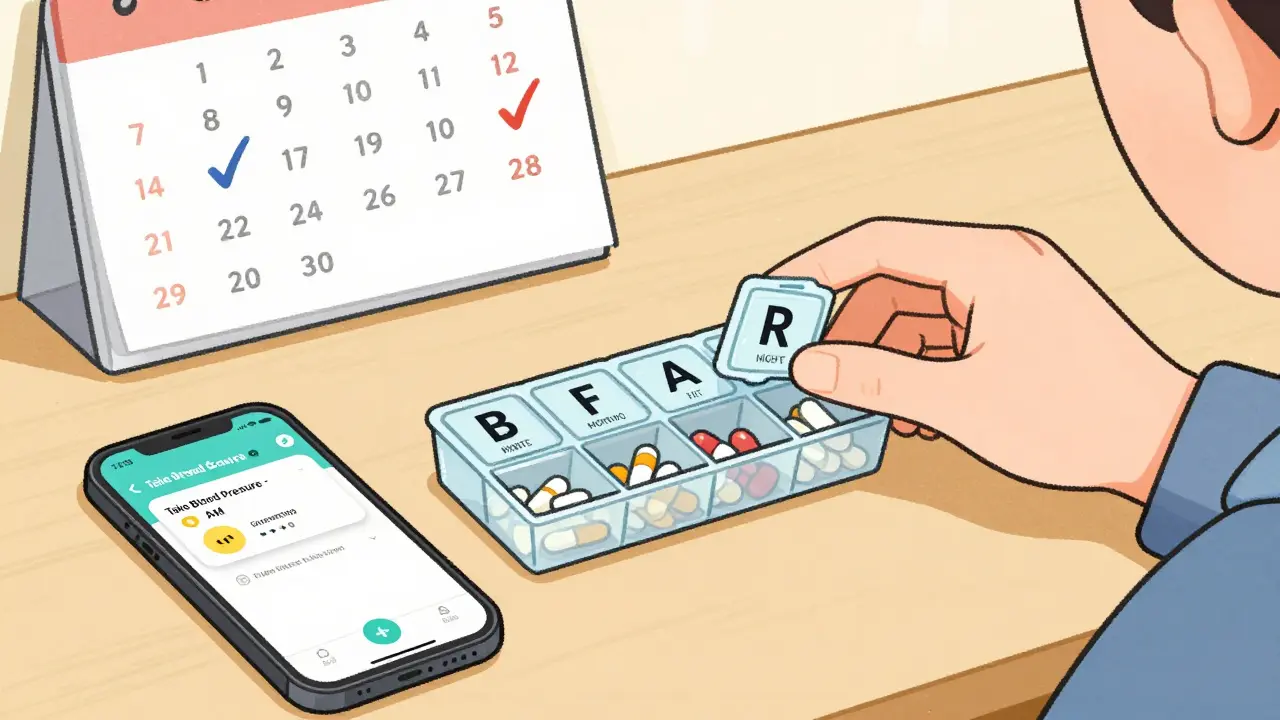
- Pill organizers - Use one with compartments for morning, afternoon, evening, and night. They reduce errors by 35% in older adults.
- Smartphone alarms - Set reminders for each dose. Label them clearly: “Morning Insulin,” “Night Blood Pressure.”
- Medication apps - The CDC launched a free mobile checklist in January 2024. It lets you log doses, set alerts, and share lists with caregivers.
- Pharmacist check-ins - Ask your pharmacist to review your full list once a year. They catch interactions you might miss. Patients who do this have 27% fewer errors.
One man in Bristol, UK, started using a pill box after his wife had a bad reaction to a new heart medication. He told his story on a local support group: “I thought I remembered everything. Turns out, I was giving her the wrong pill on Tuesdays. The box saved her.”
Clean Out Your Medicine Cabinet
Expired meds aren’t just useless - they’re dangerous. The Illinois Department of Public Health found that 38% of accidental poisonings in children happen because of old pills left in cabinets.
Do this twice a year:
- Take everything out - prescriptions, OTC, supplements.
- Check expiration dates. If it’s past the date, toss it.
- Don’t flush pills down the toilet. Use a drug take-back program. Many pharmacies offer this for free.
- Keep only what you’re actively using.
It’s not about hoarding. It’s about safety.
Ask for the Teach-Back Method
Ever had a doctor say, “Take this twice a day,” and then walk away? That’s not enough.
The teach-back method is simple: your provider asks you to explain the instructions back in your own words. If you say it wrong, they correct you - right then.
Studies show this boosts medication adherence by 40%. It’s not about testing you. It’s about making sure you understand. Ask your doctor: “Can you have me repeat what I need to do?” They’ll know what you mean.
When to Call for Help
You don’t need to figure this out alone. Reach out if:
- You’re confused about your doses
- You notice new side effects
- Someone else gives you a pill
- You find a pill that doesn’t match your usual bottle
- You’re taking more than 5 medications
Pharmacists are trained for this. They’re the last line of defense against errors. Call them. Visit them. Don’t wait until something goes wrong.
Final Thought: Safety Is a Habit
Medication safety isn’t a one-time checklist. It’s a daily habit. It’s asking questions. Writing things down. Double-checking. Talking to your pharmacist. Not trusting memory. Not guessing.
The WHO wants to cut medication harm by half by 2025. That’s not going to happen unless patients get involved. You’re not just a person taking pills. You’re the most important part of the safety system.
Start today. Write down your meds. Set a reminder. Ask one question at your next appointment. That’s how change happens.
What should I do if I think I took the wrong pill?
Stop taking it immediately. Call your pharmacist or doctor. If you’re unsure, go to the nearest urgent care or emergency room. Don’t wait for symptoms. Many medication errors don’t show signs right away. Keep the pill bottle - it helps them identify what you took.
Can I split my pills to save money?
Some pills can be safely split, but not all. Ask your pharmacist first. Pills with coatings, extended-release formulas, or capsules should never be split. Splitting them can change how the drug works. If cost is an issue, ask about generic versions or patient assistance programs. Never guess the dose.
Why do I need to tell my doctor about vitamins and supplements?
Many supplements interact with prescription drugs. St. John’s Wort can make birth control fail. Vitamin K can cancel out warfarin. Even common ones like calcium or magnesium can interfere with antibiotics. Your doctor needs the full picture - not just the prescriptions.
Is it safe to take leftover antibiotics for a new infection?
No. Antibiotics are specific to the type of infection. Taking the wrong one can make the infection worse or cause antibiotic resistance. Also, leftover pills may be expired or contaminated. Always get a new prescription. Don’t reuse old meds.
How often should I update my medication list?
Update it every time you see a doctor, pharmacist, or hospital. Even if nothing changed, check it. Many people forget to add new OTC meds or stop taking old ones. Keeping it current prevents dangerous gaps in your care.
What’s the best way to store medications?
Keep them in a cool, dry place away from sunlight. The bathroom cabinet is a bad idea - humidity ruins pills. A locked cabinet in a bedroom or kitchen drawer is better. Always store them out of reach of children and pets. Some drugs need refrigeration - check the label.
Next steps: Open your phone right now. Create a new note titled “My Medications.” List every pill, vitamin, and supplement you take. Add the reason for each. Send it to a trusted family member. That’s your first step toward safer medication use.




Philip Blankenship
February 16, 2026 AT 02:43 AMMan, I wish I’d known all this stuff when I was first prescribed blood pressure meds. I used to just toss the pills in my pocket and hope for the best. One time I took my evening dose at 3 p.m. because I thought ‘evening’ meant ‘whenever I remember.’ Ended up dizzy on the couch for three hours. Now I’ve got a pill box, alarms on my phone, and a note taped to my fridge. It’s dumb simple, but it works. Seriously, if you’re on more than three meds, stop trusting your brain. Write it down. Your future self will thank you.
Also, I started asking my pharmacist to explain everything like I’m five. They don’t mind. In fact, they seem kinda proud when I get it right. Feels good to be in control.
PS: I still forget my list sometimes. But now I’ve got a screenshot on my lock screen. No shame in that.
Liam Earney
February 16, 2026 AT 14:17 PMOh, good grief… another one of those ‘just ask your doctor’ lectures… as if doctors have time to hold your hand while you fumble through your own body’s chemistry…
Let’s be real: your GP spends 7 minutes with you, scribbles a script, and then you’re left to decode hieroglyphics on a tiny bottle with font size 4. And don’t get me started on the pharmacy-half the time, the label says ‘take twice daily’ but the instructions inside say ‘take with food, avoid dairy, monitor liver enzymes.’
And who exactly is supposed to remember all eight questions? The FDA thinks we’re all neurotypical, middle-class, English-speaking adults with unlimited access to healthcare…
Meanwhile, I’m on six meds, three supplements, and a nightly cocktail of Tums and melatonin… and my ‘care team’ hasn’t even asked if I can afford any of it…
So yes, ‘medication safety’ is important… but the system? It’s a minefield with a smiley face on it.
And yes, I know I’m ranting. But I’m not alone.
Adam Short
February 17, 2026 AT 09:58 AMRight. So we’re all supposed to become pharmacists now? Brilliant. Just brilliant. In Britain, we used to have proper nurses who’d come to your door and hand you your pills. Now? You’re lucky if the pharmacist doesn’t call you an idiot for asking if the blue pill is the same as the green one.
I’ve seen grandmas in my village taking insulin and warfarin and not knowing the difference between ‘once daily’ and ‘as needed.’ And the NHS? They’ll blame the patient when the blood sugar crashes. Meanwhile, the hospital’s been sending out 12-page leaflets in tiny print.
It’s not the patient’s fault. It’s the system’s collapse. We used to have care. Now we have compliance forms and QR codes.
And don’t even get me started on the ‘teach-back method.’ Sounds like a corporate buzzword dreamed up by someone who’s never held a 78-year-old’s hand while they cry because they can’t afford their heart meds.
Stop putting the burden on the sick. Fix the system. Or at least hire more pharmacists.
Sam Pearlman
February 18, 2026 AT 02:13 AMWait, wait-so you’re telling me I’m supposed to write down every single thing I take? Even that one gummy vitamin I take because my sister said it ‘boosts immunity’? And the melatonin I only take when I binge-watch Netflix at 2 a.m.? And the ibuprofen I use as a mood stabilizer on Mondays?
Oh, I’m sorry, I forgot-I’m not supposed to ‘guess’ anymore.
Look, I get it. I’m not trying to be a jerk. But this whole thing feels like a PSA from a 1998 health fair. I’ve got five meds, two supplements, and a coffee habit. I’m not a lab rat. I’m a guy who just wants to feel okay.
Also-why is the CDC pushing an app? Do they think we’re all 22-year-olds with iPhones? I’ve got a 72-year-old aunt who still uses a flip phone. She’s the one who needs help, not me.
And for the love of god, stop telling people to ‘ask their pharmacist.’ I live in a town where the pharmacy is run by a guy who calls everyone ‘honey’ and gives out free lollipops. He doesn’t know what warfarin does. He just knows it’s blue.
Real talk: this is great advice… if you’ve got time, money, and a PhD in healthcare.
Steph Carr
February 18, 2026 AT 22:15 PMLet’s be honest-this whole post reads like a corporate wellness webinar written by someone who’s never had to choose between insulin and groceries.
Yes, yes, write things down. Use apps. Ask questions. All noble. All ideal.
But here’s the unspoken truth: if you’re poor, elderly, undocumented, or mentally exhausted, ‘medication safety’ is a luxury. You don’t get to ‘double-check’ your pill when you’re working two jobs, caring for a sick parent, and living 40 miles from the nearest pharmacy.
And don’t get me started on ‘high-alert meds.’ Who decided that the people most vulnerable to harm should be the ones expected to memorize the FDA’s entire glossary?
Meanwhile, the same system that tells you to ‘ask your doctor’ also charges $300 for a 10-minute consult and refuses to cover generic alternatives.
So yes, I’ll use the pill organizer. I’ll set the alarms. I’ll write it all down.
But I’m not going to pretend this is about education.
This is about equity.
And until we fix that, ‘safety’ is just another word for privilege.
Brenda K. Wolfgram Moore
February 19, 2026 AT 08:42 AMThis is actually really helpful. I’ve been on four different medications since last year, and I didn’t even realize how much I was mixing up until I started writing them down. I had no idea that the ‘sleep aid’ I was taking was interacting with my blood pressure meds. My doctor didn’t mention it. My pharmacist didn’t mention it. I just assumed it was fine.
Now I have a notebook in my purse. I update it every time I refill a prescription. I even took it to my last appointment. The nurse said, ‘I wish more patients did this.’
So thank you. I know it sounds basic. But sometimes, the basic stuff is the stuff that saves your life.
And if you’re on more than three meds? Start today. Just write one thing down. That’s all you need to begin.
Linda Franchock
February 21, 2026 AT 00:33 AMOh honey, I’ve been doing this for years. I’m 67, on six meds, and I still forget which one goes with which meal. So I made a chart. Colored pencils. Pictures. Stick figures. One for morning, one for night. I taped it to my fridge next to the grocery list.
My grandkids love it. They think I’m an artist. I tell them I’m a survivalist.
And yes, I still mess up. But now I have a system. And when I do mess up? I call the pharmacist. No shame. They’ve got my back.
Also-I don’t take anything I can’t pronounce. If it sounds like a spaceship, I ask for a generic.
And I never, ever flush pills. My cat’s still alive because of that.
Basic? Maybe. But it works. And that’s all that matters.
Prateek Nalwaya
February 22, 2026 AT 14:25 PMSo… the post says to use a pill organizer. Cool. But have you ever tried to fit a 20mg oxycodone tablet into a tiny compartment next to a 5mg lisinopril? It’s like playing Jenga with your life.
And let’s talk about ‘Tall Man Lettering’-glimepiRIDE vs. glyburiDE. Yeah, great. But when you’re 70 and your glasses are on the other side of the room, and the lights are out, and your hands are shaking… you’re not gonna see the capital R.
Also, ‘don’t guess the dose’? What if you’re on a 200mg dose and the pharmacy only has 50mg pills? You split it? You cut it? You pray?
And here’s the kicker: the ‘teach-back method’ sounds great until your doctor says, ‘So, what did I just say?’ and you realize you were zoning out because they were talking about your ‘metabolic profile’ and you just wanted to know if you could eat pizza.
So yes, this is all good advice.
But if you’re not rich, healthy, and literate? Good luck.
Agnes Miller
February 24, 2026 AT 11:52 AMI just wanted to say thank you for this. I’ve been taking metformin for 8 years and never knew what the active ingredient was. I thought it was just ‘the diabetes pill.’ I looked it up today. It’s metformin hydrochloride. I wrote it down. I told my sister. She cried. She said she didn’t know either.
I’m not smart. I’m not good with details. But I can write one sentence. I can set one alarm. I can ask one question.
That’s all I need.
And if you’re reading this and you’re overwhelmed? Start there. One thing. Just one.
You don’t have to do it all today.
Just start.
Geoff Forbes
February 26, 2026 AT 08:18 AMLook, this is a textbook example of how not to communicate. You’re treating patients like children who need a 10-page manual to take a pill. Meanwhile, people in developing countries manage complex regimens with no access to apps, pill boxes, or pharmacists.
And you call insulin and warfarin ‘high-alert’? That’s like calling a chainsaw ‘high-risk’ because it can cut your finger off. Of course it can. That’s why you don’t touch it with bare hands.
Stop infantilizing people. The solution isn’t more paperwork. It’s better education. Better training. Better pay for pharmacists. Not a checklist.
Also-why is the CDC pushing an app? Did they forget that 40% of Americans over 65 don’t own smartphones?
Stop treating patients like problems to be managed. Treat them like people.
Jonathan Ruth
February 26, 2026 AT 10:55 AMMy mom took 14 pills a day. She died from a drug interaction no one saw coming. Not because she was careless. Because the system failed her. She was told to take her meds. No one asked if she could read the labels. No one checked if she had help. No one cared.
So I get it. This post is well-intentioned. But it’s not enough.
Stop telling people to write things down. Start telling hospitals to hire more pharmacists. Start telling insurance companies to cover pill organizers. Start telling doctors to spend more than 7 minutes with a patient.
Because if your solution is ‘just ask your pharmacist’ and your pharmacist works 12-hour shifts and has 40 patients in front of them… then you’re not solving the problem.
You’re just passing the blame.
Philip Blankenship
February 28, 2026 AT 08:10 AMJust read this whole thread. Wow. I didn’t expect this to turn into a therapy session. But honestly? This is why I posted. I thought I was just sharing a tip. Turns out I’m not alone.
So here’s my new rule: if you’re on more than three meds, find one person-family, friend, neighbor-and give them a copy of your list. Not a digital copy. A printed one. Tape it to their fridge. Make them promise to check on you.
Because the system won’t save you.
But someone who loves you? They might.