
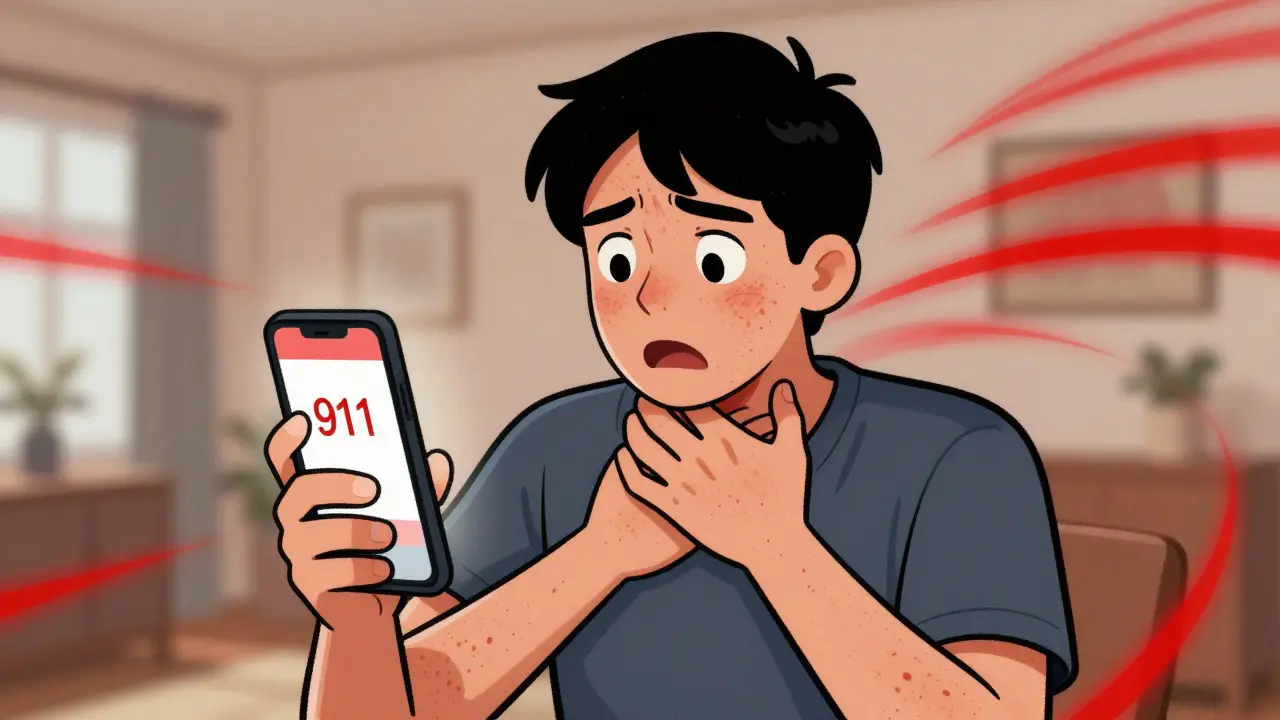
Medication Reaction Emergency Checker
Check Your Symptoms
Select all symptoms you or someone else is experiencing after taking medication.
Results
Select symptoms to see if this is an emergency
EMERGENCY: CALL 911 IMMEDIATELY
SAFE: Contact your doctor within 24 hours
If you've used epinephrine, still call 911 immediately even if symptoms improve.
It’s not always clear whether a weird feeling after taking a pill is just a side effect or a sign your body is shutting down. One minute you’re feeling a little itchy, the next you can’t breathe. Knowing when to call 911 instead of waiting to talk to your doctor can save your life-or someone else’s.
Not all medication reactions are the same
Some medications cause mild side effects. Nausea, drowsiness, a headache, or a slight rash? These are common and usually not dangerous. But when your body reacts to a drug like it’s under attack, that’s different. That’s an allergic reaction. And when it hits multiple systems at once, it can turn deadly in minutes.The key isn’t just the symptom-it’s the combination. A rash alone? Probably not an emergency. But a rash plus vomiting, or a rash plus trouble breathing? That’s a red flag. According to the American College of Allergy, Asthma, and Immunology, symptoms like hives and nausea together are far more likely to be a true allergy than nausea by itself, which is just a common side effect.
Call 911 immediately if you have these symptoms
If you or someone else starts showing signs of a severe reaction, don’t wait. Don’t text your doctor. Don’t check Google. Call 911 right away.- Difficulty breathing or wheezing
- Swelling of the tongue, throat, or lips-this can happen fast and block your airway
- Stridor-a high-pitched, squeaky sound when you breathe in
- Dizziness, fainting, or lightheadedness
- Weak, fast pulse or a sudden drop in blood pressure
- Vomiting or diarrhea along with skin symptoms like hives or flushing
- Loss of consciousness or seizure
These are signs of anaphylaxis, a life-threatening allergic reaction. It doesn’t always look the same. One person might break out in hives and feel dizzy. Another might just start gasping for air. The Mayo Clinic says these symptoms usually show up within an hour of taking the medication-but sometimes they come on slower. That’s why you can’t wait to see if it gets better.
Epinephrine is your first line of defense
If you’ve been prescribed an epinephrine auto-injector (like an EpiPen), use it at the first sign of a severe reaction. Don’t wait. Don’t hope it passes. Don’t think, “I’ve taken this before and it was fine.” Allergies can change. Your body can react worse the next time.Epinephrine works fast. It opens your airways, raises your blood pressure, and stops the reaction from getting worse. The Food Allergy Research & Education organization says it’s safe-even for older adults or people with heart conditions. The risk of not using it is far greater than any side effect from the drug itself.
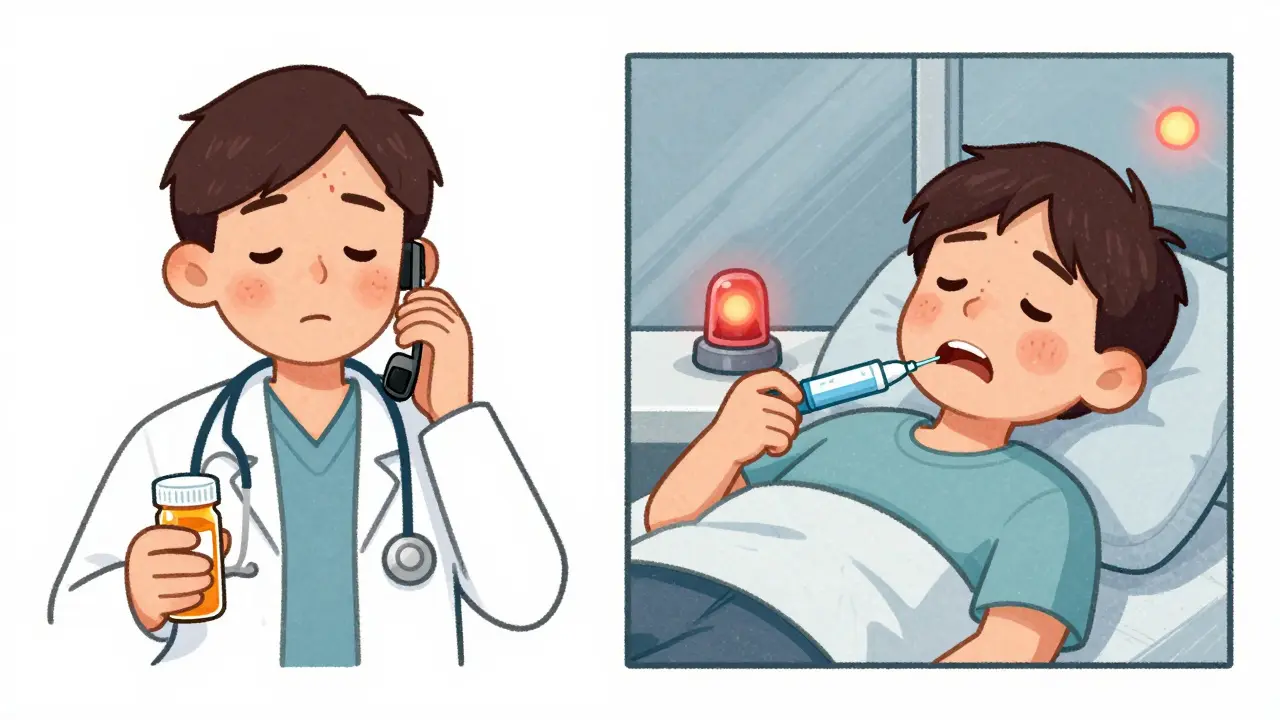
But here’s the part most people miss: Even after using epinephrine, you still need to call 911. One shot isn’t always enough. Symptoms can come back hours later. Emergency responders carry more epinephrine, oxygen, and tools to stabilize you. They can get you to the hospital fast. The Mayo Clinic and CPR Seattle both stress this: never skip the ambulance after using epinephrine.
When you can wait and call your doctor
Not every strange feeling means you need an ambulance. If you only have one symptom-like a mild rash, itching, or a slight upset stomach-and you’re not having trouble breathing, feeling dizzy, or swelling up-you can probably wait to contact your doctor within 24 hours.For example:
- A small patch of hives on your arm with no other symptoms
- Itchy skin without swelling or breathing issues
- Mild nausea or drowsiness that doesn’t get worse
In these cases, call your doctor’s office or visit an urgent care center. They can help you figure out if it’s an allergy, a side effect, or something else. You might need to stop the medication, switch to another one, or get tested later.
But if you’re unsure? Call 911 anyway. The experts agree: when in doubt, assume it’s getting worse. Breathing problems can go from mild to complete blockage in under five minutes. You won’t have time to make a decision once it’s too late.
Why waiting is dangerous
People delay calling 911 for all kinds of reasons. They think, “It’s not that bad.” “I’ll wait and see.” “I don’t want to bother anyone.” Or worst of all, “I’ve had this before.”But here’s what the data shows: half of all fatal anaphylaxis cases happen because epinephrine was given too late-or not at all. The Emergency Physicians Organization says adverse drug reactions send about 700,000 people to U.S. emergency rooms every year. That’s not rare. It’s common. And it’s preventable-if you act fast.
Dr. Mathai from Regional Hospital puts it plainly: “If you’re not sure whether it’s serious enough to call 911, then you should assume it’s going to get worse. Make the call before it’s too late.”
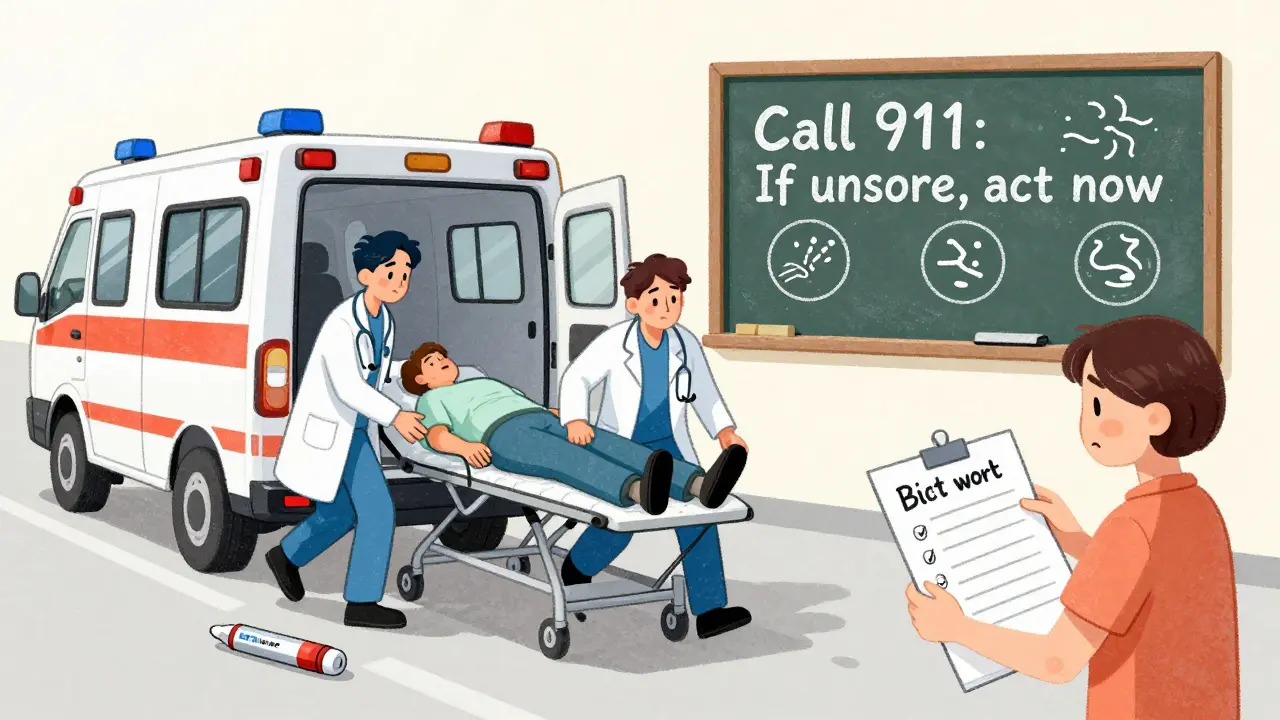
What happens after the emergency
After you’re stabilized, you’ll likely be referred to an allergist. They’ll run tests to confirm what caused the reaction. This matters because if you’ve had one serious reaction, you’re at higher risk for another. You’ll probably be given an epinephrine auto-injector to carry at all times.Also, make sure your doctor updates your medical records. Tell every provider you see-dentists, pharmacists, ER staff-about your reaction. Even a simple note in your chart can prevent a future mistake.
Keep a list of all medications you’ve reacted to, including the symptoms. Don’t rely on memory. Write it down. Show it to your pharmacist when you pick up a new prescription.
Bottom line: When in doubt, call 911
There’s no shame in calling 911 and finding out it was nothing. There’s huge risk in waiting too long and finding out it was everything.Medication reactions are unpredictable. What was a mild itch yesterday could be a blocked airway today. The rules are simple:
- One symptom? Call your doctor.
- Two or more? Especially if they involve breathing, swelling, or dizziness? Call 911.
- Used epinephrine? Still call 911.
- Not sure? Call 911.
You don’t need to be an expert to save a life. You just need to act before it’s too late.
Can a medication reaction happen days after taking the pill?
Yes. While most severe allergic reactions happen within an hour, some-like DRESS syndrome or serum sickness-can take days or even weeks to show up. These are rare but serious. If you develop a rash, fever, swollen lymph nodes, or joint pain days after starting a new medication, contact your doctor right away.
Do I need to carry epinephrine if I’ve only had a mild reaction before?
If you’ve ever had a reaction that involved breathing trouble, swelling, or dizziness-even once-you should carry epinephrine. Mild reactions can become severe the next time. Your doctor will assess your risk and likely prescribe an auto-injector if there’s any chance of a future serious reaction.
Can I just go to urgent care instead of calling 911?
Only if your symptoms are mild and isolated-like a simple rash or itching. If you have any breathing problems, swelling, dizziness, vomiting with a rash, or a fast heartbeat, urgent care is not safe enough. Emergency rooms have the tools and staff to handle life-threatening reactions. Urgent care doesn’t.
What if I’m not sure if it’s a food allergy or a drug reaction?
It doesn’t matter. The treatment is the same. Whether it’s penicillin, peanuts, or bee venom, if you’re having trouble breathing, swelling, or dizziness, use epinephrine and call 911. The cause will be figured out later. Saving your life comes first.
Are antibiotic reactions common?
Yes. Antibiotics like penicillin and sulfa drugs cause about 15% of all reported drug allergies. Many people think they’re allergic because they got a rash after taking them-but not all rashes are allergies. A doctor can help determine if it’s a true allergy or just a side effect.



Curtis Younker
January 26, 2026 AT 17:17 PMJust wanted to say this post saved my sister’s life last year. She took amoxicillin, got a rash, and thought it was ‘just a side effect’ - until her lips swelled up and she couldn’t breathe. She didn’t have an EpiPen, didn’t know what to do. We called 911 at 2 a.m. and they got her stabilized. Now she carries two pens everywhere. If you’re reading this and you’ve ever had a weird reaction? Don’t wait. Don’t overthink it. Call 911. Seriously.
Thank you for writing this. People need to hear it.
Conor Flannelly
January 28, 2026 AT 04:15 AMThere’s something deeply human about how we minimize our own symptoms until it’s too late. We’ve been trained to ‘tough it out,’ to not be dramatic, to respect the doctor’s time. But your body doesn’t care about politeness. It doesn’t wait for office hours. Anaphylaxis doesn’t schedule appointments. It shows up like a storm - silent at first, then roaring.
I used to think epinephrine was for ‘serious’ people. Now I know it’s for anyone who’s ever felt something ‘off’ after a pill. That gut feeling? That’s your biology screaming. Listen to it. Always.
And yes, even if you’ve taken the drug before. Allergies don’t follow logic. They follow chance. And chance doesn’t care how ‘safe’ you think you are.
Allie Lehto
January 29, 2026 AT 03:03 AMOMG I JUST HAD THIS HAPPEN. I took a new painkiller and got a tiny rash and thought ‘eh, it’ll go away’ - then my throat felt tight and I started sweating. I panicked and called 911. They came, gave me benadryl, said I was lucky. Turns out it WAS an allergy. I’m now carrying an EpiPen and I’ve told everyone I know. Don’t be like me. Don’t wait. Call. 911. NOW. 😭
Conor Murphy
January 29, 2026 AT 19:19 PMThis is the kind of post that makes me believe in the internet again. I’ve seen too many people die because they ‘didn’t want to bother anyone.’ But here’s the truth: if you call 911 and it’s nothing, you get a free ride and a free checkup. If you don’t call and it’s everything? You don’t get a second chance.
My dad passed from a delayed reaction to a new blood pressure med. He thought ‘it was just a headache.’ We didn’t know any better. This post? It’s the warning we should’ve had. Thank you.
Shawn Raja
January 31, 2026 AT 01:53 AMOkay but let’s be real - calling 911 for a rash is basically the new ‘I’m having a mental health crisis’ situation. We’ve turned every minor physical sensation into a national emergency. Are we really that fragile now? I mean, I’ve had hives from laundry detergent and I didn’t call 911. I took a nap and drank water.
Don’t get me wrong, anaphylaxis is real. But 700k ER visits a year? That’s not ‘preventable’ - that’s just people being anxious and overreacting. Maybe we need better education on side effects, not panic buttons.
Also, why is everyone suddenly carrying EpiPens like they’re going to a barbecue with a venomous snake? I’m just saying… maybe we’ve gone too far.
Patrick Merrell
February 1, 2026 AT 04:57 AMEVERYONE KNOWS THE TRUTH - 911 calls for medication reactions are just a way for hospitals to make money. They want you to panic so you come in and get billed for $12,000 worth of ‘tests’ you don’t need. Epinephrine? Overhyped. The real danger is the pharmaceutical industry convincing you your body is a ticking bomb every time you swallow a pill.
My cousin took ibuprofen, got a rash, called 911, got rushed to the hospital, charged $8k, and was told it was ‘just a side effect.’ They didn’t even test for allergies. This whole system is rigged. Don’t be a sheep. Call your doctor. Wait. Breathe. You’ll be fine.
And if you use an EpiPen and then call 911? That’s just giving them more leverage. You’re not a victim. You’re a consumer. Wake up.
eric fert
February 3, 2026 AT 03:49 AMLet me just say - this entire post is a masterpiece of emotional manipulation wrapped in medical jargon. You’re not educating people. You’re weaponizing fear. ‘When in doubt, call 911’ - that’s not advice, that’s a guilt trip. You’re turning every minor discomfort into a life-or-death scenario. People are going to start calling 911 for heartburn now. Next thing you know, ambulances will be dispatched for ‘I think I’m allergic to sunlight.’
And the epinephrine push? That’s not medicine - that’s corporate sponsorship. EpiPen’s stock went up 500% after this exact narrative went viral. Who’s funding this content? Who benefits? You think the Mayo Clinic is just handing out free advice? Please. There’s a profit motive here, and you’re just the cheerleader.
Maybe, just maybe, people should learn to interpret their own symptoms instead of outsourcing their survival instincts to a system that charges $1500 for a 10-minute ER visit. You’re not saving lives. You’re creating a culture of panic.
Curtis Younker
February 3, 2026 AT 10:29 AMeric fert, I get you’re trying to sound edgy, but your comment is dangerously ignorant. People don’t call 911 because they ‘want to be dramatic.’ They call because they’ve seen someone die. My sister didn’t have a $12,000 bill - she had a near-death experience. And you know what? She’d rather pay $12k than be dead.
Stop pretending this is about money. This is about people who don’t know the difference between a rash and a death sentence. And if you think ‘waiting and breathing’ is a valid strategy when your tongue is swelling? You’re not a critic. You’re a liability.
And no, this isn’t corporate propaganda. This is science. The American College of Allergy has been saying this for 20 years. If you want to argue with data, fine. But don’t argue with the people who’ve lived it.