
Vitamin K Intake Tracker
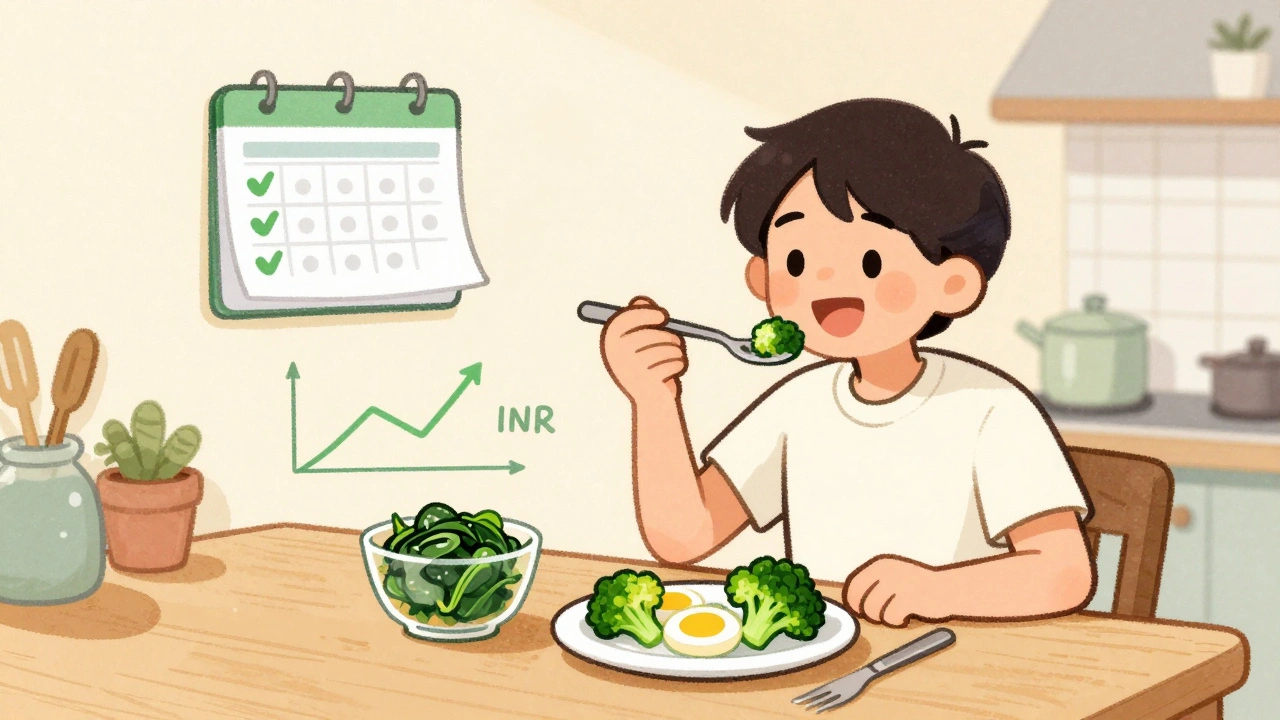
Track your daily vitamin K intake to maintain stable INR levels while on warfarin. The article shows that consistent intake (within ±20% of your daily average) leads to 14.7% better INR control.
Your Daily Intake
Your Results
Why this matters: Research shows patients with vitamin K intake within ±20% of their daily average have 14.7% higher time in therapeutic range (TIR).
Your daily vitamin K intake should stay between 60-120 µg for consistent INR control. Eating consistently helps your body adjust to your warfarin dose.
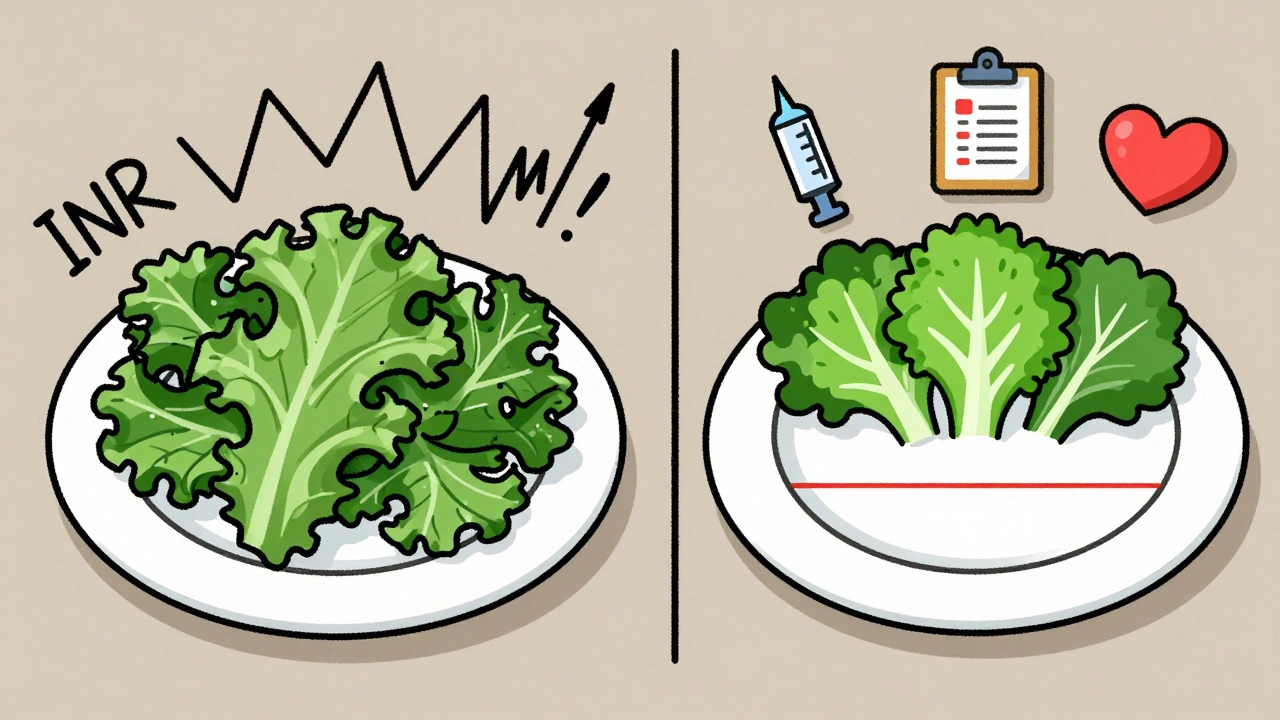
If you’re on warfarin, you’ve probably heard that vitamin K can mess with your blood thinner. But here’s the truth: it’s not about avoiding spinach or kale. It’s about keeping your intake steady. One cup of cooked spinach one day and none for a week? That’s what causes your INR to swing like a pendulum. And when your INR is out of range, you’re at risk for clots or dangerous bleeding.
Why Vitamin K and Warfarin Are a Tight Pair
Warfarin works by blocking a key enzyme called VKORC1. That enzyme helps recycle vitamin K, which your body needs to make clotting factors. Without enough active vitamin K, those clotting factors can’t do their job - and your blood thins. But if you suddenly eat a lot of vitamin K - say, a big bowl of kale salad - your body gets more of the raw material it needs to make those clotting factors again. Your blood starts clotting faster, and your INR drops. Do the opposite - skip vitamin K-rich foods for days - and your INR climbs. That’s why consistency isn’t just helpful. It’s critical.
Research shows patients who eat inconsistent amounts of vitamin K have 2.3 times more INR fluctuations outside the safe range. That’s not a small risk. It means more doctor visits, more blood tests, and more chances for a clot or bleed to slip through.
What’s the Right Amount of Vitamin K?
The Recommended Dietary Allowance (RDA) for vitamin K is 90 micrograms a day for women and 120 for men. Most Americans already hit that mark - men average 122 µg/day, women 93 µg/day. You don’t need to take supplements. You don’t need to cut out greens. You just need to keep your daily intake steady.
Here’s what that looks like in real food:
- 1 cup cooked spinach: 889 µg
- 1 cup raw kale: 547 µg
- 1 cup cooked broccoli: 220 µg
- ½ cup cooked Brussels sprouts: 219 µg
- 1 egg: 20 µg
- 3 oz chicken breast: 2 µg
Notice something? Spinach and kale are packed. But you don’t need to avoid them. You just need to eat about the same amount every day - or spread it evenly across the week. One study found that patients who ate 60-120 µg of vitamin K daily had better INR control than those who restricted intake. The American College of Chest Physicians now says: vitamin K restriction is not recommended and may be harmful.
Why Cutting Out Greens Makes Things Worse
For years, doctors told patients on warfarin to avoid leafy greens. That advice is outdated - and dangerous. When you cut out vitamin K, your body starts to run low. That triggers a biochemical imbalance. Your bones suffer because vitamin K helps keep them strong. Your arteries may calcify faster. And your INR becomes more unpredictable.
A 2020 American Heart Association report found that patients told to restrict vitamin K had 37% more day-to-day INR swings than those who ate consistent amounts. Why? Because when you suddenly eat vitamin K again - say, after a week of salad avoidance - your body reacts like it’s been starved. Your INR plummets. That’s when clots form.
One patient on Reddit shared: “My INR was all over the place until my pharmacist gave me a vitamin K tracking sheet. Now I eat exactly 1 cup of mixed greens every Tuesday and Thursday. My time in range jumped from 45% to 78%.” That’s not luck. That’s consistency.
How to Track Your Vitamin K Intake (Without Going Crazy)
You don’t need to count every microgram. But you do need to be aware. Start with a simple plan:
- Choose 2-3 vitamin K-rich foods you like. Spinach, kale, broccoli, Brussels sprouts, or even green peas.
- Eat about the same portion every day - or the same total amount over 3-4 days.
- Use measuring cups. Visual guesses are wrong 45% of the time, according to a 2022 study.
- Track for 4-6 weeks. Use a food diary or an app like Warframate, which has a database of 1,200+ foods.
Here’s a sample day that hits around 124 µg:
- Breakfast: 1 scrambled egg (20 µg)
- Lunch: ½ cup cooked broccoli (102 µg)
- Dinner: 3 oz chicken breast (2 µg)
That’s it. No need for complex math. Just repeat it. After a few weeks, your body adjusts. Your INR stabilizes. Your warfarin dose becomes easier to manage.
Genetics Play a Role Too
Not everyone reacts the same way to vitamin K. Your genes matter. Variants in the VKORC1 and CYP2C9 genes make some people super sensitive to small changes in diet. If you’re a carrier, even a 10% change in vitamin K intake can throw off your INR. Others can handle more variation.
Doctors don’t routinely test for these genes - yet. But if your INR is still unstable despite consistent eating, ask your anticoagulation clinic about genetic testing. A 2023 study showed that patients with certain gene variants needed tighter control (±10% variation) to stay in range. For others, ±25% was fine.
What About Supplements and New Foods?
Don’t start a new vitamin K supplement without talking to your pharmacist. Even a 150 µg daily pill - which sounds harmless - can drop your INR if you’re not used to it. One study showed that adding 150 µg/day to unstable patients increased their time in range from 58% to 65.6%. That’s a real benefit. But only if it’s done under supervision.
Same goes for new diets. If you’re switching to keto, vegan, or juicing, your vitamin K intake will change. Talk to your care team first. A 2021 Mayo Clinic study found that patients who got personalized counseling from a certified anticoagulation pharmacist hit 82% time in range - compared to 63% for those who didn’t.
Real Results: What Happens When You Get It Right
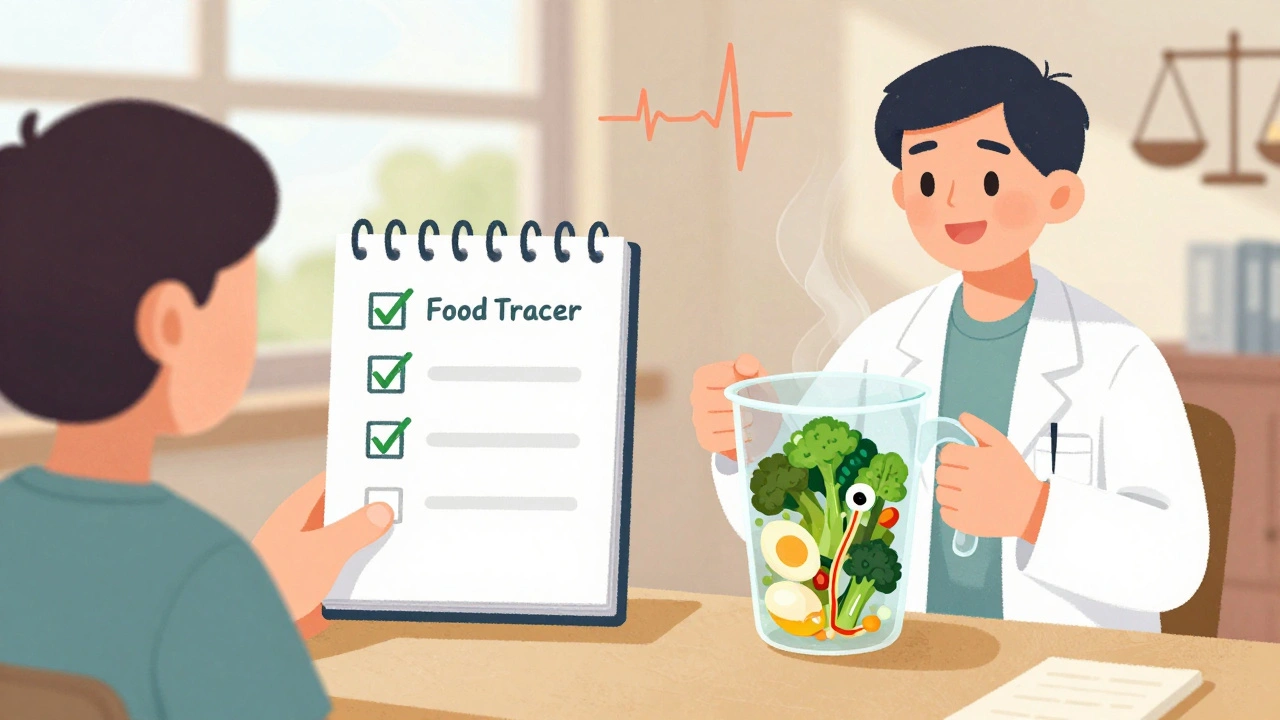
Centers that teach vitamin K consistency see dramatic improvements. The ORBIT-AF registry tracked over 14,000 patients. Those in programs with structured dietary education had 72.4% time in therapeutic range. Those without? Just 61.8%. That 10.6% difference means 1.8 fewer hospitalizations per 100 patients each year.
At Brigham and Women’s Hospital, a focused counseling program cut emergency visits for INR problems by 28%. Why? Because patients stopped guessing. They started eating the same way every day.
And here’s the kicker: you don’t need to eat perfectly. You just need to be predictable. One study found that keeping vitamin K intake within ±20% variation boosted time in range by 14.7 percentage points. That’s the difference between frequent blood tests and long stretches of stability.
What to Do Next
If you’re on warfarin, here’s your action plan:
- Stop trying to avoid vitamin K. Eat your greens - but keep it consistent.
- Use measuring cups, not eyeballs, for leafy greens.
- Track your intake for 4-6 weeks. Use a simple notebook or app.
- Find a pharmacist who specializes in anticoagulation. Ask if they offer dietary counseling.
- Don’t change your diet, supplements, or medications without checking with your care team.
Warfarin isn’t about fear. It’s about rhythm. Your body likes routine. Your blood likes predictability. And your INR? It’ll thank you.
Can I eat spinach if I’m on warfarin?
Yes - but only if you eat it regularly and in similar amounts. Eating spinach one day and none for a week will cause your INR to swing. Stick to about the same portion every day or spread it evenly over a few days. One cup of cooked spinach has nearly 900 µg of vitamin K - that’s a lot. But if you eat it every Tuesday and Thursday, your body adjusts and your INR stays stable.
Should I take a vitamin K supplement?
Only if your doctor or pharmacist recommends it. Taking a supplement without guidance can lower your INR too much, increasing clot risk. A 2015 study showed that 150 µg/day helped stabilize INR in unstable patients - but only under medical supervision. Never start a supplement on your own.
Why does my INR change even when I eat the same food?
Several things can affect INR beyond diet: antibiotics, alcohol, illness, stress, and even changes in liver function. Your genetics also play a role - some people are naturally more sensitive to vitamin K. If your INR keeps shifting despite consistent eating, talk to your anticoagulation clinic. They may check for drug interactions or consider genetic testing.
Is it better to eat vitamin K every day or skip days?
Every day is better - but consistency matters more than frequency. If you eat a large amount of vitamin K on Monday and then nothing for three days, your INR will fluctuate. It’s better to eat a small, steady amount daily. For example, ¼ cup of cooked broccoli every day is more stable than 1 cup once a week.
How long does it take for vitamin K intake to affect my INR?
It takes about 2-5 days for changes in vitamin K intake to show up in your INR. That’s because clotting factors have a half-life of 20-60 hours. A sudden change in diet won’t shift your INR overnight - but it will over the next few days. That’s why it’s important to track your meals and avoid big swings.
What foods have the most vitamin K?
Leafy greens top the list: cooked spinach (889 µg/cup), raw kale (547 µg/cup), cooked collards (443 µg/cup), and cooked broccoli (220 µg/cup). Other sources include Brussels sprouts, cabbage, green peas, and soybean oil. Animal products like egg yolk and liver have smaller amounts. Avoid relying on supplements or fortified foods - stick to whole foods.
Can I drink alcohol while on warfarin?
Moderate alcohol (1 drink per day for women, 2 for men) is usually fine. But binge drinking or chronic heavy use can damage your liver, which affects how warfarin is processed. That can cause your INR to rise unpredictably. Consistency applies here too - if you drink, do it the same way every week.
Do I need to avoid cranberry juice?
The old warning about cranberry juice and warfarin has been overstated. Large studies haven’t found a strong link. But if you drink a lot - say, a full bottle daily - it might affect your INR. Stick to normal amounts (1 cup or less per day) and avoid sudden changes. If you’re unsure, check your INR after a big change in juice intake.
Final Thought: It’s Not About Perfection
You don’t need to be a nutritionist. You don’t need to memorize micrograms. You just need to eat the same way most days. If you usually have spinach with dinner, keep doing it. If you skip it for a week and then go all in on kale - that’s when trouble starts. Your body responds to patterns. So give it one. And your blood will thank you.


Deborah Andrich
December 13, 2025 AT 03:48 AMI used to avoid greens like the plague on warfarin until my pharmacist told me to eat the same amount every day. My INR went from a rollercoaster to a straight line. Seriously, consistency > restriction. Your body isn't a magic box-it's a machine that likes routine.
Scott Butler
December 14, 2025 AT 12:15 PMThis is why America’s healthcare is broken. You’re telling people to eat spinach like it’s a yoga pose? Next they’ll tell us to meditate to fix our INR. Wake up. This isn’t wellness culture-it’s medicine.
Ronan Lansbury
December 15, 2025 AT 13:43 PMLet me guess-Big Pharma paid these 'experts' to push greens so you keep buying warfarin instead of switching to the real anticoagulants. Vitamin K is a Trojan horse. They want you dependent. Look up the 2018 EU study they buried.
John Fred
December 17, 2025 AT 03:02 AMYES! 🙌 Consistency is king 👑 I eat 1 cup of kale every morning with my eggs-no more wild INR swings. My pharmacist even gave me a printable tracker! If you’re struggling, DM me-I’ll send it. You got this! 💪
Hamza Laassili
December 17, 2025 AT 23:38 PMIve been on warfarin for 7 years and i never knew this. i was eating spinach one day and then nothing for 5 days. no wonder my INR was always out of whack. this makes so much sense. i started eating 1/2 cup of broccoli every day and my last test was perfect. thanks for this.
Cole Newman
December 18, 2025 AT 19:11 PMYou guys are missing the point. Genetics. I have the VKORC1 variant. I can eat a whole head of kale and my INR barely moves. Meanwhile my wife eats one cup of spinach and it crashes. So stop preaching 'one size fits all.' Not everyone’s body works the same.
Casey Mellish
December 19, 2025 AT 11:50 AMAs an Aussie who’s been on warfarin since 2018, I can confirm: consistency wins. We call it 'the rhythm method' here-eat the same greens at the same time, same portion, same week. No drama. No panic. Just steady. My clinic even gave me a laminated card with portion sizes. Life-changing.
Tyrone Marshall
December 21, 2025 AT 00:48 AMThere’s a deeper truth here beyond vitamin K. We treat medicine like a checklist instead of a relationship. Your body isn’t a machine you program-it’s a conversation. When you feed it the same signals, it learns to respond. That’s not nutrition advice. That’s bio-philosophy.
Emily Haworth
December 21, 2025 AT 17:52 PMI think this is a cover-up. Why are they pushing greens? Because they don’t want you on DOACs. They make more money off warfarin + frequent INR tests. And don’t even get me started on the spinach lobby. 🌱👁️
Lara Tobin
December 21, 2025 AT 22:58 PMI was terrified of eating anything green until I tried this. My mom had a stroke on warfarin because they told her to avoid everything. I didn’t want that for me. This changed everything. Thank you for writing this so clearly.
Jamie Clark
December 22, 2025 AT 14:59 PMThe real problem? Doctors don’t have time to teach this. Pharmacies do. But most patients never see one. This isn’t about spinach. It’s about a healthcare system that treats patients like data points. Fix the system, not the diet.