When you hear rivaroxaban, a direct oral anticoagulant used to prevent blood clots. Also known as Xarelto, it's one of the most common blood thinners prescribed today for people with atrial fibrillation, deep vein thrombosis, or after hip or knee surgery. Unlike older drugs like warfarin, rivaroxaban doesn’t require regular blood tests to check your levels. That’s one reason why doctors have switched so many patients to it over the last decade.
But rivaroxaban isn’t magic. It works by blocking a single protein in your blood called Factor Xa, which stops clots from forming too quickly. That’s great for preventing strokes or pulmonary embolisms—but it also means you can bleed more easily if you get hurt. That’s why it’s not safe for everyone. People with severe kidney problems, active bleeding, or certain liver diseases should avoid it. And unlike warfarin, there’s no easy antidote if something goes wrong. While a reversal agent called andexanet alfa exists, it’s expensive and not always available.
Many people taking rivaroxaban also use other medications, and that’s where things get tricky. Drugs like ketoconazole, rifampin, or even some herbal supplements can either make rivaroxaban too strong or too weak. That’s why talking to your pharmacist about every pill, patch, or tea you take matters more than ever. And if you’re planning surgery—even a simple dental extraction—you need to tell your provider you’re on rivaroxaban. Stopping it suddenly can cause clots. Skipping doses can too.
You’ll find posts here that dig into how rivaroxaban fits into broader medication routines. Some explain how to pair it with daily habits so you never miss a dose. Others compare it to other anticoagulants like apixaban or dabigatran, showing real differences in bleeding risk, cost, and convenience. There’s also advice on flying with it, managing side effects, and what to do if you accidentally take two pills. You’ll see how it connects to NTI drugs, because even though rivaroxaban isn’t classified as one, its narrow safety window still demands precision. And you’ll find discussions on how generic versions are starting to appear, which could lower your out-of-pocket cost significantly.
This isn’t just about taking a pill. It’s about understanding how your body reacts, how other drugs interact, and how to stay safe without living in fear. Whether you’ve been on rivaroxaban for years or just started, the posts below give you the real-world tools to manage it confidently—no medical jargon, no fluff, just what works.
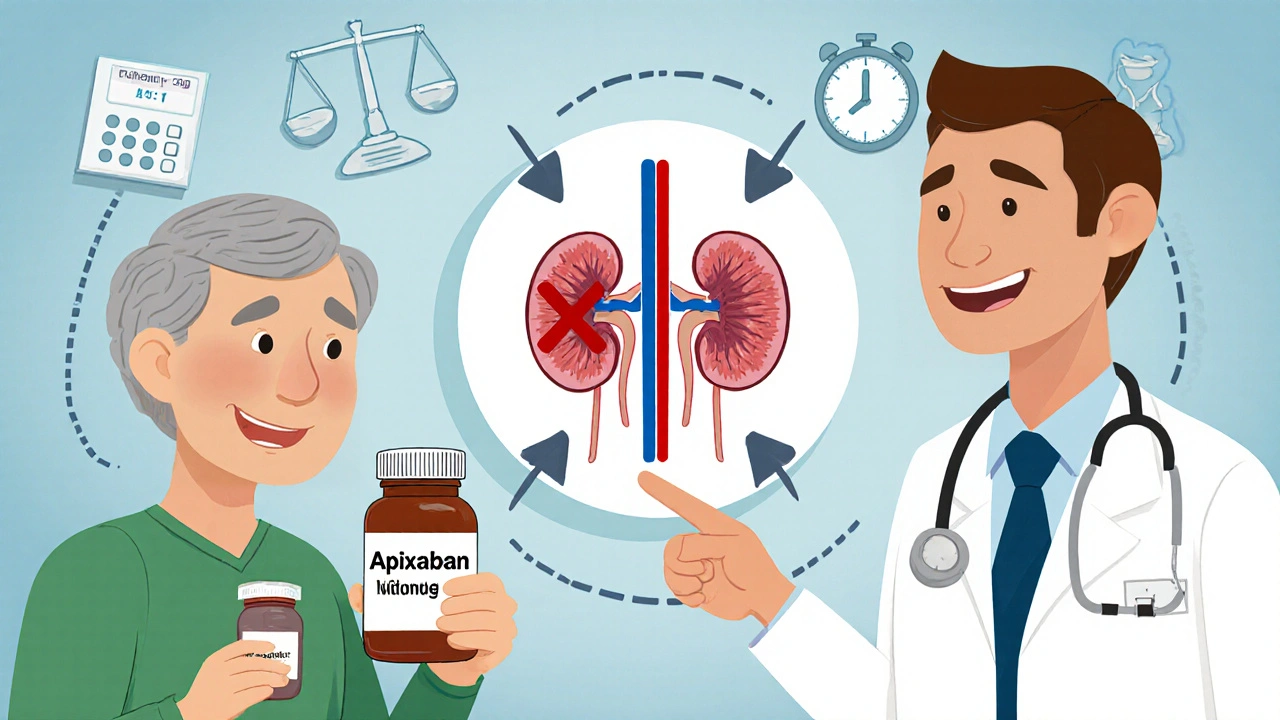
DOACs like apixaban and rivaroxaban require precise dosing in kidney disease to avoid bleeding or clots. Learn how to adjust doses using creatinine clearance and the ABCs rule, and why apixaban is often the safest choice.
read more