When you reach for a cold medicine, you might see phenylephrine, a nasal decongestant used to shrink swollen blood vessels in the nose. Also known as a vasoconstrictor, it’s meant to clear stuffy noses fast—but recent studies show it often doesn’t work as well as older options.
Phenylephrine is the main decongestant in many over-the-counter cold pills, nasal sprays, and sinus remedies. But here’s the catch: a 2023 FDA review found that oral phenylephrine at standard doses (10 mg) doesn’t reduce nasal congestion better than a placebo. That’s because it gets broken down too quickly in the gut before it can reach the nose. Meanwhile, pseudoephedrine, a more effective decongestant once widely available behind the pharmacy counter, still works reliably. It’s not just about what’s on the shelf—it’s about what actually does the job.
Why does this matter? Because millions of people take phenylephrine every day, thinking it’s helping. If you’re still congested after taking it, it’s not you—it’s the drug. And while phenylephrine is generally safe for most people, it can raise blood pressure, speed up your heart, or cause dizziness, especially if you have high blood pressure, heart issues, or take certain antidepressants. medication side effects, like increased heart rate or anxiety, aren’t rare with this ingredient. You don’t need to suffer through a stuffy nose, but you also don’t need to waste money on something that won’t help.
So what should you do? If you’ve been using phenylephrine and it’s not working, check the label. Look for pseudoephedrine instead—it’s often kept behind the counter, but it’s more effective and worth the extra step. If you’re on blood pressure meds or have heart problems, talk to your pharmacist before taking anything with phenylephrine. Even if it’s "over-the-counter," it’s not harmless. And if you’re looking for natural relief, saline sprays, steam, or humidifiers might do more than the pill in your cabinet.
The posts below dive into real-world issues with medications like phenylephrine—why some drugs work better than others, how to spot ineffective ingredients, and what to ask your doctor when your medicine isn’t doing what it promises. You’ll find comparisons, safety tips, and clear explanations about what’s actually helping you—and what’s just filling your medicine cabinet.
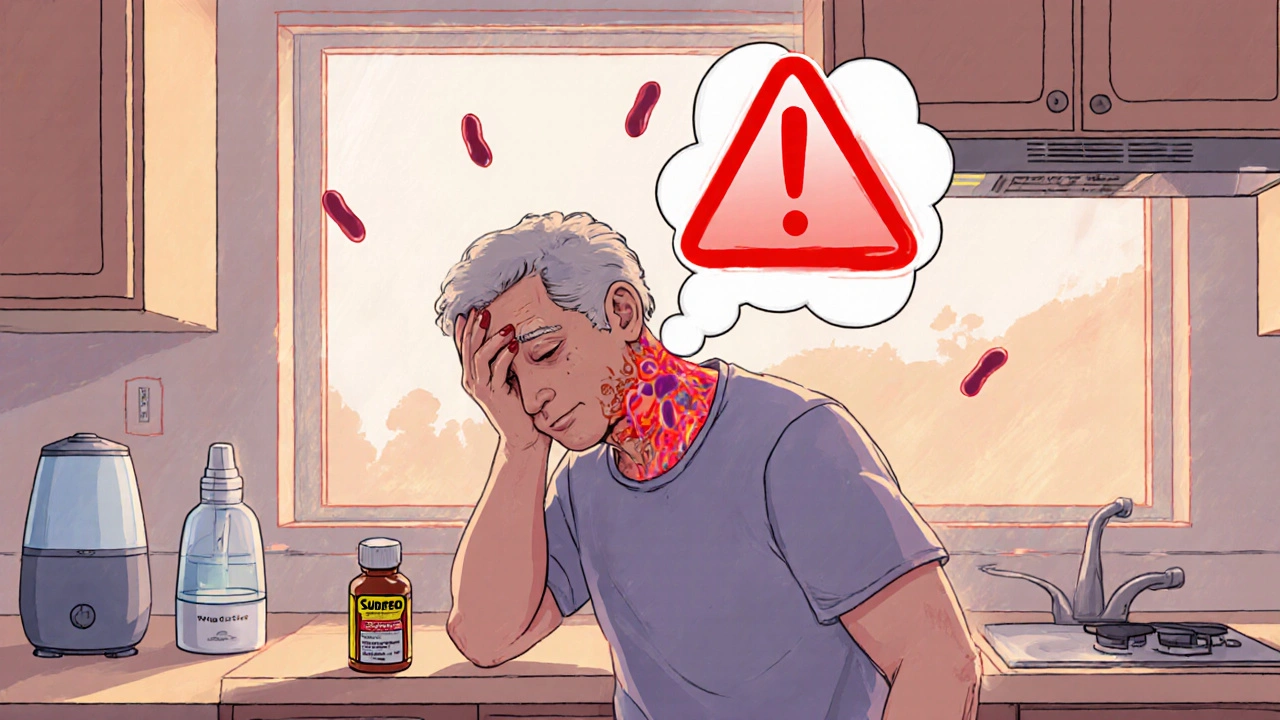
Nasal decongestants can dangerously raise blood pressure when taken with hypertension meds. Learn which ingredients to avoid, safe alternatives, and how to read labels to protect your heart.
read more