When you're immunocompromised, a condition where the immune system doesn't work as it should due to disease, medication, or treatment. Also known as immunodeficient, it means your body has a harder time fighting off infections like COVID-19. That’s why the standard two-dose vaccine schedule often isn’t enough. Studies show people with conditions like organ transplants, active cancer treatment, or advanced HIV don’t always build strong protection after the first shots. Their immune systems just don’t respond the same way as healthy adults.
This isn’t about being weak—it’s about biology. booster doses, additional vaccine shots given after the initial series to strengthen immunity make a real difference here. The CDC recommends extra primary doses for many immunocompromised groups, followed by updated boosters. Timing matters too. If you’re on chemotherapy or biologics, your doctor might suggest scheduling your vaccine between treatment cycles when your immune system has a better chance to react. Some people need three or more doses just to reach basic protection levels.
immune response, the body’s reaction to a vaccine that produces antibodies and memory cells to fight future infection varies widely. One person might develop strong antibodies after three doses; another might still test low. That’s why some doctors check antibody levels, especially before major procedures or travel. But even if your numbers are low, the vaccine still helps reduce severe illness, hospitalization, and death. It’s not all or nothing—it’s about stacking layers of protection.
You’re not alone in this. Millions of people with autoimmune diseases, transplant recipients, and those on immunosuppressants are navigating the same questions. The key is working with your care team—not guessing. Some medications, like rituximab or high-dose steroids, can block vaccine response for months. Knowing when to pause or adjust them around vaccination can change outcomes. And while masks and antiviral pills like Paxlovid are helpful backups, they’re not replacements for a vaccine that’s been tailored to your needs.
The posts below cover real-world advice from people who’ve been through this. You’ll find guides on how to talk to your doctor about timing, what to do if you’re on a transplant waiting list, how to interpret antibody tests, and why some boosters work better than others for your condition. There’s no one-size-fits-all answer, but there are clear steps you can take to get stronger protection. This isn’t about fear—it’s about taking control with the right information.
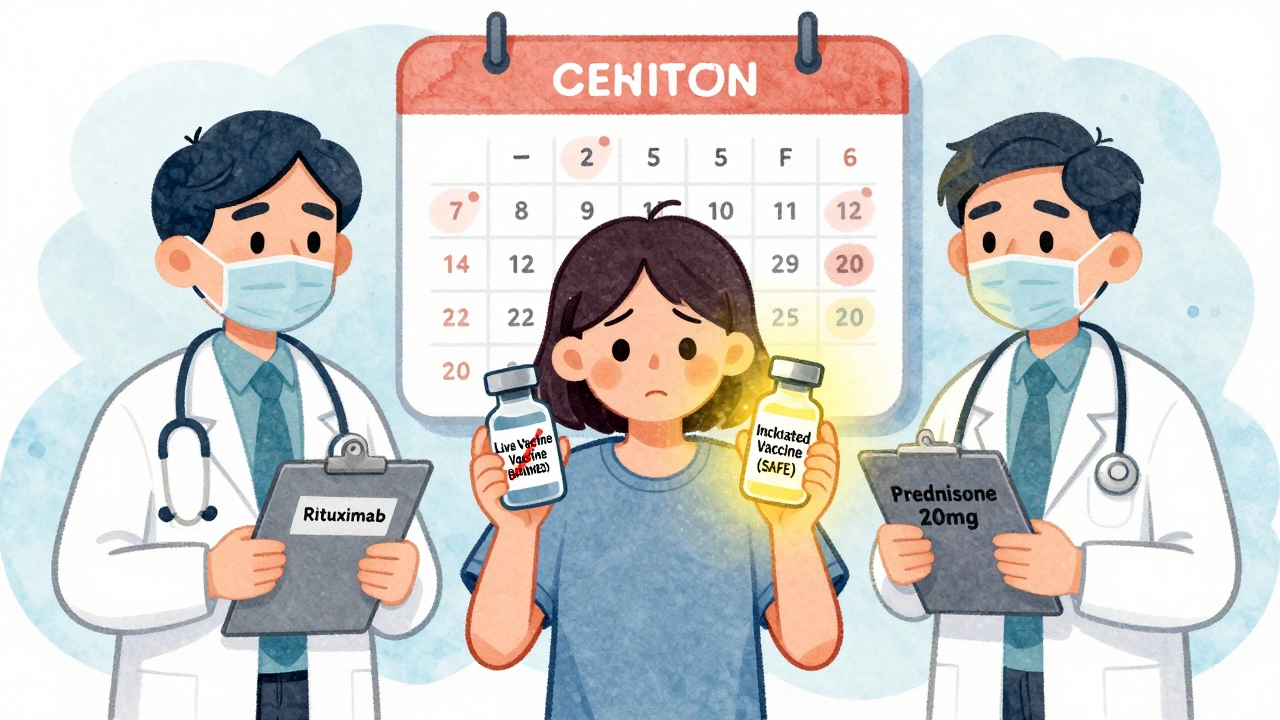
Vaccines for people on immunosuppressants require careful planning. Live vaccines are dangerous; inactivated vaccines are safe but need timing and extra doses. Learn the 2025 guidelines for flu, COVID-19, and more.
read more