
Vaccine Timing Calculator
Getting vaccinated while on immunosuppressants isn’t just a matter of showing up at the clinic. It’s a high-stakes balancing act-protect yourself from dangerous infections without triggering a vaccine-related illness. The rules have changed. In 2025, the inactivated vaccines are your safest bet, but timing, dosage, and even your medication schedule can make or break your protection.
Why Live Vaccines Are Off-Limits
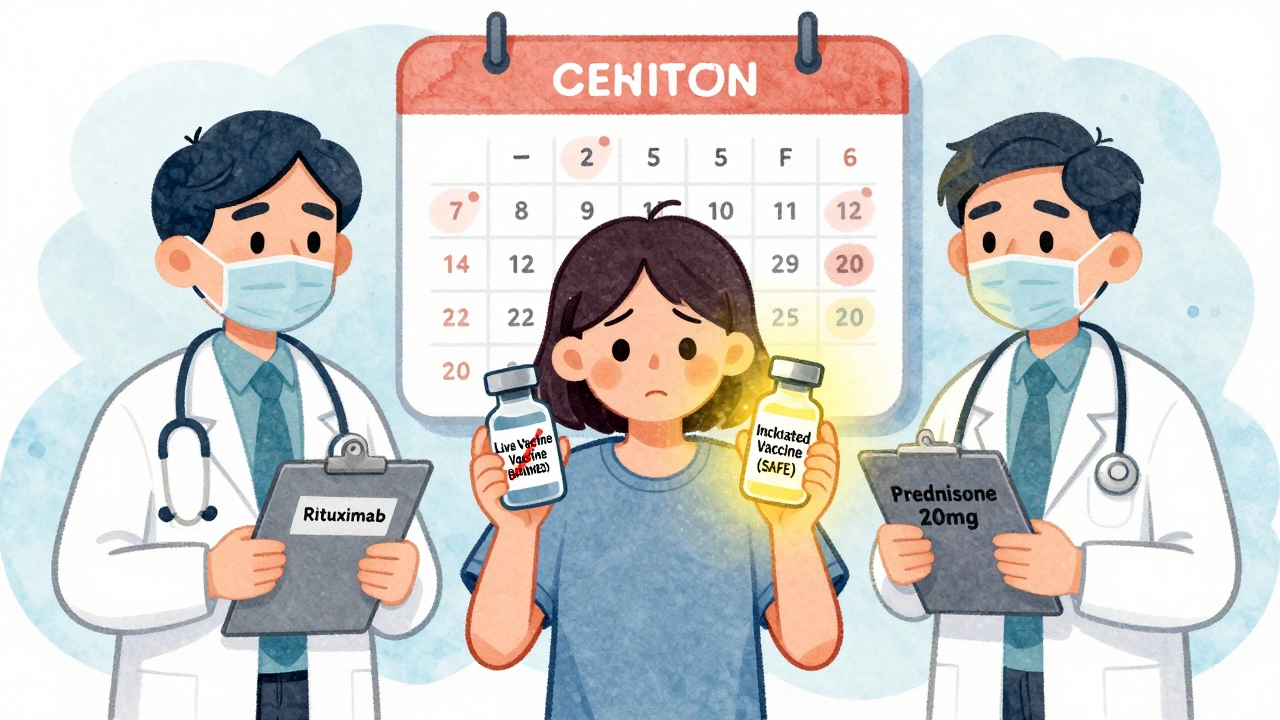
Live vaccines use a weakened version of the virus to trigger immunity. That works great for healthy people. For someone on immunosuppressants, it’s dangerous. Your immune system can’t control even a weakened virus. The result? You could get sick from the vaccine itself.The CDC and IDSA 2025 guidelines list clear contraindications: MMR (measles, mumps, rubella), varicella (chickenpox), and the old Zostavax shingles vaccine are all banned for moderate to severe immunocompromise. Even the nasal spray flu vaccine (LAIV) is off-limits. One patient on Reddit shared how their oncologist accidentally scheduled them for the nasal flu shot while they were on rituximab. They had to cancel-right before the appointment-after their infectious disease specialist stepped in.
There’s one narrow exception: if you’re on low-dose steroids (under 20 mg of prednisone daily) and your doctor specifically approves it, MMR might be considered. But that’s rare. Most people on biologics, chemotherapy, or transplant drugs need to avoid live vaccines entirely.
Inactivated Vaccines Are Safe-But Not Always Effective
This is where things get practical. Inactivated vaccines-like the flu shot, pneumococcal shots, and mRNA COVID-19 vaccines-don’t contain live viruses. They’re safe. But they’re weaker. Your immune system doesn’t respond as strongly. That means you need more doses, and you need them timed right.For the 2025-2026 COVID-19 vaccine, immunocompromised adults need two doses of the updated mRNA formula (Pfizer or Moderna), not just one. If you’ve already had your initial series, you still need those two extra shots. Novavax, the protein-based vaccine, is also an approved alternative. Hepatitis B? You need the full 3-dose series (Engerix-B, Recombivax HB, or Twinrix) or the faster 2-dose Heplisav-B schedule. Pneumococcal protection requires both PCV20 and PPSV23, given at least one year apart.
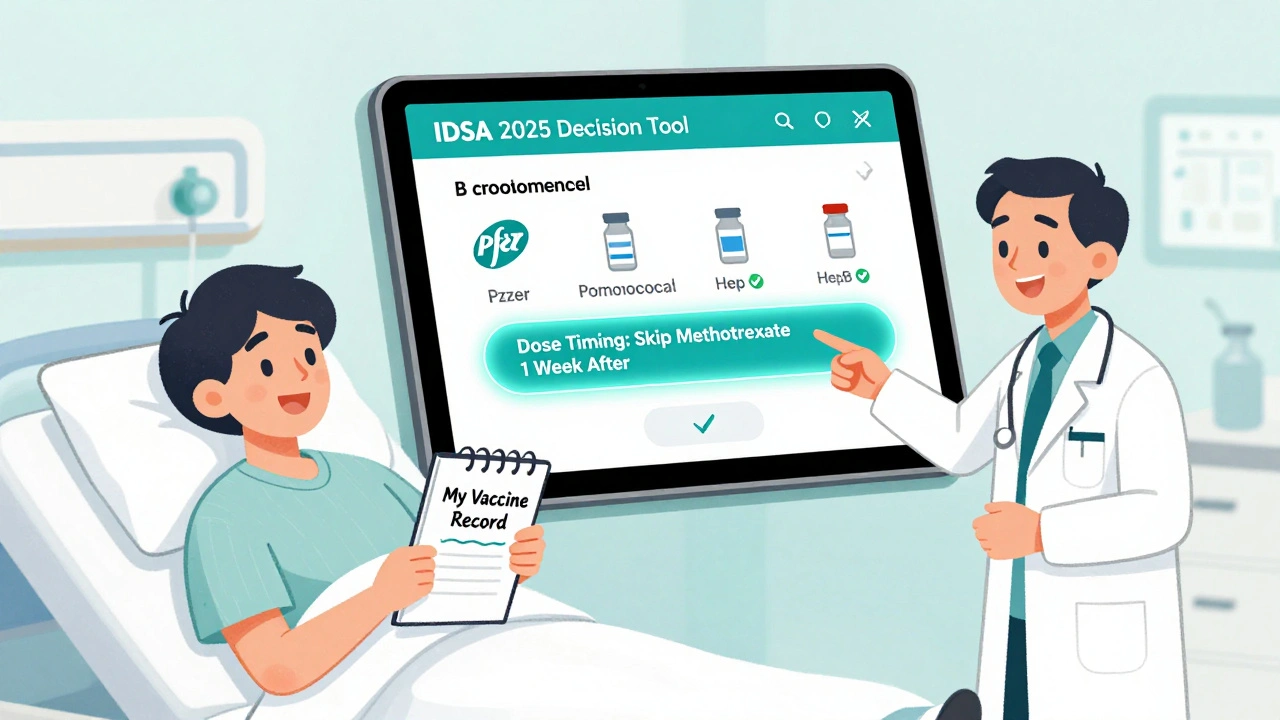
But here’s the catch: studies show antibody responses to mRNA vaccines in immunocompromised patients range from 15% to 85%. That’s a huge gap compared to 90%+ in healthy people. One patient with rheumatoid arthritis on methotrexate reported that skipping their methotrexate for one week after each vaccine dose helped them develop detectable antibodies-something they hadn’t achieved before.
Timing Is Everything
Vaccines don’t work well when your immune system is buried under a pile of drugs. The goal is to vaccinate when your suppression is lowest.If you’re starting immunosuppressants, get all your vaccines at least 14 days before you begin. If you’re already on them, timing depends on your drug:
- Rituximab, ocrelizumab, or other B-cell depleters: Wait at least 6 months after your last dose before vaccinating. The sweet spot? 3 to 6 months post-treatment. If you’re staying on it, get your shot 4 weeks before your next infusion.
- Cyclophosphamide: Schedule your vaccine during the “nadir week”-when your white blood cell count is starting to recover between cycles.
- Corticosteroids (prednisone ≥20 mg/day for 14+ days): Hold off until you’re down to under 20 mg daily. If you can’t reduce the dose, vaccinate anyway-but expect a weaker response.
- Biologics (TNF inhibitors, IL inhibitors): Vaccinate 2 to 4 weeks before your next dose. Don’t wait until the day before.
These aren’t suggestions. They’re evidence-based protocols. A University of Washington study found kidney transplant patients with structured vaccination schedules had 42% fewer breakthrough COVID-19 infections than those with random, uncoordinated shots.
What About Your Household?
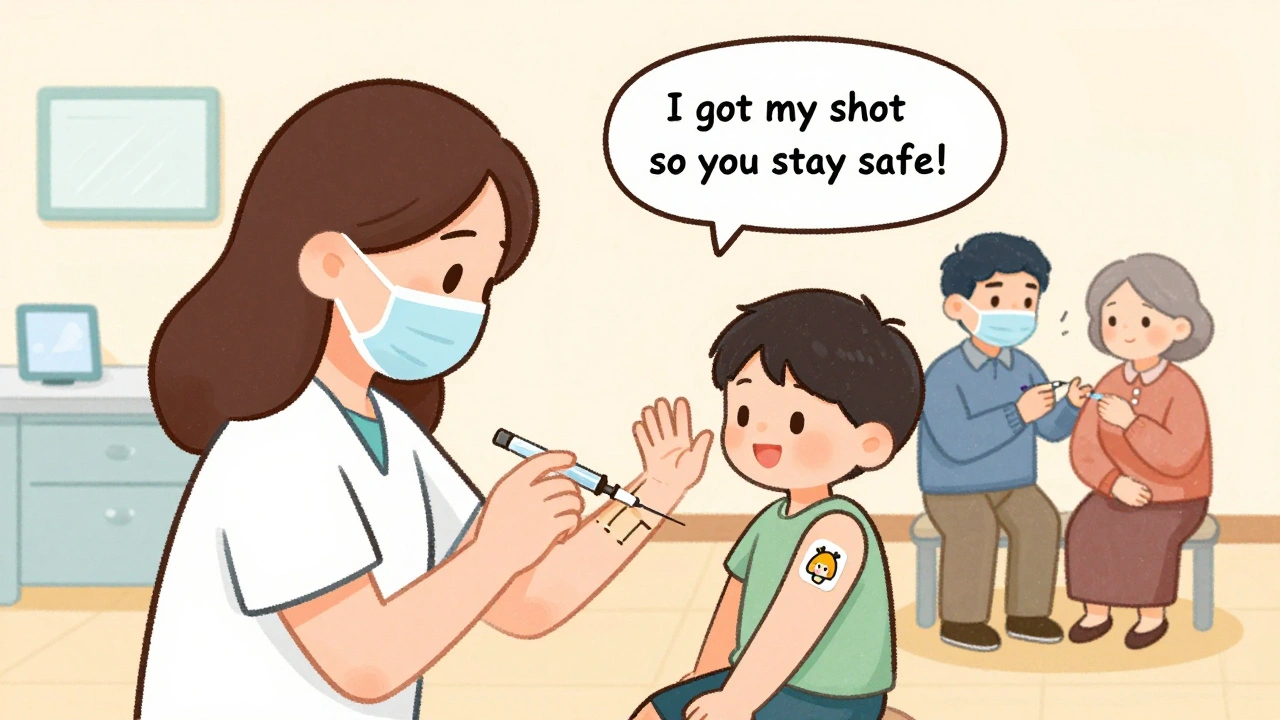
You can’t control your environment. But your family can help. The IDSA guidelines strongly recommend that close contacts-spouses, kids, roommates-get fully vaccinated too. This is called “cocooning.”Household members should be up to date on flu, COVID-19, Tdap, and MMR (if eligible). A 2025 study showed this strategy cut household transmission of respiratory viruses by 57%. If your child gets the nasal flu vaccine, they could unknowingly expose you. That’s why the CDC now advises against live vaccines for anyone living with a severely immunocompromised person.
How to Get the Right Vaccine at the Right Time
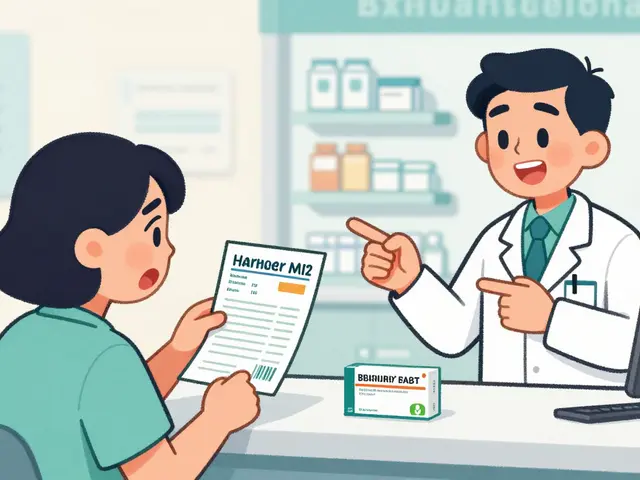
This isn’t something you figure out alone. You need a team.Start with your primary doctor and your specialist (rheumatologist, oncologist, transplant team). Ask them to coordinate with your pharmacist. Many community pharmacies don’t stock the updated COVID-19 vaccines for immunocompromised patients, or they don’t know the dosing rules.
Use the IDSA’s free online decision tool, launched in November 2025. Plug in your condition, your meds, and your last dose date. It spits out a personalized schedule. If your EHR system is updated (Epic rolled out IDSA guidelines in January 2026), your doctor’s system may even flag you automatically.
Don’t rely on walk-in clinics. Call ahead. Ask: “Do you have the 2025-2026 updated mRNA COVID-19 vaccine for immunocompromised patients? And can you confirm the dosing?” If they hesitate, go elsewhere. Specialized clinics like the Immunocompromised Vaccine Access Network (IVAN)-now in 47 locations across 22 states-work directly with oncology centers to give shots during chemo downtimes.
What to Do If You Got the Wrong Vaccine
Mistakes happen. A patient on Inspire.com shared that their pharmacy kept running out of the updated COVID-19 vaccine. They missed their 4-week window before their rituximab dose and ended up unprotected during a winter surge.If you got a live vaccine by accident:
- Call your infectious disease specialist immediately.
- Monitor for fever, rash, or unusual fatigue for up to 3 weeks.
- Don’t panic-most live vaccines given accidentally don’t cause disease, but you need to be watched.
If you got the wrong dose of an inactivated vaccine (e.g., only one dose instead of two), schedule the second one as soon as possible. It’s never too late to catch up.
Insurance, Cost, and Access
Medicare Part D must cover all ACIP-recommended vaccines for immunocompromised people with no out-of-pocket cost through December 31, 2026. Private insurers follow suit. But here’s the problem: some pharmacies still require a prescription for the updated COVID-19 vaccine, even though it’s now an over-the-counter recommendation for this group.Dr. Peter Hotez warned in September 2025 that this creates barriers. If your pharmacy says “no prescription, no shot,” ask them to call your doctor. Or go to a community health center or hospital pharmacy-they’re more likely to have the right stock and protocols.
What’s Coming Next
The future is personalized. The CDC is launching a national registry to track vaccine responses in 5,000 immunocompromised patients. Researchers are testing adjuvanted vaccines-formulas with stronger immune boosters-specifically designed for this group. Phase I trials are already underway at the NIH.Within five years, experts predict point-of-care immune tests will tell your doctor exactly how strong your response is after a shot. That means no more guessing. You’ll get the right number of doses, tailored to your body-not a one-size-fits-all schedule.
Until then, stay informed. Keep a record of every vaccine you get-date, type, lot number, location. Share it with every provider. And never assume your doctor knows the latest rules. Bring the IDSA 2025 guidelines with you. Ask: ‘Based on what I’m taking, what’s the safest and most effective vaccine plan for me?’



Inna Borovik
December 6, 2025 AT 05:56 AMOkay but let’s be real - if your doctor didn’t know MMR was contraindicated on rituximab, they shouldn’t be prescribing it. I’ve seen this happen three times in my oncology unit. Pharmacies don’t train their staff. Clinics don’t update their EHR flags. It’s systemic. The IDSA tool is great, but only if your provider actually uses it. Most still rely on memory or outdated PDFs from 2020.
Jackie Petersen
December 7, 2025 AT 09:26 AMSo what you’re saying is the government wants us to take more shots because Big Pharma pays them? I got my flu shot last year and felt like I had the flu for a week. Coincidence? I think not. And now they want TWO doses? For what? To keep the vaccine industry afloat? My body isn’t a lab rat.
Annie Gardiner
December 8, 2025 AT 14:39 PMIsn’t it kind of poetic that we’re told to vaccinate against viruses while our immune systems are being chemically silenced? Like, we’re being asked to fight a war with one hand tied behind our backs, then blamed when we lose. Maybe the real question isn’t ‘how do we vaccinate better’ - but ‘why are we being forced into this fragile state in the first place?’ I mean, what if the cure is worse than the disease? Not that I’m saying that. Just… thinking out loud.
Rashmi Gupta
December 9, 2025 AT 05:58 AMIndia has different rules. We use live vaccines even for some immunocompromised patients because the risk of actual infection is higher than vaccine risk. You guys overthink everything. We just give the shot and move on. Your healthcare system is too expensive to be this complicated.
Karen Mitchell
December 9, 2025 AT 17:52 PMIt is deeply concerning that the medical establishment continues to promote a one-size-fits-all vaccination protocol for a population that, by definition, cannot be treated uniformly. The lack of individualized immunological assessment prior to administration constitutes a gross negligence of the principle of beneficence. One cannot ethically prescribe a vaccine regimen based on population averages when the patient’s immune status is demonstrably non-normal. This is not medicine. This is algorithmic compliance.
Geraldine Trainer-Cooper
December 11, 2025 AT 04:07 AMtwo doses? really? okay then. i skipped mine. my body knows what it’s doing. if i get sick i get sick. no biggie. stop overmedicating everything.
Kenny Pakade
December 11, 2025 AT 09:29 AMSo now we’re supposed to trust a bunch of bureaucrats in Washington who don’t even know how to fix the VA system but think they know how to vaccinate my aunt with lupus? I’ve got news for you - if you’re immunocompromised, you’re already a target. And the CDC’s ‘guidelines’ are just another way to make you feel like you’re doing something while they take your tax dollars. Wake up.
Katie O'Connell
December 12, 2025 AT 05:17 AMWhile the clinical recommendations presented are methodologically sound and grounded in contemporary immunological literature, one cannot help but observe the structural inequities inherent in their implementation. The logistical burden placed upon the immunocompromised - coordinating with multiple specialists, navigating pharmacy stock shortages, and advocating for access to vaccines not routinely stocked - constitutes a form of medical gaslighting. The onus is placed entirely on the patient, rather than the system. This is not patient-centered care. This is patient burden.
Arjun Deva
December 13, 2025 AT 05:03 AMWait… so the CDC says live vaccines are dangerous… but what if the virus in the vaccine is actually a microchip? And what if the mRNA isn’t just mRNA - what if it’s nano-robots that sync with your DNA? And the ‘updated’ vaccine? That’s just Phase 3 of the global reset. They’re testing it on us because we’re ‘easy targets.’ I’ve got a cousin who works at Pfizer - she says they’re already tracking antibody responses through the injection site. That’s not science. That’s surveillance.
Max Manoles
December 14, 2025 AT 20:53 PMMy sister is on methotrexate and followed the 1-week hold protocol after each mRNA dose. Her antibody titers went from undetectable to 1:1280. That’s not luck. That’s science. I’ve shared her schedule with three other patients. If you’re on immunosuppressants, don’t guess - track. Write down every date, every drug, every shot. Bring it to every appointment. You’re your own best advocate. And yes, it’s exhausting. But it works.
Billy Schimmel
December 16, 2025 AT 05:13 AMlol i got the nasal flu shot last year and didn't even realize it was live until my doc yelled at me. i'm still here. maybe we're all just overreacting? i mean, i didn't die. so... yeah.
Shayne Smith
December 16, 2025 AT 21:25 PMmy rheumatologist just emailed me the IDSA tool link yesterday. took me 10 minutes to plug in my meds. it told me to wait 5 weeks before my next ocrelizumab and get both pneumococcal shots. i printed it. brought it. she said ‘wow, you did your homework.’ i just wish she’d done hers first.