
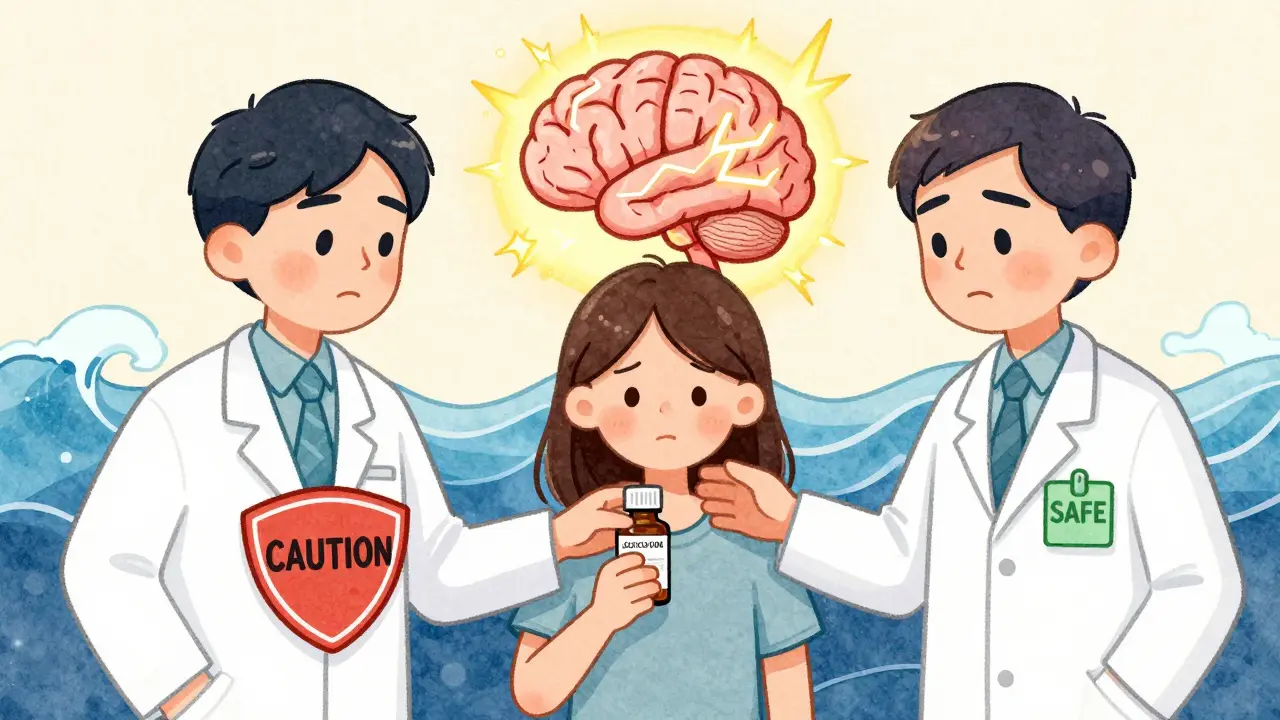
Seizure Risk Calculator for Evening Primrose Oil and Antipsychotics
This calculator estimates your potential seizure risk when taking evening primrose oil (EPO) with antipsychotic medications, based on current medical evidence. Remember, this is not medical advice. Always consult your physician before making changes to your medication regimen.
If you're taking antipsychotic medication and considering evening primrose oil (EPO) for PMS, eczema, or joint pain, you're facing a confusing and potentially dangerous choice. One source tells you it's safe. Another warns it could trigger a seizure. So what's real? And why do experts disagree so strongly?
What Is Evening Primrose Oil?
Evening primrose oil comes from the seeds of the Oenothera biennis plant. It's rich in omega-6 fatty acids-mostly linoleic acid (74%) and gamma-linolenic acid (GLA, 9%). GLA is the part that matters most. Your body turns GLA into prostaglandin E1, which has anti-inflammatory effects. That’s why people use it for conditions like premenstrual syndrome, breast pain, and eczema. It’s not a miracle cure, but for some, it helps.
When taken orally, GLA reaches peak levels in your blood about 2.7 hours after an evening dose, and 4.4 hours if taken in the morning. A standard 500mg capsule delivers roughly 50mg of GLA. Some products go up to 1,300mg per capsule, which means more GLA-and possibly more risk.
The Seizure Controversy: Two Sides of the Same Coin
The debate isn’t new. It started in the early 1980s with a handful of case reports linking EPO to seizures. Since then, two major camps have formed.
On one side, institutions like Mayo Clinic, Walgreens, and Familiprix say: Don’t take it if you have epilepsy or schizophrenia. Their warnings are clear. They cite case reports and mechanistic plausibility-like how EPO might interfere with sodium channels or alter GABA activity. The American Academy of Neurology rates the evidence as Class IV-the lowest level-but still advises caution.
On the other side, Dr. BK Puri from Imperial College London published a 2007 review that turned the whole narrative upside down. He analyzed animal studies and human data and concluded the seizure link is spurious. His research showed that in four different epilepsy models, EPO actually protected against seizures. Why? Because its components-linoleic acid and GLA-block sodium ion currents and reduce synaptic overactivity. Prostaglandin E1, derived from GLA, has documented anticonvulsant properties. Puri’s paper has been cited over 36 times and remains one of the most thorough rebuttals to the fear.
So why the conflict? One side sees a few scary stories. The other sees real science.
How Antipsychotics Fit Into the Picture
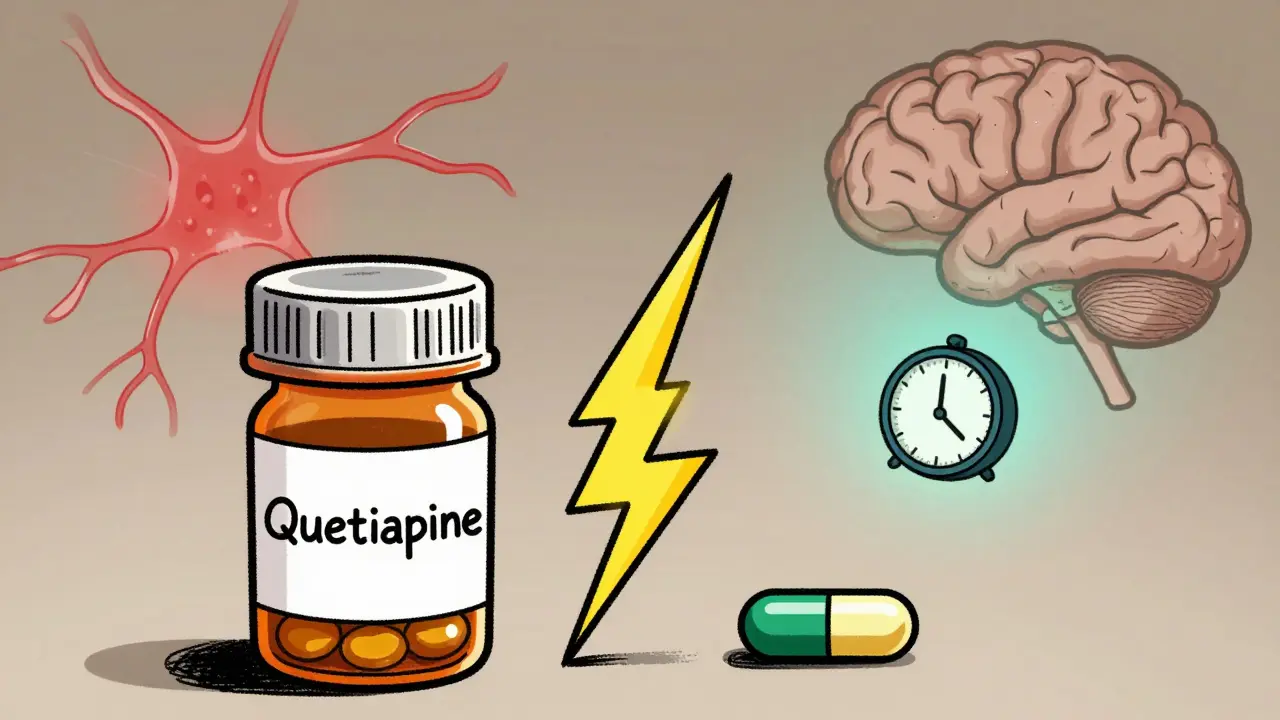
Antipsychotics like quetiapine, chlorpromazine (Largactil), and flupentixol (Fluanxol) already lower the seizure threshold. They make your brain more excitable. Add EPO into the mix, and the risk isn’t just theoretical-it’s documented.
DrugBank (updated April 2025) confirms EPO increases seizure risk when taken with Amifampridine, brexpiprazole, lumateperone, and pimavanserin. Familiprix specifically flags flupentixol and chlorpromazine as high-risk combinations. These aren’t random guesses. They’re based on clinical reports and pharmacological interactions.
One patient on HealthUnlocked reported a spike in seizures after starting EPO while on quetiapine. Another on Drugs.com said she took EPO for two years with no issues. The difference? Dosage, timing, other meds, and individual biology.
What the Data Really Shows
Let’s look at real-world evidence:
- On Reddit’s r/Epilepsy, 57% of 142 respondents said EPO didn’t trigger seizures.
- 15% reported increased seizures-mostly when combining EPO with antipsychotics.
- HealthUnlocked’s 2023 forum had 15 users blaming EPO for worsening seizures, 19 saying no effect, and 9 unsure.
- WebMD’s 1,842 reviews give EPO a 3.2/5 safety rating for neurological conditions.
There’s no clear majority. But the pattern is telling: Most people tolerate EPO fine. A subset-especially those on antipsychotics-do not.
What Do the Guidelines Actually Say?
Here’s the messy truth: There’s no consensus.
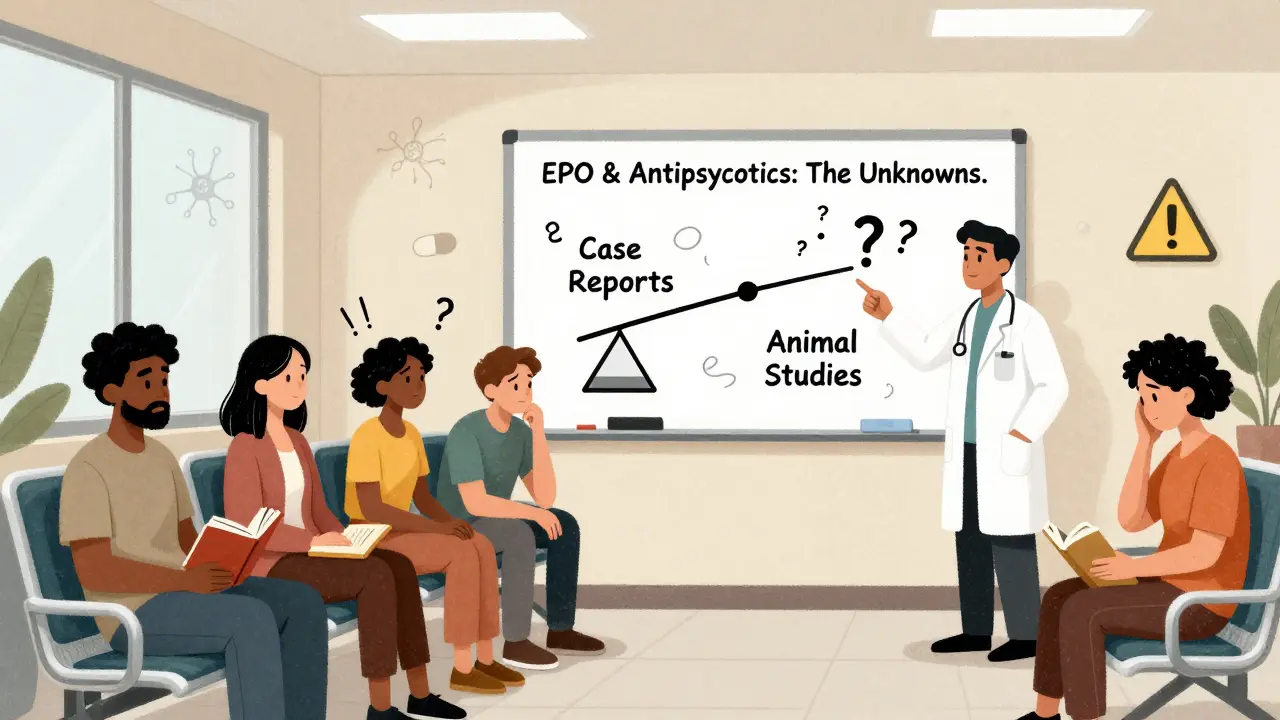
The Epilepsy Foundation says “theoretical concerns” exist but “limited clinical evidence” supports the risk. The European Medicines Agency (March 2024) said current evidence doesn’t prove EPO causes seizures-but more research is needed. The American Epilepsy Society (February 2024) admits “conflicting evidence” and says caution is still warranted.
Meanwhile, a major multicenter study (NCT05678901) launched in January 2024 is tracking 300 epilepsy patients over 18 months to finally settle this. Results won’t be out until late 2025 or early 2026.
What Should You Do?
If you’re on antipsychotics and thinking about EPO:
- Don’t start it on your own. Talk to your psychiatrist or neurologist first. Don’t assume it’s safe just because it’s “natural.”
- Know your meds. If you’re on chlorpromazine, flupentixol, quetiapine, or any newer antipsychotic like brexpiprazole, the risk is higher.
- Check the label. 68% of EPO products now carry epilepsy warnings. But they vary. Some say “may increase seizure risk,” others say “avoid completely.”
- Start low, monitor closely. If your doctor agrees you can try it, begin with a low dose (500mg or less), take it at night, and track your seizure frequency for at least 4 weeks.
- Stop immediately if seizures increase. Even one extra seizure is a red flag.
Some patients with PMS and epilepsy have used EPO for years without issue. Others lost control after adding it to their regimen. There’s no universal answer-only individual risk.
Why This Matters Beyond EPO
This isn’t just about one supplement. It’s about how we handle natural products in medicine. The supplement industry is worth $187.5 million annually. About 15% of users have neurological conditions. And 22% of epilepsy patients take supplements. Yet labeling is inconsistent. Warnings are vague. Doctors aren’t trained to ask about them.
Until large-scale studies are done, we’re left guessing. But one thing is clear: When you’re on antipsychotics, your brain is already on edge. Don’t add unknown variables without a plan.
Can evening primrose oil cause seizures in people without epilepsy?
There’s no strong evidence that EPO causes seizures in people without a pre-existing seizure disorder. The documented risks are almost entirely in those with epilepsy, schizophrenia, or those taking medications that lower the seizure threshold. For someone with no neurological history, EPO is unlikely to trigger a seizure-but it’s still wise to monitor for unusual symptoms.
Is there a safe dose of evening primrose oil if I’m on antipsychotics?
There’s no proven safe dose. Even low doses (500mg) have been linked to seizures in vulnerable individuals. The risk isn’t linear-it’s unpredictable. Most experts recommend avoiding EPO entirely if you’re on antipsychotics. If you insist on trying it, only do so under strict medical supervision with seizure monitoring.
Why do some doctors say EPO is safe while others say it’s dangerous?
It comes down to how they interpret the evidence. Some rely on case reports and mechanistic theory-like how EPO might affect sodium channels. Others, like Dr. Puri, look at controlled animal studies showing protective effects. The 2007 review showed EPO reduced seizures in four epilepsy models. But real-world human data is still sparse. Until large trials finish, doctors will continue to err on opposite sides.
Are there safer alternatives to evening primrose oil for PMS or eczema?
Yes. For PMS, calcium, vitamin B6, and magnesium have stronger evidence and no seizure risk. For eczema, topical emollients, oat baths, and omega-3s from fish oil are better options. Unlike EPO, these don’t interact with antipsychotics or affect brain excitability. Always ask your doctor before switching supplements.
What should I do if I’ve already been taking EPO with antipsychotics?
Don’t stop suddenly if you’re using it for a medical condition-talk to your doctor first. But if you’ve had any unexplained increase in seizures, dizziness, or confusion, stop EPO immediately and schedule a neurological check-up. Keep a log of your symptoms and share it with your prescriber. Even if you feel fine, it’s worth discussing this interaction.




George Vou
March 10, 2026 AT 09:05 AMso like... if you're on antipsychotics and still taking this 'natural' oil, you're basically playing russian roulette with your brain. i don't care if some guy in london says it's 'protective'-case reports don't lie. people SEIZURE. like, actual hospital trips. and now you wanna add it because it 'helps with eczema'? nah. your skin ain't worth your sanity.
Mantooth Lehto
March 11, 2026 AT 03:35 AMOMG I KNEW IT!! 😭 I took EPO for 3 years for my PMS and then BOOM-my psychiatrist said I had 'new-onset focal seizures.' I didn't even know what that meant until they showed me the EEG. Now I'm off everything. No more 'natural remedies.' 🙅♀️🚫
Melba Miller
March 12, 2026 AT 03:07 AMThey say 'natural' like it's some sacred word. Like if it comes from a plant, it's harmless. LOL. You think your grandma’s herbal tea didn’t kill someone? This country’s so dumb. We let people buy seizure triggers like they’re vitamins. I swear, if you’re on antipsychotics, you shouldn’t be allowed to breathe without a prescription. 😤
Katy Shamitz
March 13, 2026 AT 19:03 PMLook. I get it. You want relief. You want to feel better. But 'natural' doesn't mean 'safe.' I've seen too many people think supplements are harmless because they're on Amazon. Spoiler: they're not regulated. If your doctor didn't write it on a script, it's a gamble. And if you're on antipsychotics? You're not just gambling-you're betting your brain. 💔
Nicholas Gama
March 15, 2026 AT 07:40 AMGLA modulates sodium channels? That's not 'mechanistic plausibility'-that's pharmacology 101. The fact that Mayo Clinic warns against it isn't fearmongering-it's basic neuropharmacology. You're not 'fighting the system' by avoiding EPO. You're avoiding a documented interaction. Grow up.
Mary Beth Brook
March 16, 2026 AT 08:56 AMPharmacokinetic interaction profile of GLA with CYP3A4 substrates is undercharacterized. Antipsychotics are primarily metabolized via CYP2D6 and CYP3A4. EPO's fatty acid profile may induce or inhibit enzyme activity. No RCTs exist. Case reports = Class IV evidence. Still, clinical vigilance > theoretical benefit.
Neeti Rustagi
March 17, 2026 AT 10:24 AMDear friends, I understand the desire for natural healing. However, in matters of neurological health, caution must be grounded in science, not anecdote. The evidence, though conflicting, leans toward risk in vulnerable populations. Please consult a qualified neurologist before introducing any supplement. Your well-being matters deeply.
Dan Mayer
March 18, 2026 AT 03:08 AMso like... dr. puri's study was like 17 years ago? and it was on rats?? what if the whole thing is just a placebo effect? i mean, i took EPO for 5 years and never had a seizure... but then again i also believe aliens control the weather. 🤷♂️
Janelle Pearl
March 18, 2026 AT 13:42 PMI just want to say-this is why I hate how we treat mental health. People are scared to ask about supplements because they're told 'just don't do it.' But what if you've tried everything else? What if EPO is the only thing that helps your eczema? We need better guidance-not fear. I'm not saying take it. I'm saying: listen to people. Talk to them. Don't just say 'no.' Be a human.
Ray Foret Jr.
March 19, 2026 AT 16:56 PMhey, i’ve been on quetiapine for 8 years and took EPO for 2. no issues. zero. i even upped to 1300mg. maybe i’m just lucky? or maybe the fear is overblown? 🤔 i’m not saying go wild-but don’t write off everyone who’s fine. we exist too. 💙
Samantha Fierro
March 20, 2026 AT 13:30 PMAs a mental health advocate, I urge all patients on antipsychotics to prioritize communication with their prescriber. The supplement industry is unregulated. Your neurologist is your best ally-not Dr. Google. If you’re considering EPO, document your symptoms, track dosage, and schedule a formal review. Safety isn’t about fear-it’s about informed partnership.
Philip Mattawashish
March 21, 2026 AT 14:09 PMYou think the pharmaceutical companies don't profit from fear? Of course they do. They don't want you taking 'natural' supplements because they can't patent them. Dr. Puri's work was buried. The FDA doesn't regulate supplements because they're too cozy with Big Pharma. Wake up. This isn't about science-it's about control. And you're being manipulated.
Erica Santos
March 21, 2026 AT 21:25 PMOh wow. So the 'evidence' is 'Class IV'? That's like saying 'I think this might be bad' and calling it peer-reviewed. Meanwhile, real science shows GLA reduces synaptic overactivity. But sure, let's keep scaring people with 1980s case reports. I'm sure the FDA is just dying to regulate supplements... said no one ever.
Scott Easterling
March 23, 2026 AT 18:06 PMLook. I'm not a doctor. But I read the internet. And I saw a guy on Reddit say he had 3 seizures in a week after starting EPO. Then he stopped. And poof. No more. So why risk it? I don't need a 2026 study. I need common sense. And common sense says: if it might kill you, don't take it. Duh.