When you hear brand-name drugs, the original versions of medications developed and marketed by pharmaceutical companies under a proprietary name. Also known as innovator drugs, they’re the first to hit the market after years of research and clinical trials. These are the pills you see advertised on TV—like Eliquis, Keytruda, or Viagra—sold under names you recognize, not chemical ones. But here’s the catch: they cost a lot more than their generic versions. Why? Because the company that made them had to pay for everything: the scientists, the labs, the clinical trials, the marketing. That cost gets built into the price.
That’s where patent expiration, the legal end of a drug company’s exclusive right to sell a medication. Also known as patent cliff, it’s when other companies can legally make copies. The U.S. FDA doesn’t require these copycats to repeat all the expensive tests. Instead, they just need to prove they’re bioequivalent, meaning they deliver the same amount of active ingredient into your bloodstream at the same rate as the original. That’s it. No new trials on thousands of patients. No new safety studies. Just chemistry, timing, and absorption. That’s why generics cost 80% less. And when the first generic gets approved, the FDA gives that company 180 days of exclusivity—no other generics allowed yet. That’s when prices really drop.
It’s not magic. It’s law. The Hatch-Waxman Act made this system possible. It balances innovation with access. Big pharma gets time to profit from their breakthrough. Then, the market opens up. Patients win. Insurance wins. But not all brand-name drugs fade away quietly. Some stay expensive because they’re complex to copy—like biologics. Others get extended patents through minor tweaks. And sometimes, the generic version still isn’t available because no company wants to make it—usually because the market is too small or the profit too low.
What you’ll find below are real stories about how this system plays out. From the 2025 patent cliff that will drop $187 billion in drug prices to how switching from a brand-name to a generic can be safe—or risky—if you’re on digoxin or amiodarone. You’ll see how Vastarel, Abilify, and Viagra compare to their cheaper copies. You’ll learn why some people worry about bioequivalence, and why others don’t. This isn’t theory. It’s what’s happening in pharmacies, clinics, and your medicine cabinet right now.
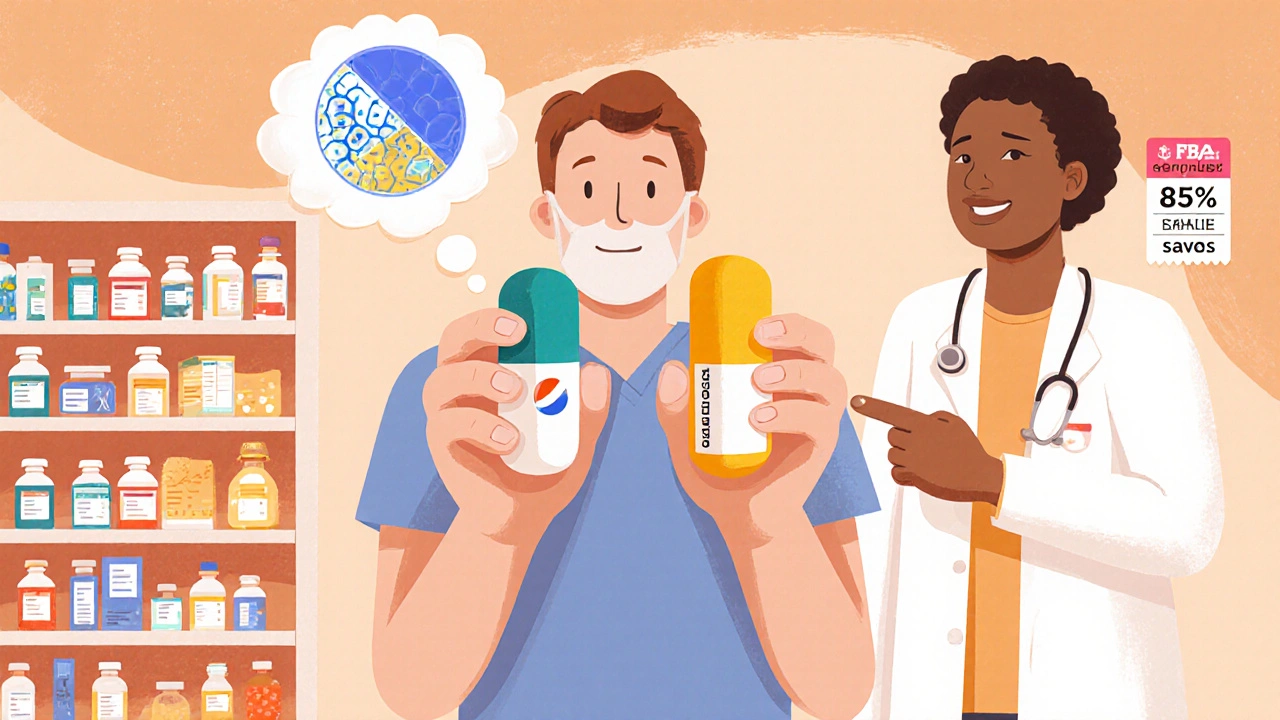
Learn how to talk to your doctor about generic vs. brand-name medications. Discover why generics are just as effective, how much you can save, and when to ask for the brand-name version.
read more