
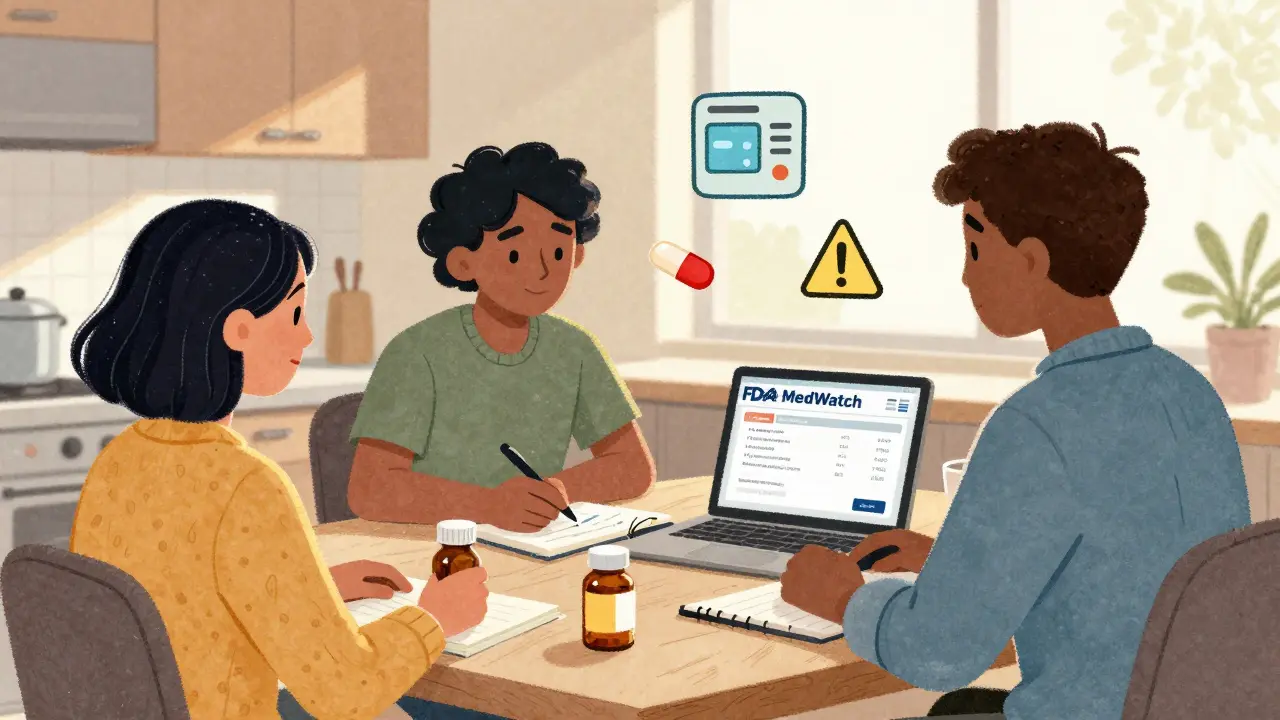
Every year, hundreds of thousands of people in the U.S. experience side effects, product failures, or errors with medications, medical devices, or even dietary supplements. Many of these incidents never make it into official records-because patients don’t know they can report them directly to the FDA. You don’t need to be a doctor, nurse, or pharmacist. If something went wrong with a product you used, you can file a report. And it matters.
What counts as a reportable issue?
You don’t need to be sure it’s serious. If you’re worried, report it. The FDA defines three main types of issues you can report:- Adverse reactions: Unexpected or harmful side effects. This includes everything from a rash after taking a new pill to a heart rhythm problem linked to a device.
- Product quality problems: Pills that look broken, expired, or discolored. A medical device that stops working. A bottle labeled wrong. Contaminated infant formula.
- Therapeutic failure or use errors: A drug didn’t work when it should have. You used a device exactly as instructed, and it failed. Someone gave you the wrong dose because the label was unclear.
Even if you’re not sure whether it’s connected to the product, report it anyway. The FDA doesn’t expect you to be a medical expert. Their job is to look for patterns-when 10, 20, or 100 other people report the same thing, that’s when action starts.
How to file a report: Step by step
There are three ways to report, but the easiest and fastest is online. Here’s how to do it:- Go to the Safety Reporting Portal. Visit www.fda.gov/safety/medwatch and click on the link for the online form. This is the FDA’s official portal for patient reports.
- Fill out the form. You’ll need basic info: your age, sex, and contact details (they keep this private). Then, details about the product: name, manufacturer, lot number, and expiration date. If you don’t know the lot number, write "unknown"-it’s better than skipping it.
- Describe what happened. Be specific. When did the problem start? What were the symptoms? Did you go to the doctor? Did it get better or worse? Include over-the-counter meds or supplements you were taking too. The more detail, the better.
- Submit. You’ll get an email confirmation within 5 business days. Save that email. It’s your receipt.
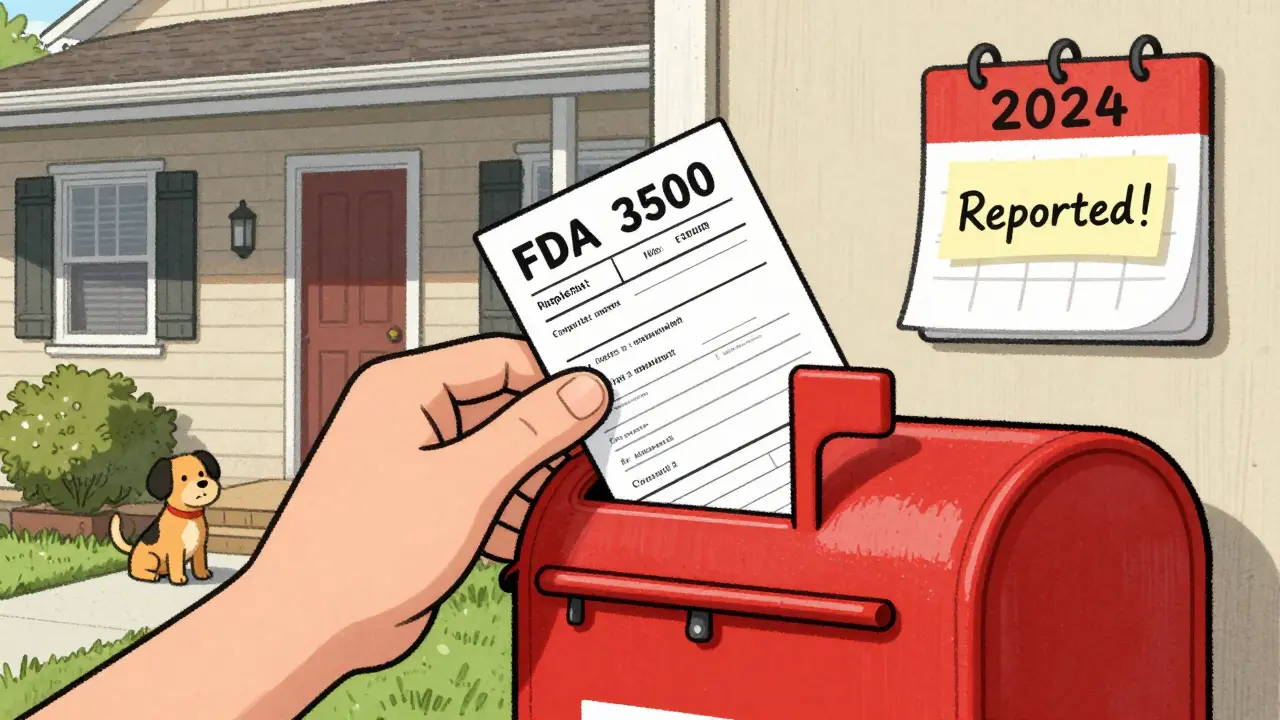
If the portal is down-which it has been frequently since August 2024-you can still report. Download the FDA Form 3500 (PDF) from the same page. Print it, fill it out by hand, and mail it to:
FDA MedWatch
5600 Fishers Lane
Rockville, MD 20852-9787
Or call 1-800-FDA-1088. A representative will take your report over the phone. This is especially helpful if you’re not comfortable typing or if you have trouble describing symptoms.
What you need to gather before reporting
You don’t need medical records. But having these handy makes the process smoother:- The product’s name and manufacturer (check the box or bottle)
- The lot number and expiration date (often printed on the bottom or side)
- The date you started using the product
- The date the problem started
- A list of all other medications or supplements you take
- Any doctor visits or hospital stays related to the issue
Many people struggle with finding lot numbers. A 2024 FDA inspection found only 62% of consumer-packaged products display them clearly. If you can’t find it, write "not visible" or "unknown." Don’t delay reporting just because you’re missing one detail.
Why your report matters-even if you think it’s "just one"
Most people think: "It’s just me. It probably won’t change anything." But here’s the truth: the FDA’s biggest safety discoveries came from patients, not doctors.In early 2024, 287 patients reported that their insulin pens weren’t working properly after being stored at room temperature. Doctors didn’t catch this-patients did. The FDA issued a safety alert. Manufacturers changed labeling. Lives were saved.
A 2023 study in Drug Safety found patient reports included 37% more detail about symptom timing than doctor reports. Why? Because you live with your body. You notice when a pill makes you dizzy at 3 p.m., not just when you go to the clinic.
Even if your report doesn’t trigger an immediate recall, it goes into the FAERS database-a system with over 25 million reports dating back to 1969. When enough people report the same thing, the FDA sees a pattern. That’s how they find rare side effects that clinical trials miss. Trials usually involve 500 to 3,000 people. Real-world use involves millions. Your report helps fill that gap.
What you won’t get: immediate fixes or answers
It’s important to manage expectations. Filing a report doesn’t mean:- The product will be pulled off shelves right away
- You’ll get a call back from the FDA
- Your name will be shared with the manufacturer
The FDA doesn’t investigate every single report. They look for signals-clusters of similar complaints. If you report a reaction and nothing happens, that doesn’t mean your report didn’t matter. It might be sitting in the system, waiting for 10 more people to report the same thing.
Also, don’t expect a medical diagnosis from the FDA. They’re not a clinic. They’re a watchdog. Their job is to track trends, not treat you.
Common problems patients face-and how to avoid them
Based on thousands of reports reviewed in 2024, here are the top mistakes:- Missing product details: 41% of reports left out lot numbers or expiration dates. Always check the packaging.
- Vague symptom descriptions: Saying "I felt bad" isn’t helpful. Write: "I had chest tightness and nausea 2 hours after taking the pill, lasting 4 hours."
- Not reporting because of language barriers: The FDA offers a Spanish version of the form (3500B). But only English and Spanish are available right now. If you need help, call 1-800-FDA-1088-they can connect you to translation services.
- Thinking you need a doctor’s note: You don’t. The FDA accepts patient reports without medical verification.
There’s a new tool called the Patient Reporting Toolkit released in November 2024. It includes a symptom wizard that guides you with simple prompts. Try it. It cut terminology errors by 33% in testing.

Confidentiality: Your identity is protected
You might worry: "What if the drug company finds out I complained?" Under 21 CFR 10.75, the FDA is legally required to keep your name and contact info private. They won’t share it with manufacturers, insurers, or employers. Only in rare cases-like if you give permission or if there’s a legal subpoena-would your identity be released.And yet, a 2024 University of Michigan survey found 68% of patients didn’t know this. You have rights. Use them.
What’s changing in 2025 and beyond
The FDA is upgrading its system. As of January 15, 2025, the Next Generation Safety Reporting System (NGSRS) launched. It now:- Automatically checks lot numbers against databases
- Uses AI to categorize symptoms (so your "headache" gets tagged correctly)
- Reduces processing time from 22 days to 9 days
By 2026, they aim to cut that to just 5 business days. By 2027, they plan to add reporting in five more languages. And by 2028, they’ll merge all six current reporting portals into one.
These changes mean your report will be faster, more accurate, and more likely to be seen.
What you can do right now
1. Check your medicine bottles. Write down the name, lot number, and expiration date. Keep this info in your phone notes. 2. If something went wrong, report it. Don’t wait. Don’t assume someone else already did. 3. Tell others. Share this with friends, family, or support groups. Most people don’t know this exists. 4. Keep your confirmation email. It’s your proof you reported.One report might seem small. But when thousands of patients report the same thing, it changes how drugs and devices are used, labeled, and monitored. You’re not just complaining-you’re helping protect others.
Can I report a problem with a dietary supplement or cosmetic?
Yes. The FDA regulates dietary supplements, cosmetics, and infant formula under the same reporting system. If you had a reaction-like a rash from a cream, vomiting after a protein powder, or illness from baby formula-you can and should report it. These products aren’t tested as rigorously as prescription drugs, so patient reports are especially important.
Do I have to pay to file a report?
No. Filing a report with the FDA is completely free. There are no fees, subscriptions, or hidden charges. Be cautious of third-party websites that ask for payment-only use the official FDA portal or paper form.
What if I reported something and nothing happened? Was it a waste of time?
Not at all. Most safety actions start with just one or two reports. The FDA doesn’t act on single cases-they look for patterns. Your report adds to a database that helps identify trends over time. Even if you never hear back, your report could be the one that triggers a warning months later when 20 other people report the same issue.
Can I report a problem with a device I bought online or from another country?
Yes. The FDA accepts reports on any product used in the U.S., regardless of where it was bought. That includes online purchases, imports, or devices brought from abroad. Just include as much detail as possible about the product’s origin, brand, and where you got it.
Can I report a problem for someone else, like a child or elderly parent?
Absolutely. Caregivers, family members, or friends can file reports on behalf of others. You’ll list yourself as the reporter and the patient as the person affected. The form has fields for both. This is common for parents reporting for children, or adult children reporting for aging parents.
How long does it take for the FDA to act on a report?
There’s no set timeline. Some reports lead to alerts within weeks. Others sit in the system for years until enough similar reports appear. The FDA doesn’t notify you when they act. But if your report contributed to a safety update, you might see it in a public notice on their website.
Is there a deadline to file a report?
There’s no official deadline for patients. Manufacturers and hospitals must report serious events within 15 days, but patients can report anytime-even years later. The sooner you report, the better, but it’s never too late.



Meghan Hammack
January 9, 2026 AT 21:09 PMI filed a report last year after my insulin pump kept shutting off at night. I thought it was just me being paranoid. Turns out, 37 other people had the same issue. FDA sent a notice to the manufacturer. My pump got replaced for free. You don’t have to be loud to make a difference. Just report.
And yes, I still check my lot numbers now. Always.
Thank you for this post. Seriously.
Lindsey Wellmann
January 11, 2026 AT 08:33 AMOMG I JUST REALIZED I’VE BEEN USING A BOTTLE WITH NO LOT NUMBER FOR 6 MONTHS 😭😭😭 I’M SO GUILTY. I’M GOING TO REPORT IT RIGHT NOW. ALSO WHY DOESN’T EVERYONE KNOW THIS??? I’M TELLING MY BOOK CLUB. MY YOGA INSTRUCTOR. MY DOG. 🐶💖 #FDAPOWER #PATIENTVOICE
Ian Long
January 12, 2026 AT 09:42 AMThis is the most important public health info I’ve seen in years. I’ve been pushing my patients to report for a decade. Most don’t know they can. The system’s broken, but this is one of the few things that actually works. Stop waiting for someone else to do it. Do it now. Your life - or someone else’s - could depend on it.
Pooja Kumari
January 12, 2026 AT 09:45 AMLet me tell you something - I live in India and I’ve been using American supplements for my thyroid because they’re cheaper. Last month, I had a panic attack after taking a protein powder labeled 'natural' - turns out it had caffeine and stimulants not listed. I tried to report it but the website wouldn’t load, I called 1-800-FDA-1088 and the lady said 'sorry, we only take English' - I cried for an hour. I had to get my nephew to translate everything. Why is there no Hindi version? Why do we have to fight just to be heard? I’m not asking for pity. I’m asking for equity. And I’m going to keep reporting - every single time - until they fix this. I’m not done.
Also, I’m sending this to every Indian expat group I’m in. We need to wake up.
Angela Stanton
January 13, 2026 AT 02:30 AMLet’s be real - the FDA’s system is a dumpster fire. AI categorization? Reduced processing time? Cute. The FAERS database is a black hole. 87% of reports get buried in noise. I’ve submitted 14 reports. Zero follow-up. Zero acknowledgment. The only reason this works is because of sheer volume - not because the system cares. Don’t get emotional about it. Just submit. Then forget. And if you’re lucky, your report gets paired with 20 others and suddenly - oh look - a warning. Congrats. You’re part of a statistical anomaly.
Also, ‘Patient Reporting Toolkit’? That’s just a fancy form with checkboxes. It doesn’t fix the fact that the FDA still doesn’t have a mobile app. Pathetic.
Johanna Baxter
January 13, 2026 AT 13:19 PMI reported my daughter’s reaction to her ADHD med and nothing happened. So I did it again. And again. Then I posted about it on Facebook. Then I called the manufacturer. Then I emailed my senator. Now they changed the label. So yeah - you’re right. It matters. But only if you fight. Don’t be polite. Be loud. Be annoying. Be the person who won’t shut up. That’s how change happens.
Jerian Lewis
January 15, 2026 AT 00:50 AMWhy is this even a question? Of course you can report. Of course it matters. If you’re not reporting, you’re part of the problem. The system doesn’t work because people assume someone else already did. Spoiler: they didn’t. Stop waiting. Start reporting. Your silence is complicity.
Jenci Spradlin
January 15, 2026 AT 06:19 AMHey, I work in pharma logistics. I’ve seen how lot numbers get printed - sometimes it’s just a tiny dot. I’ve had customers call me crying because they couldn’t find it. Don’t stress. Write 'unknown'. The FDA knows. I’ve seen the forms. They don’t punish you for missing info. They just want the story. Tell them what happened. That’s all. And if you’re not sure if it’s related? Report it anyway. I’ve seen cases where the link was only found after 3 years and 87 reports. Just hit submit. You got this.
Catherine Scutt
January 16, 2026 AT 20:40 PMWhy are you all acting like this is some revolutionary act? People have been reporting for decades. The fact that you’re surprised this exists means you’ve never read the fine print. Also, you’re all so naive. The FDA doesn’t care about you. They care about liability. Your report gets filed, then buried under 10,000 others. The only reason anything changes is when the media catches wind. Don’t report because it’s 'right.' Report because you want a headline. That’s the only thing that moves the needle.
Alicia Hasö
January 17, 2026 AT 13:03 PMHey everyone - I’m a nurse and I’ve helped over 200 patients file reports. I’ve seen the difference this makes. One woman reported a rash from a generic thyroid med. Six months later, the FDA updated the warning label. That woman didn’t know she’d saved someone else’s life. You don’t need to be brave. You just need to be willing to type. I’ve got a free template I’ll share in the comments if you want it. No judgment. No pressure. Just a little help. You’re not alone in this.
tali murah
January 19, 2026 AT 06:23 AMOh wow. Another feel-good PSA. Let me guess - next you’ll tell us to recycle plastic and donate to charity. How noble. How pure. Meanwhile, the FDA still hasn’t fixed the fact that their portal crashes every time someone tries to upload a photo. And you think your little report is going to change anything? Please. The system is designed to make you feel like you’re helping while they quietly ignore 99% of submissions. You’re not a hero. You’re a data point. Enjoy your email confirmation.
Gregory Clayton
January 20, 2026 AT 03:00 AMWhy are we letting the FDA control our health? This is socialism in disguise. If you want to report something, fine. But don’t act like the government is your savior. The real solution? Take back your health. Stop taking pills. Stop using devices. Get off the grid. America is being poisoned by Big Pharma and the FDA is just their PR arm. Report if you want. But don’t believe the hype. Real freedom starts when you stop trusting the system.