
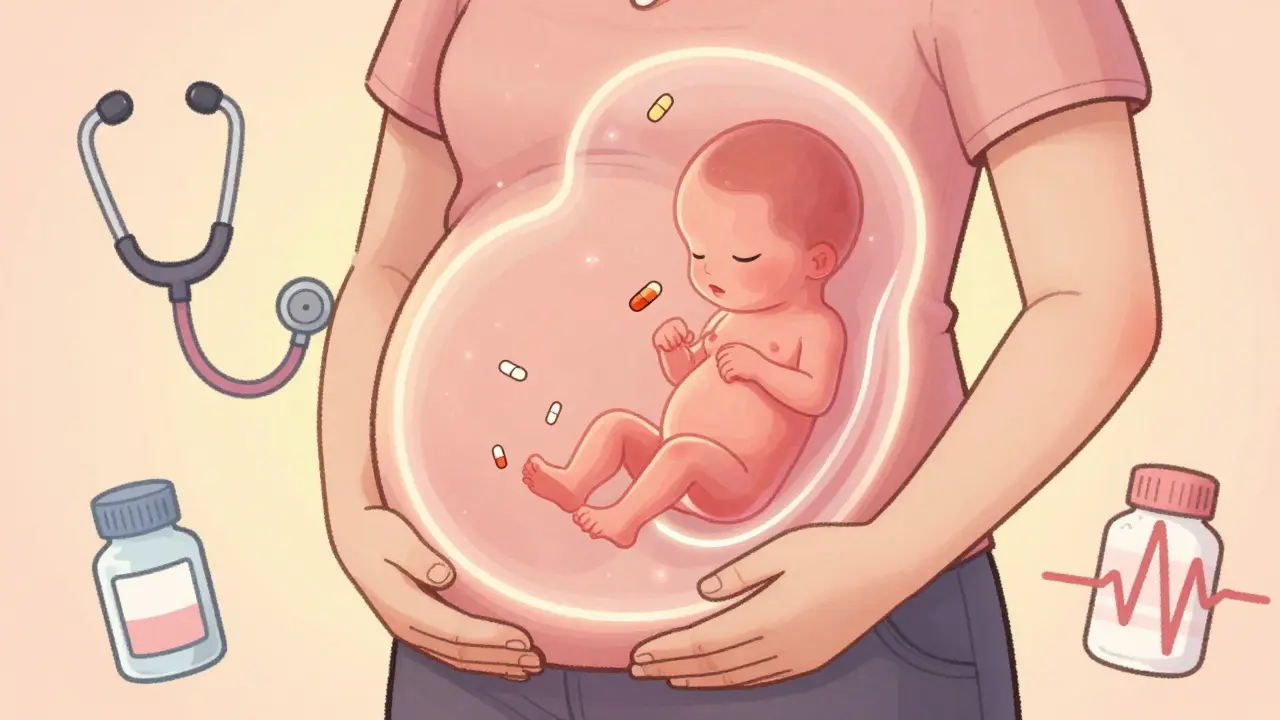
When a pregnant person is using opioids-whether prescribed for pain or misused as part of an addiction-the stakes aren’t just high, they’re life-altering. The baby doesn’t just inherit the drug exposure; they inherit the consequences. That’s why managing opioid use during pregnancy isn’t about judgment. It’s about science, safety, and survival.
What Happens When Opioids Cross the Placenta?
Opioids like oxycodone, hydrocodone, heroin, or even prescription painkillers don’t stay in the mother’s bloodstream. They cross the placenta. The baby’s developing brain gets exposed, and over time, it adapts. That adaptation is what leads to Neonatal Opioid Withdrawal Syndrome (NOWS), once called Neonatal Abstinence Syndrome (NAS). About 50 to 80% of babies born to people using opioids during pregnancy will show signs of withdrawal after birth. Symptoms don’t show up right away. Most appear between 48 and 72 hours after delivery. They include:- High-pitched crying that won’t calm down
- Shaking or tremors
- Feeding problems-poor latch, vomiting, or refusing to eat
- Loose, watery stools (more than three per hour)
- Fast breathing (over 60 breaths per minute)
- Temperature swings-over 37.2°C
- Excessive sweating or skin mottling
Why Withdrawal Isn’t the Answer
Some people think the best way to protect the baby is to stop opioids cold turkey. That’s a dangerous myth. Medically supervised withdrawal during pregnancy increases the risk of miscarriage by 5 to 8%, preterm labor by 25 to 30%, and fetal distress by nearly double compared to staying on medication-assisted treatment (MAT). The CDC and the American College of Obstetricians and Gynecologists (ACOG) both say: Do not stop opioids abruptly. The risks to both mother and baby are too high. Relapse rates after withdrawal are 30 to 40% higher. And when someone relapses, they often use more than before-increasing the chance of overdose, infection, or unsafe environments for the baby. Instead, the standard of care is MAT: medication-assisted treatment. Two drugs are used: methadone and buprenorphine. Both are opioid agonists, meaning they activate the same brain receptors as heroin or painkillers-but in a controlled, stable way. They prevent withdrawal without causing a high. That stability is what keeps the pregnancy on track.Methadone vs. Buprenorphine: What’s the Difference?
Not all MAT is the same. Methadone and buprenorphine work differently, and each has trade-offs. Methadone is taken daily as a liquid. It’s been used for decades. It keeps most mothers in treatment-70 to 80% stick with it after six months. But babies born to mothers on methadone tend to have more severe withdrawal. On average, their hospital stays are nearly five days longer than those on buprenorphine. Their Finnegan NAS scores (a tool doctors use to measure severity) average 14.3, compared to 11.8 for buprenorphine-exposed infants. Buprenorphine is taken as a dissolving tablet or film under the tongue. It’s easier to access and has fewer side effects for the mother. Babies exposed to it have milder withdrawal symptoms and shorter hospital stays-about 12 days on average. But here’s the catch: about 46% of these babies still need medication to manage withdrawal. And in one 2022 study, 92% of buprenorphine-exposed infants showed signs of NOWS. There’s a third option: naltrexone. It’s not an opioid. It blocks opioids from working. In a small but telling study, infants exposed to naltrexone during pregnancy had zero cases of NOWS. Their hospital stays were 3.2 days shorter on average. And 83% of mothers were able to breastfeed successfully. But here’s the problem: naltrexone isn’t for everyone. People on naltrexone in that study started prenatal care at 28.4 weeks-nearly nine weeks later than those on buprenorphine. That delay suggests many women weren’t stable enough to start naltrexone early. It’s not a first-line option, but it’s a promising tool for those who can access it in time.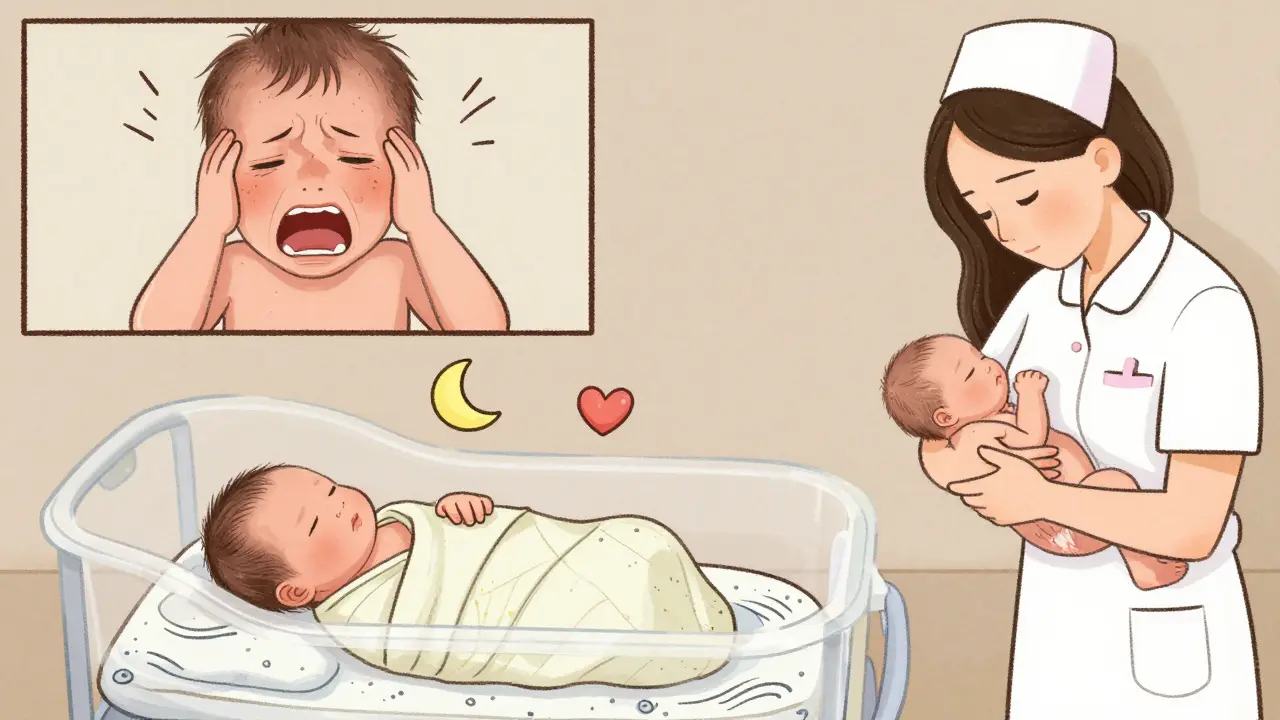
How Babies Are Monitored After Birth
Every baby born to someone using opioids must be watched closely for at least 72 hours. Hospitals use standardized tools like the Finnegan scale or the newer Eat, Sleep, Console method. The Finnegan scale scores symptoms like tremors, irritability, and feeding issues. A score of 8 or higher usually means medication is needed. But it’s subjective. There are 37 different scoring systems used across U.S. hospitals. That inconsistency makes it hard to compare outcomes or know if one hospital is doing better than another. The Eat, Sleep, Console approach is changing that. Instead of scoring every cry or twitch, staff ask three simple questions:- Can the baby eat?
- Can the baby sleep for more than an hour at a time?
- Can the baby be soothed without medication?
What About Breastfeeding?
Breastfeeding is safe-and encouraged-for most mothers on methadone or buprenorphine. The amount of drug that passes into breast milk is tiny. The American Academy of Pediatrics says the benefits outweigh the risks. In fact, breastfeeding can reduce the severity and duration of withdrawal symptoms. Mothers on naltrexone can also breastfeed without issue. In the 2022 study, 83% of them did so successfully. But stigma is real. Many mothers report being told not to breastfeed, even when it’s medically safe. Some nurses assume breastfeeding will worsen withdrawal. That’s not true. If you’re on MAT, ask for a lactation consultant. Don’t let fear stop you from doing what’s best for your baby.The Bigger Picture: Access, Stigma, and Support
Only 45% of U.S. hospitals have standardized protocols for managing opioid use in pregnancy. In rural areas, that number drops to 28%. Many women don’t get care until late in pregnancy-or not at all. The 2020 SUPPORT Act required Medicaid to cover MAT for pregnant women. But only 32 states fully comply. That means access depends on where you live. And then there’s stigma. Over half of mothers in recovery forums report being judged by doctors, nurses, or social workers. One mother on Reddit said, “I felt like a criminal for being pregnant while on medication.” That fear keeps people from seeking help. The best outcomes happen when care is coordinated. That means an OB-GYN, an addiction specialist, a pediatrician, a social worker, and a mental health provider all working together. Many pregnant women with OUD also struggle with depression-over 30% screen positive for moderate to severe depression. Without mental health support, recovery is harder.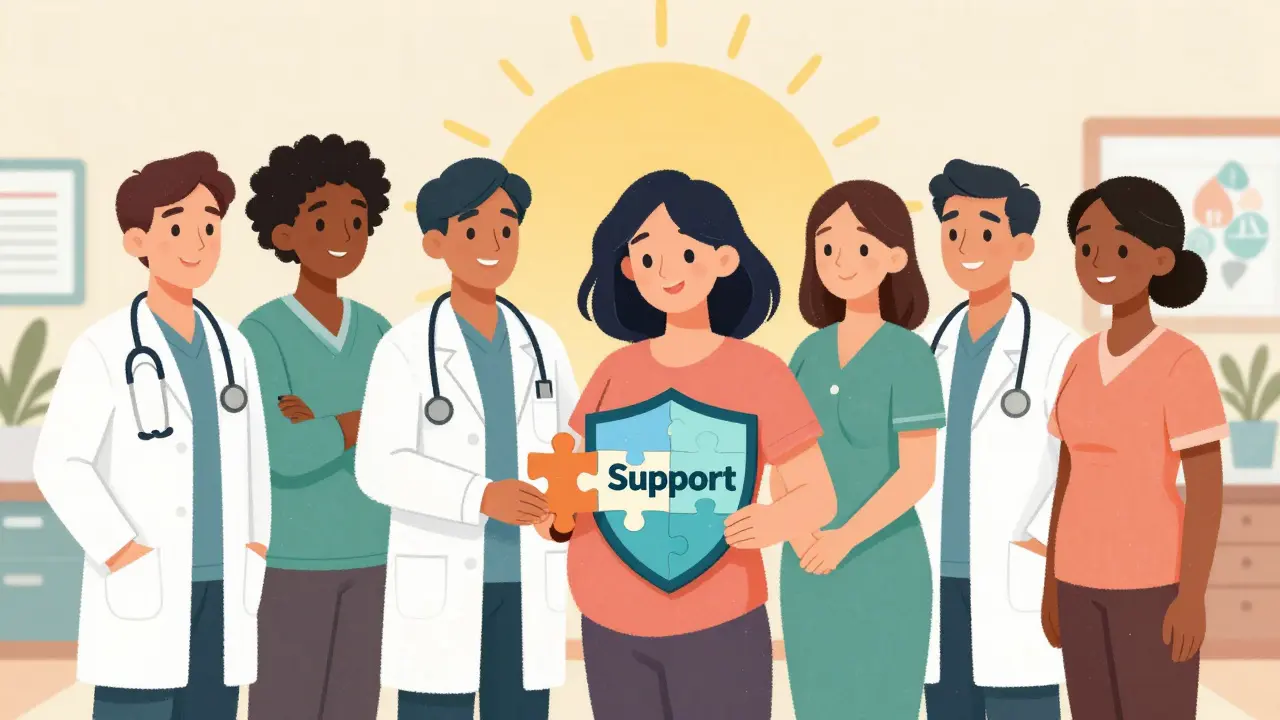
What’s New in 2025?
The FDA approved Brixadi in 2023-a once-weekly injection of buprenorphine designed for pregnancy. Early results show 89% of women stayed in treatment at 24 weeks, compared to 76% on daily pills. That’s huge. Missing a daily dose can mean withdrawal. A weekly shot removes that risk. The American Academy of Pediatrics now recommends at least two hours of non-medication care-skin-to-skin contact, swaddling, quiet rooms-before giving any drugs for withdrawal. And the NIH’s HEALing Communities Study is testing full integration of care in 67 areas. Early data shows a 22% drop in NAS severity when housing, food, mental health, and MAT are all addressed together. Because recovery isn’t just about drugs. It’s about safety. Stability. Support.What You Can Do
If you’re pregnant and using opioids:- Don’t stop on your own. Talk to a provider who specializes in addiction and pregnancy.
- Ask about MAT-methadone, buprenorphine, or naltrexone if you’re eligible.
- Find a hospital that uses the Eat, Sleep, Console method.
- Request a lactation consultant if you plan to breastfeed.
- Ask for mental health screening. Depression and trauma are common-and treatable.
- Screen every pregnant patient for substance use-not just at the first visit, but throughout.
- Know your hospital’s protocol. If you don’t have one, help create one.
- Treat addiction like any other chronic condition. No shame. No judgment.
Frequently Asked Questions
Can I take opioids while pregnant if they’re prescribed by a doctor?
Prescribed opioids for pain during pregnancy carry the same risks as misused ones. They cross the placenta and can lead to neonatal withdrawal. If you need pain management, talk to your provider about non-opioid options first. If opioids are unavoidable, you should be enrolled in a monitoring program and evaluated for MAT to reduce risks to your baby.
Is buprenorphine safer than methadone for my baby?
Buprenorphine is associated with milder withdrawal symptoms and shorter hospital stays for newborns. However, methadone has higher treatment retention rates-meaning mothers are more likely to stay in care long-term. Neither is "better" for everyone. The best choice depends on your medical history, access to care, and personal needs. Both are far safer than continuing to use street opioids or quitting cold turkey.
Will my baby be taken away if I’m on MAT?
Being on medication-assisted treatment is not grounds for child removal. Child Protective Services (CPS) typically only intervenes if there’s evidence of neglect, unsafe home conditions, or failure to follow medical care. MAT is the recommended standard of care. If you’re attending appointments, taking your medication as directed, and engaging with your care team, you’re doing everything right. Document your care and ask for a social worker to help navigate any concerns.
How long does neonatal withdrawal last?
Symptoms usually peak between days 3 and 5 after birth and can last from a few days to several weeks. Babies on medication for withdrawal may be weaned slowly over 10 to 21 days. Non-pharmacological care like skin-to-skin contact, swaddling, and quiet environments can shorten the duration. Some babies, especially those exposed to naltrexone, show no symptoms at all.
Can I breastfeed if I’m on buprenorphine or methadone?
Yes. The amount of medication passed through breast milk is very low and does not harm the baby. In fact, breastfeeding can reduce the severity of withdrawal symptoms. The American Academy of Pediatrics supports breastfeeding for mothers on MAT. If you’re unsure, ask for a lactation consultant who understands addiction medicine.
What if I can’t afford MAT or prenatal care?
The 2020 SUPPORT Act requires Medicaid to cover MAT for pregnant women. Even if you’re not on Medicaid, many clinics offer sliding-scale fees or free care. Contact your state’s maternal health program or call the SAMHSA helpline (1-800-662-HELP). You are not alone. Treatment is available, and no one should be turned away because of cost.


Brooks Beveridge
December 18, 2025 AT 07:31 AMJust wanna say this is the kind of post that reminds me why I still believe in humanity sometimes. Not judging, not shaming-just science, care, and real talk. If you're reading this and scared? You're not alone. Help exists. It's not perfect, but it's there.
And yeah, breastfeeding while on MAT? Do it. Your baby feels your heartbeat more than they feel the meds. Skin-to-skin saves lives, not just stats.
Anu radha
December 19, 2025 AT 05:15 AMso baby get sick after birth if mom use medicine? why not just stop? i dont understand.
Victoria Rogers
December 19, 2025 AT 16:39 PMlol so now we’re giving out free meds to pregnant drug addicts like it’s a Starbucks gift card? Next they’ll be handing out free housing and a baby stroller with a side of sympathy. Wake up America.
And don’t even get me started on naltrexone-sounds like a miracle cure until you realize most of these women don’t show up until week 28 because they’re too busy getting high to care about ultrasounds.
Meghan O'Shaughnessy
December 20, 2025 AT 16:08 PMAs someone who grew up in a rural county where the nearest OB-GYN was 90 minutes away, I’ve seen what happens when care isn’t accessible.
It’s not about ‘bad choices.’ It’s about systems failing people. A woman who can’t get to a clinic because she has no car, no childcare, and no insurance isn’t choosing to endanger her baby-she’s surviving.
And yes, the Eat, Sleep, Console method works. I saw it in action at a rural hospital last year. One baby cried for 48 hours straight. No meds. Just skin-to-skin, quiet room, mom holding him. He went home at 72 hours. No one said a word about ‘failure to thrive.’ They just celebrated.
Kaylee Esdale
December 22, 2025 AT 16:01 PMmy cousin had a baby on buprenorphine. he cried like a banshee for 3 days. then he slept like a rock. no drugs. just wrapped tight and held all day. nurses said he was the calmest newborn they’d seen in months.
stigma is real. i heard a nurse say ‘at least she’s not using heroin’ like that made it okay. no. it made it worse. she was trying. that’s all that matters.
CAROL MUTISO
December 23, 2025 AT 20:28 PMOh wow. A post that doesn’t make me want to scream into a pillow. Who knew?
Let’s be real-naltrexone is the quiet MVP here. Zero NOWS? That’s not a miracle, that’s a wake-up call. Why isn’t this the first-line treatment? Because it requires stability. And stability? That’s a luxury in a system that treats addiction like a moral failing instead of a medical condition.
Also, breastfeeding while on MAT? Please. The amount of drug in breast milk is less than what’s in a baby’s spit. But oh no, let’s panic because ‘it’s opioids.’
Meanwhile, the FDA just approved a weekly shot. That’s not innovation-that’s basic human decency. Why did it take 40 years?
Erik J
December 24, 2025 AT 20:26 PMInteresting data. But I’m curious-how many of the mothers on naltrexone had prior opioid use disorder versus those who were prescribed opioids for chronic pain? The study doesn’t break it down. That’s a big variable.
BETH VON KAUFFMANN
December 26, 2025 AT 17:55 PMLet’s not romanticize this. MAT is not a cure. It’s harm reduction. And harm reduction is just a fancy way of saying ‘we’re not gonna stop them, so we’ll just make it less lethal.’
Also, Finnegan scores are outdated. Of course they’re inconsistent-37 systems? That’s not a protocol, that’s chaos. And the Eat, Sleep, Console method? Cute. But it’s not evidence-based enough to replace clinical scoring. It’s a feel-good Band-Aid.
Martin Spedding
December 26, 2025 AT 22:19 PMlol naltrexone = zero nows? sounds like a lie. or a tiny sample size. also, 92% of buprenorphine babies still had symptoms? so its not safe. just less bad. and who cares about the mom? what about the baby? why are we enabling this?
Donna Packard
December 26, 2025 AT 23:42 PMYou’re not broken. You’re not a bad mom. You’re trying. And that’s enough.
Patrick A. Ck. Trip
December 27, 2025 AT 04:26 AMWhile I appreciate the comprehensive nature of this exposition, I must respectfully posit that the sociopolitical underpinnings of maternal opioid use disorder necessitate a paradigmatic shift in public health policy, particularly with regard to equitable access to medication-assisted treatment across socioeconomic strata and geographic regions. Furthermore, the persistence of stigmatizing vernacular within clinical environments remains a significant impediment to therapeutic engagement. It is imperative that healthcare systems adopt a trauma-informed, biopsychosocial framework to optimize outcomes for both maternal and neonatal populations.