
Caffeine Intake Calculator for Stimulant Users
Your Daily Caffeine Calculator
This tool helps you understand your total daily caffeine intake from stimulant medications and green coffee extract. The American Heart Association recommends keeping caffeine intake below 300 mg/day when taking stimulant medications for safety.
Your Caffeine Intake Report
Risk Assessment
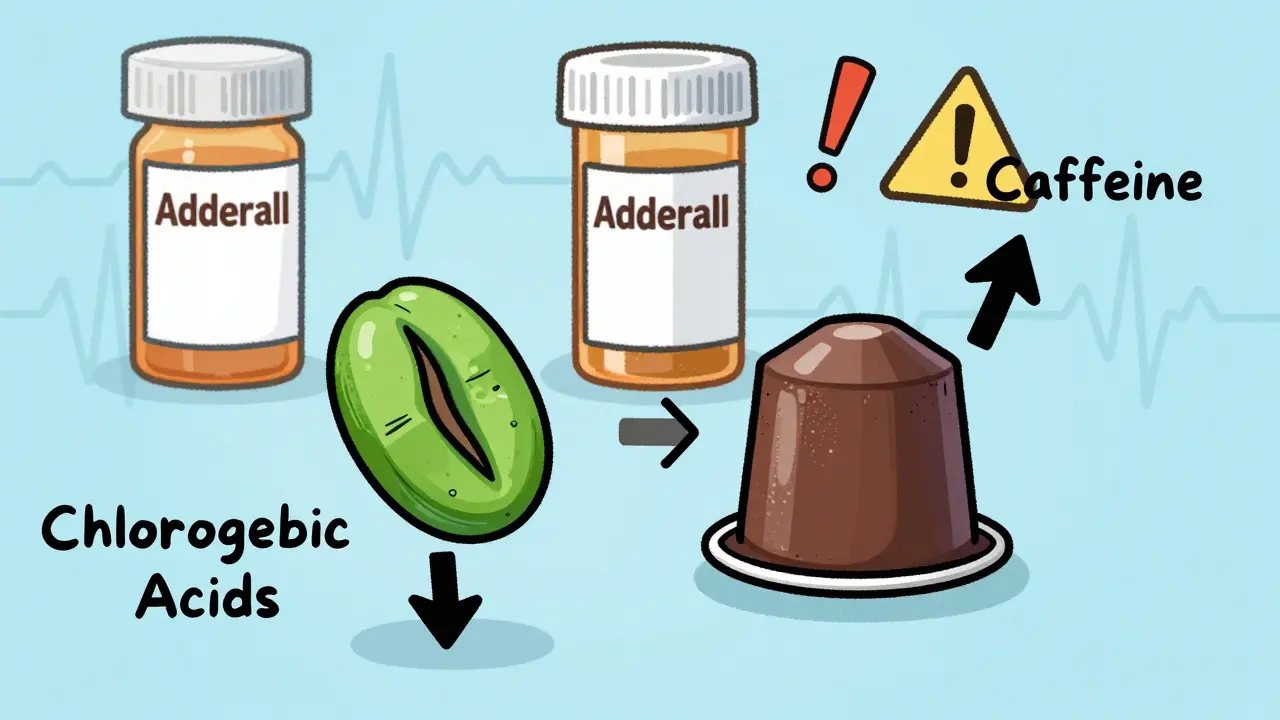
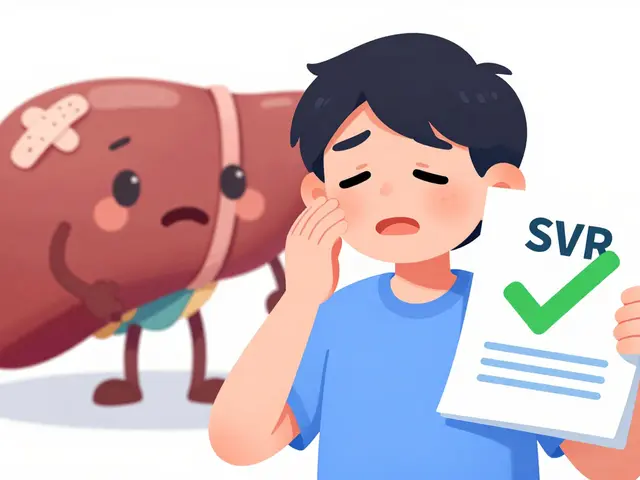
Combining green coffee extract with stimulant medications like Adderall, Vyvanse, or Ritalin isn’t just a harmless supplement habit-it’s a potential recipe for unstable blood pressure. If you’re taking one of these prescription stimulants and thinking about popping a green coffee extract pill for weight loss or energy, you need to understand the real risks. This isn’t speculation. It’s backed by clinical studies, case reports, and growing warnings from cardiologists and pharmacists.
What Exactly Is Green Coffee Extract?
Green coffee extract comes from unroasted coffee beans. Unlike regular coffee, which is roasted and loses much of its natural compounds, green coffee extract keeps high levels of chlorogenic acids and caffeine. Most supplements contain 45-50% chlorogenic acids, with caffeine ranging from 5% to 20%. That means a single capsule could have anywhere from 50 to 200 mg of caffeine-roughly the same as a large cup of coffee or half a can of energy drink.
Chlorogenic acids are what make green coffee extract interesting to researchers. They work by blocking an enzyme called ACE, which helps control blood pressure. Studies show this can lead to a modest but real drop in blood pressure. One 2006 trial with 117 men with mild high blood pressure found that taking 93 mg of green coffee extract lowered systolic pressure by nearly 5 mmHg. At 185 mg, the drop was even bigger-almost 6 mmHg. Diastolic pressure also fell by 3-4 mmHg. No serious side effects were reported at these doses.
But here’s the twist: green coffee extract also contains caffeine. Caffeine usually raises blood pressure. So why does the extract lower it overall? Because chlorogenic acids are stronger than caffeine in this context. At typical supplement doses, the blood pressure-lowering effect wins out. But that balance can shift if you add more stimulants.
How Stimulant Medications Affect Blood Pressure
Stimulant medications for ADHD-methylphenidate and amphetamines-are known to increase blood pressure. The FDA says these drugs can raise systolic pressure by 2-13 mmHg and diastolic by 1-9 mmHg in clinical trials. That might not sound like much, but for someone already on the edge of hypertension, it’s enough to push them into dangerous territory.
The American Heart Association recommends regular blood pressure checks for anyone taking these medications. Why? Because even small, consistent rises can strain the heart and blood vessels over time. Add a daily 30 mg dose of Adderall, and you’re already looking at a 4-13 mmHg systolic bump. Now throw in a green coffee extract supplement with 150 mg of caffeine, and you’re adding another potential 5-10 mmHg spike.
But here’s the real problem: green coffee extract doesn’t just add caffeine. It also has active compounds that lower blood pressure. So now you’ve got two opposing forces working against each other. One side pulls your blood pressure up. The other pulls it down. The result? Unpredictable swings.
The Dangerous Push-Pull Effect
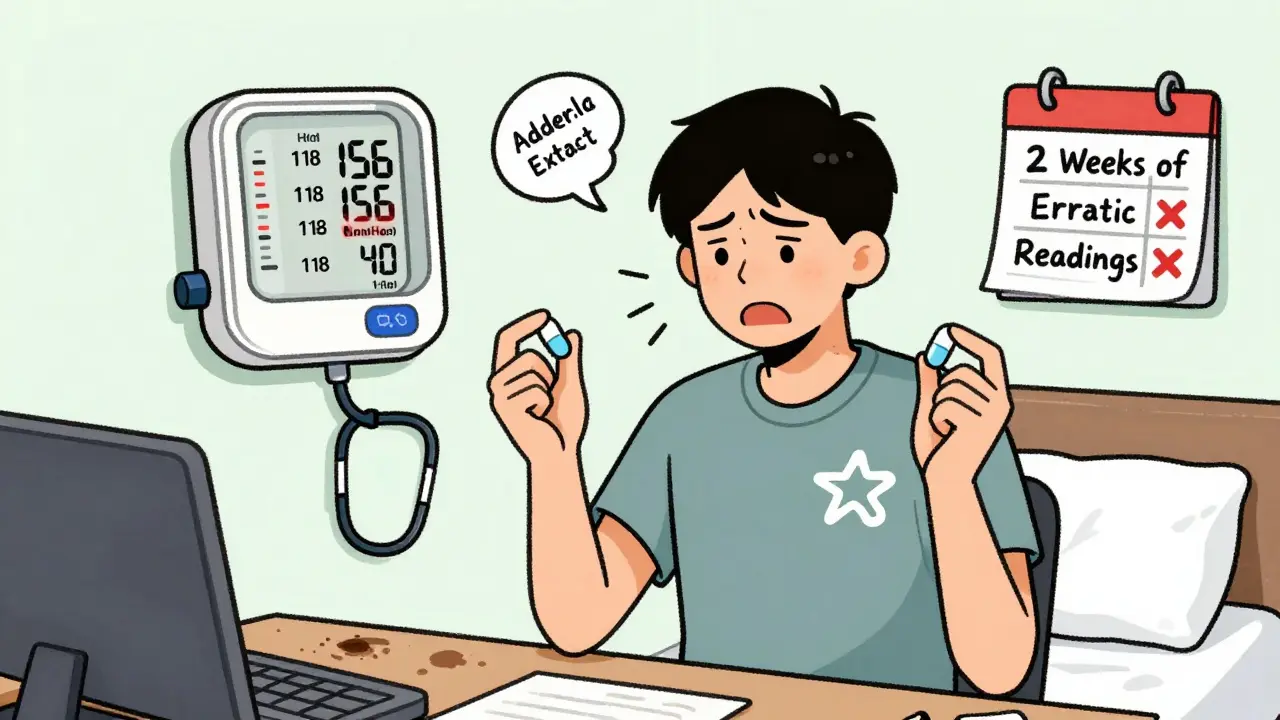
This isn’t theoretical. A case report from August 2021 described a 34-year-old man on Adderall XR 30 mg daily who started taking a green coffee extract supplement with 180 mg of caffeine. Within weeks, his blood pressure became erratic-fluctuating between 118 and 156 mmHg systolic. His doctor had to adjust his Adderall dose and tell him to stop the supplement. His readings stabilized only after he removed the green coffee extract.
That’s not an isolated incident. ConsumerLab’s 2023 safety report flagged 17 blood pressure-related adverse events tied to green coffee extract. Nine of those involved people also taking stimulant medications. On Reddit’s r/ADHD community, users have posted about sudden dizziness, heart palpitations, and wild blood pressure swings after combining Vyvanse or Adderall with green coffee extract. One user said their cardiologist told them to quit the supplement immediately.
Why does this happen? Because the body tries to compensate. If your blood pressure drops too low from chlorogenic acids, your nervous system might overreact by releasing adrenaline. That spike can then crash back down, creating a rollercoaster effect. For someone with ADHD, this can mean worse focus, increased anxiety, or even panic attacks. For someone with heart issues, it could mean arrhythmias or worse.
Supplement Quality Is a Wild Card
Not all green coffee extract is created equal. ConsumerLab tested 15 popular brands in 2023 and found chlorogenic acid levels ranged from 28.7% to 51.3%. Caffeine content varied from 3.2% to 18.7%. That means two bottles labeled the same way could have completely different effects.
One capsule might give you 60 mg of caffeine. Another might give you 190 mg. There’s no standardization. No regulation. You’re guessing. And when you’re combining it with a prescription stimulant, guessing is dangerous.
Pharmacists are catching on. A July 2024 survey of 1,200 pharmacists showed that 68% now routinely ask patients if they’re taking green coffee extract when dispensing stimulant medications. That’s up from just 32% in 2021. The American Pharmacists Association says the combined caffeine load from stimulants and green coffee extract can easily exceed 300 mg per day-the threshold linked to increased heart risk in sensitive people.
What Experts Are Saying
Dr. James Lane from Duke University Medical Center, who’s studied caffeine’s effects on cardiovascular stress for decades, says this combination creates “unpredictable hemodynamic responses.” He warns it can interfere with both the effectiveness of the stimulant and the safety of the patient.
The American Society of Hypertension’s 2022 position paper explicitly warns against mixing blood pressure-altering supplements with prescription meds. They point out that chlorogenic acids don’t just affect caffeine-they interact with ACE inhibitors, beta-blockers, and other heart medications too. If you’re on any kind of blood pressure treatment, adding green coffee extract could make things worse.
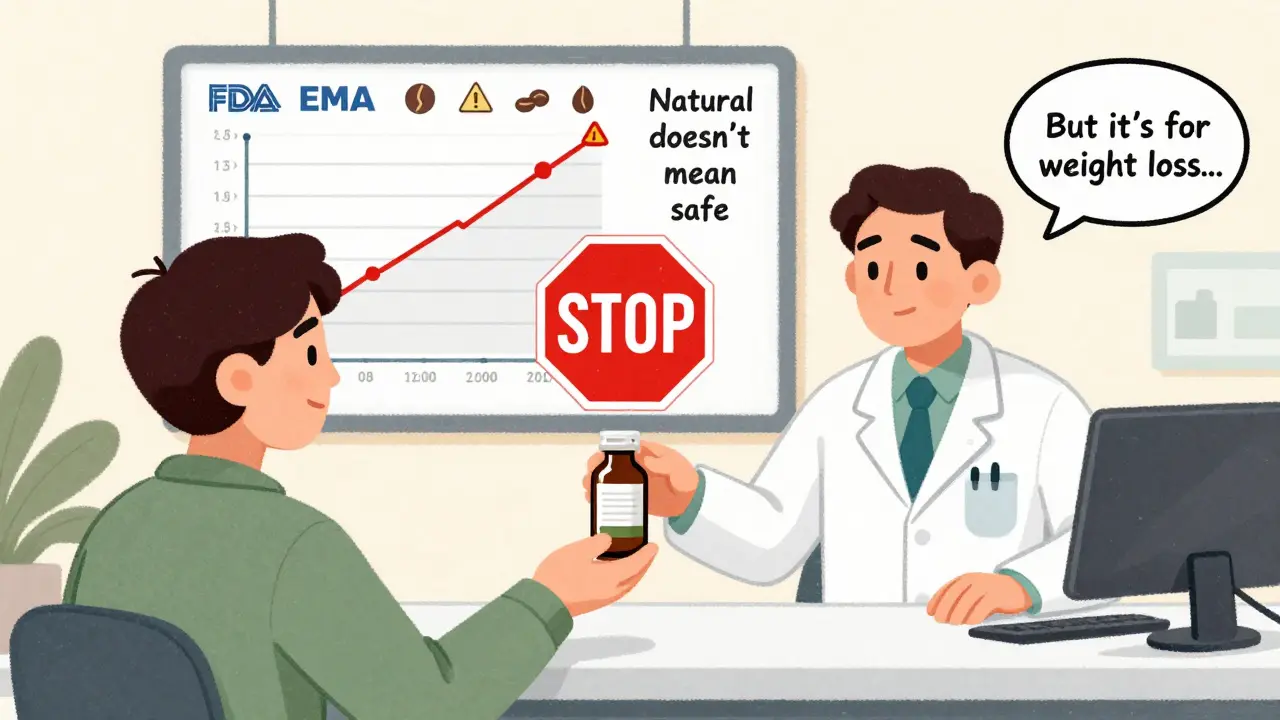
Dr. Christopher V. Granger, co-author of the American Heart Association’s 2022 guidelines on ADHD meds, says he’s seeing more cases of blood pressure lability in patients using multiple caffeine sources. “We’re not just talking about coffee,” he said in a 2023 webinar. “Green coffee extract is sneaky because people think it’s ‘natural’ and safe. It’s not.”
What Should You Do?
If you’re on a stimulant medication for ADHD, the safest choice is to avoid green coffee extract entirely. The risks outweigh any potential benefits. Weight loss claims? The evidence is weak. Energy boost? You’re already getting that from your medication. The added caffeine just piles on the strain.
If you’ve already been taking it, don’t quit cold turkey. Talk to your doctor. Abruptly stopping a supplement with caffeine can cause withdrawal headaches or fatigue. Your doctor can help you taper off safely and monitor your blood pressure during the transition.
For those who insist on using it, the European Society of Cardiology recommends twice-daily blood pressure monitoring for at least two weeks after starting or stopping green coffee extract. Keep readings below 140/90 mmHg. Watch for day-to-day swings larger than 10 mmHg systolic. If you see those, stop the supplement and call your provider.
The American Heart Association’s 2024 update says it plainly: “Patients taking stimulant medications should avoid green coffee extract supplements unless under direct medical supervision with appropriate blood pressure monitoring.”
The Bigger Picture
This isn’t just about green coffee extract. It’s about how we treat supplements. People assume “natural” means “safe.” But natural doesn’t mean harmless. Coffee beans are natural. So are foxglove and poison ivy. The dose, the combination, and your individual biology matter.
The FDA and European Medicines Agency are taking notice. The FDA added green coffee extract to its 2023 draft guidance on supplement-drug interactions. The EMA added a specific warning to its herbal medicines database in February 2024. Regulatory agencies aren’t acting on rumors-they’re responding to real data.
Meanwhile, a major clinical trial (NCT05678901) is underway to study the exact interaction between methylphenidate and standardized green coffee extract. Results are expected in early 2026. Until then, the safest answer is simple: don’t mix them.
If you’re looking for energy without the risk, try better sleep, regular movement, and hydration. If you need help managing ADHD symptoms, talk to your doctor about adjusting your medication-not adding unregulated supplements.
Can green coffee extract lower blood pressure?
Yes, studies show green coffee extract can modestly lower blood pressure, primarily due to chlorogenic acids that inhibit ACE activity. A 2006 trial found systolic pressure dropped by 4.7-5.6 mmHg with daily doses of 93-185 mg. But this effect is dose-dependent and varies by product quality.
Does green coffee extract contain caffeine?
Yes, green coffee extract contains caffeine, typically between 5% and 20% of the total weight. That means a single capsule can deliver 50-200 mg of caffeine-similar to a large cup of coffee. This caffeine content is a major reason why combining it with stimulant medications is risky.
Is it safe to take green coffee extract with Adderall or Vyvanse?
No, it’s not considered safe. Combining green coffee extract with stimulant medications can cause unpredictable blood pressure swings-sometimes too high, sometimes too low. Case reports and expert guidelines warn against this combination due to risks of heart palpitations, dizziness, and medication instability. Most doctors recommend avoiding it entirely.
How much caffeine is too much when on stimulant meds?
There’s no universal number, but experts warn that combined caffeine intake from stimulants and supplements exceeding 300 mg per day increases cardiovascular risk. Adderall or Vyvanse can contribute 10-30 mg of caffeine equivalent, and green coffee extract can add another 50-200 mg. When you add coffee, tea, or energy drinks, you can easily hit unsafe levels.
What should I do if I’m already taking both?
Don’t stop abruptly. Talk to your doctor. They may recommend gradually reducing the green coffee extract while monitoring your blood pressure twice daily for two weeks. Keep a log of your readings and any symptoms like dizziness or heart racing. Your provider can help adjust your stimulant dose if needed and find safer alternatives for energy or weight management.



Dan Mack
January 14, 2026 AT 19:51 PMThey're hiding the truth again. Green coffee extract is a natural blood pressure stabilizer. The FDA and Big Pharma are scared because people are waking up. They want you dependent on Adderall and overpriced pills. This whole thing is a cover-up. I've been taking it for years with my Vyvanse. No issues. They just don't want you to know you don't need them.
Gloria Montero Puertas
January 16, 2026 AT 18:42 PMI’m sorry, but this is exactly why I refuse to take anything that isn’t peer-reviewed, double-blind, placebo-controlled, and published in The Lancet… Honestly, if you’re supplementing with green coffee extract while on stimulants, you’re not managing your ADHD-you’re just self-sabotaging with botanical chaos. And don’t even get me started on the lack of standardization. It’s not ‘natural,’ it’s pharmacologically negligent.
Mike Berrange
January 18, 2026 AT 15:15 PMI took green coffee extract for three weeks while on Adderall. Started having panic attacks at 3pm every day. My BP spiked to 160/100. Went to my doc, he asked if I was taking anything else. I said yes, the ‘natural energy boost.’ He looked at me like I’d just admitted to feeding my dog cocaine. I stopped it. BP normalized in 48 hours. Don’t be the guy who thinks ‘natural’ means ‘safe.’
Nicholas Urmaza
January 18, 2026 AT 23:08 PMIf you’re serious about your health you’ll avoid this combo entirely. No excuses. No ‘but I’m only taking one pill.’ The science is clear. Your heart doesn’t care if it’s ‘natural’ or ‘prescription.’ It just reacts. Monitor your numbers. Stop the supplement. Focus on sleep, hydration, and movement. Your brain will thank you more than any extract ever could.
Sarah Mailloux
January 19, 2026 AT 04:17 AMI used to take this stuff too. Thought it was helping my focus. Turns out it was just making me jittery and anxious. My doctor said the same thing-don’t mix. I switched to green tea instead. Lower caffeine, no crazy swings. Honestly, the energy boost from the supplement was fake. Real energy comes from rest, not chemicals.
Nilesh Khedekar
January 20, 2026 AT 15:57 PMIn India, we’ve been drinking unroasted coffee for centuries. No one dies. No one has ‘blood pressure swings.’ But here? You take one capsule and suddenly you’re a medical emergency? Maybe the problem isn’t the extract. Maybe it’s the 300mg of Adderall you’re taking and the 12 energy drinks you’re chugging on top of it. Stop blaming the plant. Look in the mirror.
Jami Reynolds
January 21, 2026 AT 09:05 AMI’ve been tracking supplement-drug interactions since 2019. This isn’t a rumor. The FDA’s draft guidance isn’t a joke. There are 17 documented cases of hypertensive crises tied to green coffee extract + stimulants. The fact that people still think this is ‘safe’ because it’s ‘natural’ is terrifying. You’re not a pioneer. You’re a statistic waiting to happen.
RUTH DE OLIVEIRA ALVES
January 22, 2026 AT 03:48 AMThe American Heart Association’s 2024 update is unequivocal: avoid green coffee extract if you are taking stimulant medications. This is not a suggestion. It is a clinical guideline based on empirical evidence, longitudinal data, and peer-reviewed case studies. The phrase ‘unless under direct medical supervision’ is not a loophole-it is a safeguard. Please do not treat your cardiovascular system as an experimental variable.
Crystel Ann
January 22, 2026 AT 18:38 PMI’ve been on Adderall for 12 years. I tried green coffee extract once. Felt like my heart was trying to escape my chest. Stopped immediately. Didn’t need to be a doctor to know something was wrong. Sometimes the body just tells you. Listen to it.
Nat Young
January 24, 2026 AT 05:12 AMYou’re all missing the point. The real issue isn’t the extract or the stimulant. It’s that we’ve turned medication into a lifestyle accessory. You don’t need caffeine to ‘boost’ your focus. You need to address why you’re exhausted. Why you’re overwhelmed. Why you’re looking for a pill to fix a life that’s out of balance. The supplement is a symptom, not the cause. Fix the system. Not the capsule.