
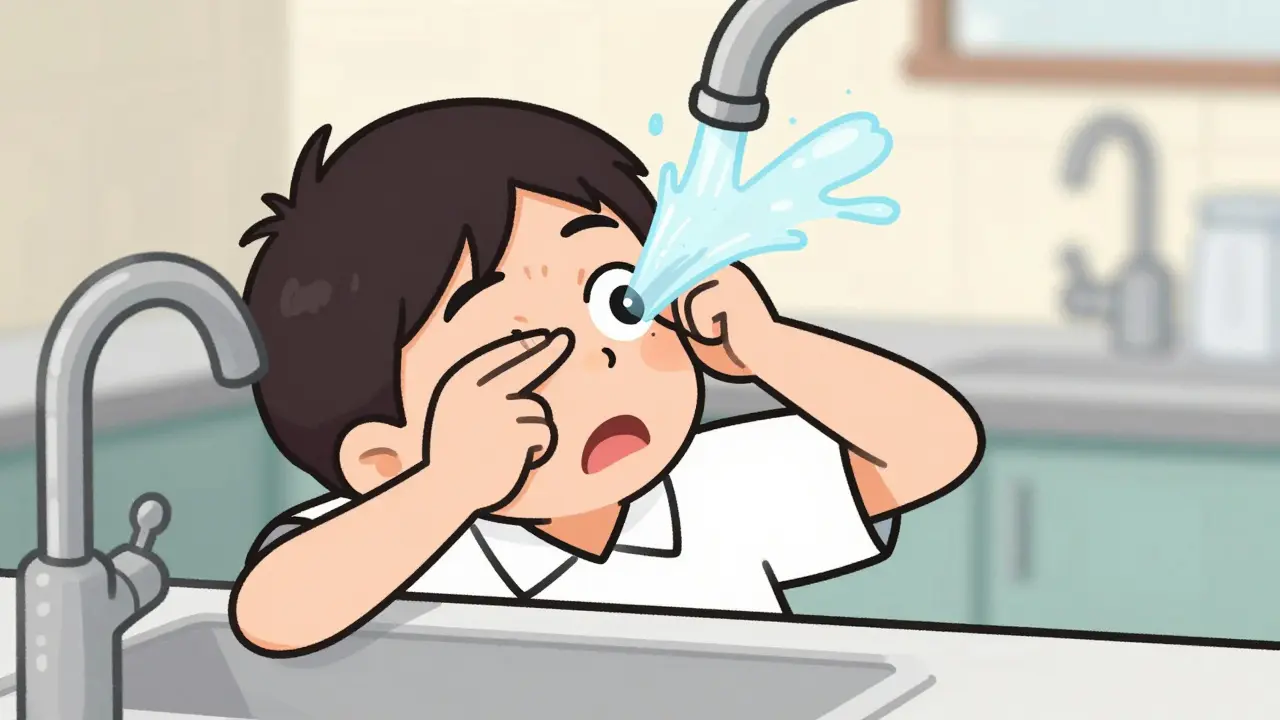
You have exactly ten seconds. That is the window where your reaction determines whether you keep your sight or face permanent damage. A chemical splash into the eye is not a minor inconvenience; it is a medical emergency that attacks the cornea and conjunctiva within moments. Most people freeze, panic, or make the mistake of rubbing their eyes. These reactions turn a treatable injury into a catastrophe. Knowing the precise steps to take immediately can reduce the risk of permanent vision loss by up to 76%, according to a 2017 meta-analysis in the British Journal of Ophthalmology.
The goal of this guide is simple: give you the exact protocol to follow when chemicals hit the eye. We will cover what to do right now, how long to flush, and common mistakes that worsen the injury. This information draws from current standards set by the American National Standards Institute (ANSI) and clinical guidelines from leading ophthalmological bodies.
The Golden Rule: Flush Immediately and Aggressively
When a corrosive substance enters the eye, time is tissue. Every second of delay allows the chemical to penetrate deeper into the eye’s structures. The single most important factor in saving vision is the speed and duration of initial irrigation. Dr. Paul T. Finger, an ophthalmologist at New York University Grossman School of Medicine, emphasizes that immediate copious irrigation is the cornerstone of management.
Do not drive to the hospital. Do not look for saline solution. Do not call for help before starting treatment. Start flushing the eye with water immediately. Research shows that initiating irrigation within 10 seconds of exposure drastically improves outcomes. If you are at work, locate the nearest eyewash station. If you are at home, go to the sink or shower. The source of water matters less than the speed of its application.
- Positioning: Tilt your head back and turn it toward the injured eye. This prevents the chemical from washing across the bridge of your nose and damaging the healthy eye.
- Keep the Eye Open: Use your fingers to gently pull the upper and lower eyelids apart. Chemicals often hide under the eyelids, so you must flood the entire surface.
- Volume Matters: Use large amounts of water. A gentle trickle is not enough. You need a steady, moderate stream to wash away the agent.
A 2022 study in the Journal of Occupational and Environmental Medicine found that only 43.7% of victims started proper irrigation within 60 seconds. The average delay was over two minutes. By the time they started, significant damage had already occurred. Do not be part of that statistic. Act instantly.
How Long Should You Irrigate?
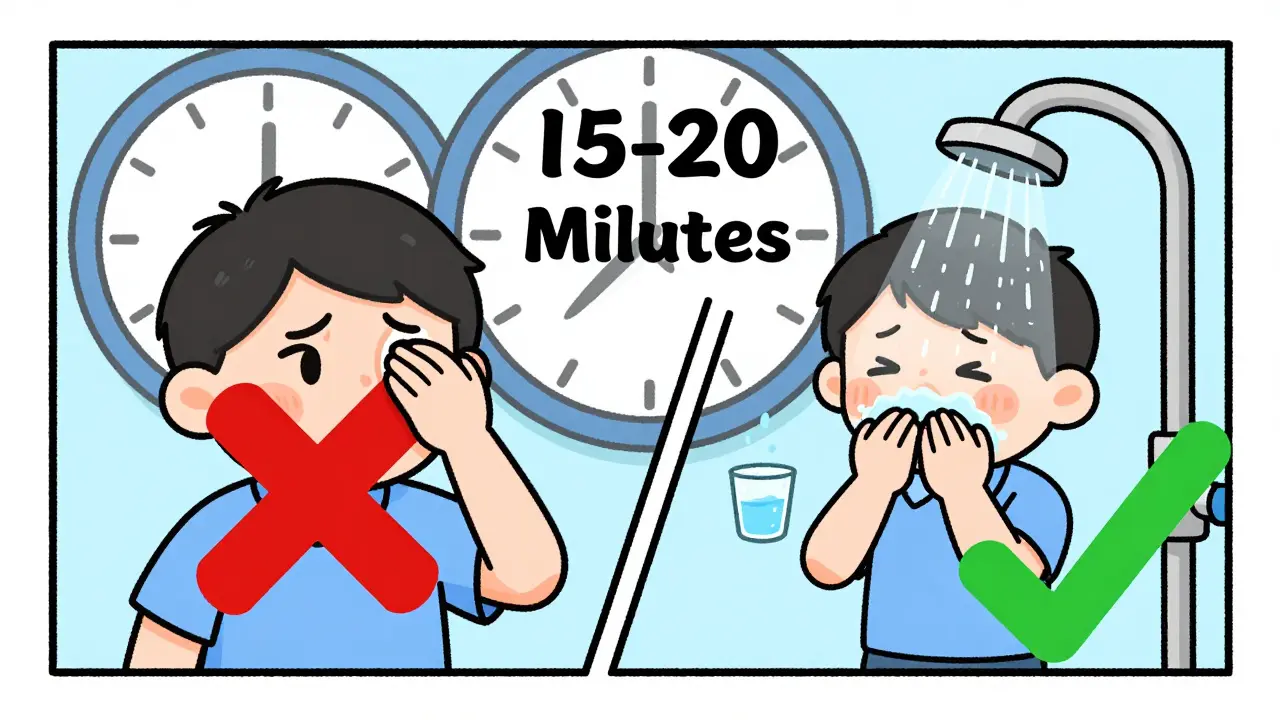
One of the biggest misconceptions is that rinsing for a few minutes is sufficient. It is not. For chemical splashes, you must continue flushing for at least 15 to 20 minutes. Some severe cases require even longer. The Healthdirect Australia guidelines recommend exactly 20 minutes of continuous flushing. The Better Health Channel in Victoria suggests 15-20 minutes. Even if the pain subsides, keep going. Pain relief does not mean the chemical is gone.
Why so long? Alkali burns, caused by substances like sodium hydroxide or ammonia, are particularly dangerous because they liquefy tissues and penetrate deeply. Acid burns, from sulfuric acid or vinegar, cause coagulation necrosis, which can sometimes limit penetration but still causes severe surface damage. Because alkalis penetrate faster, they often require longer irrigation times. However, in an emergency, you may not know what chemical hit you. Therefore, treat all chemical splashes as severe until proven otherwise.
| Authority/Guideline | Minimum Duration | Water Type |
|---|---|---|
| Healthdirect Australia (2023) | 20 minutes | Cool tap water |
| Better Health Channel (2023) | 15-20 minutes | Running water |
| Unger Eye Wellness (2022) | 10 minutes minimum | Tap water or saline |
| ANSI Z358.1-2021 (Workplace) | 15 minutes continuous flow | Tepid water (60-100°F) |
Note that workplace eyewash stations are designed to deliver tepid water between 60°F and 100°F (16°C-38°C) for at least 15 minutes. Cold water can cause shock or make the victim stop irrigating due to discomfort. At home, use cool tap water. Do not worry about temperature perfection; just get the water flowing.
Common Mistakes That Worsen the Injury
In the heat of the moment, people often do things that make the injury worse. Understanding these pitfalls can save your vision.
- Rubbing the Eye: This is the most common error, reported in 68.2% of cases according to American Red Cross data. Rubbing grinds the chemical particles into the cornea, causing abrasions and deeper penetration. Keep your hands off the eye surface.
- Using Too Little Water: Many people try to rinse with a cup or a small bottle. This is ineffective. You need a continuous stream to dilute and wash away the chemical. 82.6% of cases involved insufficient water volume.
- Stopping Too Soon: 57.3% of victims stopped irrigating prematurely. Just because the burning sensation decreases does not mean the pH is neutral. Continue flushing for the full recommended time.
- Applying Pressure: Never press on the eyeball. This can rupture the globe if the tissue has been weakened by the chemical. Let the water flow gently but continuously.
Another critical point involves contact lenses. If you wear contacts, remove them if you can do so quickly and without delaying irrigation. However, if removing them takes more than a few seconds, leave them in and start flushing. The lenses will likely dissolve or wash out during the process. Healthdirect Australia advises attempting removal unless the eye surface is severely damaged, but prioritizing irrigation is key.
Workplace vs. Home Preparedness
Your environment dictates your resources. In a workplace setting, regulations like OSHA’s 29 CFR 1910.151(c) require suitable facilities for quick drenching or flushing of the eyes where chemicals are used. The ANSI Z358.1-2021 standard mandates that eyewash stations be located within a 10-second travel distance from the hazard. Despite this, a 2023 OSHA audit revealed that 22.8% of facilities with chemical hazards lacked compliant stations.
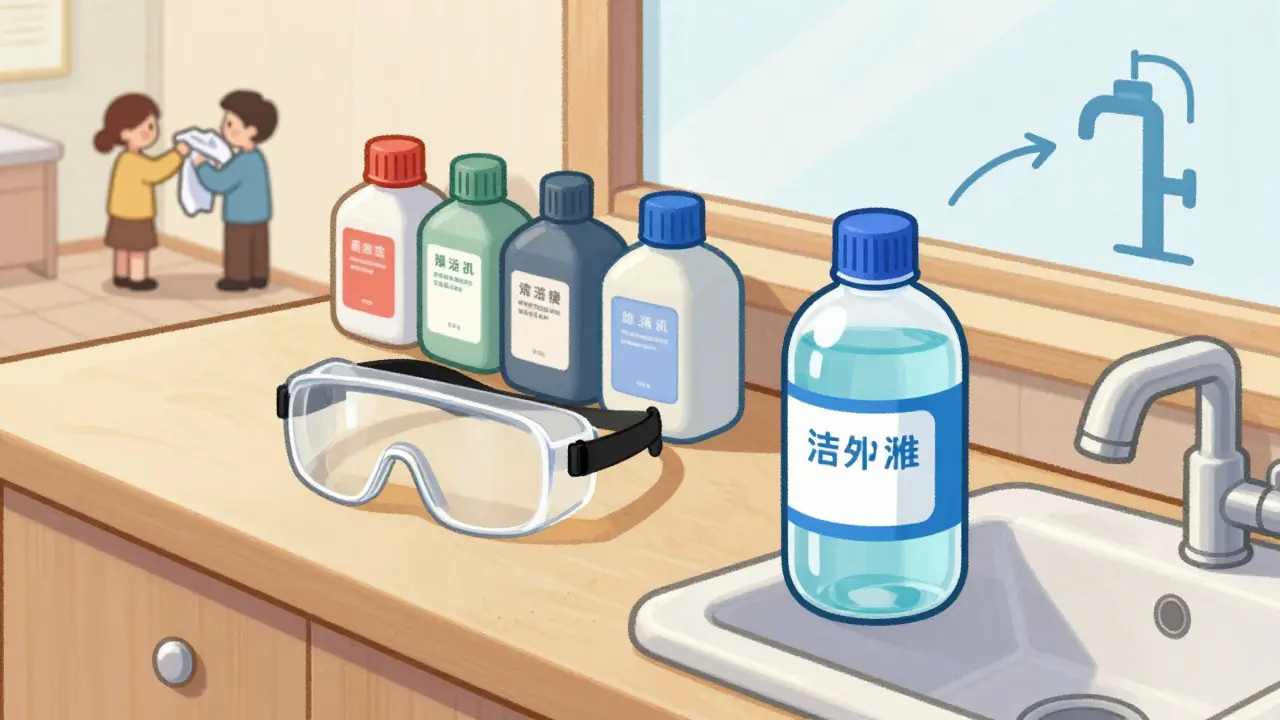
If you work with chemicals, know where the eyewash station is before an accident happens. Test it regularly to ensure it delivers water at the correct pressure and temperature. In contrast, most homes lack any dedicated eye safety equipment. A CDC survey found that 78.4% of households had no emergency eyewash solution readily available. For home safety, keep a large bottle of sterile saline or clean water near areas where you use cleaning products, pesticides, or paints. But remember, a sink or shower is always better than nothing if seconds count.
Aftercare and Medical Evaluation
Once you have flushed the eye for 15-20 minutes, seek professional medical attention immediately. Call emergency services or go to the nearest emergency department. Even if you feel fine, internal damage may not be apparent. Doctors will check the pH of the eye using litmus paper. Irrigation continues in the clinic until the pH reaches a neutral range of 7.0-7.4. This step is crucial because residual acidity or alkalinity can continue to burn the tissue.
Medical professionals may prescribe antibiotic ointments to prevent infection, as the protective barrier of the eye is compromised. In severe cases, corticosteroids or other medications might be used to reduce inflammation. The American Academy of Ophthalmology notes that 18.7% of chemical eye injury patients require corneal transplants within five years. Early intervention significantly reduces this risk.
Be prepared to tell the doctor what chemical caused the injury. Bring the container or label if possible. This helps them determine if specific antidotes or treatments are needed. For example, while most chemicals are treated with water, some specific agents may require specialized care. The FDA approved Diphoterine in 2022, a specialized decontamination solution that binds to chemical particles, but this is typically administered by medical professionals, not in the field.
Prevention: Your First Line of Defense
While knowing first aid is vital, preventing the injury is better. Wear appropriate personal protective equipment (PPE). Safety goggles that seal around the eyes offer far better protection than glasses or open-sided sunglasses. Ensure that everyone in your household or workplace knows the location of eyewash stations and sinks. Regular training can make a difference; individuals who received hands-on first aid training were 3.2 times more likely to properly irrigate an eye injury than those who only read instructions.
Store chemicals safely, away from children and pets. Label all containers clearly. When mixing cleaners, never combine bleach with ammonia or acids, as this creates toxic gases that can also harm the eyes. Simple habits can prevent tragedies.
Should I use saline or tap water for a chemical eye splash?
Use whatever water source is immediately available. Tap water is perfectly acceptable and often preferred because it is accessible instantly. Dr. Reay Brown from Bascom Palmer Eye Institute noted that saline provides no advantage over tap water for initial irrigation. Speed is more important than the type of fluid. Do not waste time searching for saline if tap water is right there.
How do I know if the chemical is an acid or an alkali?
You usually won't know in the moment, and it doesn't change your immediate action: flush with water. However, alkalis (like drain cleaners, ammonia, or lime) are generally more dangerous because they penetrate tissue rapidly. Acids (like battery acid or vinegar) tend to cause surface burns. Regardless of the type, the first aid protocol remains the same: aggressive, prolonged irrigation.
Can I remove my contact lenses myself after a splash?
Only if you can do it quickly without delaying irrigation. If you hesitate, start flushing immediately. The water will likely wash the lens out or dissolve it. Do not struggle with removal if it stops you from getting water into the eye. Healthdirect Australia advises attempting removal unless the eye surface is severely damaged, but prioritizing the flush is critical.
What if the pain goes away during irrigation?
Continue flushing. Pain relief does not mean the chemical is neutralized. Nerve endings may become temporarily desensitized, or the chemical may have penetrated deeper where pain signals are different. Follow the recommended time of 15-20 minutes regardless of comfort levels. Stopping early is one of the most common and dangerous mistakes.
Is there a specific position I should hold my head in?
Yes. Tilt your head back and turn it toward the injured eye. This uses gravity to keep the contaminated water flowing away from the healthy eye. If you tilt your head forward or straight down, the chemical can run across your face and enter the good eye, causing bilateral damage. Keeping the affected side lower ensures isolation of the injury.

Terrence spry
I'm a pharmaceutical scientist specializing in clinical pharmacology and drug safety. I publish concise, evidence-based articles that unpack disease mechanisms and compare medications with viable alternatives to help readers have informed conversations with their clinicians. In my day job, I lead cross-functional teams advancing small-molecule therapies from IND through late-stage trials.
view all posts