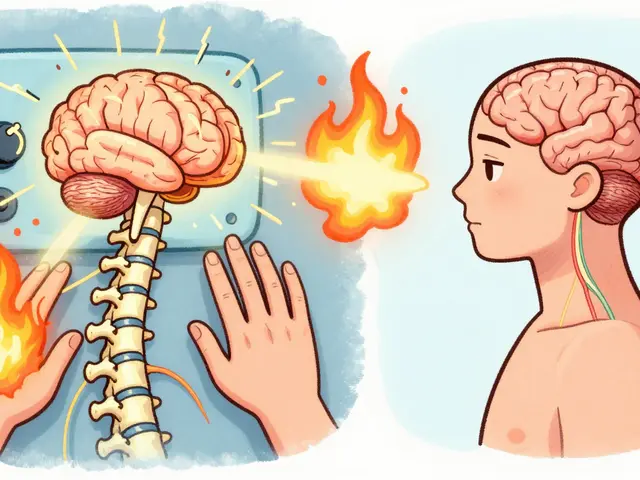
When you need to control seizures, phenytoin, a long-standing antiseizure medication used to prevent tonic-clonic and partial seizures. Also known as Dilantin, it works by calming overactive nerve cells in the brain that cause convulsions. First approved in the 1930s, phenytoin is still used today—especially when newer drugs don’t work or aren’t available. But it’s not simple to use. Getting the dose right matters because too little won’t stop seizures, and too much can cause serious side effects like dizziness, shaky movements, or even dangerous heart rhythms.
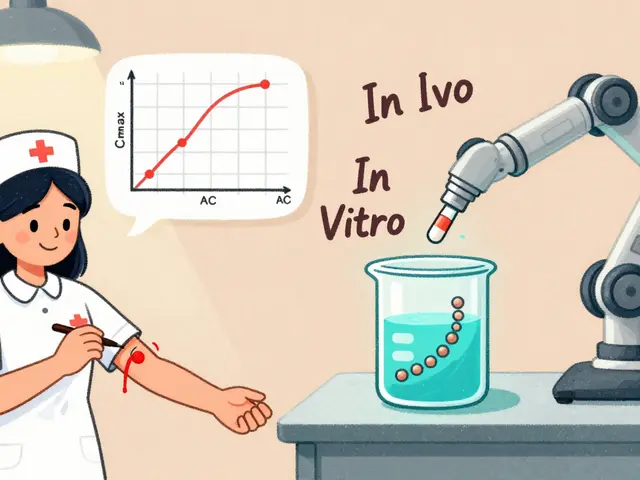
One big reason phenytoin needs careful handling is how it interacts with other drugs. therapeutic drug monitoring, the process of measuring blood levels to ensure the dose is safe and effective is often required. Unlike many newer seizure meds, phenytoin doesn’t follow a straight line in the body—its absorption changes based on food, other pills you take, and even your liver’s health. For example, it can make blood thinners like warfarin less effective, or boost the levels of antidepressants and birth control pills, leading to unexpected side effects. That’s why pharmacists and doctors watch your blood levels closely. It’s also why switching from brand to generic phenytoin isn’t always harmless—even though generics are approved as equivalent, small differences in how they’re made can throw off your seizure control.
People taking phenytoin often need to adjust their lifestyle. It can cause gum swelling, so brushing and flossing daily isn’t optional—it’s medical care. Long-term use might lower vitamin D and calcium levels, increasing fracture risk. And if you’re on birth control, phenytoin can make it less effective, so extra protection is usually needed. It’s not a drug you start and forget about. You need to stay in touch with your care team, track how you feel, and report even small changes like a rash or unusual tiredness.
Below, you’ll find real-world advice on how phenytoin fits into daily life, how to avoid dangerous interactions with other meds, and what to do if side effects start to show up. Whether you’re managing epilepsy, dealing with a heart rhythm issue, or just trying to understand why your doctor keeps ordering blood tests, the posts here give you the clear, no-fluff answers you need.
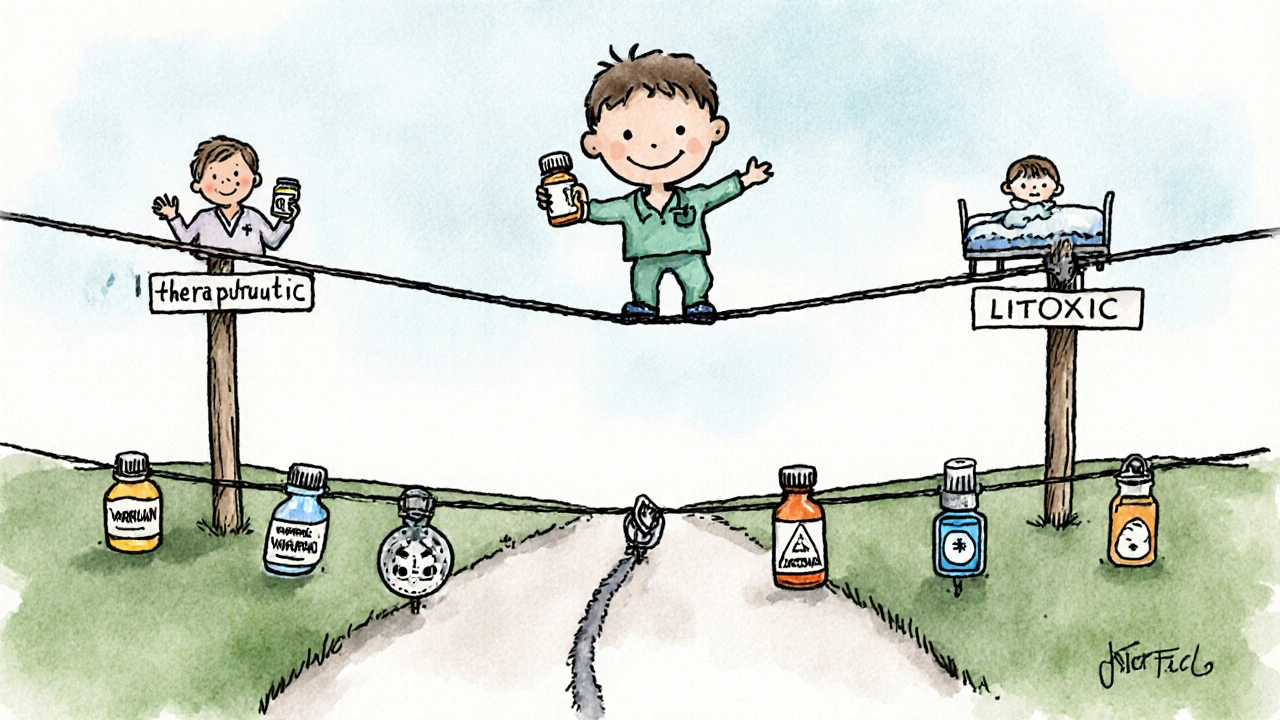
NTI drugs have a tiny margin between safe and toxic doses. Common examples include warfarin, lithium, digoxin, phenytoin, and tacrolimus. These require strict monitoring, careful dosing, and no brand switching without medical approval.
read more