
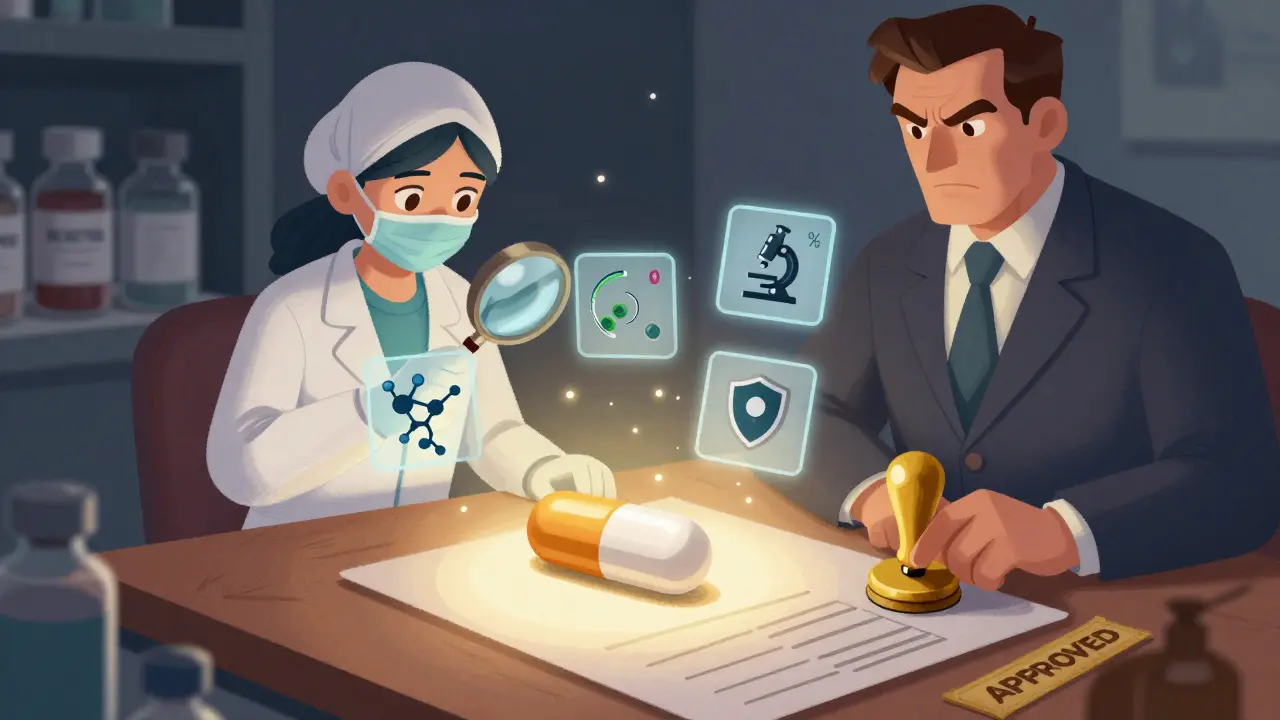
Every pill, injection, or inhaler you take has passed through one final, critical gate before it reaches you: batch release testing. This isn’t just paperwork or a formality. It’s the last line of defense between a potentially dangerous product and millions of patients. In pharmaceutical manufacturing, this step isn’t optional-it’s legally required, scientifically rigorous, and often the difference between life and death.
What Exactly Is Batch Release Testing?
Batch release testing is the final set of tests performed on every production batch of a drug before it’s allowed to be shipped out. Think of it like a final inspection before a plane takes off. No matter how many quality checks happened during manufacturing, this is the moment everything is verified one last time against strict standards. Batch release testing is a regulatory-mandated quality control procedure that confirms each batch of a pharmaceutical product meets predefined specifications for identity, strength, purity, and safety before distribution. Also known as final release testing, it is required under international guidelines including the US Code of Federal Regulations (21 CFR 211.165), EU Directive 2003/94/EC, and ICH standards.Each batch-whether it’s 10,000 tablets or 500 vials of a biologic-is tested individually. You can’t skip it because one batch looked good. Even if 99 batches passed, the 100th could be contaminated, under-dosed, or chemically off. That’s why every single batch gets its own full testing.
The Core Tests: What’s Actually Checked?
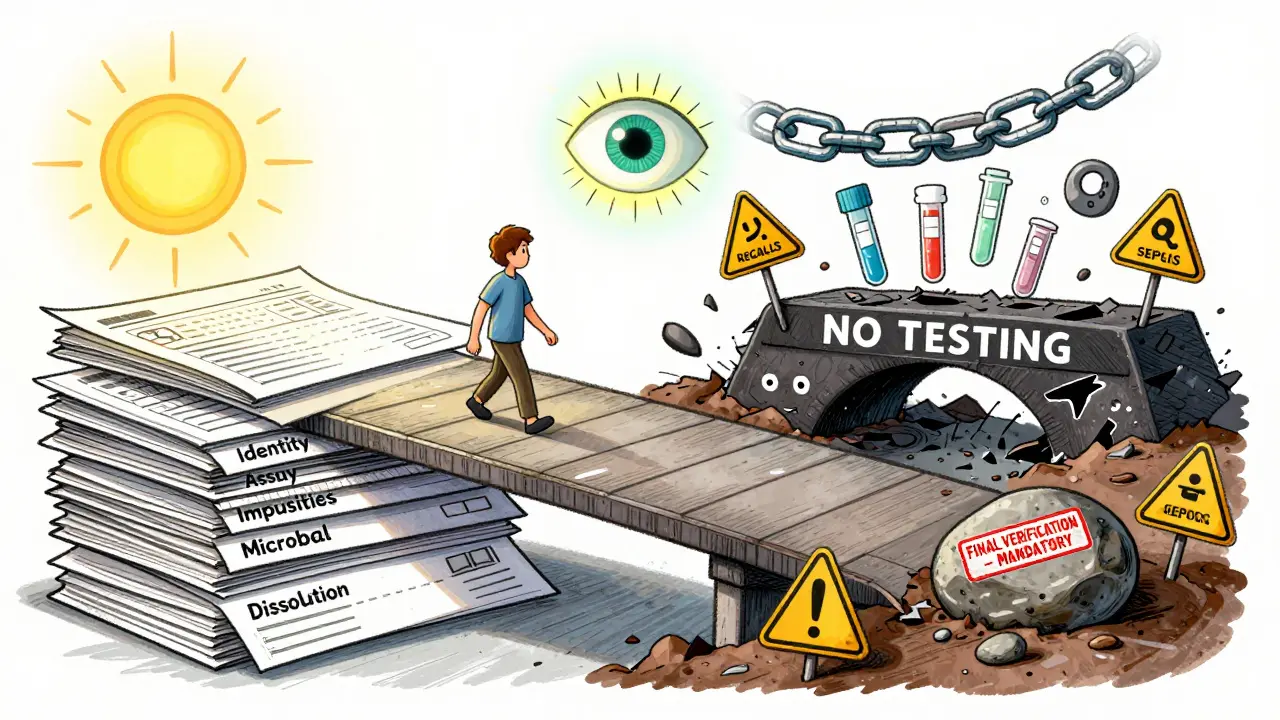
The tests aren’t random. They’re based on the product’s approved specifications and validated using internationally recognized methods. Here’s what’s typically tested:- Identity: Is this actually the drug it claims to be? This is confirmed using techniques like HPLC, FTIR, or NMR. A mix-up here could mean giving someone the wrong medication entirely.
- Assay/Potency: Does it contain the right amount of active ingredient? Acceptable range is usually 90-110% of the labeled amount. Too little? The drug won’t work. Too much? Risk of overdose.
- Impurity Profile: Are there unwanted chemicals? ICH Q3 guidelines limit unknown impurities to 0.10% in new drug substances. Even tiny amounts can be toxic over time.
- Microbial Limits: For non-sterile products, no more than 100 colony-forming units per gram. For sterile products? Zero tolerance for contamination. A single bacterium in an injection can cause sepsis.
- Endotoxin Testing: Especially critical for injectables. Limits are as low as 5.0 EU/kg/hr for spinal injections. Endotoxins from bacteria can trigger fever, shock, or death.
- Particulate Matter: Visible or microscopic particles in injectables? Not allowed. USP <788> sets limits at 6,000 particles/mL ≥10μm and 600 particles/mL ≥25μm for small-volume injections.
- Dissolution: Will the drug dissolve properly in the body? For generics, the dissolution profile must match the original brand within an f2 similarity factor of ≥50. If it doesn’t dissolve, it doesn’t work.
- Physical Properties: Tablet hardness (4-10 kp), capsule shell integrity, color, and labeling accuracy-all checked visually and mechanically.
Stability testing also plays a role. Even if a batch passes initial tests, it must prove it will stay stable under real-world conditions. Accelerated testing at 40°C and 75% humidity for six months simulates two years of shelf life. Long-term testing at 25°C and 60% humidity runs for 12-36 months.
Who Signs Off? The Qualified Person (QP)
In the European Union, no batch leaves the facility without a Qualified Person (QP) signing off. This isn’t just any manager. A QP must have at least five years of pharmaceutical industry experience, specialized GMP training, and formal certification. They’re legally responsible for ensuring every batch meets the approved standards.It’s a bottleneck. As of 2024, Europe faces a 32% shortage of qualified QPs. One QP might be responsible for reviewing 50-100 batches a month. Each review takes hours-sometimes days-because they must examine raw data, chromatograms, instrument printouts, and analyst notes. Missing a single anomaly can mean releasing a dangerous product.
In the U.S., there’s no formal QP role, but the quality unit (often a team) must independently review and certify each batch under 21 CFR 211.194. Two analysts must independently verify test results. No single person can approve their own work.
Why Does This Matter? The Real Cost of Failure
A single failed batch isn’t just a production problem-it’s a public health crisis waiting to happen.In 2023, the FDA reported that pharmaceutical recalls cost companies an average of $10.7 million per incident. But money is the least of it. In 2022 alone, batch release testing prevented an estimated 1,200 potentially harmful drug batches from reaching U.S. patients, up 27% from 2018 due to stricter protocols.
One 2023 FDA Form 483 inspection found a major manufacturer had released 12,000 vials of a monoclonal antibody with subpotent batches. Patients received ineffective treatment. The company paid $9.2 million in recall costs and faced an 18-month import ban. That’s not just a financial hit-it’s a betrayal of trust.
According to the Parenteral Drug Association’s 2024 report, 83% of batch failures happen in three areas: dissolution (32%), impurity profiles (28%), and microbial contamination (23%). These aren’t rare edge cases. They’re predictable, preventable failures.
Challenges in Real-World Implementation
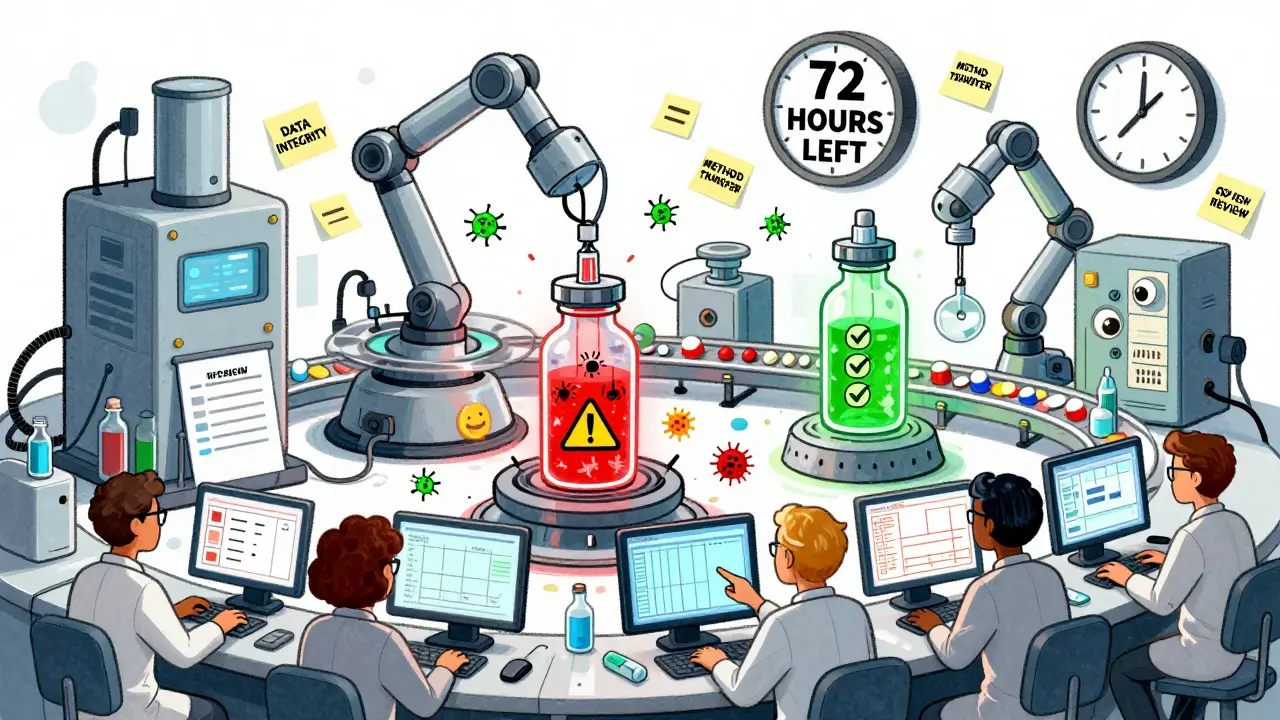
Even with perfect standards, execution is messy.- Method transfer issues: When a lab in R&D hands off a test to manufacturing, things break. Reddit’s r/Pharmaceuticals community found 78% of quality analysts cite this as the top cause of delays, with average resolution taking 14.7 business days.
- Data integrity: 31% of FDA 483 observations in 2024 involved missing, altered, or unverified data. A single missing chromatogram can halt an entire batch release.
- Documentation overload: Senior QPs report spending 40-60 hours per batch on paperwork for complex biologics. With staffing shortages, 72-hour release timelines are impossible.
But there’s progress. Companies using integrated Laboratory Information Management Systems (LIMS) report 22% faster batch release cycles. Thermo Fisher’s SampleManager LIMS was cited in 41% of those success stories. Automation cuts human error by 63%, according to a 2024 PDA Journal study.
Regulatory Differences: U.S. vs. EU vs. Global
Not every country plays by the same rules.The EU insists every batch must be fully tested. The U.S. allows reduced testing under its 2023 Continuous Manufacturing Guidance-if a facility has proven, real-time process control. This creates headaches for global manufacturers trying to meet both standards.
China’s NMPA introduced mandatory batch release for imported vaccines in 2023, adding 14-21 days to import timelines. Meanwhile, the FDA’s 2025 pilot for Predictive Release Testing allows real-time quality assessment-but only 12 companies have qualified so far. EMA’s 2024 pilot showed AI-driven methods are 78% accurate, but the FDA demands 99.9% confidence before full adoption.
And then there’s the rise of biologics. These complex drugs-like monoclonal antibodies or gene therapies-require 21-35 days for batch release, compared to 7-10 days for simple generics. Testing costs have risen 22% since 2020, and they’re still climbing.
The Future: AI, Automation, and Continuous Verification
The industry isn’t standing still.ICH Q14 (effective Nov 2024) lets companies use risk-based, flexible approaches to testing for established products. Early adopters cut testing time by 30%. The FDA’s Predictive Release Testing pilot uses process analytical technology (PAT) to monitor quality in real time during production. If the process stays in control, maybe you don’t need to test the final product.
But don’t expect this to replace batch release testing anytime soon. A 2025 ISPE survey found 97% of industry experts believe some form of discrete batch verification will remain necessary through 2040. Even with AI, regulators want a final, independent check.
By 2028, McKinsey predicts 45% of release decisions will use AI analytics. Blockchain-based batch traceability is coming too-FDA plans to require it by 2028. The goal isn’t to eliminate testing, but to make it smarter, faster, and more reliable.
What You Should Know
If you’re a patient: Trust that this system exists. Every time you take a pill, someone checked its identity, strength, and safety. It’s not perfect-but it’s the most rigorously monitored supply chain in medicine.If you work in pharma: Batch release testing isn’t a cost center-it’s your most important shield. Invest in LIMS, train your analysts, automate documentation. The next recall might be yours.
If you’re a regulator: The system works-but it’s strained. More QPs. Better data systems. Faster method validation. The stakes are too high to wait.
Is batch release testing required for all drugs?
Yes. Every batch of every approved drug-whether it’s a simple aspirin tablet or a complex gene therapy-must undergo batch release testing before distribution. This is mandated by law in the U.S., EU, and most major markets. Even generic drugs must meet the same standards as brand-name products.
Can a batch be released without testing?
No. In traditional manufacturing, every batch must be tested. The only exception is under FDA’s 2023 Continuous Manufacturing Guidance, where real-time process monitoring replaces some end-product testing-but even then, final verification by a quality unit is still required. No regulatory authority allows complete bypass of batch release testing.
How long does batch release testing take?
It varies by product type: simple generics take 7-10 days, complex generics 14-21 days, and biologics 21-35 days. Factors include test complexity, lab workload, data review time, and regulatory requirements. In high-volume facilities with automation, cycles can be reduced by up to 22%.
What happens if a batch fails release testing?
The batch is quarantined and investigated. If the failure is due to a known, isolated issue (like a faulty instrument), it may be retested after correction. If contamination, mislabeling, or major potency deviation is found, the batch is destroyed. All deviations must be documented, investigated, and reported to regulators. Repeated failures trigger facility inspections.
Are there alternatives to traditional batch testing?
Yes, but not replacements yet. Predictive Release Testing using PAT and AI is being piloted by the FDA and EMA. These systems monitor production in real time and use data models to predict final quality. However, regulators still require final batch certification. AI helps reduce testing frequency, but it doesn’t eliminate the need for verification.
Why is documentation so important in batch release?
Documentation proves compliance. Regulators don’t just check results-they check how you got them. Every chromatogram, instrument log, calculation, and analyst signature must be preserved for at least one year after the product’s expiration date. Missing records mean the batch can’t be certified, even if the test results are good. Data integrity is non-negotiable.
Final Thoughts
Batch release testing isn’t glamorous. It doesn’t make headlines. But every time you swallow a pill, take an injection, or inhale a medication, you’re relying on this system. It’s slow, expensive, and sometimes frustrating-but it’s also the reason pharmaceutical disasters are rare.The future will bring automation, AI, and real-time monitoring. But the core principle won’t change: every batch must be verified before it leaves the factory. Because in medicine, there’s no second chance.


Joey Pearson
March 7, 2026 AT 11:33 AMEvery time I pop a pill, I think about the people behind the scenes making sure it’s safe. Seriously, thank you to every analyst, QP, and lab tech doing the boring, critical work no one sees. You’re the real MVPs.
Keep doing what you’re doing.
Roland Silber
March 8, 2026 AT 05:37 AMOne thing people don’t realize-batch release testing isn’t just about catching bad batches. It’s about building trust. The fact that regulators demand this level of rigor means patients can take meds without fear.
And yeah, the paperwork is insane. But if a chromatogram goes missing, the whole batch gets shelved. That’s not bureaucracy-that’s integrity.
Patrick Jackson
March 8, 2026 AT 22:24 PMBro. I just cried reading this. 🥹
Imagine being the QP who signs off on 87 batches this month. Every single one. One typo. One skipped step. One missed impurity. And you’re the last line between a kid with asthma and a death sentence.
We owe these people everything. No cap. No joke. This isn’t just science-it’s sacred work.
Adebayo Muhammad
March 10, 2026 AT 21:30 PMThis is a classic case of regulatory overreach, masked as safety. You think they test every batch? HA. The system is rigged. Labs outsource to third-world facilities. Data is backfilled. QPs are overworked and underpaid-so they rubber-stamp. The FDA? They’re in bed with Big Pharma. You think they want real transparency? They want control. And profit. Always profit.
Pranay Roy
March 12, 2026 AT 01:01 AMWait, so you’re telling me that after all this testing, there’s still a chance some drug gets through? What about the 2023 FDA recall? You know what they don’t tell you? The same labs that test the drugs also manufacture them. Conflict of interest. It’s all a scam. You think your insulin is safe? Think again. They’re testing for the *appearance* of safety. Not the reality.
Joe Prism
March 12, 2026 AT 07:11 AMJust came back from a trip to India. Saw a small lab in Pune doing batch release testing for generics exported to Africa. No fancy LIMS. Just three people, a laptop, and a microscope.
They tested every batch. Every single one.
That’s the real story. Not the tech. Not the AI. It’s the humans showing up, even when no one’s watching.
Bridget Verwey
March 12, 2026 AT 20:55 PMSo let me get this straight: we’re celebrating a system that takes 35 days to release a life-saving biologic… but we’re too broke to hire more QPs?
Oh, and we’re going to replace it with AI? Sweet. Let’s just let ChatGPT sign off on my chemo.
Y’all are hilarious.
Andrew Poulin
March 14, 2026 AT 18:32 PMStop romanticizing this. The system is broken. QPs are overworked. Labs are understaffed. Data integrity? More like data fantasy. If you think batch release is keeping you safe, you’re delusional. Automation isn’t the future-it’s the only way we survive. Stop clinging to paper logs and 1980s methods.
Vikas Verma
March 16, 2026 AT 16:45 PMBatch release testing remains the cornerstone of pharmaceutical quality assurance. The application of ICH Q14 enables risk-based approaches, yet the fundamental requirement for discrete verification persists. Automation via LIMS and PAT significantly reduces turnaround time, with empirical evidence demonstrating a 22% efficiency gain. However, regulatory compliance mandates independent verification. The convergence of blockchain traceability and AI analytics represents the next evolutionary phase-but human oversight remains non-negotiable.