When your nose is clogged and breathing feels like a chore, nasal decongestants, medications designed to shrink swollen blood vessels in the nasal passages to relieve congestion. Also known as nasal sprays or oral decongestants, they’re one of the most common over-the-counter remedies for colds, allergies, and sinus pressure. But they’re not harmless. A quick fix today can lead to rebound congestion tomorrow—or worse, high blood pressure, rapid heartbeat, or insomnia if you’re not careful.
These drugs work by tightening blood vessels in your nose, which reduces swelling and opens up airflow. The two main types are oxymetazoline, a topical spray found in brands like Afrin, and pseudoephedrine, an oral pill sold as Sudafed. Both get the job done fast, but oxymetazoline shouldn’t be used longer than three days. Use it longer, and your nose gets dependent—swelling returns worse than before. Pseudoephedrine doesn’t cause rebound congestion, but it can raise your heart rate and blood pressure. If you have heart issues, thyroid problems, or glaucoma, it’s not worth the risk.
People often reach for these without thinking about what’s underneath the congestion. Is it a cold? Allergies? A deviated septum? Nasal decongestants don’t treat the cause—they just mask the symptom. That’s why some of the best posts in this collection focus on alternatives: steroid nasal sprays like fluticasone for long-term allergy relief, saline rinses that clean out irritants without side effects, and even how certain medications like antibiotics or thyroid drugs can trigger palpitations that feel like nasal congestion but are actually heart-related.
And here’s something most don’t realize: some decongestants are hidden in multi-symptom cold pills. You might think you’re just taking something for a cough, but you’re also getting a full dose of pseudoephedrine. That’s why the FDA requires pharmacists to keep these behind the counter. It’s not bureaucracy—it’s safety. You need to know what you’re taking, how long you’ve been taking it, and whether it’s safe with your other meds.
This collection brings together real, practical advice from people who’ve been there: the guy who used nasal sprays for months and ended up with chronic congestion, the woman who switched to saline rinses after heart palpitations from Sudafed, and the pharmacist who explains exactly which labels to read before buying anything. You’ll find comparisons between OTC options, warnings about drug interactions, and even how some decongestants can mess with sleep tracking or interact with antidepressants.
There’s no one-size-fits-all fix for a stuffy nose. But knowing what these drugs really do—and what they can do to you—gives you power. Not just to feel better today, but to avoid making things worse tomorrow.
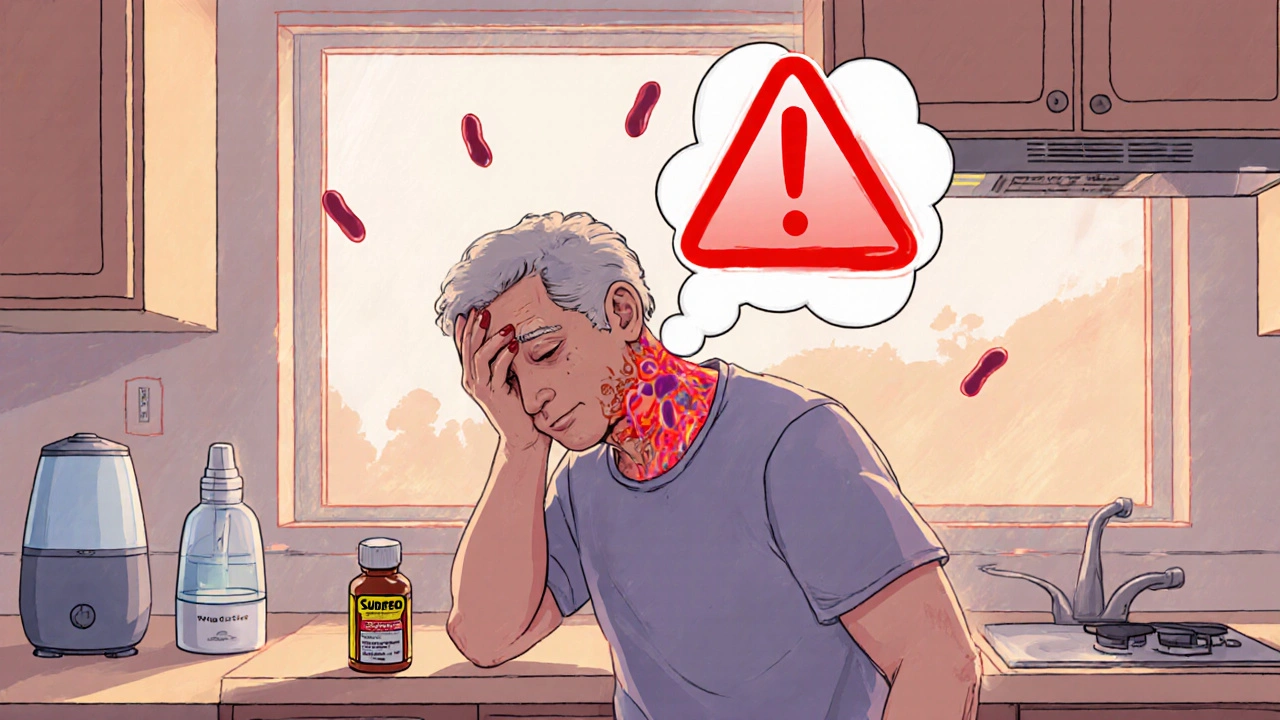
Nasal decongestants can dangerously raise blood pressure when taken with hypertension meds. Learn which ingredients to avoid, safe alternatives, and how to read labels to protect your heart.
read more