When you rely on insulin, a life-saving hormone used to manage diabetes by regulating blood sugar. It's not just about taking the right dose—it's about keeping it stable, safe, and ready to work when you need it. Many people assume insulin is tough, but heat, cold, and time can break it down without you noticing. A vial left in a hot car or a pen stored past its expiry might still look fine—but it won't control your blood sugar like it should. That’s why insulin storage, the proper handling and environment for keeping insulin potent matters as much as the injection itself.
Unopened insulin, the type still sealed in its original packaging needs to stay cold: between 36°F and 46°F (2°C to 8°C). That means your fridge, not the door where it gets too warm or freezes. Once you start using a vial or pen, you can keep it at room temperature—up to 86°F (30°C)—for up to 28 days, depending on the type. No need to refrigerate it again. But if you’re traveling, flying, or spending time in extreme heat, insulin travel, the practice of safely carrying insulin outside the home becomes critical. Insulin pens, coolers, and even insulated pouches with ice packs can keep it stable for hours. Don’t let TSA or airport security stop you—prescription insulin is exempt from liquid limits if labeled properly.
Temperature isn’t the only thing that kills insulin. Light, shaking, and time do too. Never shake an insulin pen. Don’t leave it on a sunny windowsill. And never use insulin past its expiration date—even if it looks clear and colorless. The real danger? You won’t feel it until your blood sugar spikes or crashes. That’s why checking the date, watching for cloudiness or clumps, and knowing your insulin’s shelf life after opening is part of daily diabetes care. People who use insulin daily often forget that insulin expiration, the point at which insulin loses its effectiveness isn’t just a printed date—it’s a countdown that starts the moment you pierce the seal.
And here’s the thing: most people don’t realize that insulin doesn’t suddenly stop working on the expiration day. It slowly loses strength over time. That’s why some folks notice their doses aren’t working as well—maybe they’ve been using the same pen for 40 days instead of 28. Or they keep their insulin in the glove compartment during summer. These aren’t mistakes you make once. They’re habits that quietly hurt your control.
Below, you’ll find real advice from people who’ve been there: how to pack insulin for trips, what to do if it freezes, how to tell if it’s gone bad, and how to store it when you’re on the move. No fluff. Just what works.
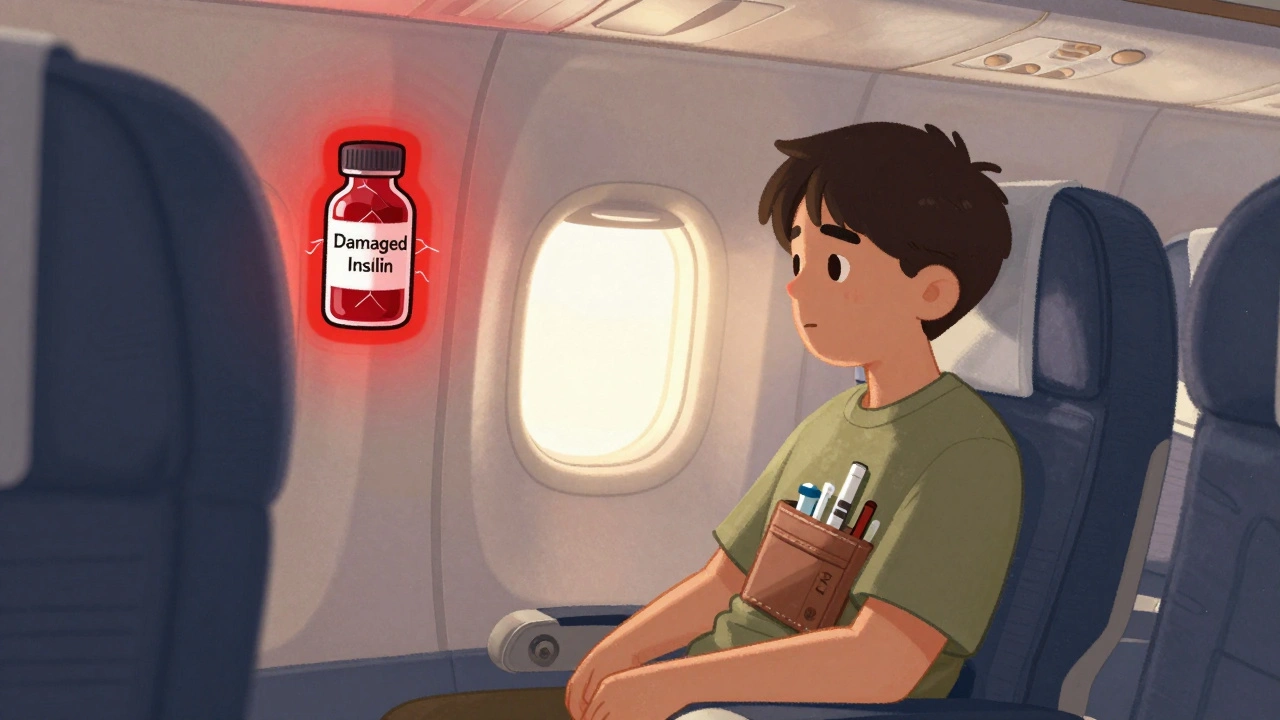
Learn how to safely store insulin and biologics during long flights to prevent dangerous temperature damage. Get practical tips on cooling wallets, TSA rules, and dose adjustments for time zones.
read more