When you have diabetes, insulin, a life-saving hormone used to control blood sugar must stay cool—usually between 36°F and 46°F (2°C to 8°C)—to work properly. Once opened, insulin can last up to 28 days at room temperature, but heat, sunlight, or freezing can break it down fast. That’s where a insulin cooling wallet, a portable device designed to maintain safe insulin temperatures without refrigeration comes in. It’s not a luxury. For travelers, hikers, or anyone on the go, it’s a basic safety tool.
A good insulin cooling wallet, a portable device designed to maintain safe insulin temperatures without refrigeration uses phase-change materials or gel packs to stay cool for 12 to 72 hours, depending on the model. It doesn’t need electricity, so it works in cars, planes, or remote areas. You don’t need to freeze it before use—just activate it by soaking or snapping the inner pack. Some even come with built-in thermometers so you know your insulin is still good. This matters because if insulin gets too hot, it loses potency. You might not notice right away, but your blood sugar could start creeping up, leading to highs, fatigue, or worse. And if it freezes? It clumps. Injecting clumped insulin is dangerous and ineffective.
People with diabetes often carry insulin through airport security, hike in summer heat, or spend long days at outdoor events. The TSA medication rules, guidelines allowing unlimited prescription liquids when properly labeled let you bring insulin and cooling wallets through security, but you still need to protect the medicine inside. A cooling wallet isn’t just about convenience—it’s about preventing hospital visits caused by spoiled insulin. You wouldn’t risk taking expired antibiotics. Don’t risk taking expired insulin either.
What you’ll find below are real, practical guides on how to manage insulin and other medications while traveling, how to talk to pharmacists about storage, and how to avoid common mistakes that put your health at risk. From how to pack insulin for a flight to what to do if your cooling wallet fails, these posts give you the tools to stay in control—no matter where you are.
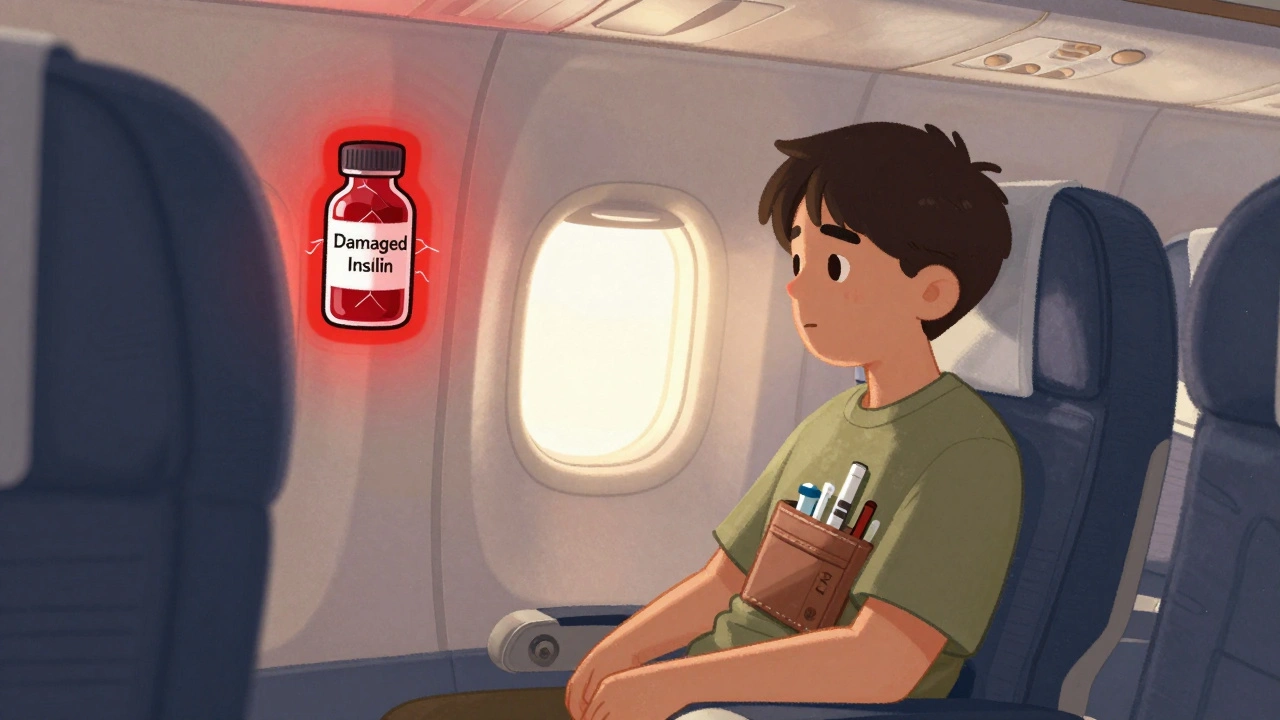
Learn how to safely store insulin and biologics during long flights to prevent dangerous temperature damage. Get practical tips on cooling wallets, TSA rules, and dose adjustments for time zones.
read more