
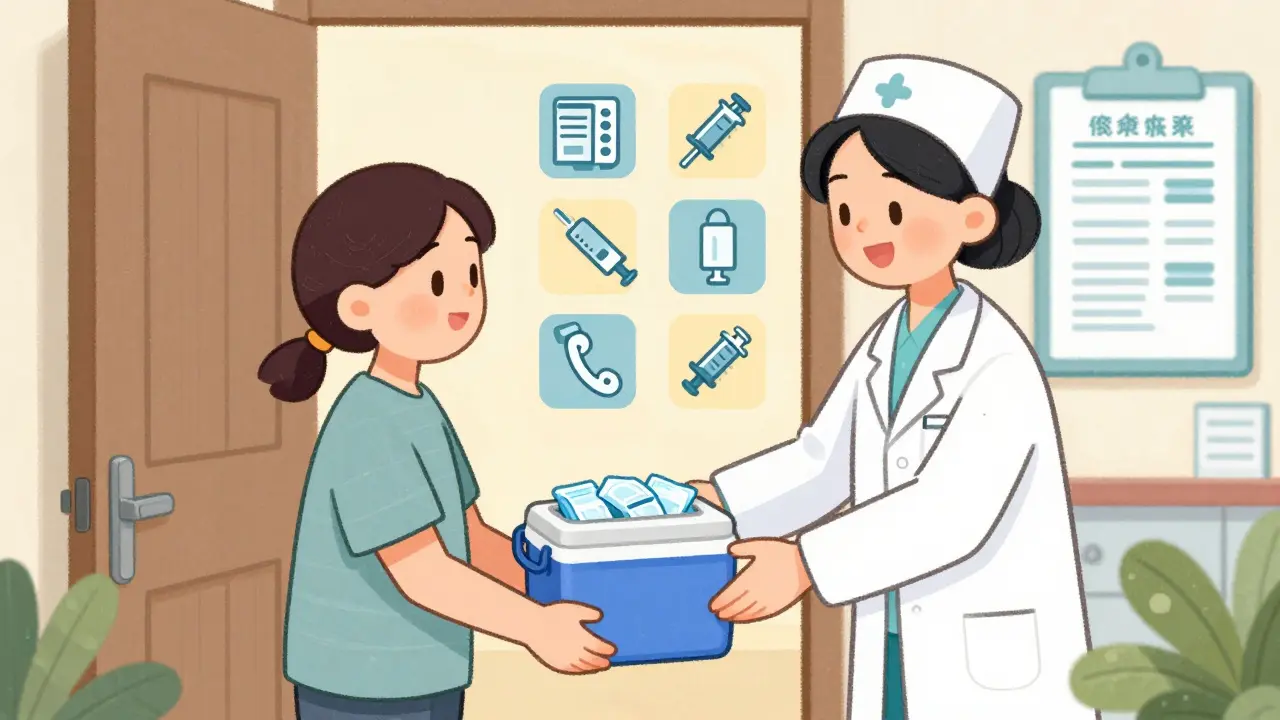
When a patient switches from a brand-name specialty drug to its generic version, many assume the process becomes simpler. But in specialty pharmacy, that’s not always true. Even when a drug is no longer branded, the way it’s dispensed, managed, and delivered often stays exactly the same. The reason? It’s not about the label on the bottle-it’s about the complexity behind it.
What Makes a Drug ‘Specialty’?
A specialty drug isn’t defined by its price or how it’s made. It’s defined by what it takes to get it safely into a patient’s hands. These are medications that need special handling: refrigeration, precise dosing, injection or infusion, or constant monitoring for side effects. Think of drugs used for rheumatoid arthritis, multiple sclerosis, cancer, or hepatitis C. Even if a version of the drug is now generic, if it falls into this category, it still requires a specialty pharmacy to handle it.The FDA doesn’t classify drugs as specialty. Instead, manufacturers decide whether to distribute them through specialty channels. And once they do, only specialty pharmacies can dispense them-even if they’re generic. That’s not a suggestion. It’s a rule. Retail pharmacies, even big chains like CVS or Walgreens, can’t step in, no matter how cheap the generic version is.
Why Generic Doesn’t Mean Simple
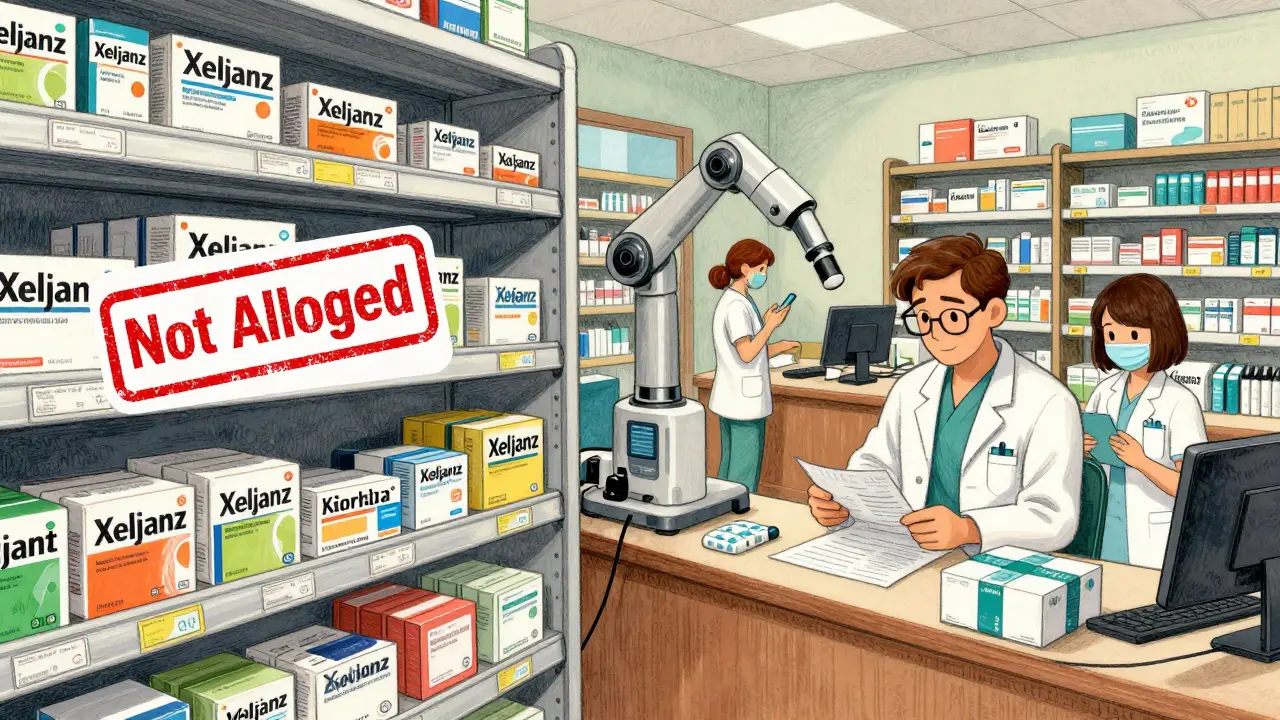
Many people think generics are just cheaper copies of brand drugs. That’s true for pills you pick up at your local pharmacy. But for specialty drugs, the story changes. True generics-identical chemical copies-don’t exist for most biologic drugs because they’re made from living cells. Instead, we have biosimilars. These are highly similar, but not identical, versions. They still need the same cold chain, same administration training, same follow-up calls from nurses.Take Xeljanz, a drug for autoimmune conditions. Its biosimilar might cost 30% less. But if it’s distributed through a specialty pharmacy, the patient still gets the same delivery, same nurse check-ins, same lab coordination. The pharmacy doesn’t treat it like a simple refill. It treats it like the original. Why? Because the risks don’t change. The side effects, the monitoring needs, the potential interactions-all stay the same.
The Specialty Pharmacy Workflow: It’s Not Just Shipping
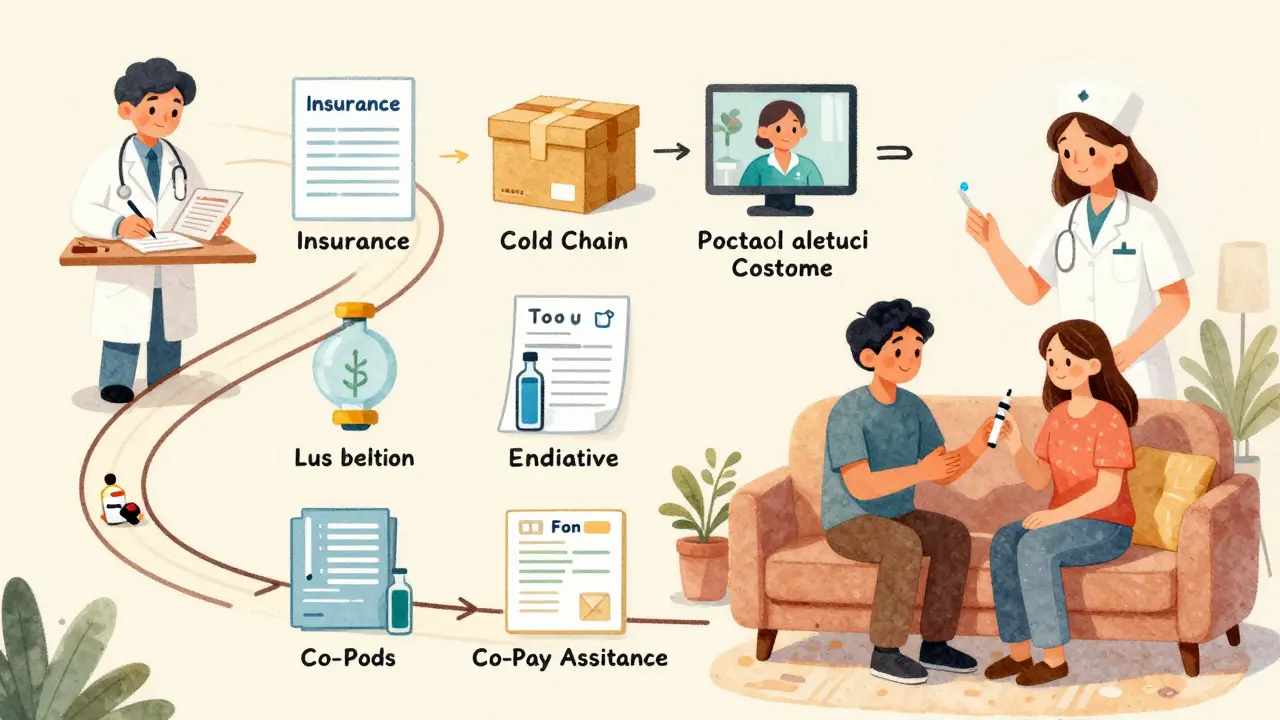
A typical specialty pharmacy doesn’t just fill a prescription and mail it out. They run a full clinical operation. Here’s what happens when a generic specialty drug comes in:- Prescription intake and verification: The pharmacy checks if the drug is approved for the patient’s condition and insurance.
- Prior authorization: Even for generics, insurers often require paperwork proving medical necessity. This can take days.
- Financial assistance: Many patients struggle with high out-of-pocket costs. Specialty pharmacies help apply for co-pay assistance or patient aid programs.
- Clinical review: Pharmacists review the patient’s full medication list to catch interactions. A patient on 10 other drugs? That’s normal.
- Training and counseling: Nurses call patients to teach them how to inject or infuse the drug. This isn’t optional-it’s required.
- Temperature-controlled shipping: The drug is packed in a cooler with ice packs, tracked, and delivered with signature confirmation.
- Follow-up: Within 48 hours of delivery, a pharmacist calls to check for side effects, adherence, or questions.
This entire process takes an average of 7.2 days from the time the prescription is sent. For a retail prescription? About 1.2 days. The difference isn’t just time-it’s care.
Who’s Doing This? The Big Players
The specialty pharmacy market is dominated by three giants: OptumRx, CVS Specialty, and Express Scripts. Together, they handle nearly 84% of all specialty drug dispensing in the U.S. These aren’t just mail-order pharmacies. They’re integrated into health plans, hospitals, and employer networks.Smaller regional pharmacies still exist, but they’re being absorbed. In January 2024, Walgreens bought Shields Health Solutions to expand its specialty arm. Health systems are also building their own internal specialty pharmacies-63% of hospitals plan to do so by 2026. That’s a major shift. It means patients might soon get their specialty drugs from their hospital’s pharmacy instead of a national chain.
Why Patients Stick With Specialty Pharmacies-Even for Generics
Some patients hate the wait. One Reddit user wrote: “Went from $15 copay at Walgreens to $75 with a two-week delay.” That’s real. But others say the service keeps them alive.A 2024 survey by MyHealthTeams found that 68% of patients preferred staying with the same specialty pharmacy when switching to a generic. Why? Because they knew the nurse who helped them with injections. They trusted the pharmacist who caught a dangerous drug interaction. They didn’t want to start over.
Trust isn’t built on price. It’s built on consistency. When a patient transitions from a brand drug to its biosimilar, the last thing they need is a new team, a new process, a new phone number. They need the same person who’s been helping them for months.
The Real Cost Isn’t the Drug-It’s the System
Specialty drugs cost a lot. In 2023, they made up just 3% of all prescriptions but 56% of total drug spending. That’s because of the infrastructure behind them: temperature-controlled logistics, trained staff, electronic systems, compliance with FDA REMS programs.Dispensing fees range from $250 to $500 per prescription. That’s not profit on the drug-it’s the cost of doing this right. Even if the drug itself is now generic, those fees stay because the work hasn’t changed.
And here’s the irony: the cheapest generic drug in the world still needs the same level of care as the most expensive brand. A $500 biosimilar and a $5,000 brand drug? They go through the same pipeline. Same nurse calls. Same cold box. Same follow-up. The only difference? The price tag.
What’s Changing in 2026?
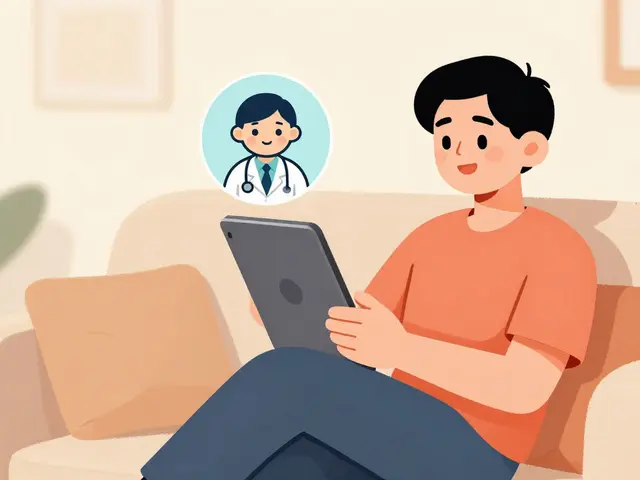
New CMS rules now require Medicare Part D to cover all FDA-approved biosimilars. That means more generic specialty drugs will enter the system. By 2026, specialty pharmacies expect a 40% increase in biosimilar volume.To handle it, they’re upgrading. Real-time prescription benefit tools are cutting prior authorization time by over three days. Electronic systems are now linking directly to EHRs so pharmacists can see a patient’s full history. Some are even adding telehealth visits for injection training.
But the core hasn’t changed. The industry’s future isn’t about cutting costs. It’s about keeping the care intact. As industry analyst John Prince said: “The distinction between brand and generic becomes almost irrelevant. The service model-not the product cost-determines the distribution channel.”
What This Means for Providers
For prescribers, this means: don’t assume switching to a generic will simplify things. If the drug was originally distributed through a specialty pharmacy, it still will be. You can’t just write a prescription and send it to a retail pharmacy. You have to send it to the right specialty pharmacy-and often, the one the patient already uses.For pharmacists, it means deepening expertise. The learning curve for specialty pharmacy practice is 6 to 8 months. You need to know not just the drug, but the disease, the side effects, the insurance rules, the delivery logistics.
For patients? It means continuity. Even when the drug changes, the support doesn’t. And that’s what keeps them alive.
Can a retail pharmacy dispense a generic specialty drug?
No. If the manufacturer has mandated specialty distribution, only specialty pharmacies can dispense the drug-even if it’s generic. Retail pharmacies are legally barred from filling these prescriptions, regardless of cost or availability.
Why do generic specialty drugs still cost so much?
The cost isn’t just for the drug-it’s for the entire service package. Specialty pharmacies charge dispensing fees of $250-$500 per prescription to cover clinical support, temperature-controlled shipping, prior authorization, patient education, and follow-up care. These services remain necessary even for low-cost generics.
Are biosimilars the same as generics?
No. Biosimilars are highly similar versions of biologic drugs, but not exact copies. Because biologics are made from living cells, they can’t be replicated exactly. Biosimilars require the same handling, storage, and monitoring as their reference biologics, so they’re always dispensed through specialty pharmacies.
Why do specialty pharmacies take longer to fill prescriptions?
Specialty prescriptions require more steps: prior authorization, insurance verification, financial assistance applications, clinical review, patient education, and temperature-controlled packaging. The average turnaround is 7.2 days, compared to 1.2 days for retail. This is because care, not speed, is the priority.
Can patients switch specialty pharmacies when switching to a generic?
Technically, yes-but most patients don’t. A 2024 survey found 68% of patients preferred staying with the same specialty pharmacy when transitioning to a generic because they valued continuity of care, established relationships with nurses, and familiarity with the process.


THANGAVEL PARASAKTHI
February 9, 2026 AT 11:01 AMSo basically, even if the drug costs half, you still got the same nurse calls, same cold box, same 2-week wait? That’s wild. In India, we’d just get the pill and call it a day. But here, it’s like you’re signing up for a full-on medical program. Not saying it’s bad-just… intense.
Frank Baumann
February 9, 2026 AT 14:20 PMLet me tell you something-this whole system is a goddamn masterpiece of over-engineering. I mean, we’re talking about a drug that’s chemically identical, right? But nooooo, we need a whole damn clinical operation to hand-hold someone through injecting themselves with a liquid that’s now 30% cheaper. It’s like the healthcare industry decided: if you can make something complicated, you must. And now we’re all trapped in this ritual of paperwork, cold packs, and nurse check-ins just because… well, because ‘care’? Please. It’s profit in a lab coat.
Chelsea Deflyss
February 10, 2026 AT 15:31 PMY’all are overthinking this. It’s not about the drug, it’s about the liability. If some dude gets a bad reaction and the pharmacy didn’t call him, they get sued. So they do ALL the things. Even if it’s generic. Even if it’s cheap. Even if the patient says ‘I’m fine, just send it.’ They still gotta call. That’s just how it is. No one wants to be the one who didn’t follow protocol.
Scott Conner
February 11, 2026 AT 04:59 AMWait, so biosimilars aren’t generics? I thought they were. So if I switch from Humira to its biosimilar, I’m not getting a cheaper version-I’m getting a ‘kinda similar’ version? And still have to go through the same 7-day process? That’s kind of messed up. Why can’t we just call it what it is? If it’s not identical, why call it a ‘generic’ at all? Confusing as hell.
Alex Ogle
February 13, 2026 AT 00:44 AMIt’s funny, really. You’d think with all the tech we have, we’d automate the hell out of this. But no. We still have real humans calling patients to teach them how to inject. We still use ice packs and tracked coolers. We still have 7-day turnarounds. Maybe it’s outdated. Maybe it’s inefficient. But… I get it. When you’re on a drug that keeps you alive, you don’t want a robot. You want someone who remembers your name, who knows your kid’s name, who asks if you’ve been sleeping. That’s not a cost center. That’s the whole damn point.
Brandon Osborne
February 13, 2026 AT 16:47 PMTHIS IS WHY AMERICA IS BROKEN. You people are crying about how ‘expensive’ specialty drugs are-but you’re ignoring the REAL problem: the ENTIRE SYSTEM is designed to keep you dependent. They don’t want you to go to CVS. They don’t want you to have options. They want you stuck with the same pharmacy, the same nurse, the same $500 fee, because that’s where the money is. And you’re okay with it? You think this is ‘care’? It’s a monopoly with a white coat. Wake up.
Marie Fontaine
February 14, 2026 AT 20:06 PMOMG YES!! I switched to a biosimilar last year and my nurse kept calling me-she even sent me a care package with stickers and a little journal to track my side effects!! I cried!! 😭💕 That’s why I stayed!! Price doesn’t matter when someone knows your life!!
Lyle Whyatt
February 15, 2026 AT 21:50 PMHaving worked in a regional specialty pharmacy in Tasmania, I can tell you-this isn’t just a U.S. thing. We had the same setup: cold chain, nurse calls, insurance battles, and patients who’d rather wait 10 days than switch to a new team. The emotional bond here is real. I once had a patient who refused to let us switch her to a new pharmacy because ‘the guy who taught her to inject had the same dog as her late husband.’ That’s not logistics. That’s human. And no algorithm can replicate that. So yeah, the system’s clunky. But sometimes, clunky is what saves lives.
Ken Cooper
February 16, 2026 AT 03:43 AMOkay, so let me get this straight: even if a drug is now generic, and even if it’s cheaper, and even if it’s FDA-approved, you STILL can’t get it at Walgreens? Why? Because ‘the manufacturer decided’? That’s not a regulation-that’s a corporate dictatorship. And now we’re stuck with 3 companies controlling 84% of the market? That’s not healthcare, that’s a cartel. And don’t even get me started on the $500 ‘dispensing fee’-that’s not a fee, it’s a tax on being sick.
MANI V
February 16, 2026 AT 23:04 PMPeople are making this into a romanticized tragedy. It’s not ‘care.’ It’s greed. If the drug is generic, why not let retail pharmacies handle it? Why force patients through this bureaucratic nightmare? The answer? Profit. The ‘nurse calls’? Paid by the manufacturer. The ‘cold chain’? Marked up 300%. This isn’t about safety. It’s about control. And the patients? They’re pawns. Stop pretending this is noble. It’s exploitation.