
Medication Synchronization Impact Calculator
Your Current Situation
Enter your details to see how Med Sync could simplify your routine.
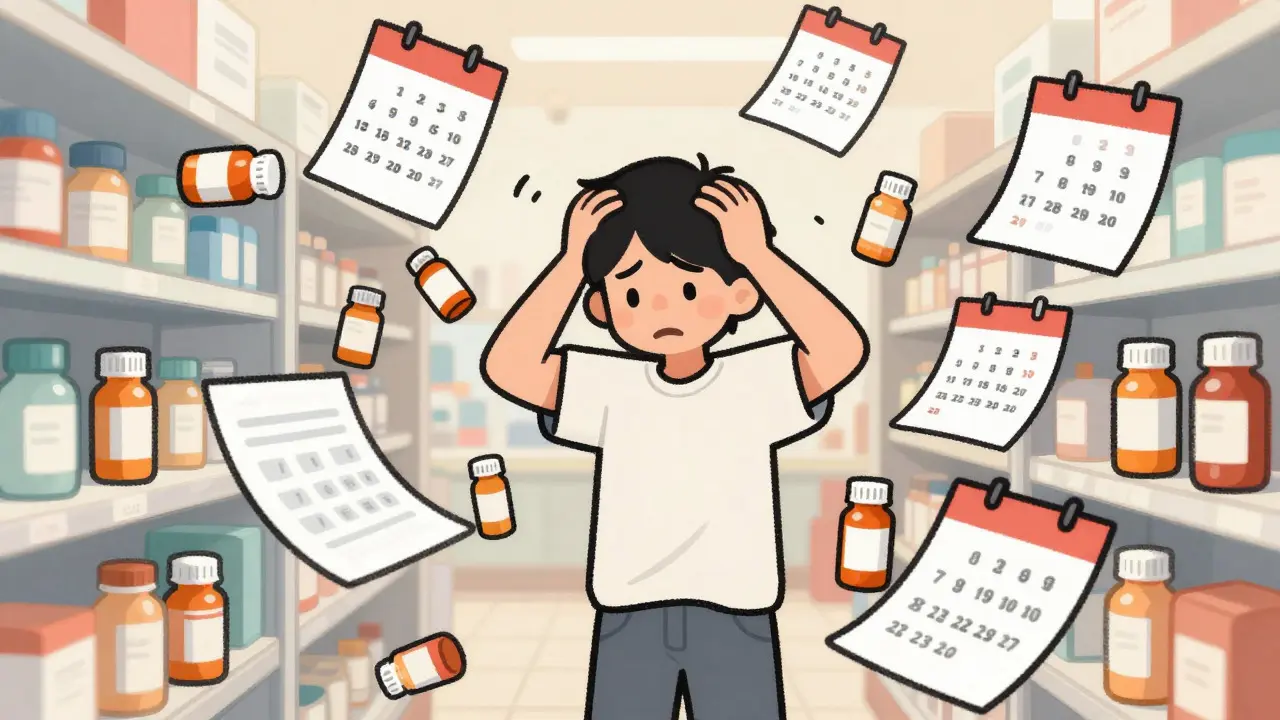
Missing a single dose of blood pressure medication might not seem like a big deal. But for millions of people managing chronic conditions, that one missed pill can trigger a cascade of health issues, leading to emergency room visits or hospitalizations. The problem isn't usually laziness; it's complexity. Juggling different refill dates for five or six different prescriptions is mentally exhausting. It creates gaps in therapy-the dangerous periods when you run out of medicine before the next refill arrives.
This is where medication synchronization, often called "med sync," changes the game. Instead of running to the pharmacy every two weeks on random days, med sync aligns all your maintenance medications to a single monthly pickup date. It turns a chaotic scheduling nightmare into a simple, predictable routine. If you are struggling to keep up with your prescriptions, understanding how this system works could be the key to better health outcomes and less stress.
What Is Medication Synchronization?
Medication synchronization is a structured pharmacy service designed to align all a patient's prescription refills to a single monthly pick-up date, thereby preventing gaps in therapy and improving medication adherence. The concept was first introduced in 1995 by a community pharmacist in Long Beach, California, specifically to tackle the widespread issue of non-adherence. Today, major organizations like the Academy of Managed Care Pharmacy (AMCP) and the American Society of Health-System Pharmacists (ASHP) formally endorse it as a critical tool for patient care.
Think of it like consolidating your utility bills. Instead of paying electricity on the 5th, water on the 12th, and gas on the 20th, you set them all to arrive on the 1st. Med sync does exactly this for your prescriptions. By anchoring all your regular medications to one day each month, you eliminate the confusion of tracking multiple due dates. This process requires careful coordination between you, your pharmacist, and sometimes your doctor, but the result is a streamlined approach to staying healthy.
Who Benefits Most from Med Sync?
Not everyone needs medication synchronization. If you only take an occasional antibiotic for an infection, med sync adds unnecessary complexity. However, for specific groups, it is a lifesaver. The National Community Pharmacists Association (NCPA) identifies three primary candidates who see the most benefit:
- Patients with complex drug regimens: If you take three or more daily medications for conditions like diabetes, hypertension, or high cholesterol, med sync simplifies your life significantly.
- Elderly patients with mobility issues: For seniors who find driving to the pharmacy difficult or tiring, reducing trips from twelve times a year to just four is a massive quality-of-life improvement.
- Busy professionals: People with demanding jobs often forget to check their calendars for upcoming refills. A single monthly reminder is much easier to manage than weekly ones.
Data supports this targeted approach. A 2022 survey by the NCPA involving 1,200 patients found that 78% reported improved medication adherence after joining a sync program. Furthermore, caregivers of elderly patients noted a 40% reduction in missed doses once synchronization was implemented. These numbers highlight that med sync is not just about convenience; it is a clinical strategy to ensure safety plans work as intended.
How the Process Works: Step-by-Step
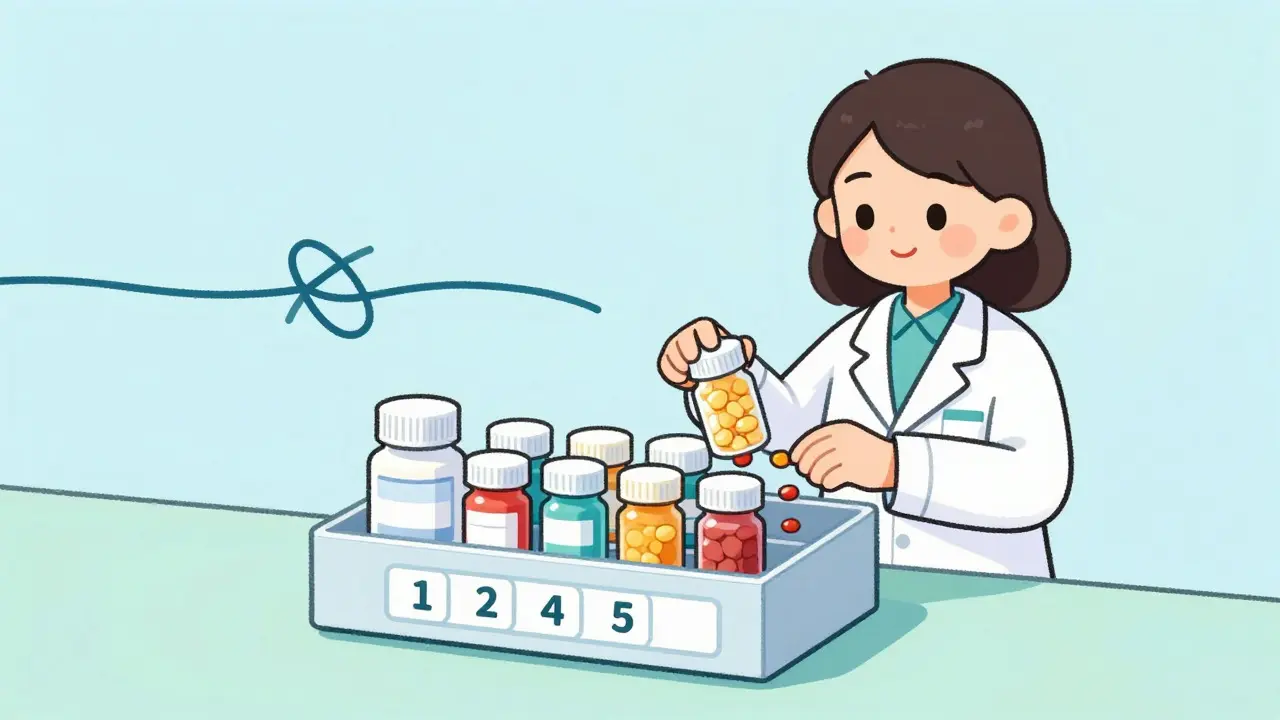
Implementing medication synchronization isn't automatic. It requires a deliberate setup phase. Here is what typically happens when you enroll in a med sync program:
- Eligibility Check: Your pharmacist reviews your profile to identify which medications are suitable for synchronization. Generally, these are long-term maintenance drugs taken daily.
- Medication Reconciliation: This is a crucial step. Your pharmacist separates your daily meds from "PRN" (as-needed) medications. Inhalers used only during asthma attacks or short-course antibiotics are excluded because they don't follow a strict schedule.
- Choosing an Anchor Date: You and your pharmacist agree on a specific day of the month for pickups. This "anchor date" should fit your lifestyle-perhaps the first Saturday of the month when you have free time.
- The Initial Short Fill: To get everything aligned, some prescriptions may need to be filled partially for the first cycle. For example, if you have 20 days left on one med but 5 days on another, the pharmacist might give you a smaller amount of the first med so both run out on the same day. This is documented clearly to avoid insurance confusion.
- Ongoing Monthly Pickups: Once synchronized, you receive all your medications at once on your anchor date. Many pharmacies also include a brief check-in call to review any side effects or questions.
This workflow ensures that therapeutic complexity is reduced without compromising the dosage or timing of your treatment. The initial adjustment period might feel strange, especially with the short fills, but it stabilizes quickly.
Common Challenges and How to Overcome Them
While med sync offers significant benefits, it is not without hurdles. Understanding these potential pitfalls helps you prepare for them.
| Feature | Traditional Refills | Medication Synchronization |
|---|---|---|
| Pickup Frequency | Multiple times per month (varies by drug) | Once per month |
| Scheduling Complexity | High (track multiple dates) | Low (single anchor date) |
| Insurance Coordination | Standard processing | May require early refill approvals or short-fill documentation |
| Risk of Gaps | Higher (easy to miss a date) | Lower (proactive reminders) |
| Pharmacist Interaction | Transactional (grab and go) | Consultative (monthly reviews) |
Insurance Restrictions: Some insurance plans, particularly Medicare Part D, have rules about early refills. During the initial sync phase, you might encounter denials for partial fills. About 35% of implementing pharmacies report this as a common challenge. The solution? Ask your pharmacist to document the short fill explicitly for "adherence purposes." They can often override standard limits or contact the insurer directly.
Physician Prescription Limits: Med sync works best with 90-day supplies. If your doctor writes prescriptions for only 30 days, the synchronization breaks down. You need to ask your physician for a "90 x 4" renewal process-four 90-day refills written at once, typically during your annual visit. The American Medical Association (AMA) emphasizes that expired prescriptions disrupt the entire sync system, so proactive communication with your doctor is essential.
Patient Resistance: Changing habits is hard. Some patients worry about receiving less medication initially or dislike the idea of committing to a full month's supply upfront. Education is key here. Explain that the goal is consistency, not cost savings (though fewer pharmacy fees can help). Hearing success stories from others, like the 87% satisfaction rate reported by NCPA, can ease these concerns.

The Role of Technology and Future Trends
Technology is making medication synchronization smoother and more accessible. As of 2026, many electronic health record (EHR) systems, including Epic, now feature "med sync" flags. These alerts remind physicians to write 90-day prescriptions during appointments, ensuring the foundation for sync is laid before the patient even reaches the pharmacy.
Chain pharmacies lead in automated integration, with 75% connecting their sync programs to automated refill systems. This means you might receive a text message on your anchor date saying, "Your meds are ready." Independent pharmacies, while slightly lower in tech adoption (48%), often excel in personalized service, offering customized anchor dates and dedicated phone support.
Looking ahead, regulatory bodies are tightening the link between med sync and value-based care. The Centers for Medicare & Medicaid Services (CMS) has proposed tying Medicare Part D star ratings to synchronization enrollment rates. Pharmacies achieving high sync rates for chronic medications may receive quality bonus payments starting in 2025. This shift signals that med sync is moving from a nice-to-have convenience to a standard of care for chronic disease management.
Is Medication Synchronization Right for You?
Deciding to join a med sync program depends on your individual needs. If you are generally organized and only take one or two medications, traditional refills might suffice. However, if you frequently forget refills, struggle with transportation, or manage multiple chronic conditions, med sync is likely worth exploring.
To get started, talk to your current pharmacist. Ask if they offer a formal synchronization program. If they do, request a consultation to review your medications. Be prepared to discuss your preferences for pickup times and to coordinate with your doctor for longer-term prescriptions. The initial setup takes effort, but the long-term payoff in health stability and peace of mind is substantial.
Remember, medication synchronization is not just about logistics; it is about creating a partnership with your healthcare team. By simplifying the refill process, you free up mental energy to focus on living well rather than managing pills. In a healthcare system where non-adherence costs billions annually, taking control of your refill schedule is one of the most powerful steps you can take for your own safety plan.
Does medication synchronization save money?
Indirectly, yes. While the cost of the medications themselves remains the same, reducing pharmacy visits can save on copays if your plan charges per visit. More importantly, improved adherence reduces the risk of costly hospitalizations or emergency room visits related to uncontrolled chronic conditions. Studies suggest synchronization can reduce medication-related hospitalizations by 12% among seniors.
Can I change my anchor date later?
Yes, absolutely. Your anchor date is flexible. If your schedule changes, simply contact your pharmacy to adjust the date. They will re-synchronize your medications to the new preferred day. It is best to do this during a refill cycle to minimize disruption.
What happens if I stop taking a medication?
If you discontinue a medication mid-cycle, inform your pharmacist immediately. They will remove it from your synchronization list. You may have unused pills left over, which is why monthly check-ins are valuable-they allow you and your pharmacist to review whether you still need each medication.
Are all medications eligible for synchronization?
No. Only maintenance medications taken regularly are suitable. Medications used "as needed" (PRN), such as pain relievers or rescue inhalers, and short-term treatments like antibiotics are typically excluded because their usage is unpredictable or temporary.
How do I handle insurance issues with early refills?
During the initial synchronization, pharmacists often perform "short fills" to align dates. If insurance denies these, ask your pharmacist to document the reason as "adherence/synchronization." Many insurers have exceptions for this. If problems persist, your pharmacist can appeal the decision or contact the insurance provider directly.





Sean Luke
I specialize in pharmaceuticals and have a passion for writing about medications and supplements. My work involves staying updated on the latest in drug developments and therapeutic approaches. I enjoy educating others through engaging content, sharing insights into the complex world of pharmaceuticals. Writing allows me to explore and communicate intricate topics in an understandable manner.
view all posts