
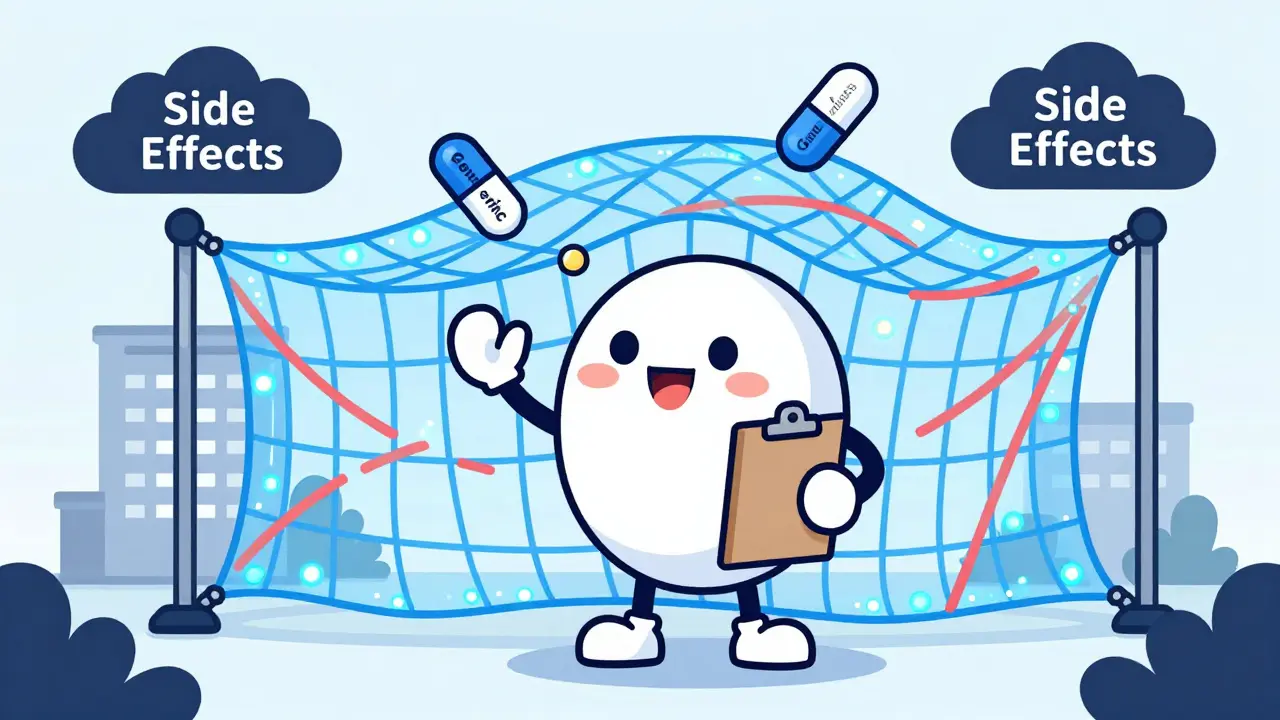
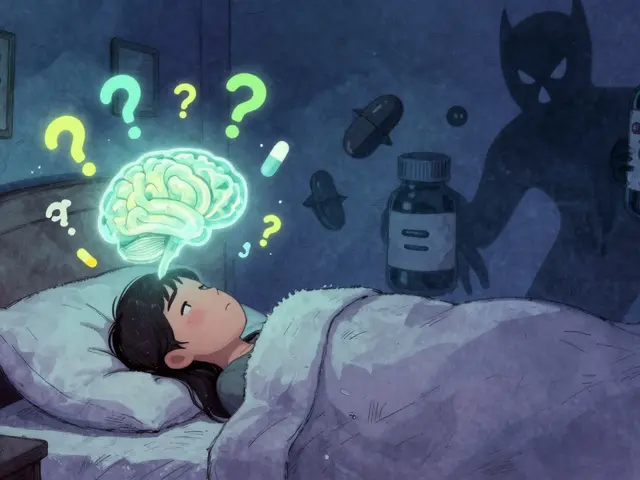
Generic drugs make up roughly 90% of all prescriptions filled in the United States. They save patients billions of dollars every year by offering the same therapeutic effect as brand-name medications at a fraction of the cost. But here is the question that keeps many people up at night: if generics are approved based on smaller studies than brand-name drugs, how do we know they stay safe once they hit the shelves?
The short answer is that the U.S. Food and Drug Administration (FDA) does not just approve a generic drug and walk away. It runs a massive, continuous safety net. This system involves real-time data mining, factory inspections, and a complex web of reporting channels designed to catch problems before they become widespread health crises. Understanding this process helps explain why your pharmacy can confidently swap a brand-name pill for a generic one.
The Foundation: Bioequivalence vs. Real-World Use
To understand post-approval monitoring, you first have to understand what happens during approval. When a company wants to sell a generic version of an existing drug, it files an Abbreviated New Drug Application (ANDA). Unlike brand-name manufacturers who run clinical trials with thousands of patients over years, generic makers must prove bioequivalence.
Bioequivalence means the generic drug delivers the same amount of active ingredient into the patient’s bloodstream at the same rate as the reference listed drug (RLD). These studies usually involve small groups-typically 24 to 36 healthy volunteers. While this proves the drug works similarly in a controlled setting, it cannot capture every possible side effect or interaction that might occur in millions of diverse patients over decades.
This is where post-market surveillance comes in. The FDA acknowledges that the "true picture of a product's safety actually evolves over the months and even years" after approval. The goal shifts from proving equivalence to detecting unexpected signals that only appear when the drug is used by the general public, including elderly patients, those with multiple conditions, or people taking other medications.
The Central Hub: Office of Generic Drugs (OGD)
The engine behind this monitoring is the FDA’s Center for Drug Evaluation and Research (CDER), specifically the Office of Generic Drugs (OGD). Think of OGD as the air traffic control tower for generic medication safety. They don't work in isolation; they coordinate closely with the Office of Pharmaceutical Quality (OPQ) and the Office of Surveillance and Epidemiology.
A key player within OGD is the Clinical Safety and Surveillance Committee. This group includes physicians, chemists, and scientists who meet regularly to review newly identified safety signals. Their job is to decide if a report of a side effect is a coincidence or a pattern that requires action. They also look at "allowable differences" between generics and brands-such as inactive ingredients like dyes or binders-to ensure these variations aren’t causing therapeutic inequivalence or allergic reactions.
Who is responsible for monitoring generic drug safety?
The FDA’s Office of Generic Drugs (OGD), part of the Center for Drug Evaluation and Research (CDER), leads the effort. They work with the Office of Pharmaceutical Quality (OPQ) and the Office of Surveillance and Epidemiology to analyze data and enforce safety standards.
Detecting Signals: FAERS and the Sentinel Initiative
How does the FDA actually find out if a drug is causing harm? They use two main tools: passive reporting and active surveillance.
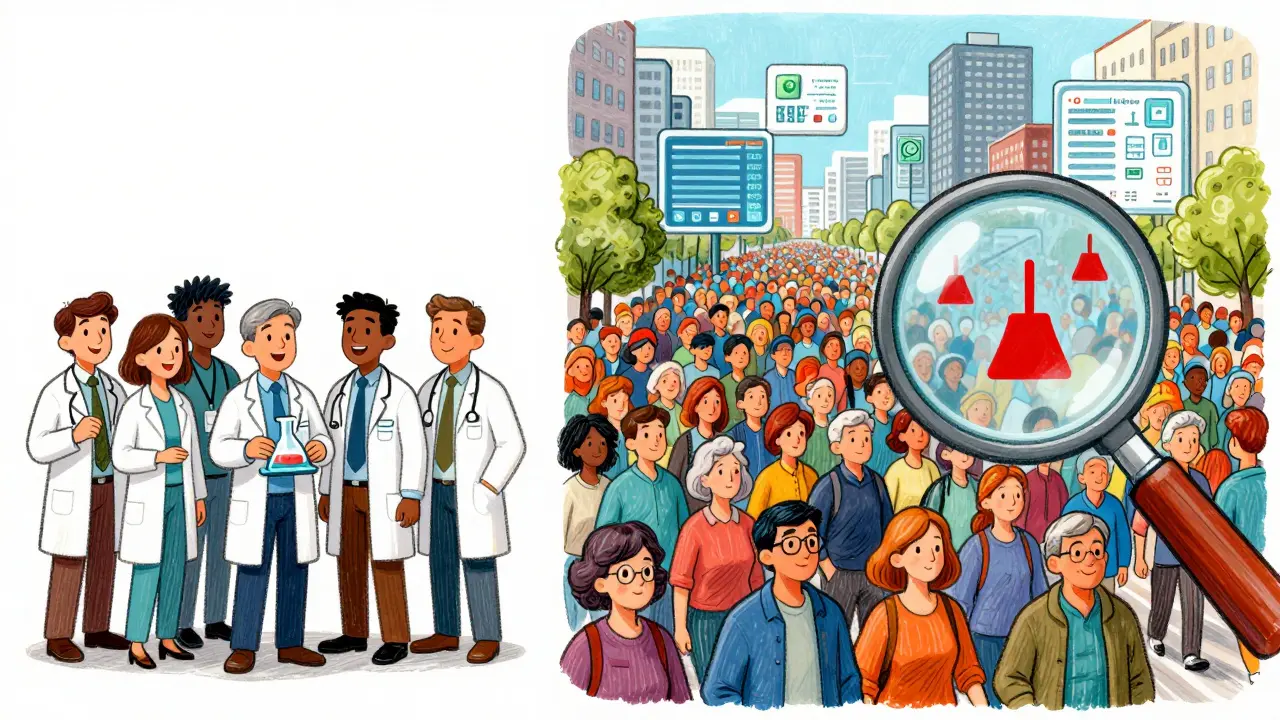
FAERS (FDA Adverse Event Reporting System) is the primary database for passive reporting. Doctors, pharmacists, patients, and manufacturers submit reports of side effects through MedWatch. In 2022 alone, the FDA processed over 1.4 million such reports. Multidisciplinary teams mine this data weekly to spot trends. For example, if dozens of reports suddenly mention liver damage linked to a specific generic antibiotic, investigators dig deeper to see if there is a manufacturing defect or a previously unknown reaction.
However, spontaneous reporting has a flaw: underreporting. Studies suggest only 1% to 10% of actual adverse events are ever reported. To fix this blind spot, the FDA relies on the Sentinel Initiative. Launched in 2008 and expanded by the 21st Century Cures Act, Sentinel is an active surveillance system. It accesses electronic health records from more than 100 million patients across hundreds of healthcare systems. Instead of waiting for someone to call in a complaint, Sentinel algorithms scan medical records in real-time to detect safety signals automatically. If a spike in hospitalizations occurs among users of a specific generic blood thinner, Sentinel flags it immediately.
Quality Control: Inspections and Impurity Monitoring
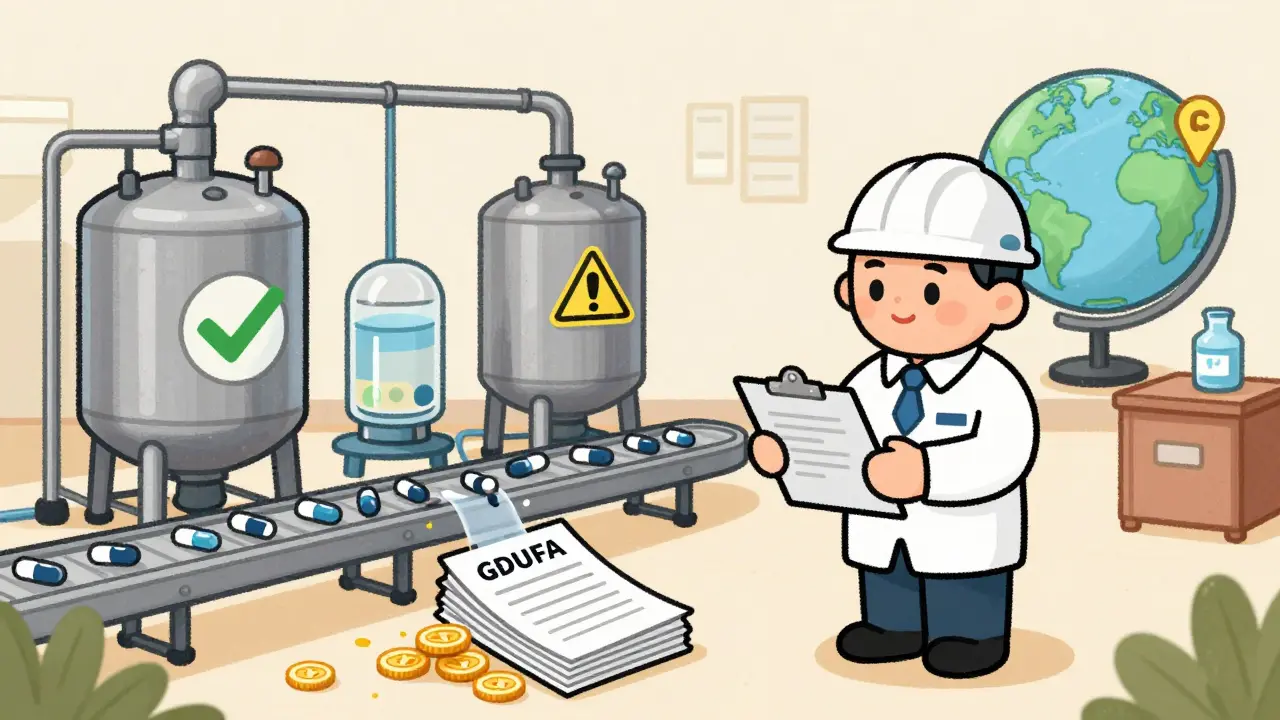
Safety isn't just about biological reactions; it's also about physical quality. A generic drug might be bioequivalent in theory but contaminated in practice. The FDA combats this through rigorous Current Good Manufacturing Practices (cGMP) enforcement.
Federal inspectors conduct approximately 1,200 domestic and 600 foreign facility inspections annually. These visits are often unannounced. Inspectors check everything from the cleanliness of the production floor to the accuracy of laboratory testing. They verify that manufacturers control their materials and processes strictly. If a facility fails inspection, the FDA can issue warning letters, seize products, or ban imports.
Impurity monitoring is another critical layer. Over time, chemical compounds can degrade, or new impurities can form during manufacturing. The Office of Pharmaceutical Quality (OPQ) oversees the review of these impurities. If a generic drug contains an impurity above established safety levels, the OGD Pharmacology/Toxicology team reviews the potential toxicity using published literature and manufacturer data. The goal is to ensure the safety profile of the generic remains comparable to the brand-name original.
| Feature | Pre-Approval (ANDA Phase) | Post-Approval (Surveillance) |
|---|---|---|
| Primary Goal | Prove bioequivalence to Reference Listed Drug | Detect rare/adverse events and quality issues |
| Data Source | Clinical studies (24-36 volunteers) | Real-world data (millions of patients via Sentinel/FAERS) |
| Key Agency | Office of Generic Drugs (OGD) | OGD, OPQ, Office of Surveillance & Epidemiology |
| Focus Area | Active ingredient absorption rate | Long-term safety, impurities, manufacturing defects |
Regulatory Framework: GDUFA and the Cures Act
The strength of this monitoring system depends heavily on funding and legal authority. For years, critics argued the FDA lacked resources to properly oversee generics. That changed with the Generic Drug User Fee Amendments (GDUFA).
GDUFA, first enacted in 2012 and reauthorized through GDUFA III (2023-2027), requires generic drug manufacturers to pay user fees. These fees fund the FDA’s review processes and post-market surveillance activities. Under GDUFA III, the FDA collected approximately $65.7 million annually, allowing them to hire more reviewers and invest in better data analytics. This financial structure ensures the agency has the staff needed to handle the volume of applications-about 1,000 ANDAs are approved annually.
Additionally, Section 3075 of the 21st Century Cures Act (2016) strengthened the legal framework. It mandated formal requirements for drug safety surveillance, pushing the FDA to move beyond reactive measures toward proactive pharmacovigilance. This means the FDA now screens certain generic drugs proactively after approval, looking for early signals of concern even before complaints flood in.
What Happens When a Problem Is Found?
If the FDA identifies a confirmed safety signal, several actions can follow, depending on the severity:
- Labeling Updates: The most common response. The FDA may require manufacturers to update the drug’s label to include new warnings, contraindications, or dosage instructions. They may also send "Dear Healthcare Provider" letters to alert doctors.
- Voluntary Recalls: If a manufacturing defect is found (e.g., contamination or incorrect potency), the manufacturer may voluntarily recall the product from pharmacies and hospitals.
- Market Withdrawal: In rare cases where risks outweigh benefits and no safe alternative exists, the FDA can mandate the removal of the drug from the market entirely.
For example, in recent years, concerns about nitrosamine impurities in certain heartburn medications led to widespread recalls and stricter testing protocols. The FDA’s ability to act quickly relied on its impurity monitoring capabilities and coordination with manufacturers.
Challenges and Limitations
Despite these robust systems, challenges remain. One major issue is "therapeutic inequivalence." While generics must be bioequivalent, allowable differences in inactive ingredients can sometimes cause issues for sensitive patients. Detecting these subtle differences through standard monitoring is difficult because patients rarely report mild allergies or digestive upset unless they suspect the drug is the cause.
Another limitation is the complexity of modern generics. As patents expire on more complex drugs-like inhalers, topical creams, and narrow therapeutic index drugs-the monitoring becomes harder. These products require precise delivery mechanisms that are harder to replicate and monitor than simple pills. The Pew Charitable Trusts noted in 2021 that gaps remain in monitoring the therapeutic equivalence of these complex generics.
Furthermore, the reliance on spontaneous reporting means rare side effects can take years to surface. If a serious adverse event affects only 1 in 100,000 users, it might not trigger a signal in FAERS until tens of thousands of people have already been exposed. This is why the expansion of the Sentinel Initiative is so critical-it provides the statistical power to detect these rare events faster.
Why This Matters to You
When you pick up a generic prescription, you are trusting a system that balances affordability with rigorous oversight. The FDA’s post-approval monitoring is not perfect, but it is comprehensive. It combines high-tech data mining with old-fashioned factory inspections to keep your medications safe.
If you experience unusual side effects from any medication, generic or brand-name, you can contribute to this system by reporting them via MedWatch. Your report could be the piece of data that helps the FDA identify a safety signal and protect others. The system works best when patients, doctors, and regulators all stay engaged.
Are generic drugs less safe than brand-name drugs?
No. Generics must demonstrate bioequivalence to brand-name drugs, meaning they deliver the same active ingredient at the same rate. The FDA monitors both types rigorously. While generics rely on smaller pre-approval studies, post-market surveillance ensures long-term safety for both.
How can I report a side effect from a generic drug?
You can report adverse events through the FDA’s MedWatch program online or by phone. Healthcare providers can also submit reports. This data feeds into FAERS, helping the FDA detect safety signals.
What is the Sentinel Initiative?
Sentinel is an FDA-led active surveillance system that uses electronic health records from over 100 million patients to detect drug safety signals in real-time, overcoming the limitations of voluntary reporting.
Does the FDA inspect generic drug factories?
Yes. The FDA conducts thousands of inspections annually, both routine and unannounced, to ensure compliance with Current Good Manufacturing Practices (cGMP). This covers domestic and foreign facilities.
What is GDUFA?
GDUFA (Generic Drug User Fee Amendments) is legislation that allows the FDA to collect fees from generic drug manufacturers to fund the review and post-market surveillance of generic products, improving regulatory efficiency.



Sean Luke
I specialize in pharmaceuticals and have a passion for writing about medications and supplements. My work involves staying updated on the latest in drug developments and therapeutic approaches. I enjoy educating others through engaging content, sharing insights into the complex world of pharmaceuticals. Writing allows me to explore and communicate intricate topics in an understandable manner.
view all posts