
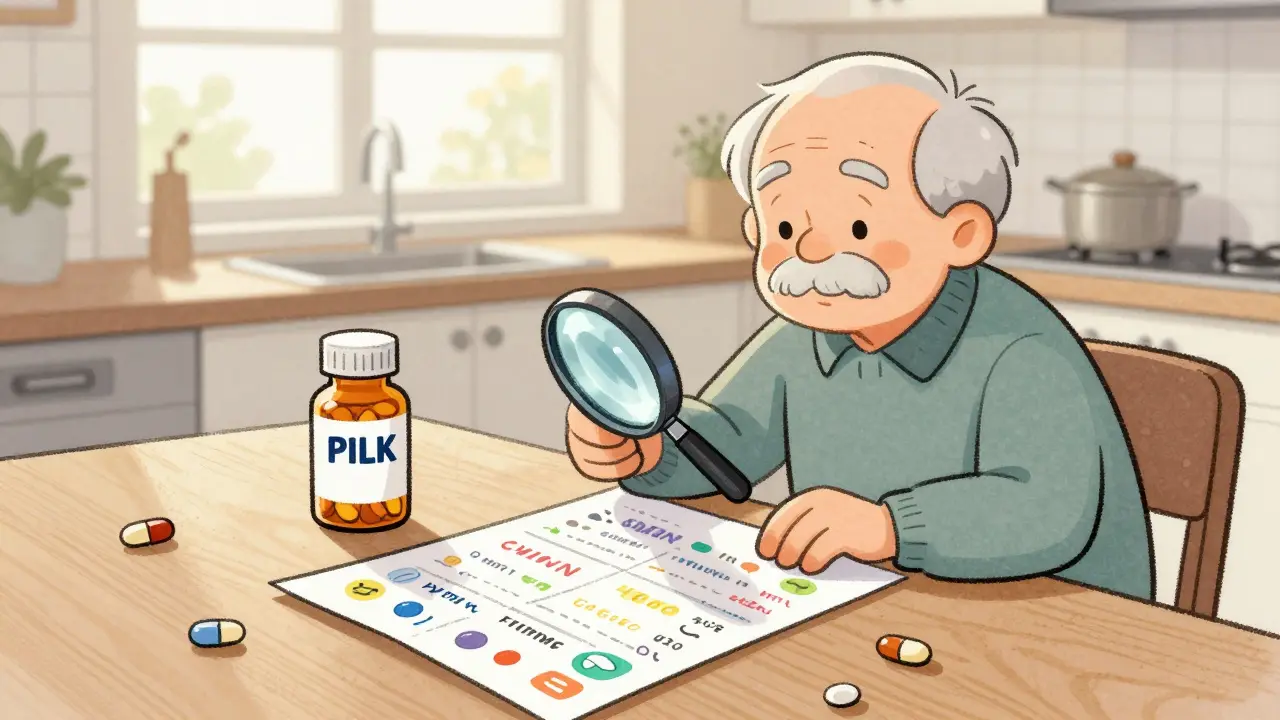
Managing medications for a chronic condition isn’t just about popping pills every day. It’s about staying alive, avoiding hospital visits, and keeping your quality of life intact. If you’re on five or more medications long-term, you’re not alone-nearly 91% of older adults in long-term care take that many. But here’s the truth: medication safety isn’t automatic. It’s a skill you build, one step at a time.
Keep a Real-Time Medication List
Don’t rely on memory. Don’t trust your pill organizer to tell you what’s in it. Write everything down. Every prescription, every over-the-counter pill, every supplement-even the gummies you take for sleep or joint pain. Include the name, dose, frequency, and why you’re taking it. Update it every time your doctor changes something. Carry this list with you. In the ER, at the pharmacy, during a specialist visit-hand it to the provider. Studies show that 67% of medication errors happen during care transitions because no one has the full picture. A simple paper list, kept in your wallet or phone notes, cuts that risk dramatically.Know the 7 Rights of Safe Medication Use
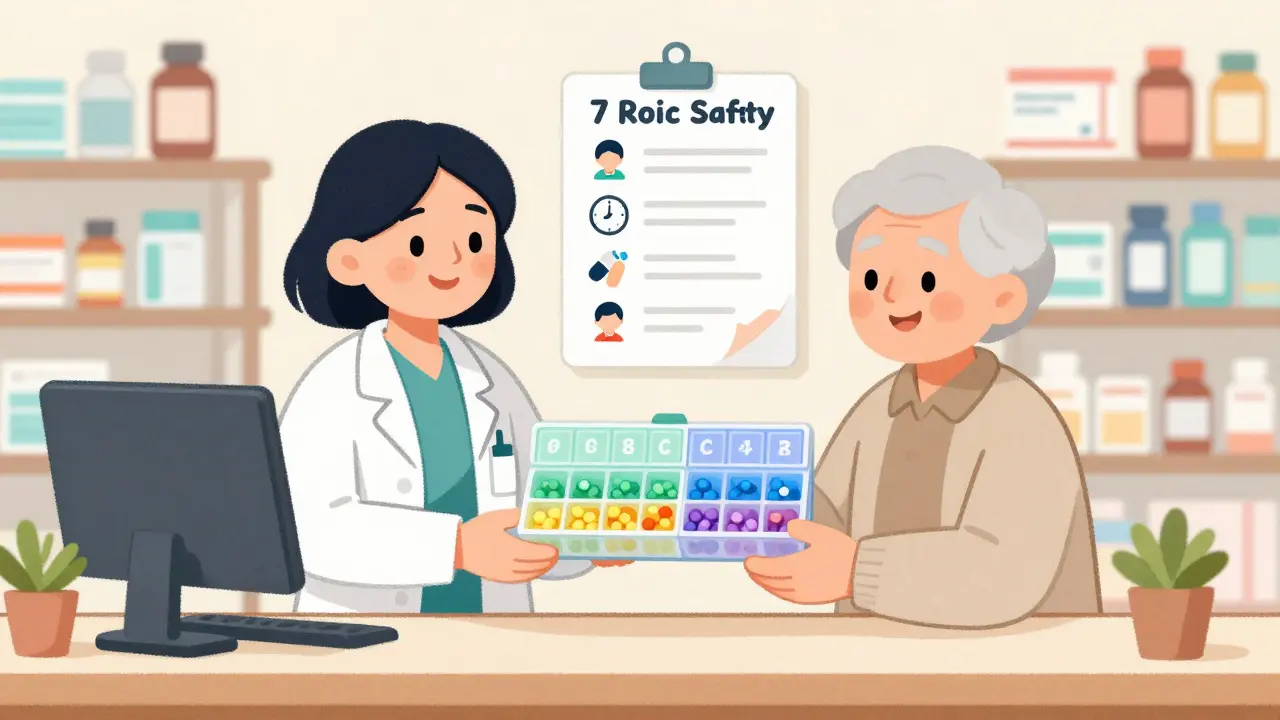
These aren’t just hospital rules-they’re your personal safety checklist:- Right patient: Are you sure this prescription is yours? Double-check your name on the bottle.
- Right drug: Does the pill look like the last one? If it’s a different color or shape, ask the pharmacist.
- Right dose: Is it 5 mg or 50 mg? Don’t guess. Read the label twice.
- Right route: Is it supposed to be swallowed, applied to skin, or inhaled? Don’t crush pills unless told it’s safe.
- Right time: Are you taking it with food? At bedtime? Every 8 hours? Timing matters for effectiveness and safety.
- Right documentation: Did you write down when you took it? Use a pill tracker app or a printed log.
- Right reason and response: Why are you taking this? And what side effect should you watch for? If you feel dizzy after starting a new med, don’t ignore it.
Use this list every single time you take a pill. It turns autopilot into awareness.
Watch for Polypharmacy Danger Zones
Taking five or more medications is called polypharmacy. It’s common. But it’s also risky. Each extra pill increases your chance of side effects, drug interactions, and falls. The American Geriatrics Society says: Don’t add a new medication without reviewing the whole list. That means every six months, sit down with your primary care doctor or pharmacist and ask: “Which of these are still necessary?”Some combinations are especially dangerous. For example, taking aspirin and diclofenac together can wreck your stomach lining. Mixing opioids with sleep meds can slow your breathing to dangerous levels. The Pharmacy Quality Alliance now tracks these high-risk pairings-and so should you. If you see a new prescription from a specialist, bring your full list to the appointment. Ask: “Could this interact with anything else I’m taking?”
Use Technology, But Don’t Depend on It
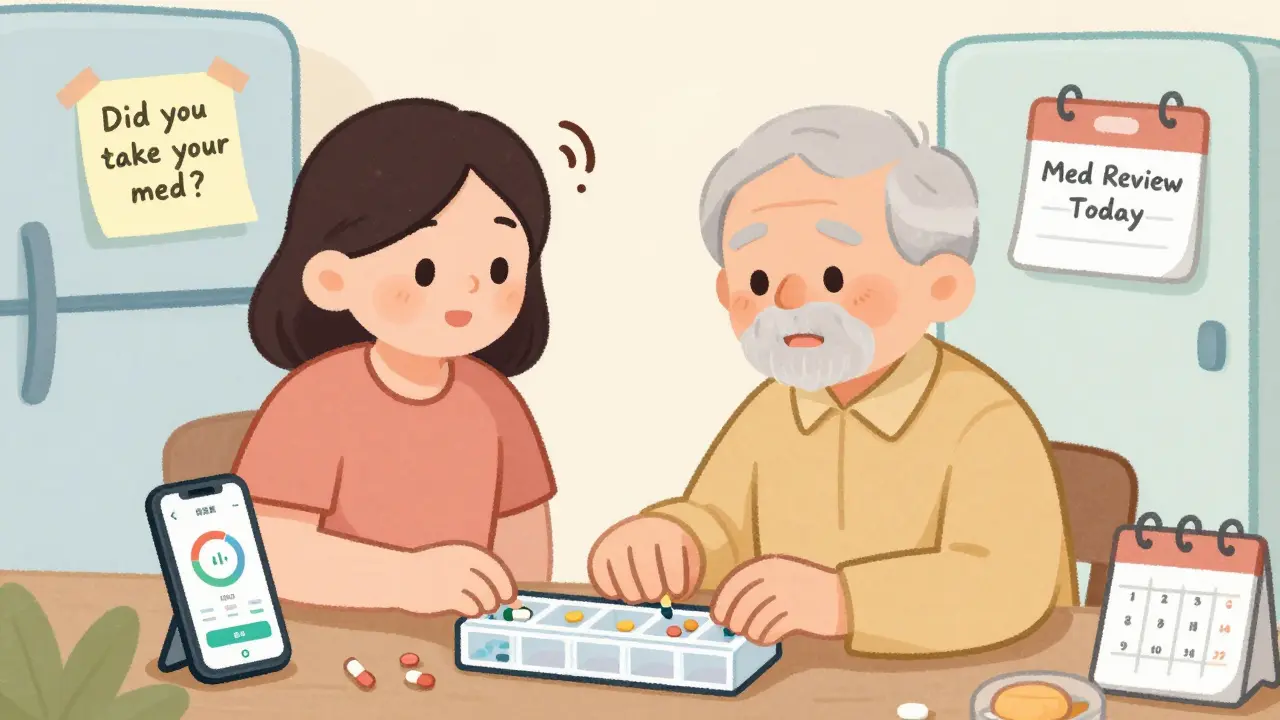
Pill dispensers with alarms? Great. Medication apps that remind you? Even better. Electronic health records that flag interactions? Vital. But technology isn’t perfect. A pill box can malfunction. An app can die when your phone battery dies. Use tech as a backup, not your only line of defense.Here’s what works: Set a daily alarm labeled “Take meds” on your phone. Put your pill box next to your toothbrush. Use a simple paper checklist taped to your fridge. If you’re forgetful, ask a family member to check in once a day. Studies show team-based care-where pharmacists, nurses, and doctors coordinate-boosts adherence from 74% to 89% after hospital discharge. You don’t need a team. But you do need a system.
Don’t Skip Medication Reviews
Your meds aren’t static. Your body changes. Your kidneys slow down. Your liver processes drugs differently as you age. Conditions improve-or get worse. What worked last year might be unnecessary-or dangerous-now.Request a full medication review at least once a year. Bring your list. Ask:
- Is this drug still helping?
- Is there a safer or cheaper alternative?
- Can I stop any of these?
Some medications, like proton pump inhibitors for heartburn, are meant for short-term use. But many people take them for years. That can lead to bone loss, nutrient deficiencies, or infections. Your doctor might not notice unless you ask.
Watch for Side Effects-Don’t Just Live With Them
Feeling tired all the time? Confused after meals? Dry mouth? Constipation? Dizziness when standing up? These aren’t just “getting older.” They could be side effects. The CDC says medication side effects are one of the top reasons older adults end up in the ER.Keep a journal. Note when symptoms started and what meds you took that day. Bring it to your next visit. Don’t say, “I feel fine.” Say, “Since I started metoprolol, I’ve been dizzy after lunch. Is this normal?” Most doctors won’t ask unless you speak up.
Cost Shouldn’t Stop You from Taking Your Meds
One in four Americans skips doses because they can’t afford them. That’s not just risky-it’s deadly. The U.S. healthcare system loses $100-$300 billion a year because people don’t take their meds as prescribed. And 125,000 people die annually from preventable complications tied to non-adherence.Ask your pharmacist about generic versions. Ask your doctor about patient assistance programs. Some drugmakers offer free or low-cost meds if you qualify. Use GoodRx or SingleCare for discounts. If your copay is $100 a month, ask if you can switch to a 90-day supply-many plans cut the cost in half. Never stop a medication because of cost. Talk to someone first.
Build a Support System
You don’t have to do this alone. If you live alone, get someone to help. A spouse, child, neighbor, or community volunteer can check in weekly. If you have memory issues, consider a medication management service. Some pharmacies offer blister packs pre-filled by day and time. Some home health agencies send nurses to watch you take your pills.And don’t be afraid to ask questions. If you don’t understand why you’re taking something, say so. If the instructions are confusing, ask for them in writing. You have the right to know what’s in your body-and why.
What to Do If You Miss a Dose
Missing a pill happens. Don’t panic. Don’t double up unless your doctor says so. Most meds have clear instructions: “If you miss a dose, take it as soon as you remember. If it’s almost time for the next dose, skip the missed one.” But not all. Blood thinners, insulin, seizure meds-those need special rules. Always check the label or call your pharmacist. Never guess.Can I stop taking my chronic medication if I feel better?
No-not without talking to your doctor. Many chronic meds, like those for high blood pressure or diabetes, work even when you feel fine. Stopping them suddenly can cause dangerous rebounds-like a spike in blood pressure or a diabetic emergency. Feeling better is often a sign the medication is working. Always discuss changes with your provider.
How often should I review my medications with my doctor?
At least once a year, but more often if you’ve been hospitalized, started a new drug, or feel different. If you see multiple specialists, ask your primary care doctor to coordinate a full medication review every six months. Many patients don’t realize their cardiologist, rheumatologist, and neurologist are all prescribing without seeing the full list.
Are supplements safe to take with my prescription meds?
Not always. Supplements like St. John’s Wort, garlic pills, or high-dose vitamin E can interfere with blood thinners, antidepressants, and chemotherapy drugs. Even common ones like calcium or magnesium can reduce absorption of thyroid or antibiotic meds. Always tell your doctor and pharmacist about every supplement you take-even if you think it’s harmless.
What should I do if I notice a new side effect?
Write it down: what you felt, when it started, and what meds you took that day. Call your pharmacist first-they can tell you if it’s a known side effect and what to watch for. Then schedule a visit with your doctor. Don’t wait until your next appointment. Some side effects, like confusion or swelling, need prompt attention.
Can I use a pill organizer if I have trouble reading small print?
Yes-and you should. Many pharmacies offer large-print labels or pre-filled organizers with color-coded compartments. Some even offer blister packs with the drug name and dose printed in big letters. Ask your pharmacist. You can also use a magnifying glass or phone flashlight to read labels. Never rely on memory if you can’t read the label clearly.
Is it safe to take my meds with alcohol?
It depends. Alcohol can dangerously interact with painkillers, antidepressants, blood pressure meds, and sleep aids. It can increase drowsiness, raise your risk of bleeding, or make your liver work too hard. If you drink, tell your doctor. They can tell you if it’s safe and how much-if any-is okay. When in doubt, skip it.


Beth Templeton
January 7, 2026 AT 04:08 AMJust take your pills and stop overthinking it.
Tom Swinton
January 7, 2026 AT 15:55 PMI’ve been managing six meds for 12 years now, and honestly? The biggest game-changer was putting my pillbox right next to my coffee maker. I don’t forget coffee. I don’t forget pills. I also keep a tiny notebook taped to the fridge with the names, times, and why I’m taking each one-like ‘metoprolol for the heart that keeps trying to escape’-and yes, I wrote that. My pharmacist laughed, then hugged me. It’s not just about safety-it’s about making peace with your body’s weird new normal. And if you’re scared to ask your doctor if you can stop something? You’re not alone. But you’re also not powerless. Ask. Write it down. Bring the list. Even if they say no, you’ve taken control. That’s half the battle.
Saylor Frye
January 9, 2026 AT 03:28 AMLook, I get it. But the whole ‘seven rights’ thing sounds like something a hospital admin wrote after a team-building retreat. If you’re that worried about messing up, maybe you shouldn’t be on five meds. Just saying.
Gabrielle Panchev
January 10, 2026 AT 14:02 PMOkay, but let’s be real-how many of these ‘essential tips’ were written by someone who’s never had to juggle a pillbox, a Medicare form, and a 3 a.m. panic about whether their blood pressure meds are secretly turning them into a zombie? I’ve been on 7 meds for 8 years, and the only thing that’s kept me alive is my cat, who sits on my lap every morning and stares at me until I swallow the little white ones. Also, I’ve never once used a pill organizer-because I’m terrified I’ll accidentally take my thyroid med as a snack. And yes, I’ve taken the wrong one. Twice. I didn’t die. I just cried in the shower. So yes, write things down. Yes, ask questions. But also? Be kind to yourself. You’re not failing because you forgot. You’re just human. And if your doctor doesn’t get that? Find a new one.
Cam Jane
January 12, 2026 AT 03:50 AMHey-this is so important, and I’m so glad someone put this out there. I work with older adults, and the #1 thing I see? People are scared to speak up. They think, ‘Oh, my doctor knows best,’ or ‘I don’t want to be a bother.’ But guess what? Your body is the expert here. If you feel weird after a new med? Jot it down. If you’re paying $120 for a pill that’s been on the market since 1998? Ask for the generic. If your pharmacist gives you a look like you’re asking them to perform surgery? They’re probably just impressed you showed up with a list. And if you’re using a pill organizer? Bless you. But also-set a timer. Put your phone on the counter. Use a sticky note that says ‘DO NOT SKIP’ in Sharpie. You’re not lazy. You’re overwhelmed. And you’re not alone. I’ve had patients who cried because they finally realized they could ask, ‘Can I stop this?’ and the answer was yes. That’s power. That’s freedom. You’ve got this.
Joann Absi
January 12, 2026 AT 12:40 PMAMERICA IS DROWNING IN PILLS 🇺🇸💊😭 This isn’t healthcare-it’s a pharmaceutical cult! They’re selling us pills like they’re candy at a gas station! I took my blood pressure med for 15 years, then I tried lemon water and yoga-and BAM! No more meds! The system doesn’t want you healthy, they want you addicted! 🌿✨ #MedicationFreeRevolution #WakeUpSheeple
Venkataramanan Viswanathan
January 13, 2026 AT 18:52 PMIn India, we often rely on family to manage medications. My grandmother takes eight medicines. We keep a chart on the kitchen wall with color-coded stickers-red for morning, blue for night. We also use WhatsApp to remind each other. When she forgets, we call. When she refuses, we sit with her. No app can replace that. Technology helps, but love is the real safety net.
Vinayak Naik
January 15, 2026 AT 13:19 PMbro i used to skip my meds till i started calling them my ‘tiny soldiers’ and talking to them like they were my squad. ‘Hey, lisinopril, you’re the quiet one who keeps my BP chill. You good?’ it sounds dumb but it works. also, i put my pillbox on my pillow so i see it before i check my phone. no more ‘oh crap, did i take it?’ moments. also, i stopped taking that fish oil thing-turns out it was making me burp like a dragon. just sayin’.
Kiran Plaha
January 17, 2026 AT 12:50 PMCan I ask something? What if I don’t have anyone to help me? I live alone. My kids are far. I’m not tech-savvy. I just need to know-I’m not broken if I can’t do all this perfectly, right?
Katie Schoen
January 18, 2026 AT 00:55 AMThat’s the most honest comment here. And honestly? You’re not broken. You’re surviving. And if you can’t do all the lists and apps and alarms? Just do one thing. One. Pick one pill. The one that scares you the most. Set a daily alarm for it. Put a sticky note on your mirror that says ‘I’m still here.’ That’s enough. That’s everything.
Kelly Beck
January 18, 2026 AT 18:06 PMI’m a nurse, and I’ve seen people die because they stopped their meds because they couldn’t afford them. Please, please, please-don’t suffer in silence. Pharmacists have access to programs you don’t even know exist. Some companies give meds for free if you make under $30k. Just ask. Say: ‘I can’t pay this. Is there another way?’ They’re trained to help. You’re not asking for charity-you’re asking for your life. And you deserve it.
Molly McLane
January 20, 2026 AT 14:31 PMTo the person who asked if they’re broken-no. You’re not broken. You’re adapting. And if you can’t remember every pill, that’s okay. Write the name of one on your hand with a marker. Let it fade. Then write the next one. Do it slowly. Do it gently. You don’t need to be perfect. You just need to be present. And you are. Right here. Right now. That counts.
Matt Beck
January 20, 2026 AT 19:53 PMIt’s funny how we treat medication like it’s some sacred ritual-when really, it’s just chemistry. We’re not ‘managing’ anything. We’re just trying not to die while the system sells us more pills than we need. The real question isn’t ‘How do I take my meds?’-it’s ‘Why do I need so many in the first place?’ We’ve turned healing into a product. And the only thing that’s truly safe? Questioning the system. 🌍🧠💊