
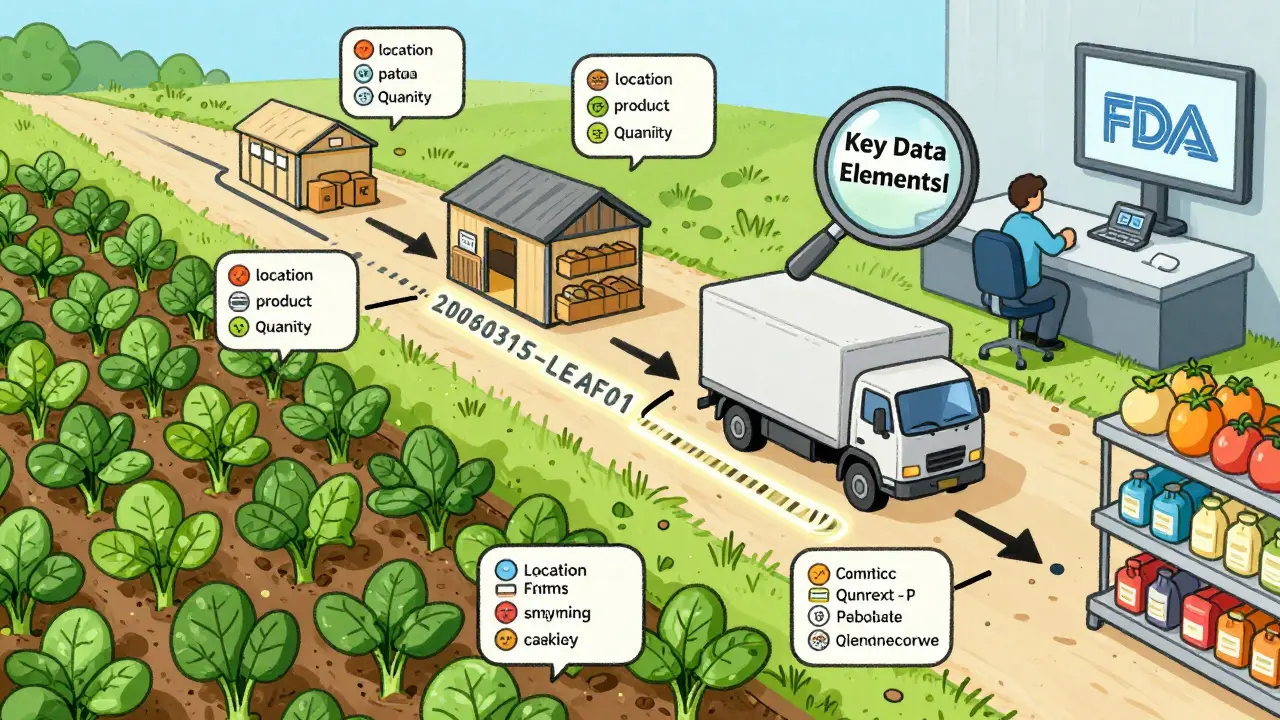
When a foodborne illness outbreak happens, time is the biggest enemy. The lot number is the key that unlocks the entire supply chain - and the FDA’s new Traceability Lot Code (TLC) system is designed to find it in minutes, not weeks. Before this system, investigators had to chase down paper records, phone calls, and scattered spreadsheets across dozens of companies. Now, with the right lot code, they can trace a contaminated bag of spinach from a grocery store shelf all the way back to the farm where it was packed - and stop more of it from being sold.
What Is the Traceability Lot Code (TLC)?
The TLC is not just another label on a box. It’s a unique, persistent identifier assigned to a specific batch of food at three critical points in its journey: when raw produce is first packed, when seafood is received on land, and when food is transformed (like when tomatoes are chopped into salsa). Unlike old-style lot codes that companies used internally for quality control, the TLC must travel with the product through every step of the supply chain. It’s the one piece of data that connects every transaction - from farmer to distributor to retailer.
It doesn’t have to be fancy. A TLC can be as simple as "20260315-LEAF01" - a Julian date plus a product code. Or it can be a randomized string like "TLC-X9K7P2Q". The only rules? It must be unique within the entire food system (not just within one company), and it must be recorded with seven other key details: where it was assigned, what the product is, how much there is, the unit of measure, and the transaction records with the next handler. These seven pieces are called Key Data Elements (KDEs), and they’re the backbone of the system.
Which Foods Are Covered?
The FDA doesn’t track everything. The system focuses on high-risk foods that have caused the most outbreaks. This list, called the Food Traceability List (FTL), includes leafy greens, tomatoes, onions, fresh-cut fruits and vegetables, soft cheeses, eggs, nut butters, and certain seafood like shrimp and tuna. Together, these foods make up about 15% of the U.S. food supply by volume - but they account for nearly half of all foodborne illness cases linked to produce and seafood.
Why not include melons? Critics say that’s a gap. In December 2022, Consumers Union pointed out that cantaloupe outbreaks have sickened hundreds in recent years, yet melons aren’t on the list. The FDA has acknowledged this and said melons and ready-to-eat foods are under review. The current list was based on outbreak data from 2010 to 2020, but food safety experts warn that the list must evolve as new risks emerge.
How the FDA Uses Lot Numbers During an Outbreak
Imagine a cluster of E. coli cases pops up in three states. The CDC flags it as a possible foodborne outbreak. The FDA gets the call. Within hours, they ask the affected retailers: "What lot numbers are in your inventory?" The retailers pull up their electronic records - the ones that now include the TLC and KDEs - and send them back. Within 24 hours, the FDA gets the full chain: which distributor shipped it, which processor repacked it, and which farm grew it.
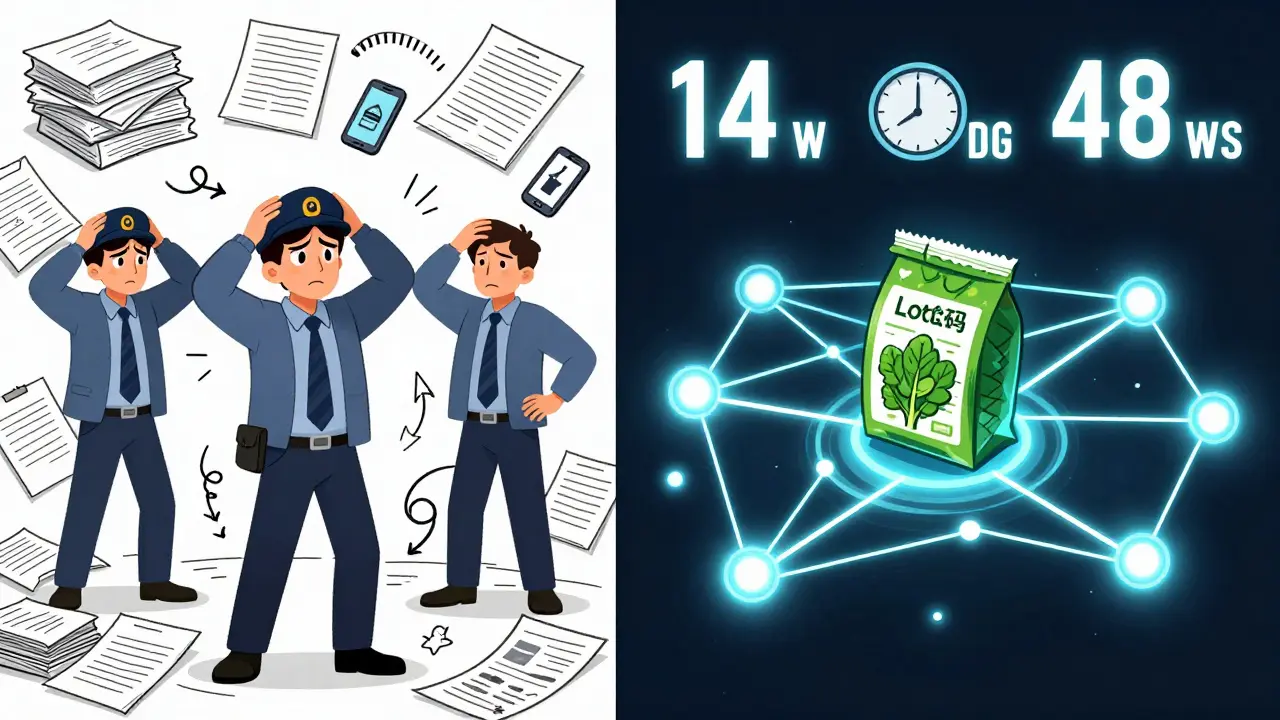
Without the TLC system, this process could take weeks. In 2018, a listeria outbreak tied to celery took 14 weeks to trace. By then, thousands were sick, and millions of dollars in product had to be recalled. With the TLC system, the FDA estimates that tracing time drops to under 48 hours. That means fewer people get sick, less food is wasted, and recalls are targeted - not blanket sweeps that hurt innocent farmers.
How Companies Are Adapting
For big companies, this wasn’t a surprise. Walmart has required blockchain traceability for leafy greens since 2019. Kroger uses similar tech. But for small farms and processors, the change is huge. The FDA estimates implementation costs at $42,500 per company on average. Some spent $10,000 upgrading old ERP systems. Others bought new traceability software. A few still use spreadsheets - but now they have to make sure every lot code is linked to all seven KDEs.
The FDA made one big concession: you don’t need two separate lot codes. If your company already uses a lot number that meets the TLC requirements - unique, traceable, and recorded with KDEs - then that code is your TLC. You don’t have to re-label everything. This helped ease the burden. A survey by the United Fresh Produce Association found that 78% of member companies had already adjusted their systems by early 2023.
Still, challenges remain. Sixty-five percent of companies say integrating old systems is the hardest part. Seventy-one percent struggle to get supply chain partners to use the TLC consistently. If one shipper doesn’t record the code, the chain breaks. That’s why the FDA launched 12 free training modules and a Traceability Assistance Program for small businesses. They’re also working on standardized data formats - a CSV template everyone can use - expected in mid-2024.
What’s Next for Lot Tracking?
The TLC system is just the start. The FDA is already testing how IoT sensors and blockchain can automatically log temperature, location, and handling time as food moves. Pilot projects are underway with farms in California and processors in Wisconsin. In the long run, the goal is real-time alerts: if a batch of lettuce goes above 45°F during transport, the system flags it before it even reaches a store.
Internationally, pressure is building. The EU launched its Digital Product Passport in January 2023 - a similar idea, but with different rules. The FDA held its first joint workshop with EU regulators in Brussels in March 2023. Harmonizing standards could make global food safety smoother - and help U.S. exporters avoid confusion.
Meanwhile, Congress is backing the system. The 2023 Farm Bill set aside $25 million to help small farms adopt TLC systems. That’s a signal: this isn’t a temporary rule. It’s the new baseline for food safety.
Why This Matters to You
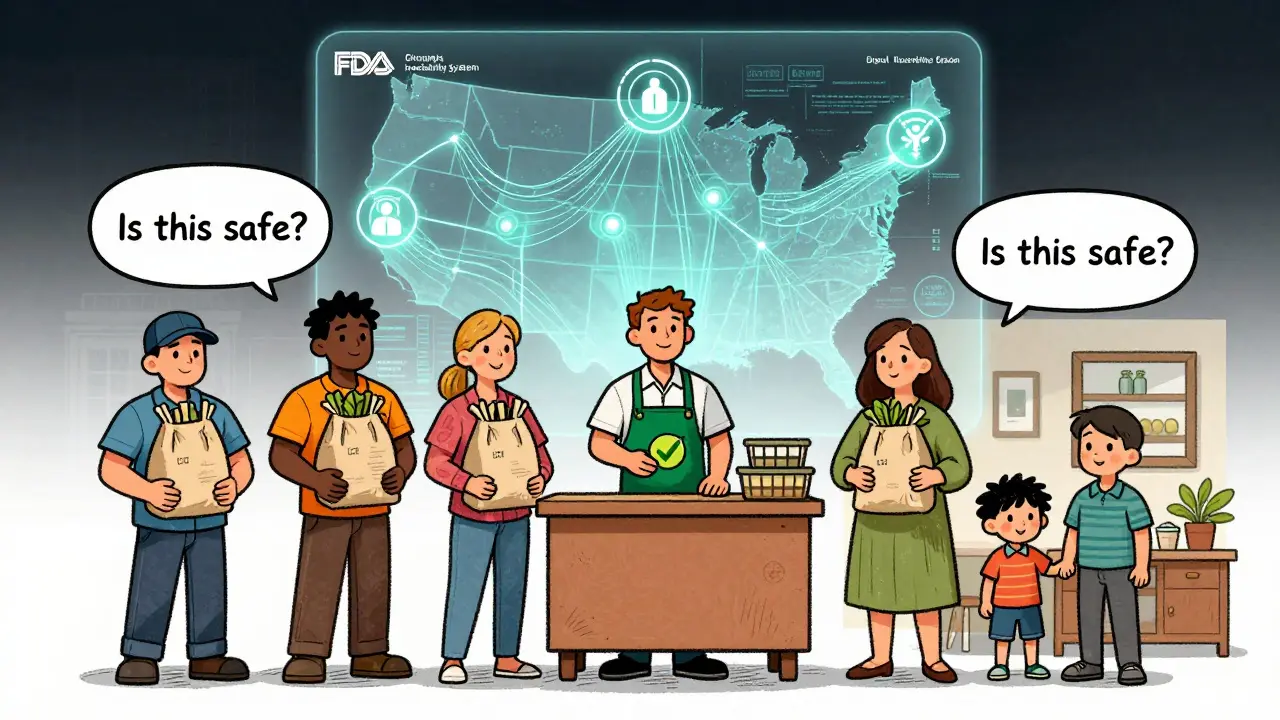
Every time you buy a bag of spinach, a carton of eggs, or a tub of almond butter, you’re benefiting from this system. The lot number on the package isn’t just for inventory. It’s your safety net. If something goes wrong, the FDA can find it fast - and pull it off shelves before more people get sick.
And if you’re a consumer, you can help. Check the lot number on recalled products. Don’t ignore recall notices. If you’re unsure, call your store or check the FDA’s website. Your awareness keeps the system strong.
Common Misconceptions
Some think this rule applies to all food. It doesn’t. Only foods on the FTL. Others believe the TLC replaces all internal lot codes. It doesn’t - it just has to meet the same standards. And some assume electronic records are required. They’re not. Paper records are still legal - as long as they’re complete and can be handed over in 24 hours.
The biggest myth? That this system is perfect. It’s not. Implementation is uneven. Smaller companies still lag. Supply chain gaps exist. But it’s the most significant food safety upgrade since the Bioterrorism Act of 2002. And it’s working.
What is a traceability lot code (TLC)?
A traceability lot code (TLC) is a unique alphanumeric identifier assigned to a specific batch of food at three key points in the supply chain: initial packing, first land-based receipt of seafood, and food transformation. It links to seven key data elements and must be passed along with the product to enable rapid tracing during foodborne illness investigations.
Which foods require a TLC under FDA rules?
The FDA’s Food Traceability List (FTL) includes high-risk foods such as leafy greens, tomatoes, onions, fresh-cut fruits and vegetables, soft cheeses, eggs, nut butters, and certain seafood. These represent about 15% of the U.S. food supply and are linked to the majority of foodborne illness outbreaks. Melons and ready-to-eat foods are under review for future inclusion.
Do I need to create a new lot code if I already have one?
No. If your existing lot code meets the TLC requirements - it’s unique across the supply chain and is recorded with all seven Key Data Elements - then it can serve as your TLC. The FDA explicitly allows companies to use their current codes, as long as they’re properly documented and passed along.
Are electronic records required?
No, electronic records are not required. Paper records are still acceptable. However, if you use electronic records, they must be sortable and exportable in common formats like CSV. The FDA can request records in either format, and you must provide them within 24 hours during an investigation.
When does the TLC rule take full effect?
The compliance date for the TLC rule was originally set for January 20, 2026. However, the FDA proposed a 30-month extension in September 2023, pushing the deadline to July 20, 2028. This gives businesses more time to adapt, especially small operations that need technical support.
How does the TLC system reduce foodborne illness?
By cutting tracing time from weeks to under 48 hours, the TLC system allows the FDA to isolate and remove contaminated products faster. FDA estimates this could reduce foodborne illness outbreaks by 20-30%. Faster recalls mean fewer people are exposed, less product is wasted, and outbreaks are contained before they spread across states.

Amber Gray
March 24, 2026 AT 23:27 PMFinally! 🙌 This system is LONG OVERDUE. I don't care how much it costs small farms - if it keeps my kids from getting sick from spinach, it's worth it. No more guessing games. 🥬💀
Danielle Arnold
March 26, 2026 AT 03:57 AMSo... we're spending millions to track lot numbers... but still can't stop melons from killing people? 😴
Donna Fogelsong
March 26, 2026 AT 05:47 AMThis is just step one. They're building a national food surveillance grid. You think they're tracking lot codes for safety? Nah. They're building a database to control what you eat. Next they'll mandate biometric scans at checkout. Watch. They're already testing RFID chips in eggs.
Seth Eugenne
March 27, 2026 AT 10:23 AMI work at a small farm and this was terrifying at first. But the FDA’s free training modules? Lifesaver. We didn’t even have to buy new software - just tweaked our existing system. It’s not perfect, but it’s way better than chasing paper trails. 🙏
rebecca klady
March 27, 2026 AT 20:35 PMI read the FDA’s site and honestly? This makes sense. If I buy a carton of eggs and later hear about a recall, I want to know if mine’s affected. Simple. Practical. No drama.
Namrata Goyal
March 28, 2026 AT 06:24 AMYou Americans think this is innovation? In India we’ve been tracking food batches with handwritten logs since the 90s. You’re 30 years late and still overcomplicating it with ‘KDEs’ and ‘TLCs’. Just use QR codes. Or better yet - don’t import anything.
Jefferson Moratin
March 28, 2026 AT 14:42 PMThe real question isn’t whether this system works - it’s whether we’ve conflated traceability with safety. We can know exactly where the contamination came from, but if we don’t fix the root causes - poor sanitation, monoculture farming, industrial processing - we’re just playing whack-a-mole with E. coli. This is symptom management, not systemic change.
Caroline Dennis
March 28, 2026 AT 20:07 PMTLC + KDE = game changer. Real-time data flow across the supply chain isn’t just about recalls - it’s about predictive risk modeling. We’re moving from reactive to proactive food safety. The 20-30% reduction in outbreaks? That’s not a guess. That’s modeled data. This is the foundation for AI-driven food integrity systems.
Zola Parker
March 29, 2026 AT 15:44 PMSo... you’re telling me the government now has a master list of every bag of spinach ever sold? And they’re ‘just’ using it to prevent illness? 😏 I’ve seen the patents. This isn’t food safety. It’s a backdoor to national food rationing. Wake up.