
G6PD Medication Safety Checker
Select a Medication or Condition
Click on a drug below to see its safety profile for G6PD deficiency.
Rasburicase
Tumor Lysis Syndrome
Methylene Blue
Antiseptic / Methemoglobinemia
Primaquine
Malaria Treatment
Dapsone
Leprosy / Skin Conditions
Tafenoquine
Malaria Prophylaxis
Nitrofurantoin
Urinary Tract Infection
Sulfonamides
Various Infections
Chloroquine
Malaria Treatment
Artemisinin
Malaria Treatment
Penicillins
Common Antibiotics
Safety Assessment
Select a medication from the list to view its risk level and clinical recommendations.
Disclaimer: This tool is for educational purposes only and does not constitute medical advice. Always consult your healthcare provider before taking any medication. Clinical decisions should be based on quantitative testing and professional judgment.
Imagine taking a standard medication for malaria or high blood pressure, only to watch your red blood cells start bursting apart within hours. For the 400 million people worldwide living with G6PD deficiency, a genetic condition that affects how your body handles oxidative stress, this isn't just a hypothetical nightmare-it's a real risk if you don't know which drugs to avoid.
If you have been diagnosed with G6PD deficiency, or if you suspect you might have it because of your family history, understanding the link between specific medications and hemolytic anemia is critical. This article breaks down exactly which medications are dangerous, which ones are safe, and how modern testing can keep you out of the hospital.
What Is G6PD Deficiency and Why Does It Matter?
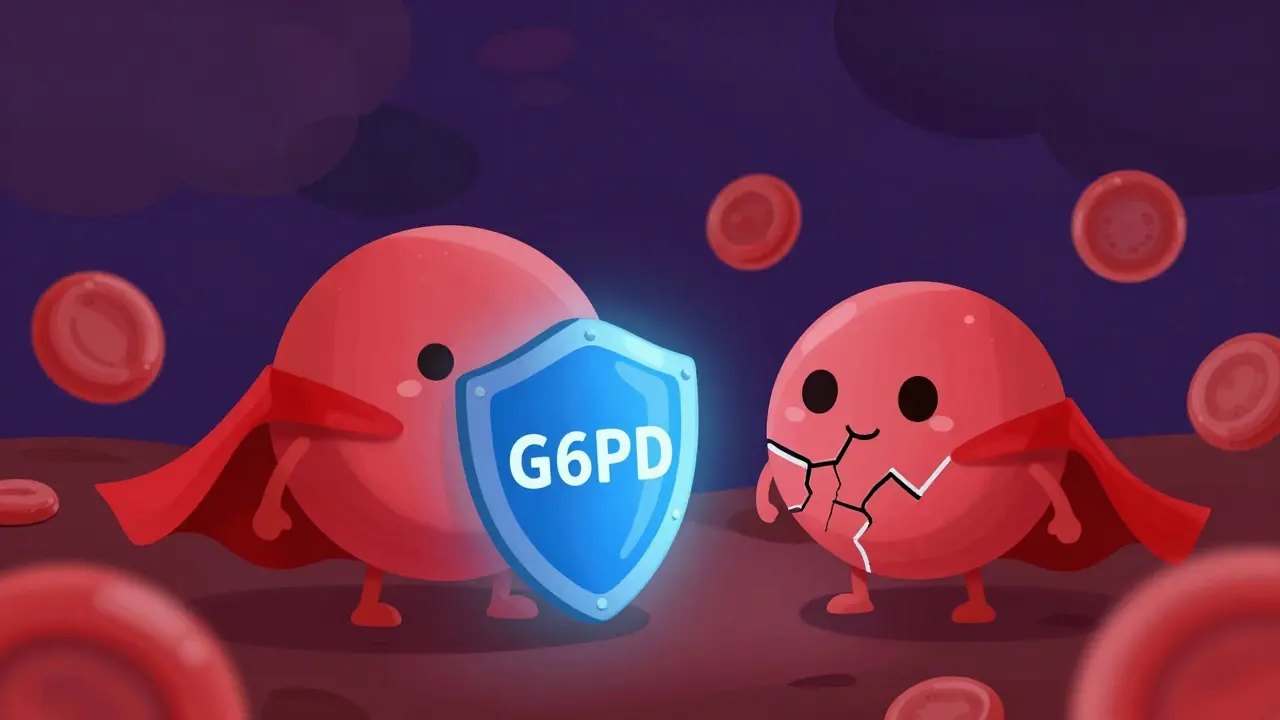
Glucose-6-phosphate dehydrogenase (G6PD) is an enzyme that protects your red blood cells from damage caused by reactive oxygen species. Think of it as a shield. In people with G6PD deficiency, this shield is weak or missing. When these individuals are exposed to certain triggers-like specific drugs, infections, or even fava beans-their red blood cells undergo oxidative stress and rupture, a process known as hemolysis.
This condition is X-linked, meaning it primarily affects males, though females can be affected depending on their carrier status. It is most common in regions where malaria has historically been prevalent, including sub-Saharan Africa, the Mediterranean, and Southeast Asia. The World Health Organization classifies G6PD variants into five classes based on severity. Class I and II involve severe enzyme deficiency and carry the highest risk of chronic or intermittent hemolysis, while Class III involves moderate deficiency and is the most common form globally.
The Danger Zone: Medications to Avoid
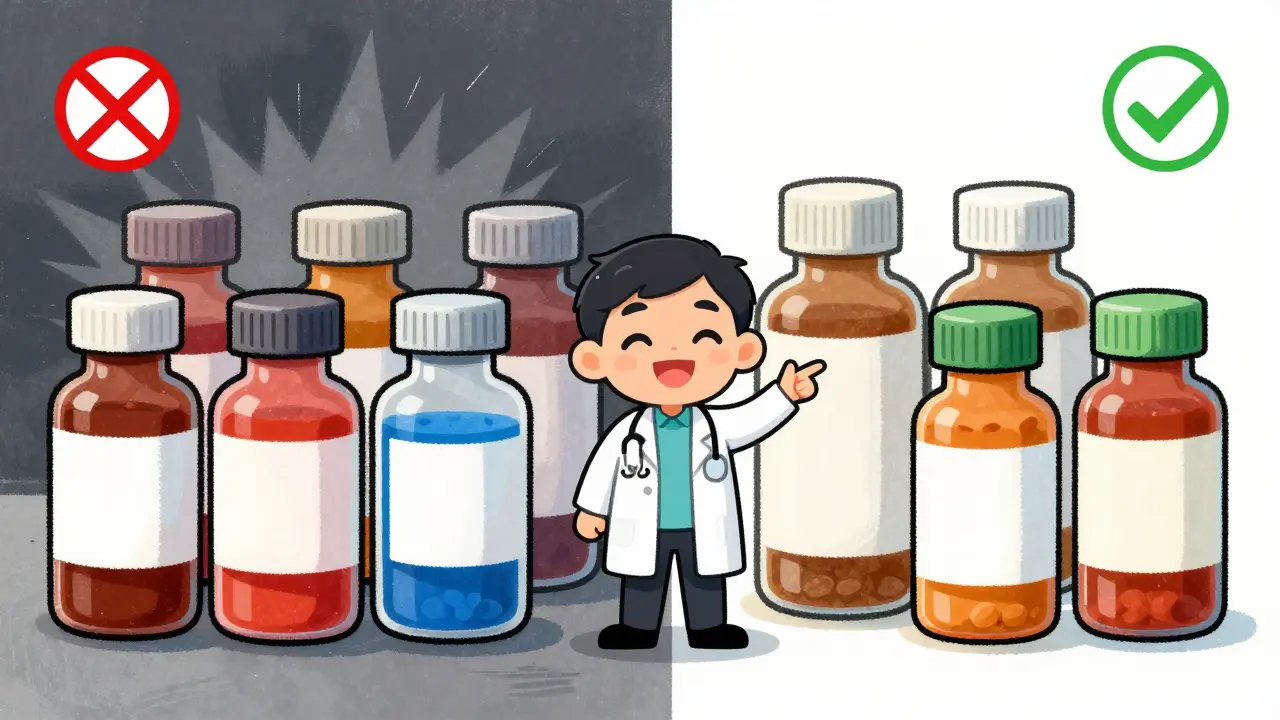
Not all medications are created equal for someone with G6PD deficiency. Some drugs act as potent oxidative stressors that can trigger a hemolytic crisis. A hemolytic crisis can cause your hemoglobin levels to drop by more than 50% in just seven days, leading to severe anemia, jaundice, dark urine, and potentially kidney failure.
Here are the high-risk medications you must discuss with your doctor before taking:
- Rasburicase: Used to treat tumor lysis syndrome, this drug carries an FDA Black Box Warning for G6PD-deficient patients. Studies show a near 100% risk of severe hemolysis if administered without prior testing.
- Methylene Blue: Often used for methemoglobinemia or as an antiseptic, methylene blue causes severe hemolysis in up to 95% of deficient patients. There are documented cases where a single dose dropped hemoglobin from normal levels to critically low numbers within 48 hours.
- Primaquine: A standard treatment for malaria, primaquine induces hemolysis in 100% of Class I and II patients at standard doses. It is strictly contraindicated unless rigorous quantitative testing confirms safety.
- Dapsone: Used for leprosy and certain skin conditions, dapsone causes hemolysis in 80% of deficient patients when taken at doses above 50mg daily.
It is important to note that some older guidelines listed sulfonylureas (like glyburide) as risky. However, recent expert reviews suggest this warning may be overstated, based on very few documented cases since 1965. Always verify current recommendations with a hematologist.
Safe Alternatives and Management Strategies
Avoiding harmful drugs doesn't mean you have no options. Modern medicine offers several safe alternatives for treating common conditions in G6PD-deficient individuals.
| Medication | Safety Profile in G6PD Deficiency | Notes |
|---|---|---|
| Chloroquine | Safe | Considered safe for all classes of G6PD deficiency according to WHO 2023 guidelines. |
| Tafenoquine | Conditional | Requires mandatory quantitative G6PD testing before use. Approved by FDA with strict testing protocols. |
| Artemisinin-based therapies | Safe | Safe for all G6PD deficiency classes. Preferred first-line treatment in many endemic regions. |
| Atovaquone-proguanil (Malarone) | Safe | Recommended alternative for travelers to malaria-endemic regions who cannot take primaquine. |
Beyond malaria, many other conditions have safe treatment paths. For example, N-acetylcysteine (NAC) has shown promise in protecting red blood cells from oxidative damage in laboratory studies, potentially reducing hemolysis risk when combined with certain treatments. Always ask your provider: "Is there a non-oxidative alternative for this prescription?"
The Importance of Accurate Testing
You cannot prevent what you do not measure. Proper diagnosis is the cornerstone of hemolysis prevention. The American Society of Hematology recommends universal G6PD testing for newborns in regions with prevalence above 5%. This includes 127 countries representing over 3 billion people.
Testing methods vary in accuracy and speed:
- Fluorescent Spot Test: A point-of-care test that provides results in 15 minutes with high sensitivity (98.7%) and specificity (99.2%). Ideal for rapid screening in emergency settings or resource-limited areas.
- Quantitative Spectrophotometric Assay: The gold standard for diagnosing severity. It measures enzyme activity in units per gram of hemoglobin. Deficiency is defined as activity below 10% of normal for Class I, 1-10% for Class II, and 10-60% for Class III.
- Genetic Sequencing: Identifies specific mutations like G6PD Mediterranean (common in Southern Europe) or G6PD A- (common in African populations). This helps predict individual risk profiles more precisely.
Crucially, timing matters. Enzyme activity can appear falsely normal immediately after a hemolytic episode because young red blood cells (reticulocytes) have higher enzyme levels. Doctors recommend waiting at least three months after a crisis for accurate baseline testing.
Real-World Challenges and What You Can Do
Despite clear guidelines, gaps in clinical practice persist. Surveys indicate that nearly half of G6PD-deficient patients report healthcare providers unaware of required medication restrictions. One alarming case involved a patient receiving rasburicase without prior testing, resulting in a hemoglobin drop to 3.1 g/dL and requiring massive blood transfusions.
To protect yourself:
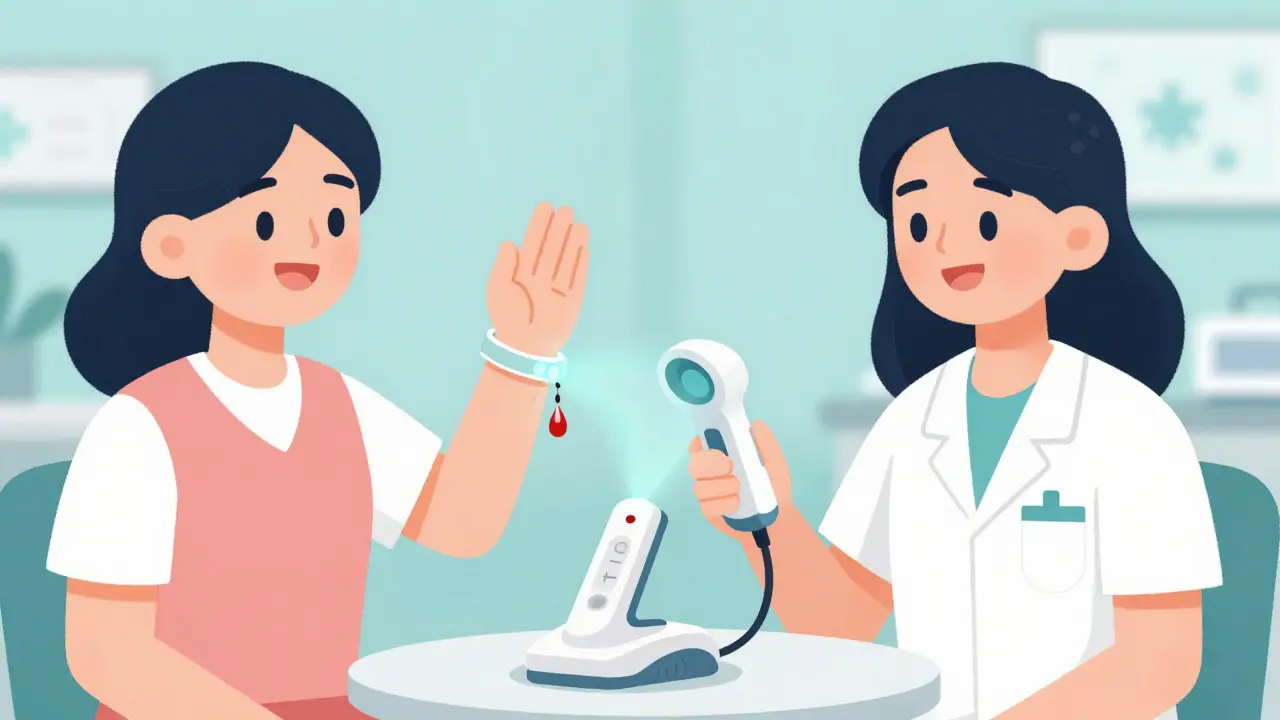
- Carry Medical Identification: Wear a bracelet or carry a card stating "G6PD Deficiency - Avoid Oxidative Drugs."
- Advocate for Testing: If you are prescribed primaquine, rasburicase, or methylene blue, insist on G6PD testing first if you haven't had it recently.
- Educate Your Care Team: Remind every new doctor, dentist, or pharmacist about your condition. Information does not always transfer seamlessly between healthcare systems.
- Monitor for Symptoms: Watch for signs of hemolysis such as fatigue, pale skin, yellowing of eyes/skin (jaundice), and dark brown urine. Seek immediate medical attention if these occur after starting a new medication.
New technologies are helping bridge these gaps. Clinical decision support systems integrated into electronic health records can automatically flag high-risk medications for G6PD-deficient patients, reducing inappropriate prescribing by nearly 90% in pilot studies. Additionally, the FDA approved the first quantitative point-of-care G6PD test in early 2024, providing results in just 8 minutes with 99.1% accuracy.
Looking Ahead: Future Therapies
Research continues to evolve. The American Society of Hematology’s 2024 roadmap prioritizes the development of enzyme replacement therapy. Phase I trials for recombinant human G6PD are scheduled to begin later this year, offering hope for a potential cure rather than just management. Meanwhile, global initiatives aim to expand screening infrastructure in malaria-endemic countries, with projections suggesting that preventable mortality from G6PD-related hemolysis could be eliminated in well-resourced settings by 2035.
Until then, knowledge remains your best defense. By understanding your condition, knowing the risks, and actively participating in your care, you can live a healthy life without fear of unexpected hemolytic crises.
Can women get G6PD deficiency?
Yes. While G6PD deficiency is X-linked and more common in males, females can be affected. Approximately 15% of G6PD-deficient females experience hemolysis due to skewed X-chromosome inactivation patterns. Carrier females may also have reduced enzyme activity in some red blood cells.
How long does it take to recover from a hemolytic crisis?
Recovery time varies depending on severity. Mild cases may resolve within a week once the trigger is removed. Severe cases requiring hospitalization and blood transfusions can take several weeks to fully restore hemoglobin levels. Full enzyme activity recovery in surviving red blood cells takes about 72 hours, but overall blood count normalization takes longer.
Are antibiotics safe for people with G6PD deficiency?
Most common antibiotics like penicillins and cephalosporins are considered safe. However, nitrofurantoin and sulfonamides (like sulfamethoxazole) carry higher risks and should be used with caution or avoided depending on the severity of the deficiency. Always consult your doctor before starting any antibiotic.
What should I do if I accidentally take a forbidden medication?
Stop taking the medication immediately and seek medical attention. Monitor for symptoms of hemolysis such as dark urine, jaundice, or extreme fatigue. Early intervention can prevent severe complications. Bring the medication bottle with you to the hospital so doctors know exactly what was ingested.
Is fava bean consumption still a major concern?
Yes, fava beans contain vicine and convicine, which are strong oxidative agents. Ingestion can trigger hemolysis in sensitive individuals, a condition historically called favism. People with G6PD deficiency should strictly avoid fava beans and products containing them.

Sean Luke
I specialize in pharmaceuticals and have a passion for writing about medications and supplements. My work involves staying updated on the latest in drug developments and therapeutic approaches. I enjoy educating others through engaging content, sharing insights into the complex world of pharmaceuticals. Writing allows me to explore and communicate intricate topics in an understandable manner.
view all posts