
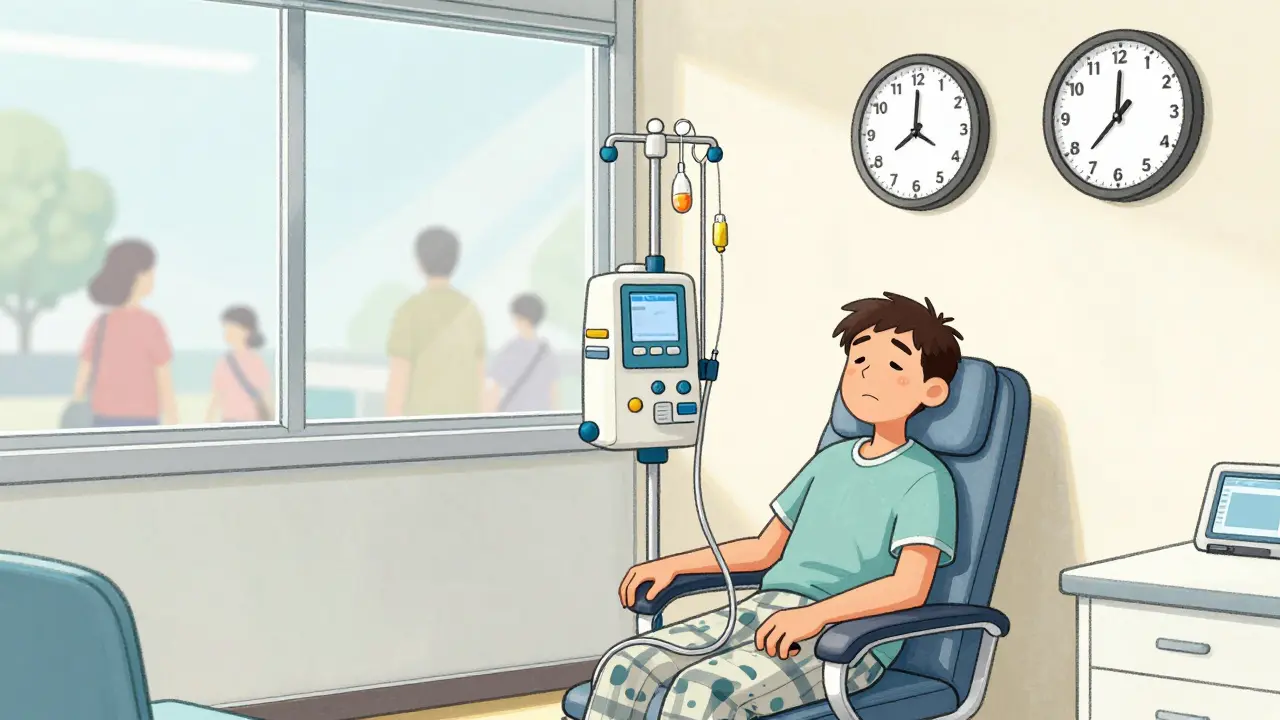
When your kidneys fail, your body can’t clean your blood anymore. Waste builds up. Fluid swells your legs and lungs. Your bones weaken. Your heart struggles. This isn’t just a bad day-it’s end-stage renal disease (ESRD), the point where your kidneys have lost 90% of their function. Without treatment, you won’t survive more than a few weeks. But here’s the truth most people don’t tell you: how you live after that diagnosis depends far more on your treatment choice than you think.
Dialysis Keeps You Alive-But at a Cost
Dialysis is the most common path. About 71% of Americans with ESRD are on it. It’s not a cure. It’s a machine that does what your kidneys used to do: filter toxins and extra fluid from your blood. There are two main types: hemodialysis and peritoneal dialysis.Hemodialysis usually happens in a clinic, three times a week, for three to four hours each visit. That’s 12 to 16 hours a week just sitting in a chair, hooked up to a machine. Add travel time, prep, and recovery, and it eats up your whole week. Blood flows out through a fistula-a surgically created connection between an artery and vein in your arm-and back in after being cleaned. The flow rate? Around 300 to 500 milliliters per minute. The dialysate fluid moves at 500 to 800 mL/min. It’s precise. But it’s also exhausting.
Peritoneal dialysis is done at home, using your own abdominal lining as a filter. You fill your belly with fluid, let it sit, then drain it out. Some do it manually four times a day. Others use a machine overnight while they sleep. It’s more flexible, but you have to be meticulous. One slip-up with hygiene? You risk peritonitis-a dangerous belly infection.
And the numbers don’t lie. Dialysis patients live an average of five years. Only 35% survive past that. Why? Because dialysis doesn’t fix everything. It can’t replace the hormones your kidneys make. It doesn’t regulate blood pressure perfectly. It doesn’t stop bone loss or anemia. You’re stuck on strict diets-low potassium, low phosphorus, low sodium. You can’t eat bananas, potatoes, or cheese without checking with your dietitian. And you still feel tired. Always.
Kidney Transplant: The Real Game-Changer
If you’re healthy enough, a kidney transplant is the best option. Not just medically-but for your life.Studies show transplant recipients are 68% less likely to die than those on dialysis. Five-year survival? 83% for transplant patients. For dialysis? 35%. That’s not a small difference. That’s a life saved.
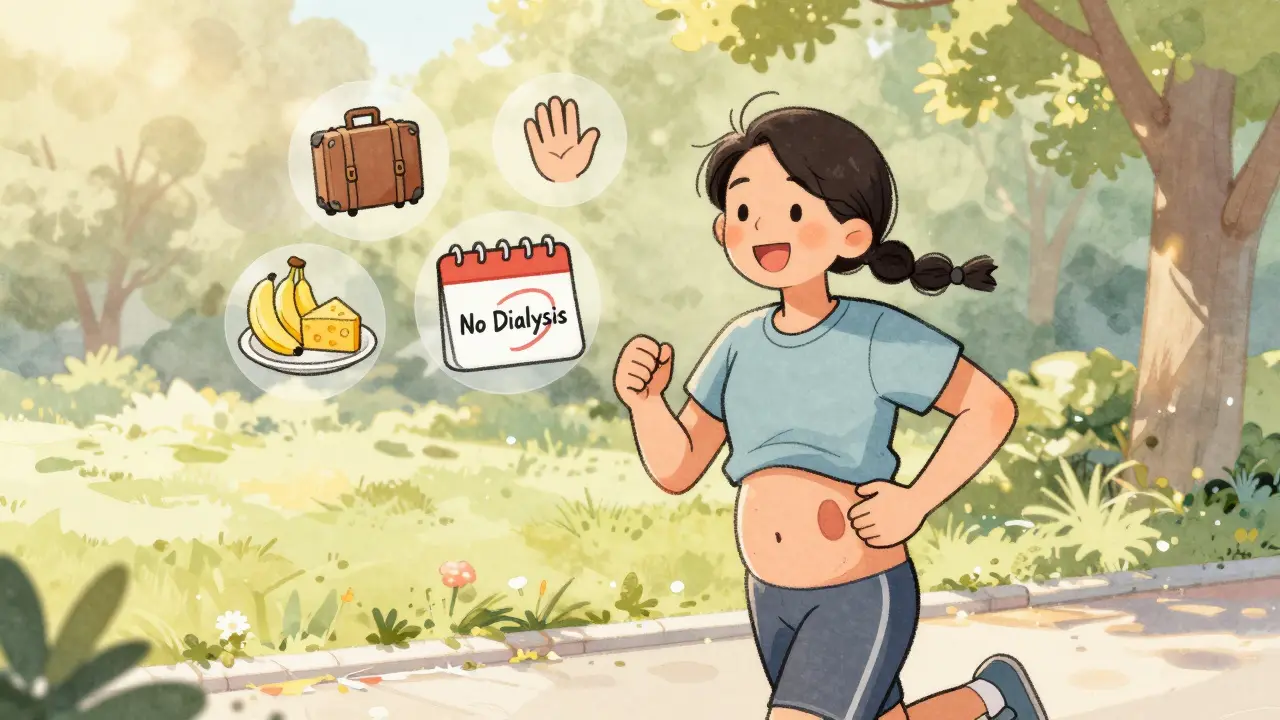
Transplant patients don’t need to sit in a chair three times a week. They don’t have to count every bite of food. Their energy levels bounce back. Many go back to work. They travel. They play with their grandkids without worrying about their next treatment.
But it’s not magic. You’ll take immunosuppressants for the rest of your life. Drugs like tacrolimus, mycophenolate, and steroids. They cost $1,500 to $2,500 a month. They make you more vulnerable to infections. You’ll need regular blood tests. You’ll watch for signs of rejection-fever, swelling, pain, sudden weight gain.
Still, the trade-off is worth it. Transplant patients have 50% fewer hospital visits than dialysis patients. Their quality of life scores are 28.7 points higher on the Kidney Disease Quality of Life survey. That’s like going from feeling constantly drained to feeling like yourself again.
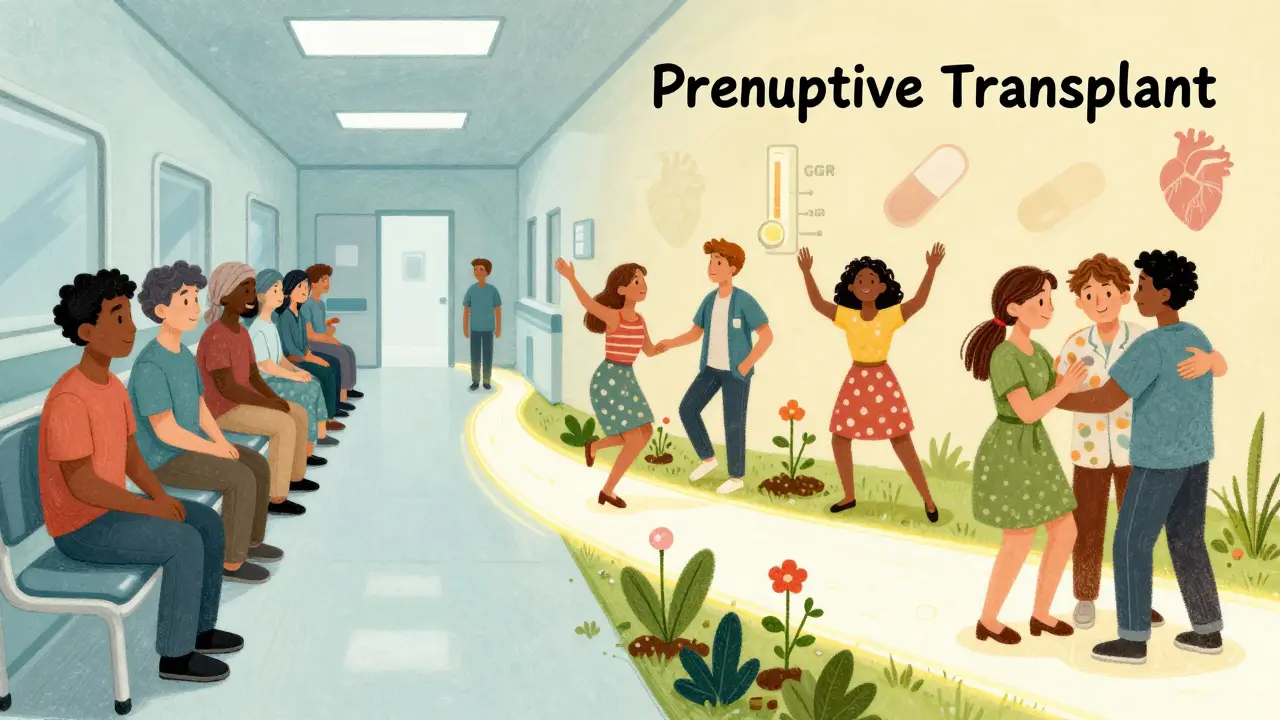
Living donor transplants are even better. One-year graft survival? 95.5%. Five-year? 86%. Deceased donor? 93.7% and 78.5% respectively. The sooner you get a transplant-before you even start dialysis-the better your odds. Only 5% of people on dialysis were ever referred early enough to get a preemptive transplant. That’s a system failure.
Who Gets a Transplant-and Who Doesn’t
You’d think if a transplant is better, everyone would get one. But that’s not how it works.Doctors won’t offer you a transplant if you’re over 75 with severe heart disease. If you’ve had cancer in the last five years. If you’re still drinking heavily or using drugs. If you have dementia or can’t manage your meds. These aren’t arbitrary rules. They’re about survival.
But here’s the ugly part: race still matters. African American patients are less likely to be referred for transplant evaluation-even when their kidney function is just as bad as white patients’. A study called RaDIANT found that after training staff and educating patients, transplant referrals among African Americans jumped by 40%. That’s not luck. That’s fixing a broken system.
Medicare covers ESRD care, but only after you’ve been on dialysis for three months. That delay pushes people into dialysis longer than they should be. And even though Medicare spends $35 billion a year on ESRD care-7% of its entire budget-only 1% of its enrollees have kidney failure. That’s a huge cost for a small group. It’s why some hospitals push dialysis: it’s predictable. Transplants are complex. They need teams, time, coordination.
What You Can Do Now
If you or someone you love has chronic kidney disease, don’t wait until you’re in crisis.When your glomerular filtration rate (GFR) drops below 30 mL/min, ask for a transplant evaluation. Don’t wait for your doctor to bring it up. Push for it. Get referred to a transplant center. Start the process early. Find out if anyone in your family can be a donor. Living donors can give a kidney and live perfectly healthy lives afterward.
If you’re already on dialysis, ask about home dialysis options. More people are doing it now-14.2% of new dialysis patients in 2022 were on home hemodialysis, up from 8.3% in 2015. It gives you control. You can do it at night. You can skip the clinic.
And if you’re eligible, ask about the Kidney Care Choices Model. It’s a new Medicare program that pays providers to get patients to transplant faster. It’s changing how care is delivered.
The Numbers Don’t Lie
Right now, over 90,000 people are waiting for a kidney in the U.S. About 27,000 transplants happen each year. That means 3,000 more people join the list every month. The gap is growing. But so is hope.Living donor transplants have increased by 18% since 2018. Deceased donor transplants are up 14%. The 21st Century Cures Act helped expand the donor pool by letting doctors use kidneys from older or higher-risk donors. NIH has invested $157 million through 2026 to personalize kidney care-so one day, treatments won’t be one-size-fits-all.
But here’s the bottom line: dialysis keeps you alive. A transplant lets you live. The difference isn’t just medical. It’s human.
What You Need to Know About Minerals and Bone Health
Your kidneys don’t just filter blood. They help your bones stay strong. When they fail, your calcium and phosphate levels go haywire. Your parathyroid glands go into overdrive. Your bones soften. Your blood vessels calcify. That’s why dialysis patients need strict control.Target phosphate? Between 3.5 and 5.5 mg/dL. Calcium? Below 9.5 mg/dL. PTH? Less than two to nine times the normal range. Most people can’t hit these targets without phosphate binders-pills you take with every meal to stop your gut from absorbing too much phosphorus. You’ll also need active vitamin D (calcitriol) to help your body use calcium properly.
It’s a daily grind. But get it wrong, and you risk heart attacks, broken bones, and severe itching. This isn’t optional. It’s survival.
What Comes Next?
If you’re reading this because you or someone you care about is facing ESRD, you’re not alone. But you’re not powerless either.Ask questions. Demand referrals. Learn about home dialysis. Talk to transplant coordinators. Find out if you qualify for preemptive transplant. Don’t let fear or silence keep you from the best possible outcome.
There’s no perfect path. But there is a better one. And it starts with knowing your options-and refusing to settle for less.

Adarsh Uttral
January 30, 2026 AT 05:49 AMman i just lost my uncle to this last year. dialysis for 4 years then gave up. no one talks about how lonely it gets.
Sidhanth SY
February 1, 2026 AT 04:25 AMsame here. my dad did home peritoneal for 3 years. the hygiene part was brutal. one time he forgot to wash his hands before connecting the line and ended up in the hospital for a week. but still better than clinic dialysis. i’d rather have him at home even if it’s messy.
Gaurav Meena
February 2, 2026 AT 20:16 PMyou guys are real. 🙏 if you're reading this and have CKD, don't wait. talk to your doc today. even if they say 'not yet' - push. your life matters more than their schedule. i've seen people get transplanted after 10 years on dialysis. they wish they'd started sooner. don't be them.
Diksha Srivastava
February 4, 2026 AT 16:40 PMmy cousin got a kidney from her sister last year. she’s running marathons now. i cried when i saw her play with her kids without needing a nap after. this isn’t just medical - it’s magic. you can have your life back.
April Allen
February 6, 2026 AT 15:48 PMthe pharmacokinetics of calcineurin inhibitors in transplant recipients are non-linear and highly variable - tacrolimus trough levels must be titrated to maintain therapeutic exposure while minimizing nephrotoxicity and neurotoxicity. the CYP3A4/5 polymorphisms significantly influence metabolism, necessitating genotype-guided dosing in high-risk populations. this is where precision medicine in nephrology is finally emerging.
Natasha Plebani
February 7, 2026 AT 16:37 PMthe paradox of ESRD care is that we treat it like an emergency when it’s a chronic, predictable trajectory. we wait until GFR hits 15, then scramble. we don’t screen early. we don’t educate. we don’t empower. we institutionalize dependency. the system isn’t broken - it was designed this way. profit margins on dialysis are predictable. transplants are chaotic. and chaos doesn’t scale well in a fee-for-service model.
Blair Kelly
February 7, 2026 AT 19:39 PMyou all are being way too nice. let’s be real - most people on dialysis are dying slowly because the system doesn’t care. doctors don’t push transplants because they don’t get paid enough. insurance companies delay referrals. hospitals make millions off dialysis. and the patients? they’re just numbers on a spreadsheet. this isn’t healthcare - it’s a business with a stethoscope.
Darren Gormley
February 8, 2026 AT 05:56 AMlol so transplant is better? sure. but have you seen the side effects of lifelong immunosuppression? skin cancer rates are 100x higher. diabetes from steroids. osteoporosis. depression. you trade one hell for another. and the donor? they’re just a walking organ bank now. i’m not saying dialysis is great - but transplant isn’t some fairy tale. it’s just a different flavor of suffering.
Lily Steele
February 9, 2026 AT 06:22 AMi’m a nurse in a dialysis unit and i see this every day. people show up exhausted. quiet. some don’t talk for weeks. then someone gets a transplant and comes back to visit - and they’re different. brighter. laughing. it’s like they got their soul back. you don’t need stats to see that. you just need to look in their eyes.
Niamh Trihy
February 10, 2026 AT 13:15 PMthe racial disparities in transplant referral are not accidental. they’re systemic. implicit bias, lack of provider education, language barriers, mistrust of medical institutions - all of it compounds. the RaDIANT study showed that simple interventions like standardized referral protocols and patient navigation can close the gap. the question isn’t whether we can fix it - it’s whether we have the will.
owori patrick
February 12, 2026 AT 07:15 AMin my country, Nigeria, dialysis costs more than most people make in a month. we have maybe 50 machines for 200 million people. some wait 6 months just to get a slot. we don’t talk about transplant because most can’t even afford dialysis. if you’re lucky enough to live where this care exists - don’t take it for granted. fight for it. for others too.
Marc Bains
February 12, 2026 AT 13:12 PMmy dad is a Black man from the South. he was told he was ‘too old’ for transplant at 68. turned out he was healthy as a horse. we got a second opinion. got him on the list. got him a kidney from a living donor. he’s been off dialysis for 3 years. this isn’t about race. it’s about who you know and how loud you scream. don’t be quiet. scream louder.
Sazzy De
February 14, 2026 AT 07:26 AMmy mom got a transplant 5 years ago. she’s alive. she’s happy. she’s gardening. she’s not on a schedule. she’s not tired all the time. she’s just… her. dialysis was stealing her. transplant gave her back. that’s all you need to know.