
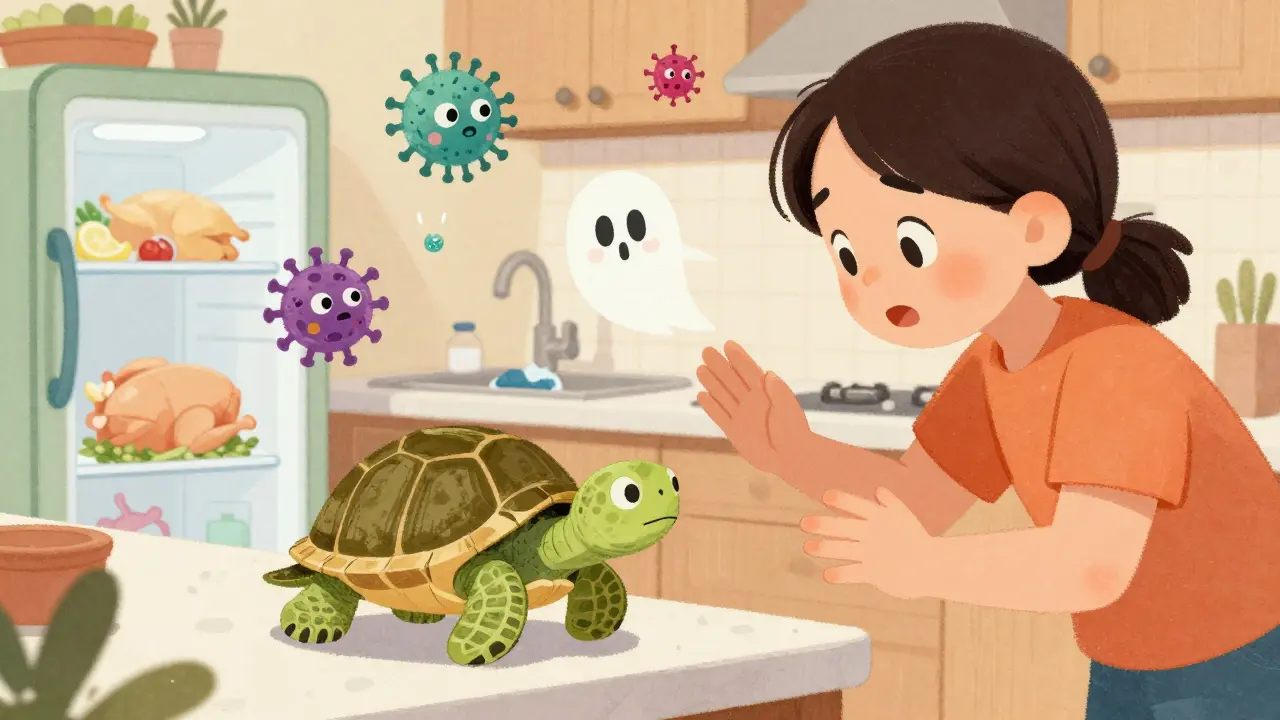
Every year, zoonotic diseases jump from animals to humans - and they’re more common than most people realize. You don’t need to be a farmer or a vet to be at risk. That pet turtle in your kid’s room? The tick on your dog after a hike? Undercooked chicken at your barbecue? These aren’t just everyday risks - they’re potential gateways for deadly infections. About 60% of all known human infectious diseases started in animals. And 75% of new diseases we’ve seen in the last 20 years came from wildlife. This isn’t science fiction. It’s happening right now, in your backyard, your grocery store, and your living room.
What Exactly Are Zoonotic Diseases?
Zoonotic diseases, or zoonoses, are infections passed between animals and people. They’re caused by viruses, bacteria, parasites, or fungi that live in animals - from mice and bats to cows, dogs, and reptiles. The word comes from Greek: zoon means animal, and nosos means disease. This isn’t new. Hippocrates wrote about anthrax in livestock over 2,000 years ago. Louis Pasteur developed the first rabies vaccine in 1885 after seeing how deadly it was for both dogs and humans.
Today, the list is long and growing. Bacterial zoonoses include salmonella from reptiles and poultry, anthrax from infected livestock, and Lyme disease carried by ticks. Viral ones include rabies, Ebola, and even HIV, which jumped from primates to humans in the early 20th century. Parasites like Toxoplasma gondii (from cat feces) and Trichinella (from undercooked pork) are also common. Even fungi - like ringworm - can spread from pets to people.
The scary part? Many of these don’t make animals sick. A bat can carry Ebola without showing symptoms. A mouse can shed hantavirus in its droppings and look perfectly fine. That’s why you can’t rely on how an animal looks to judge if it’s dangerous.
How Do These Diseases Jump to Humans?
There are five main ways zoonotic diseases cross the species barrier. And you’re probably exposed to at least one of them every week.
- Direct contact: Touching, petting, or being bitten by an animal. A dog bite can transmit rabies. A cat scratch can give you cat scratch disease. Handling a sick bird can lead to psittacosis.
- Indirect contact: Touching something an animal has contaminated - like a cage, tank, soil, or even a doorknob. Salmonella outbreaks have been traced to pet reptile tanks. People have gotten sick from cleaning out a rodent-infested shed.
- Vector-borne: Bites from ticks, mosquitoes, or fleas. Lyme disease comes from ticks. West Nile virus comes from mosquitoes. Fleas carried plague from rats to humans in medieval Europe - and still do in parts of Africa and the U.S. Southwest.
- Foodborne: Eating or drinking something contaminated. Undercooked meat, raw milk, unwashed produce - all can carry pathogens. The CDC says 1 in 6 Americans gets sick from foodborne illness each year, and many of those are zoonotic. Campylobacter from chicken, E. coli from beef, listeria from soft cheese - all started in animals.
- Waterborne: Drinking or swimming in water contaminated by animal waste. Giardia from beaver droppings in lakes, leptospirosis from urine in puddles after rain - these are real risks for hikers, campers, and even backyard swimmers.
One of the most common - and surprising - sources? Pet reptiles. A 2023 report from Minnesota’s health department found that every single case of campylobacteriosis linked to reptiles involved direct contact with turtles, lizards, or snakes. No one had eaten the animal. They just touched it, then washed their hands poorly - or not at all.
Why Are These Diseases So Hard to Control?
Unlike flu or COVID, which spread mainly from person to person, zoonotic diseases have two hosts: animals and humans. That means stopping them isn’t just about wearing masks or quarantining people. You have to track animals, monitor ecosystems, test livestock, and change farming practices.
Take rabies. Once symptoms show in humans, it’s almost always fatal. But it’s 100% preventable - if dogs are vaccinated. In Uganda, coordinated dog vaccination programs cut human rabies cases by 92%. In the U.S., we vaccinate pets, so human cases are rare. But in countries without animal health infrastructure, it’s still a killer.
The bigger problem? Fragmentation. Human health agencies, animal health agencies, and environmental groups rarely work together. Only 38% of countries have systems that connect these dots. In the 2018 Nipah virus outbreak in India, delays in testing pigs and bats meant doctors didn’t recognize the pattern until 17 people were dead. If vets, farmers, and doctors had shared data earlier, many lives could’ve been saved.
And then there’s the cost. Zoonotic diseases cause 2.7 million human deaths every year. The economic toll? Over $100 billion per major outbreak. Brucellosis alone costs farmers $3.5 billion annually in lost milk, dead livestock, and quarantine measures.

Who’s at Highest Risk?
Not everyone is equally at risk. Some groups face much higher exposure.
- Veterinarians and farm workers: They’re 8 times more likely than the average person to catch a zoonotic disease. One vet in Wisconsin reported 12 cases of tularemia in hunters who handled infected rabbits - all had fever above 103°F and skin ulcers.
- Children under 5: Their immune systems are still developing, and they’re more likely to put things in their mouths. A family in Wisconsin got salmonellosis from pet turtles. The 2-year-old was hospitalized for dehydration.
- People with weakened immune systems: Cancer patients, organ transplant recipients, or those on immunosuppressants are more vulnerable to infections like toxoplasmosis or cryptococcosis from bird droppings.
- Pet owners: A 2022 survey found 23% of pet owners had been exposed to a zoonotic disease. Ringworm and cat scratch disease were the most common. And 67% didn’t know how to prevent them.
Even healthy adults aren’t safe. A poultry farmer in Ohio got psittacosis from his birds. He ended up in the hospital for two weeks with pneumonia. His cough lasted eight weeks after he was discharged.
How to Protect Yourself - Practical Steps That Work
You don’t need to give up pets or avoid nature. You just need to know how to reduce risk. Here’s what actually works, based on CDC guidelines and real-world data.
- Wash your hands - properly. Use soap and water for at least 20 seconds after handling animals, cleaning cages, or touching soil. Studies show this cuts transmission by 90%. Don’t just rinse - scrub between fingers, under nails, and thumbs.
- Cook meat thoroughly. Poultry should hit 165°F. Ground beef should be 160°F. Use a food thermometer. Don’t guess. Salmonella and E. coli don’t care if the meat looks done.
- Never kiss or lick pets. Their mouths carry bacteria like Pasteurella and Capnocytophaga. One man in Colorado lost part of his hand after kissing his dog - the infection spread too fast for antibiotics to stop.
- Keep reptiles out of kitchens and away from kids under 5. The CDC has banned the sale of small turtles since 1975 for this exact reason. But people still buy them online. Don’t be one of them.
- Use flea and tick prevention on pets. If your dog has ticks, you’re at risk. Monthly preventatives reduce Lyme disease exposure by over 80%.
- Wear gloves when cleaning animal waste. A 2021 study in JAMA showed this reduces infection risk by 85%. Even if you think it’s just “poop” - it’s not.
- Don’t touch wild animals. Even if they look friendly. Bats, raccoons, and deer carry rabies, hantavirus, and Lyme disease. If you find a sick or dead animal, call animal control - don’t handle it.
And if you’re a pet owner? Get your animals vaccinated. Keep their shots up to date. Regular vet visits aren’t just for worms - they’re your first line of defense against diseases that could make you sick.
The Bigger Picture: Climate, Land Use, and the Future
This isn’t just about personal hygiene. Zoonotic diseases are tied to how we treat the planet.
Deforestation, farming expansion, and wildlife trade are pushing animals into closer contact with humans. Dr. Peter Daszak’s research shows land-use change causes 31% of new zoonotic outbreaks. When you clear a forest to build a farm, you force bats, rodents, and insects into new areas - and into your backyard.
Climate change is making it worse. The Lancet predicts that by 2050, 45% more of North America will be suitable for Lyme disease-carrying ticks. Mosquitoes that spread West Nile and dengue are moving into new regions as winters get warmer.
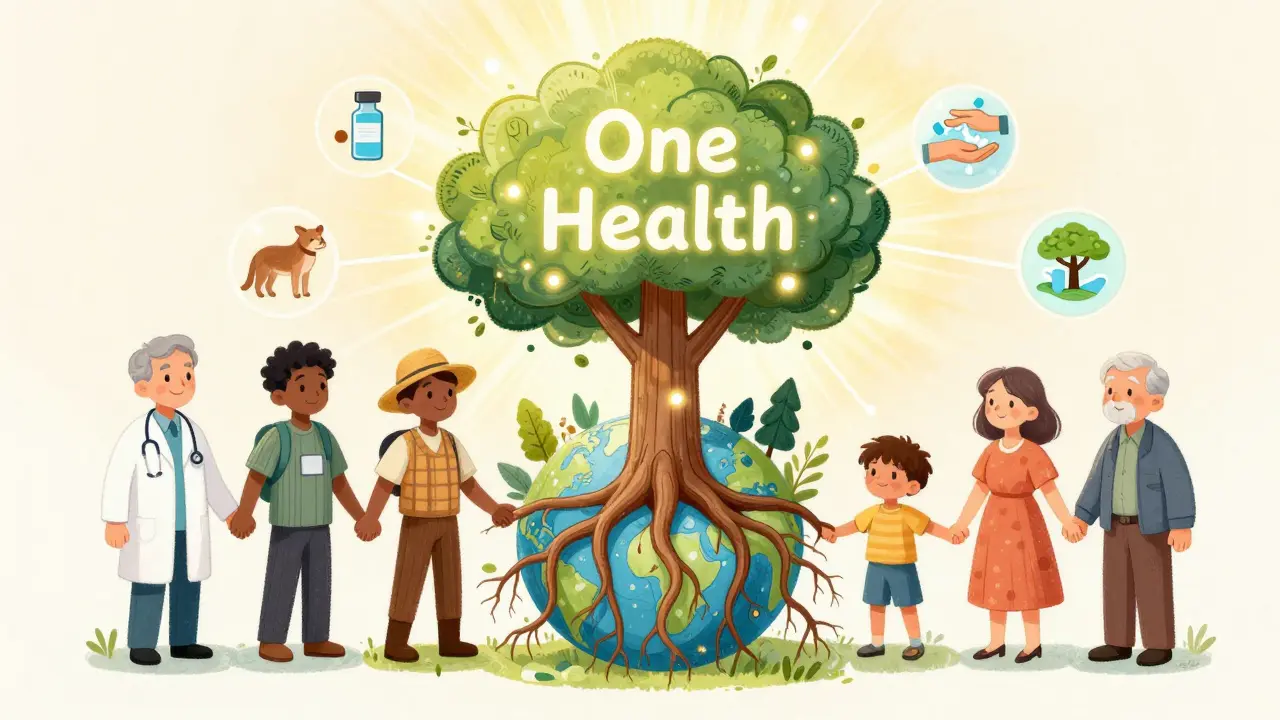
There’s hope, though. The WHO, FAO, and OIE launched the One Health Joint Plan in 2022 - a $150 million global effort to link human, animal, and environmental health systems. The CDC is investing $25 million to train doctors and vets together in university centers. And countries that use integrated systems have reduced outbreaks by 37%.
Investing $10 billion a year in these systems could prevent 70% of future pandemics - with a return of $100 for every dollar spent. That’s not charity. It’s smart economics.
What You Can Do Today
You don’t need to be a scientist or a policymaker to make a difference. Start small:
- Wash your hands after playing with your dog or cleaning the litter box.
- Don’t let your kids handle reptiles or amphibians.
- Ask your vet about zoonotic risks for your pets - especially if you have young kids or elderly family members.
- Support farms and food producers that use humane, sustainable practices. Industrial animal farming increases disease risk.
- Advocate for better animal health policies in your community. Zoonotic disease control isn’t just a medical issue - it’s a public health priority.
The next outbreak won’t come from nowhere. It’ll come from a bat in a forest you helped clear, a turtle you bought online, or a tick you didn’t check for after a hike. But you can stop it - starting today.





Stephen Rock
January 21, 2026 AT 06:44 AMWow. Another ‘you’re all gonna die from your pet turtle’ panic piece. Let me guess - next week’s headline is ‘Your Houseplant is Secretly a Bioweapon’?
Roisin Kelly
January 22, 2026 AT 19:41 PMThey’re hiding the real cause. 5G towers are weakening animal immune systems so they spew more pathogens. You think the CDC cares about your dog? They’re too busy tracking your phone. Read the papers from 1999 - they knew. They just don’t want you to.
Melanie Pearson
January 24, 2026 AT 13:41 PMWhile the article presents a compelling epidemiological overview, it fundamentally fails to address the structural deficiencies in inter-agency coordination under the current U.S. public health framework. The absence of mandatory zoonotic surveillance integration between USDA, CDC, and state veterinary services constitutes a systemic vulnerability. Furthermore, the casual tone employed undermines the gravity of the data presented, which includes over 2.7 million annual global fatalities. This is not a lifestyle advisory - it is a national security imperative.
Rod Wheatley
January 26, 2026 AT 02:57 AMYES. YES. YES. I’ve been saying this for years! Wash your hands after petting your dog - not just ‘kinda’ wash, but scrub like you’re trying to remove a tattoo! I work in vet ER, and I’ve seen kids get salmonella from a turtle they held for 30 seconds and then ate a cookie without washing. One little kid spent 12 days in the hospital. His mom cried for weeks. Please, people - it’s not rocket science. Soap. Water. 20 seconds. Sing ‘Happy Birthday’ twice. Do it. Your kid’s life is worth more than your ‘but it’s just a lizard’ attitude. And if you have a reptile in your house with a toddler? Just. Don’t. I’m not being dramatic. I’ve seen the charts. The numbers don’t lie.
Uju Megafu
January 26, 2026 AT 06:50 AMThis is what happens when white people treat nature like a theme park. You clear forests, then act shocked when the animals come for revenge? You think this is about turtles? No. It’s about your greed. Your need to own everything. You want to stop zoonotic diseases? Stop buying exotic pets from traffickers. Stop eating meat from factory farms. Stop pretending you’re innocent when your lifestyle is poisoning the world. We’ve been warning you. You just didn’t want to listen until it touched your precious little child.
Dee Monroe
January 26, 2026 AT 23:20 PMIt’s strange, isn’t it? We spend billions on space telescopes to find life beyond Earth, yet we ignore the ecosystems crawling beneath our feet - the ones that have been sharing this planet with us for millions of years. We treat animals like disposable props in our human drama: pets when convenient, pests when inconvenient. But the truth is, we’re not separate from them. We’re just one more species trying to survive, and when we rupture the balance - whether by clearing a forest, or buying a turtle on Amazon - we’re not just risking our health, we’re betraying the quiet, ancient contract of coexistence. Maybe the real disease isn’t the virus - it’s our arrogance.
Sangeeta Isaac
January 28, 2026 AT 13:01 PMso like… my iguana is literally just chillin’ in his tank and now i’m supposed to think he’s gonna murder my toddler? lmao. also i kissed my dog yesterday and he licked my face after i ate tacos. is that a crime now? i’m just sayin’… maybe we’re all gonna die but not because of the turtle. maybe because we’re all too scared to touch anything anymore. also can we talk about how the CDC is basically a horror movie narrator at this point?
Alex Carletti Gouvea
January 28, 2026 AT 16:43 PMLet’s be real - this is just another liberal scare tactic to push global health mandates. We don’t need more regulations. We need better Americans. Stop importing exotic animals from countries that can’t even feed their own people. Stop letting foreigners bring in diseases. We’ve got enough problems without letting the world’s germs in through your pet snake.
Philip Williams
January 28, 2026 AT 21:13 PMWhile the article accurately outlines transmission vectors, it lacks quantitative analysis of intervention efficacy. For instance, the claim that handwashing reduces transmission by 90% requires citation of peer-reviewed meta-analyses. Additionally, the assertion that ‘$10 billion annually prevents 70% of pandemics’ is not substantiated with cost-benefit modeling. Without data transparency, this risks becoming advocacy disguised as education. I request the source material for these figures.
Ben McKibbin
January 30, 2026 AT 08:08 AMThere’s something quietly beautiful about how deeply we’re entangled with the rest of life - even the things we fear. A bat, a tick, a dog’s breath - they’re not enemies. They’re just living. We built our world on the backs of ecosystems, then pretended we could wall ourselves off from them. The real tragedy isn’t the disease - it’s that we only pay attention when we’re scared. But if we start seeing animals not as vectors, but as neighbors… maybe we’ll finally learn how to live together without killing each other.
Jerry Rodrigues
February 1, 2026 AT 04:04 AMMy grandma had a turtle. I touched it. I didn’t wash my hands. I didn’t get sick. I’m 47 now. I’ve had three kids. None of them died from reptiles. Maybe the real risk is the fear.