
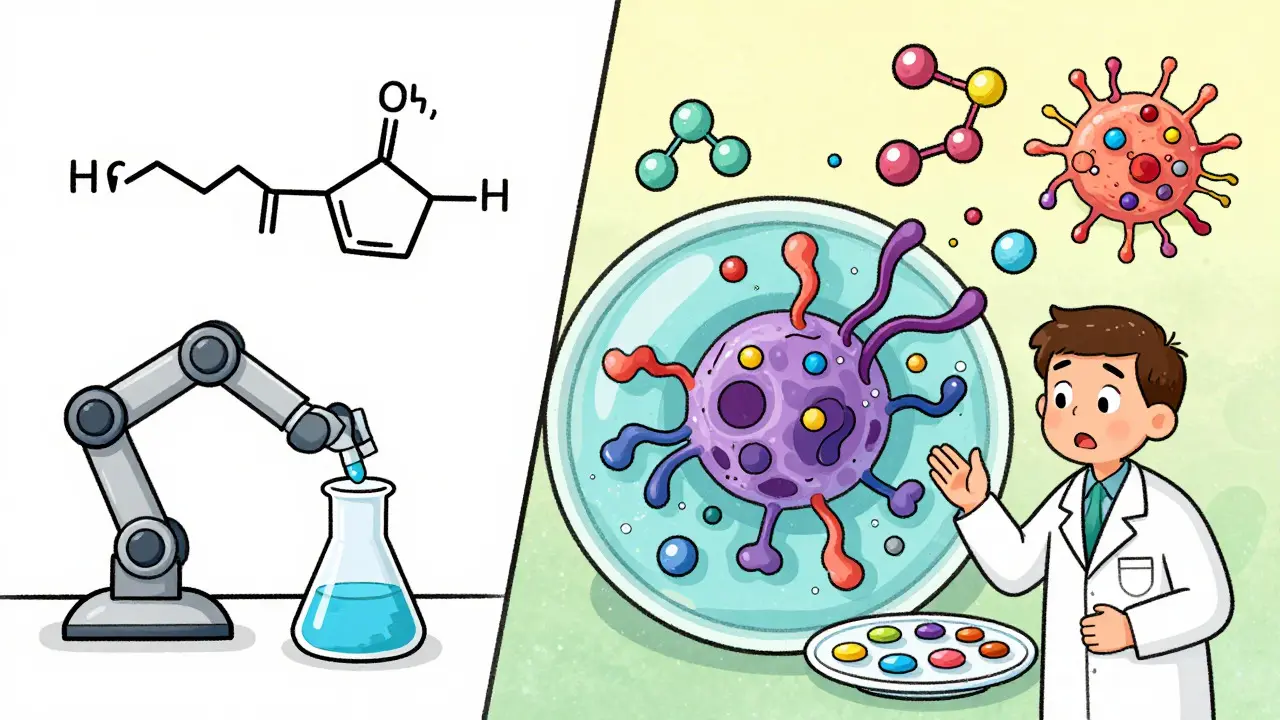
Imagine trying to recreate a Michelin-starred dish without ever seeing the recipe. You have the final plate in front of you, but you don't know the exact temperature the chef used, how long they stirred the sauce, or which specific batch of ingredients went into it. This is essentially what manufacturers face when developing biosimilars, which are biologic medical products highly similar to an already approved reference biologic product but not identical due to complex molecular structures. Unlike generic drugs, where the chemical structure is simple and easy to copy, biologics are large, intricate molecules made by living cells. Because these cells are alive, they introduce natural variability that makes every batch slightly different. This fundamental difference creates a manufacturing puzzle that has kept many companies out of the market despite billions of dollars in potential revenue.
The Core Problem: Process Defines the Product
In small-molecule drug manufacturing, chemistry rules. If you mix Ingredient A with Ingredient B at 50 degrees Celsius, you get Molecule C. Every time. This predictability allows generic manufacturers to simply replicate the active ingredient and call it a day. But in biologic manufacturing, biology rules. The industry mantra here is that "the process defines the product." This means the manufacturing steps themselves-how the cells are fed, how much oxygen they receive, and even the shape of the tank they grow in-determine the final quality of the drug. Dr. Patrick Meyer, Global Head of Business Development at Rentschler Biopharma, notes that ensuring biosimilarity is a multifaceted challenge because biological systems are inherently variable. To prove a biosimilar is safe and effective, developers must reverse-engineer the originator's "molecular fingerprint" without access to their proprietary methods. It’s like trying to bake the perfect cake while guessing the oven settings based solely on the taste of the finished product.
Glycosylation: The Tiny Detail That Matters
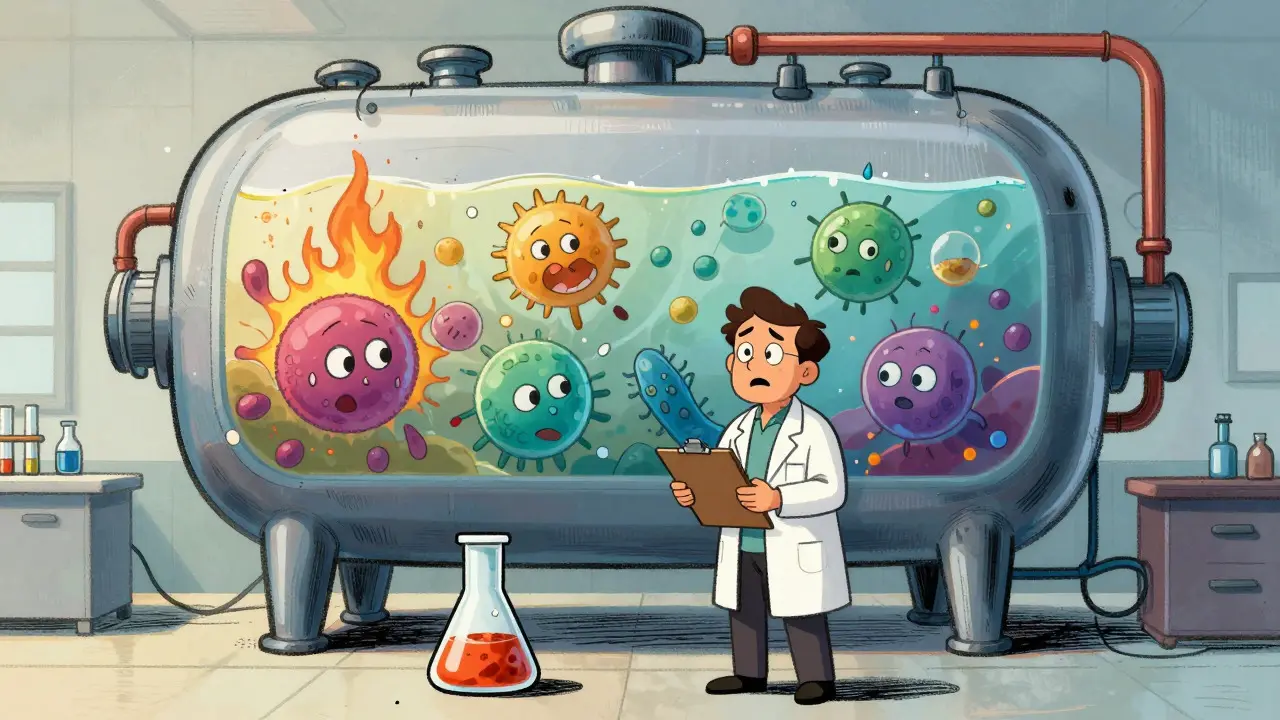
One of the most critical hurdles in this process is glycosylation. Proteins often have sugar chains attached to them, known as glycans. These aren't just decorative; they dictate how the drug behaves in the human body. They affect how quickly the drug is cleared from the blood, how well it binds to receptors, and whether the immune system attacks it. These glycan structures are incredibly sensitive. A slight change in pH, temperature, or nutrient levels in the cell culture can alter the sugar patterns. Even minor differences can compromise therapeutic equivalence. For example, if a biosimilar has too many fucose sugars attached, it might lose its ability to trigger an immune response effectively. Manufacturers must control dozens of parameters simultaneously to ensure the glycosylation profile matches the reference product within tight limits. This requires advanced analytical techniques and state-of-the-art labs capable of detecting minute structural variations.
Scaling Up: From Lab Beaker to Giant Tank
Getting the formula right in a 1-liter lab flask is one thing. Doing it in a 20,000-liter commercial bioreactor is another beast entirely. Scale-up is often where projects stumble. In larger tanks, physical forces change. Mixing becomes less efficient, oxygen transfer drops, and temperature uniformity suffers. Cells at the bottom of the tank might experience different conditions than those at the top. Manufacturers must adjust stirring speeds, aeration rates, and feeding profiles to ensure the cells "feel as similar as possible" to their lab counterparts. Not every facility has the space or equipment for these massive vessels. Smaller mid-range facilities often struggle with limited capacity, requiring significant investment in new production halls and staff to handle scale-up. This barrier keeps many potential competitors out of the race, limiting market participation to established players with deep pockets and existing infrastructure.
| Feature | Small-Molecule Generics | Biosimilars |
|---|---|---|
| Molecule Type | Simple chemicals | Large, complex proteins |
| Production Method | Chemical synthesis | Living cell cultures |
| Replicability | Exact copy possible | High similarity required (not identical) |
| Key Challenge | Cost reduction | Process consistency & glycosylation control |
| Regulatory Pathway | Abbreviated approval | Extensive clinical & analytical data |
The Cold Chain and Fluid Management Risks
Time is money in biosimilar manufacturing, but it’s also a risk factor. Biologics are fragile. During filling, transport, and storage, any mishandling can damage the protein structure. Bioprocessing containers, especially flexible bags, can break if handled incorrectly, leading to costly product loss. The cold chain-the network of refrigerated storage and transport-is non-negotiable. A break in the cold chain can denature the protein, rendering the entire batch useless. With production costs running high, losing a batch due to logistical errors is devastating. Manufacturers must implement rigorous protocols for handling fluids and maintaining temperature stability throughout the supply chain. This includes real-time monitoring systems that alert teams to any temperature deviations before permanent damage occurs.
Regulatory Hurdles and Data Requirements
Proving that your biosimilar is "highly similar" to the reference product isn't just about making the drug; it's about documenting every step of the way. Regulatory agencies like the FDA and EMA require robust analytical, preclinical, and clinical evidence. The guidelines evolve constantly, adding layers of complexity. Developers must demonstrate similarity across dozens of critical quality attributes (CQAs). This requires extensive data packages showing that despite minor inherent variations, the clinical effect remains the same. As noted by industry experts, successful scale-up requires access to a stable supply chain for high-quality raw materials and up-to-date knowledge of regulatory requirements. Compliance demands comprehensive quality management systems, including detailed standard operating procedures and thorough documentation to adhere to current Good Manufacturing Practices (cGMP). Any gap in documentation can delay approval by months or even years.
Tech Solutions: Single-Use Systems and Automation
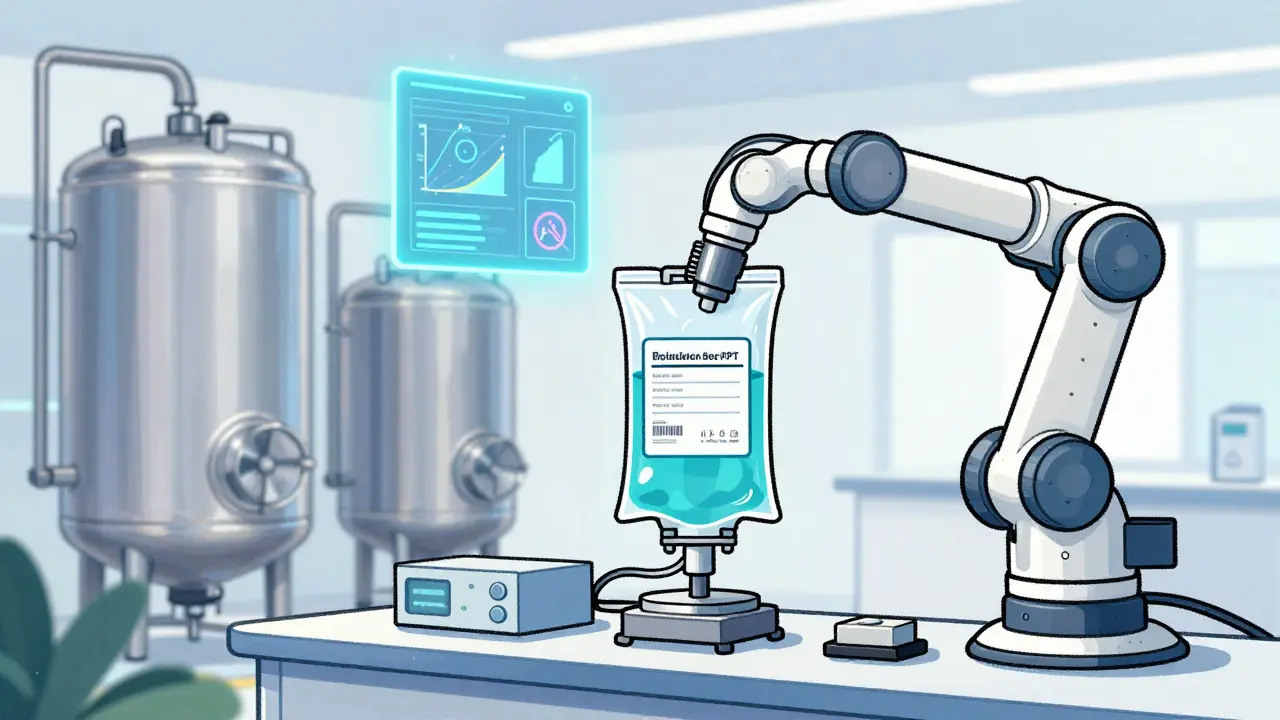
To tackle these challenges, the industry is shifting toward newer technologies. Single-use bioreactors have become a game-changer. Unlike traditional stainless steel tanks that require lengthy cleaning and validation between batches, single-use systems are disposable. This eliminates cross-contamination risks and allows for rapid changeovers between products. It also reduces the capital expenditure needed for cleaning infrastructure. Automation plays a crucial role too. Closed automated systems minimize human intervention, reducing the risk of contamination and error. By automating critical steps like cell harvesting and purification, manufacturers can improve efficiency and consistency. Process Analytical Technology (PAT) enables real-time monitoring of critical parameters, allowing operators to make adjustments on the fly rather than waiting for end-of-batch tests. These tools help maintain the delicate balance required to produce consistent biosimilars at scale.
Market Outlook and Future Trends
Despite the hurdles, the market is booming. The global biosimilars market was valued at approximately $7.9 billion in 2022 and is projected to reach $58.1 billion by 2030. This growth is driven by patent expirations of major biologics and increasing pressure to reduce healthcare costs. However, the high barrier to entry means only a few established biopharmaceutical companies dominate the space. Future developments point toward continuous processing and AI-driven optimization. Artificial intelligence can predict potential quality issues before they occur, optimizing manufacturing processes for better yield and consistency. Continuous manufacturing could further reduce batch-to-batch variability. Yet, complex biosimilars like antibody-drug conjugates will remain difficult to master. Only manufacturers who can balance regulatory compliance, technical excellence, and cost efficiency will thrive in this competitive landscape.
Why are biosimilars harder to manufacture than generic drugs?
Generic drugs are small molecules made through chemical synthesis, allowing for exact replication. Biosimilars are large proteins produced by living cells, which introduces natural variability. Since "the process defines the product," manufacturers must meticulously control biological conditions to achieve high similarity, not identity, making the process far more complex and sensitive to changes.
What is glycosylation and why does it matter in biosimilars?
Glycosylation is the attachment of sugar chains to proteins. These structures affect how the drug interacts with the body, including its clearance rate and immune recognition. Minor changes in glycosylation can alter the drug's efficacy or safety, so manufacturers must tightly control production conditions to match the reference product's glycan profile.
How do single-use bioreactors help in biosimilar production?
Single-use bioreactors are disposable plastic bags or vessels used for cell culture. They eliminate the need for cleaning and sterilizing stainless steel tanks between batches, reducing contamination risks and downtime. This flexibility allows manufacturers to switch products quickly and reduces the capital investment required for cleaning infrastructure.
What is the biggest challenge in scaling up biosimilar manufacturing?
Scaling up involves moving from small lab-scale vessels to large commercial bioreactors. Physical factors like mixing, oxygen transfer, and temperature distribution change significantly at larger scales. Ensuring that cells experience similar conditions in a 20,000-liter tank as they did in a 1-liter flask is technically difficult and requires precise adjustment of multiple parameters.
Are biosimilars exactly the same as the original biologic?
No, biosimilars are not identical copies. Due to the complexity of biological production, minor differences are inevitable. However, they must be "highly similar" to the reference product with no clinically meaningful differences in safety, purity, and potency. Extensive testing ensures that these minor variations do not affect the drug's performance in patients.


Sean Luke
I specialize in pharmaceuticals and have a passion for writing about medications and supplements. My work involves staying updated on the latest in drug developments and therapeutic approaches. I enjoy educating others through engaging content, sharing insights into the complex world of pharmaceuticals. Writing allows me to explore and communicate intricate topics in an understandable manner.
view all posts