
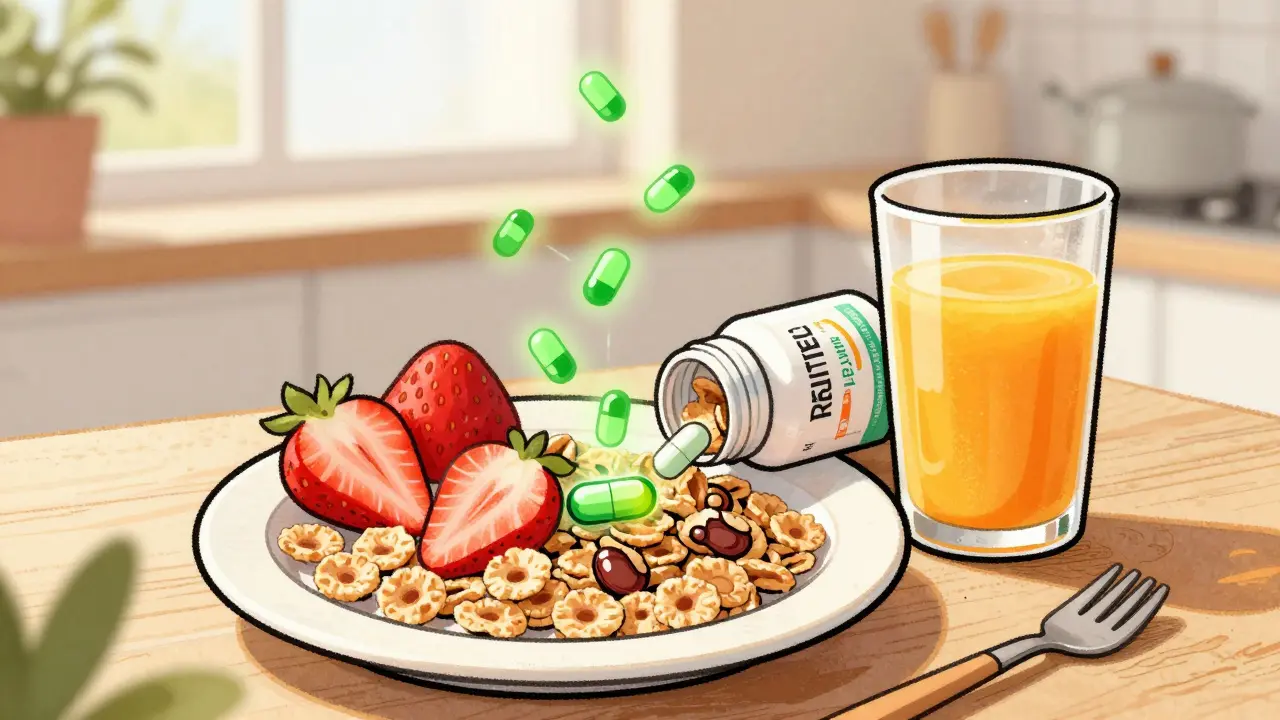
Most people know that iron is important for energy and oxygen transport, but few realize that vitamin C can make or break how well your body uses it. If you’re taking an iron supplement or eating plant-based iron sources like lentils, spinach, or fortified cereal, skipping vitamin C means you’re leaving up to 80% of that iron on the table. And if you’re taking other meds at the same time, you might be sabotaging your own efforts without even knowing it.
Why Vitamin C Makes Iron Work Better
Iron from plants - called non-heme iron - is stubborn. Your body struggles to absorb it, especially compared to the iron in meat, which comes pre-converted into a usable form. But vitamin C changes that. It doesn’t just help - it transforms non-heme iron into a form your gut can actually grab onto.
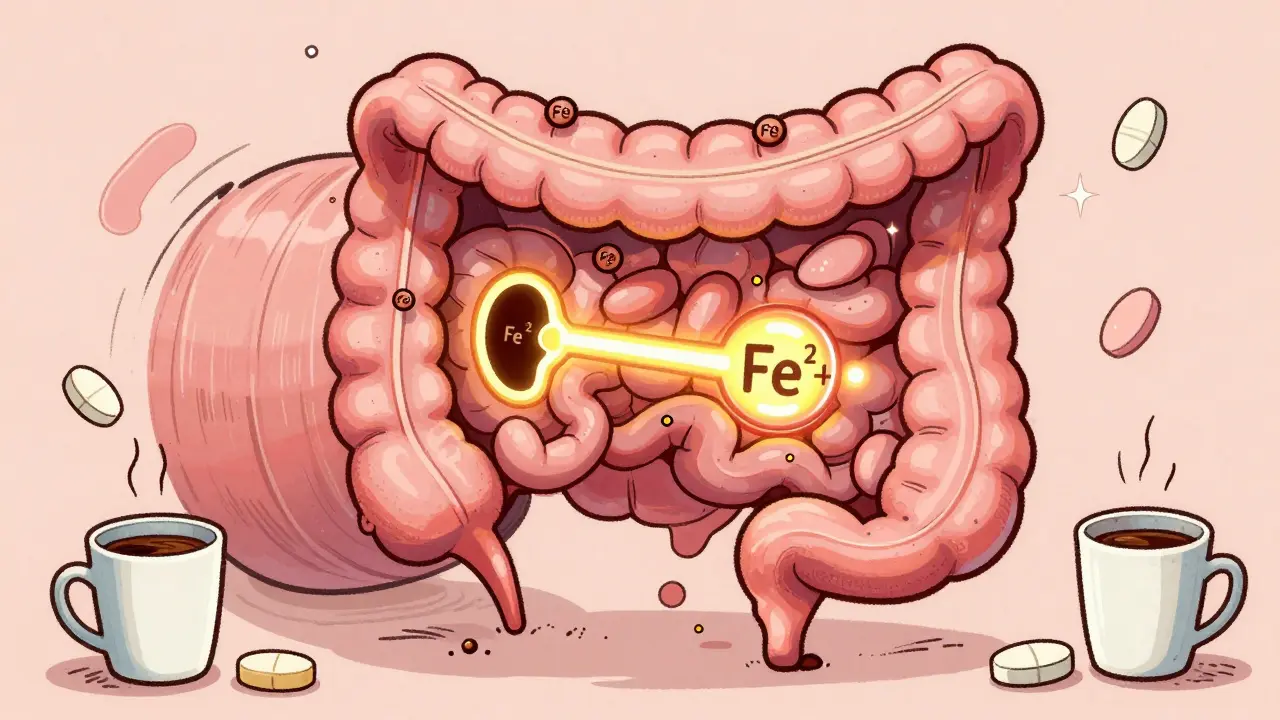
Here’s how: vitamin C (ascorbic acid) acts like a molecular key. It donates electrons to ferric iron (Fe³⁺), turning it into ferrous iron (Fe²⁺). This tiny chemical shift turns insoluble iron into soluble iron, letting it pass through the wall of your small intestine via a transporter called DMT-1. Without vitamin C, most non-heme iron just passes through you, unchanged.
Studies show this isn’t theoretical. In one trial, adding 100mg of vitamin C to a meal increased iron absorption by 100%. At 200mg, absorption jumped by 150-200%. That’s not a small boost - it’s the difference between barely improving your iron levels and actually reversing deficiency.
This effect is strongest with plant foods. Fortified cereals? Absorption goes up 67%. Lentils? Up 123%. Spinach? Up 89%. Even better, vitamin C can fight back against common blockers like tea, coffee, and calcium. Just 100mg of vitamin C can neutralize the iron-blocking power of a cup of black tea.
How Much Vitamin C Do You Actually Need?
You don’t need a mega-dose. The sweet spot is 100-200mg per meal. That’s:
- One medium orange
- Half a cup of red bell pepper
- One cup of strawberries
- Six ounces of orange juice
More than 200mg doesn’t help much more - and can cause stomach upset. A 500mg dose might increase absorption slightly more, but 15-20% of people get diarrhea or cramps. Stick to the 100-200mg range. It’s enough to get results, and it’s what doctors actually recommend.
Timing matters too. Take vitamin C at the same time as your iron. If you take it 30 minutes before or after, absorption drops by half. This isn’t a suggestion - it’s chemistry. The reaction happens in your gut within minutes. Waiting defeats the purpose.
What to Avoid: Drugs That Block Iron Absorption
Iron doesn’t live in a vacuum. Many common medications interfere with it - and not all of them are obvious.
Thyroid medication (levothyroxine): Iron and thyroid meds compete for absorption. If you take them together, your thyroid levels can tank. The fix? Wait at least 2 hours between doses. Take your thyroid med first thing in the morning on an empty stomach, then have your iron-rich breakfast two hours later.
Calcium supplements: Calcium and iron use the same gut transporters. A single 500mg calcium pill can slash iron absorption by 50-60%. If you’re taking calcium for bones or prenatal vitamins, space them out. Four hours apart is ideal.
Antacids and PPIs: Drugs like Tums, Maalox, omeprazole, and famotidine reduce stomach acid. Iron needs acid to be freed from food. Without it, even vitamin C can’t help. If you’re on long-term acid blockers, talk to your doctor - you may need a different form of iron, like ferrous bisglycinate, which doesn’t rely on stomach acid.
Antibiotics: Tetracycline and quinolone antibiotics (like ciprofloxacin) bind to iron and become useless. Iron also binds to them, making both less effective. Take them at least 3 hours apart.
Real-Life Examples: What Works
People who get this right see results. One pregnant woman in Michigan, with a hemoglobin level of 9.8 g/dL (significantly low), boosted it to 12.1 g/dL in eight weeks - just by pairing fortified cereal with a glass of orange juice at breakfast. No IV iron needed.
On Reddit, users report consistent energy boosts when they start taking iron with vitamin C. One person wrote: “I was exhausted all day. Started eating strawberries with my iron pill. Two weeks later, I could climb stairs without stopping.”
Common habits that work:
- Adding sliced strawberries to oatmeal with fortified grains
- Having a tomato and bell pepper salad with lentil soup
- Drinking a small glass of orange juice with your iron supplement
- Snacking on kiwi or guava after a bean-based meal
And the habits that backfire:
- Drinking coffee or tea with your iron-rich meal
- Taking iron with a calcium-rich snack like yogurt or cheese
- Swallowing an iron pill with a glass of milk
- Waiting hours after eating to take your supplement
Who Doesn’t Benefit - And Why
Vitamin C won’t help everyone. If you have hemochromatosis (a genetic iron overload disorder), extra iron - even from vitamin C - is dangerous. Don’t take supplements unless your doctor says so.
People with H. pylori infection or low stomach acid (common in older adults) also see reduced benefits. The acid in your stomach helps break down food so iron can be released. If you’re on long-term acid-reducing meds or have chronic gastritis, vitamin C’s effect is weaker. In these cases, doctors often recommend iron forms that don’t need acid, like iron polysaccharide or ferrous bisglycinate.
Even then, vitamin C still helps - just not as dramatically. It’s not a magic bullet, but it’s the best dietary tool we have for non-heme iron.

What’s New in 2026
The science keeps evolving. In early 2024, researchers at Japan’s SPring-8 facility announced they’d identified a protein (Dcytb) that vitamin C activates to reduce iron. They’re now testing synthetic compounds that could boost this effect by 40-60% without needing more vitamin C. That could help the 30% of people whose bodies don’t respond well to vitamin C alone.
Meanwhile, the FDA now requires all non-heme iron supplements to say on the label: “Take with vitamin C-rich foods for better absorption.” That’s new as of 2022 - and it’s a big deal. It means the medical community is finally acknowledging what nutrition science has known for decades.
Apps like MyFitnessPal now alert users when they log iron and vitamin C separately, nudging them to pair them. The WHO is rolling out SMS reminders in 15 countries to help low-income populations time their meals right. This isn’t niche advice anymore - it’s public health policy.
Bottom Line: Simple Rules to Follow
Here’s what you need to remember:
- Take 100-200mg of vitamin C with every iron-rich meal or supplement.
- Do it at the same time - not before, not after.
- Avoid coffee, tea, and calcium for 2 hours before and after.
- Wait at least 2 hours after thyroid meds, 4 hours after calcium supplements.
- Use whole foods: oranges, strawberries, bell peppers, broccoli - not just pills.
- If you’re on acid reducers or have gut issues, talk to your doctor about iron forms that work without stomach acid.
This isn’t complicated. It’s not expensive. And it works. You don’t need fancy supplements or expensive pills. Just pair your beans with a glass of orange juice. Your body will thank you.

Jake Kelly
January 11, 2026 AT 02:54 AMSo simple, yet so many people miss this. I used to take my iron with coffee and wonder why I was still tired. Started pairing it with orange juice and now I don’t need naps after lunch. Game changer.
Lisa Cozad
January 11, 2026 AT 04:32 AMI’ve been doing this for years with lentil bowls and bell peppers. No supplements needed. My ferritin levels are solid and I feel like I’ve got my energy back. It’s wild how such a small habit makes such a big difference.
anthony martinez
January 12, 2026 AT 01:39 AMWow. A post that doesn’t sound like it was written by a pharmaceutical rep. Who knew the answer was just fruit and not another pill?
Mario Bros
January 13, 2026 AT 13:26 PMTHIS. I was exhausted for months. Started eating strawberries with my iron pill. Two weeks later I climbed a flight of stairs without gasping. Thank you for this. 🙌
Saumya Roy Chaudhuri
January 13, 2026 AT 15:41 PMYou’re all missing the real issue. The FDA only mandated the label because of lobbying from citrus growers. Vitamin C doesn’t ‘boost’ absorption-it just tricks your body into absorbing more iron, which can be dangerous if you’re not deficient. This isn’t health advice. It’s corporate manipulation.
Christine Milne
January 15, 2026 AT 14:34 PMWhile I appreciate the sentiment, the assertion that vitamin C ‘transforms’ non-heme iron is a gross oversimplification. The biochemical mechanism is far more nuanced than a molecular key analogy suggests. The DMT-1 transporter’s affinity for ferrous iron is modulated by multiple factors including pH, mucosal iron stores, and hepcidin regulation-all of which are absent from this narrative. One must consider the broader physiological context before advocating blanket dietary recommendations.
Faith Edwards
January 17, 2026 AT 01:46 AMHow quaint. You all treat this like some grand revelation, as though no one in the history of human civilization ever thought to pair citrus with legumes. The ancient Egyptians, the Chinese apothecaries, the Ayurvedic texts-all knew this. And yet here we are in 2026, acting like we’ve cracked the code because a study was published in a journal with a fancy acronym. How utterly pedestrian.
Jay Amparo
January 17, 2026 AT 05:03 AMAs someone from India, I’ve seen this work firsthand. My grandmother always said, ‘Eat dal with amla or lemon.’ No science degree needed. She just knew. Now we have apps telling us what our grandmothers taught us. That’s not progress-that’s nostalgia with a UI.
lisa Bajram
January 17, 2026 AT 16:16 PMYESSSSS!! I’m a vegan mom and this is literally my daily life hack!! Oatmeal + strawberries + chia seeds + iron supplement = I don’t pass out at PTA meetings anymore!! My kids even ask for orange juice with their lentils now 😭✨ Thank you for writing this like a human and not a textbook!!
McCarthy Halverson
January 17, 2026 AT 22:24 PMTake vitamin C with iron. Don’t take it with calcium or antacids. Wait two hours for thyroid meds. Use food not pills. Done.
neeraj maor
January 19, 2026 AT 09:27 AMAnd who funds the SPring-8 facility? Who controls the WHO’s SMS program? The same people who sell vitamin C gummies and iron supplements. They need you to believe you’re ‘doing it right’ so you keep buying their products. The real solution? Stop taking iron unless you have a confirmed deficiency. The rest is fear-based marketing wrapped in pseudoscience.
Jake Nunez
January 19, 2026 AT 19:43 PMMy Nigerian auntie used to make spinach stew with lime juice. She didn’t know about DMT-1 or ferrous iron. She just knew if you didn’t add the lime, the stew made you weak. That’s wisdom. Not science. But science finally caught up.
Ritwik Bose
January 21, 2026 AT 04:32 AMBeautifully said, Jay 🙏 I grew up with turmeric in milk and lemon in dal. Our elders didn’t need journals to know what worked. The science just confirms what tradition already knew. Let’s honor both.
Ted Conerly
January 21, 2026 AT 05:56 AMLove this. I used to take my iron at night with a snack. Now I take it with breakfast and orange juice. My energy is up, my brain fog is gone. It’s not magic. It’s just chemistry. And you don’t need to be a scientist to use it.
Michael Marchio
January 23, 2026 AT 02:41 AMLet’s be real here. The entire post is just a well-researched infomercial disguised as public health advice. You’ve got the FDA ‘requiring’ labels now? Since when did regulatory bodies become nutrition coaches? And who decided that ‘100-200mg’ is the sweet spot? Because I’m pretty sure that’s the exact dosage used in the last three supplement studies funded by a company that sells vitamin C tablets. The real danger isn’t lack of vitamin C-it’s trusting anyone who says ‘just do this’ without asking who benefits.