When you put on a wearable sleep monitor, a device worn on the wrist or body that tracks sleep patterns using motion, heart rate, and sometimes blood oxygen levels. Also known as sleep trackers, these gadgets promise to turn your nights into data—but how much of it actually helps you sleep better? They’re everywhere now: on wrists, in rings, even tucked into headbands. But most people don’t realize these devices don’t measure sleep directly. They guess it—based on movement, heart rate changes, and breathing patterns. That’s why your device might say you slept 7 hours when you were actually awake for half of it.
Not all wearables are the same. Some, like the Oura Ring or Apple Watch, track heart rate variability, the subtle changes in time between heartbeats that reflect nervous system activity during sleep to estimate deep and REM cycles. Others, like Fitbit, rely mostly on motion sensors. Then there are devices that claim to detect sleep apnea, a condition where breathing stops repeatedly during sleep, often linked to snoring and daytime fatigue. But here’s the catch: none of these are medical devices. If your tracker says you have sleep apnea, it’s a red flag to see a doctor—not a diagnosis.
What do these tools actually help with? For most people, they’re not about fixing sleep—they’re about spotting patterns. Maybe you notice your sleep quality drops after coffee after 2 p.m. Or your deep sleep improves when you turn off screens an hour before bed. That’s the real value: personal insight, not precision. The data won’t tell you why you’re tired, but it can help you test what changes make a difference. And that’s powerful.
But don’t let the numbers stress you out. Obsessing over your sleep score can backfire—leading to more anxiety, which makes sleep worse. These devices work best when you use them as a mirror, not a judge. If your tracker shows you got 6 hours of sleep and you woke up refreshed, that’s a win. If you’re exhausted and it says 8 hours? Maybe the device got it wrong, or maybe your body needs more rest than it’s counting.
The posts below dig into what matters: how sleep trackers interact with medications that affect rest, why some people see false alarms for heart rhythm issues, and how conditions like GERD or anxiety show up in the data. You’ll find real-world comparisons, warnings about misleading claims, and practical tips on using this tech without letting it control your nights. No fluff. Just what you need to know to make sense of the numbers—and get better sleep without the stress.
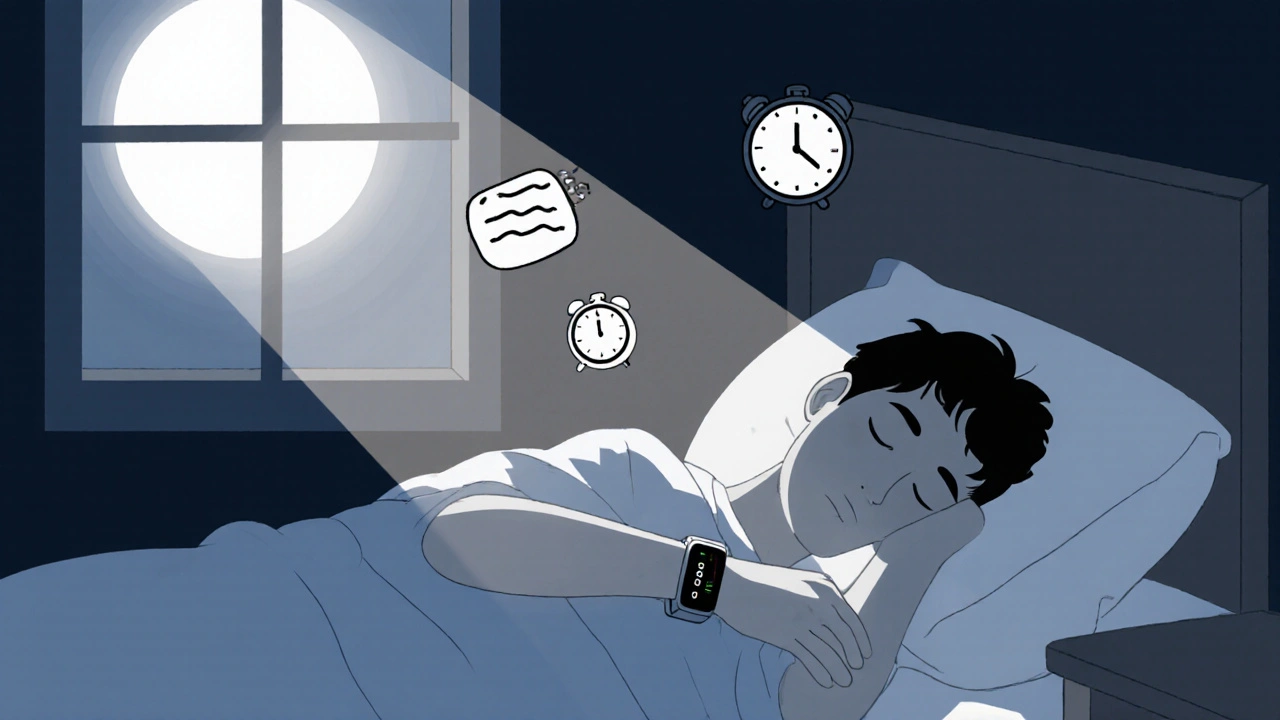
Actigraphy uses motion sensors in wearables to track sleep at home, offering a practical alternative to lab-based sleep studies. Learn how it works, its accuracy limits, and who benefits most from using it.
read more