
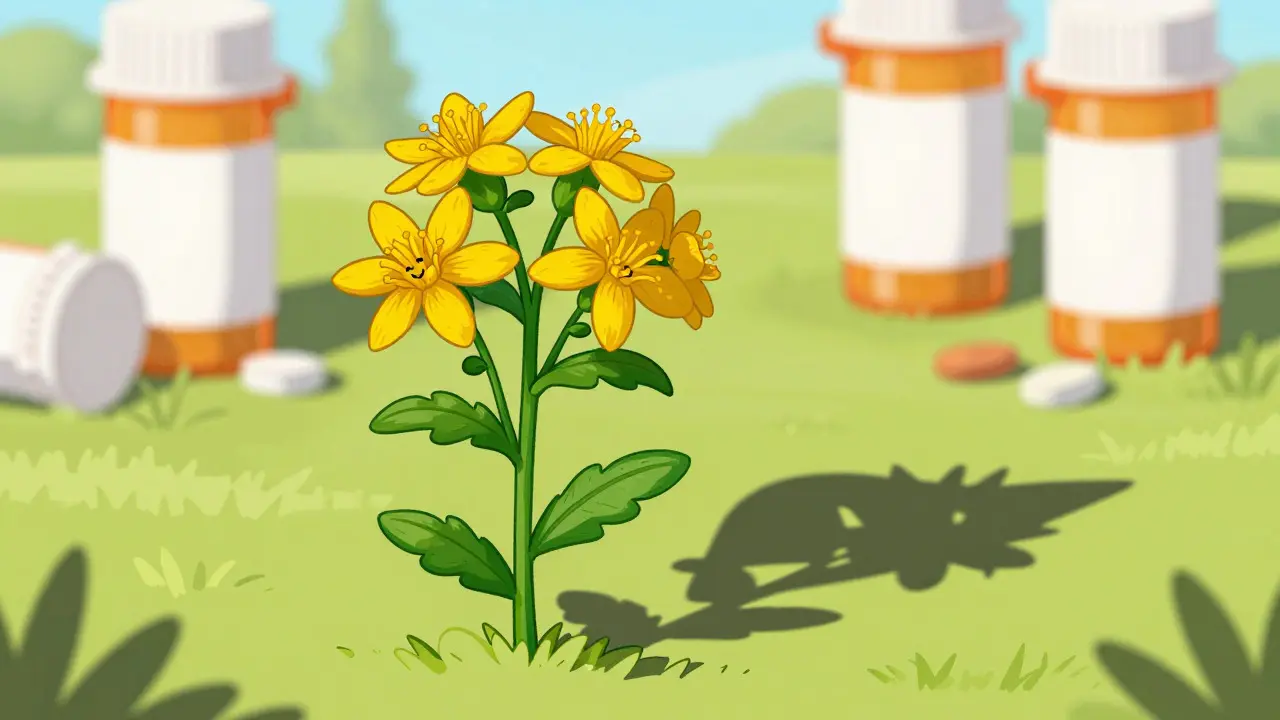
You might think that because it grows in a field, St. John’s Wort is a herbal supplement considered safe for treating mild depression and anxiety. But when you mix this plant with your daily prescription pills, the result can be anything but natural. It is one of the most potent enzyme inducers known to pharmacology. If you are taking blood thinners, birth control, or antidepressants, this herb could silently undermine your treatment or push you into dangerous territory.
The problem isn't just that St. John’s Wort interacts with drugs; it changes how your body processes them. Specifically, it ramps up the activity of liver enzymes and gut transporters. This means your body breaks down medications faster than intended, leaving you with sub-therapeutic levels of life-saving drugs. Or, in the case of certain antidepressants, it piles on extra serotonin, leading to a potentially fatal condition called serotonin syndrome. Understanding these mechanisms is crucial before you pop another capsule.
How St. John’s Wort Messes With Your Metabolism
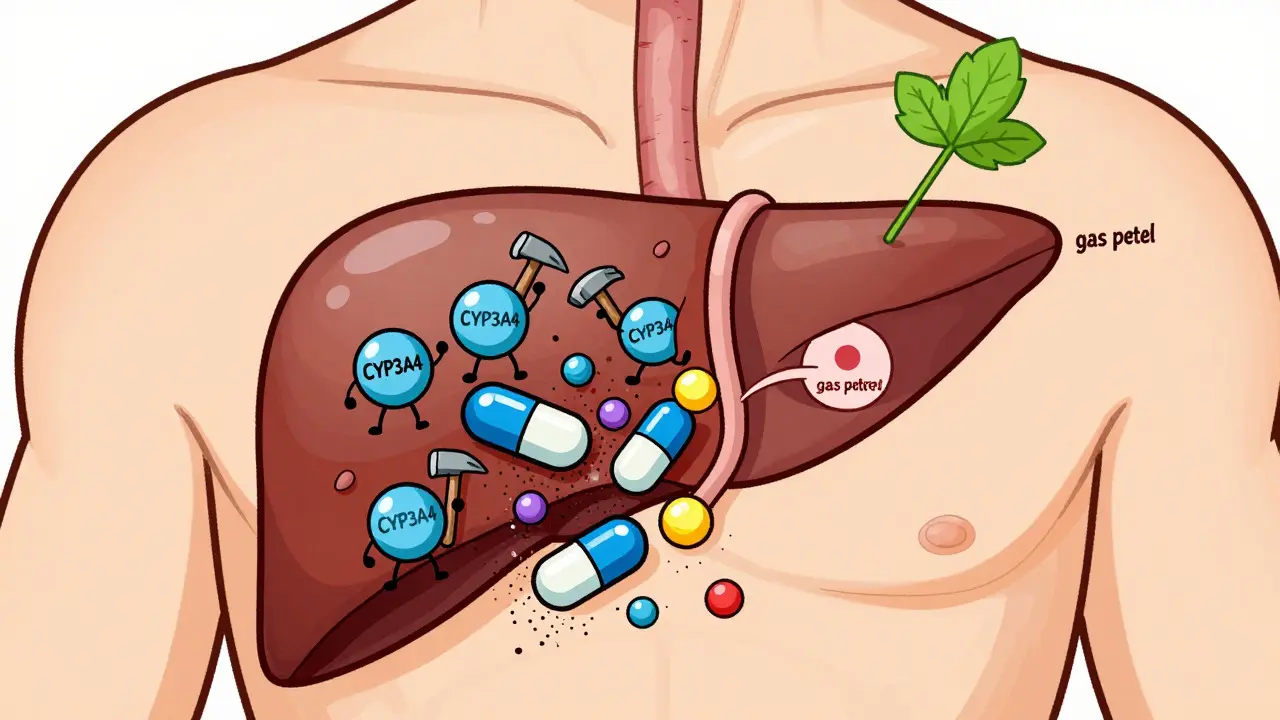
To understand why this herb is such a troublemaker, we need to look at Cytochrome P450 3A4 (CYP3A4), which is a liver enzyme responsible for metabolizing about half of all prescription drugs. Most of us have a baseline level of this enzyme. When you take St. John’s Wort, specifically its active component hyperforin, which is the primary compound in the herb responsible for inducing liver enzymes and increasing drug metabolism rates, it acts like a gas pedal for CYP3A4.
Research indicates that hyperforin can increase CYP3A4 activity by up to 40% after just two weeks of standard dosing (900 mg daily). This acceleration doesn't stop there. The herb also boosts P-glycoprotein, which is a transporter protein that pumps drugs out of cells back into the gut, reducing their absorption into the bloodstream. The combination of faster breakdown in the liver and reduced absorption in the gut creates a perfect storm for medication failure. According to the Mayo Clinic, St. John’s Wort can decrease blood levels of co-administered medications by 30-50%. That is not a minor fluctuation; that is the difference between being protected from a stroke and having one.
Here is the kicker: these effects don’t vanish the moment you stop taking the herb. The induction of these enzymes persists for up to two weeks after discontinuation. So, if you start St. John’s Wort, feel better, and then quit while staying on your other meds, those meds will suddenly become too strong in your system as the enzyme levels normalize. It is a double-edged sword that requires careful timing and monitoring.
The Most Dangerous Drug Combinations
Not all interactions are created equal, but many are clinically significant. Here are the specific categories where the risks are highest.
| Medication Class | Specific Drugs | Interaction Mechanism | Potential Consequence |
|---|---|---|---|
| Anticoagulants | Warfarin, Phenprocoumon | Reduces plasma concentration by ~25% | Unstable INR values, increased risk of blood clots and stroke |
| Oral Contraceptives | Ethinyl estradiol-containing pills | Reduces hormone levels by 25-35% | Breakthrough bleeding, unintended pregnancy |
| SSRIs & Antidepressants | Fluoxetine, Sertraline, Paroxetine | Additive serotonin reuptake inhibition | Serotonin Syndrome: confusion, rapid heart rate, muscle rigidity |
| Immunosuppressants | Cyclosporine, Tacrolimus | Decreases blood levels by 30-50% | Organ transplant rejection |
| HIV Protease Inhibitors | Ritonavir, Saquinavir | Reduces drug concentrations by up to 50% | Viral resistance, treatment failure |
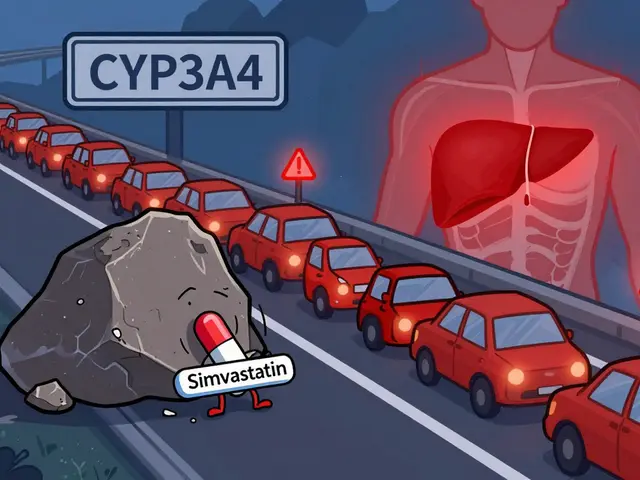
| Statins | Atorvastatin, Simvastatin | Reduces plasma concentrations by 30-40% | Ineffective cholesterol management, higher cardiovascular risk |
Blood Thinners: A Silent Threat
If you take Warfarin, you know the importance of keeping your INR (International Normalized Ratio) stable. St. John’s Wort destabilizes this balance rapidly. The Swedish Medical Products Agency documented cases where patients’ INR dropped from a therapeutic range of 2.0-3.0 to subtherapeutic levels of 1.2-1.8 within days of starting the herb. One case report showed an INR dropping from 2.5 to 1.3 in just seven days. For someone with atrial fibrillation or a mechanical heart valve, this drop significantly increases the risk of clot formation and stroke. The Therapeutic Goods Administration (TGA) of Australia recorded 22 spontaneous case reports of warfarin interactions between 1998 and 2000 alone, highlighting a long-standing clinical issue.
Birth Control Failure
Many women assume their pill is foolproof if they take it correctly. St. John’s Wort proves otherwise. By accelerating the metabolism of ethinyl estradiol, the herb reduces the hormone’s effectiveness. GoodRx analysis notes a 25-35% reduction in hormone concentrations. There are 13 documented cases of contraceptive failure linked to this interaction, resulting in breakthrough bleeding and unintended pregnancies. If you rely on oral contraceptives, consider this herb a major threat to your family planning.
The Serotonin Surge
While most interactions involve the herb making drugs *less* effective, combining it with SSRIs makes the effect *too* strong. Both St. John’s Wort and SSRIs increase serotonin levels in the brain. Together, they can trigger Serotonin Syndrome, which is a potentially life-threatening condition caused by excessive accumulation of serotonin in the central nervous system. Symptoms include agitation, hallucinations, rapid heartbeat, high blood pressure, dilated pupils, loss of coordination, and muscle rigidity. The TGA reported six Australian cases of this syndrome involving combinations with citalopram, fluoxetine, and sertraline. Symptoms can appear within 3-7 days of starting the combination.
Who Is Most at Risk?
It is easy to underestimate the danger because St. John’s Wort is sold in health food stores without a prescription. However, the data shows that specific groups face disproportionate risks.
- Transplant Patients: Immunosuppressants like cyclosporine have a narrow therapeutic window. A 30-50% drop in blood levels can lead to acute organ rejection. One patient reported being "hours away from organ rejection" after starting the herb for depression.
- HIV Patients: Protease inhibitors and non-nucleoside reverse transcriptase inhibitors are heavily metabolized by CYP3A4. Reduced concentrations can lead to viral replication and the development of drug-resistant HIV strains.
- Cardiovascular Patients: Beyond warfarin, digoxin levels can drop by 25%, risking heart failure decompensation. Statins like atorvastatin lose efficacy, leaving cholesterol unchecked.
- Anxiety Sufferers: Benzodiazepines like alprazolam (Xanax) can see plasma levels drop by 40%, causing rebound anxiety and panic attacks.
A 2022 Johns Hopkins study revealed a troubling gap in communication: 41% of surveyed patients did not disclose their use of St. John’s Wort to healthcare providers despite taking prescription medications. This silence is often due to the perception that "natural" equals "safe." The FDA has required labels to state "Ask a doctor before use if you are taking prescription drug" since 2019, but awareness remains low.
Navigating the Risks: Practical Steps
If you are considering St. John’s Wort for mild depression, you are not necessarily doomed to avoid it entirely, but you must proceed with extreme caution. Here is how to manage the risk.
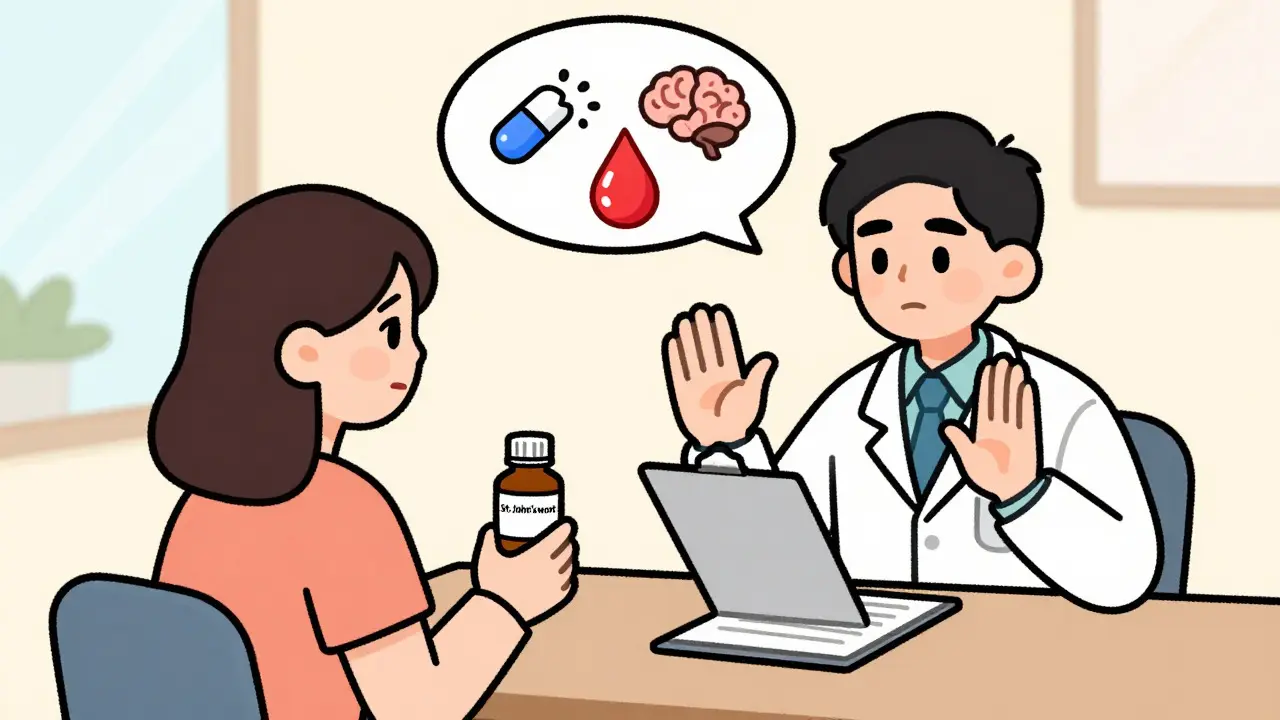
- Full Disclosure: Tell your doctor and pharmacist about every supplement you take. Use the phrase "herbal supplements" rather than just "medications," as patients often forget to categorize herbs as drugs.
- Check for High-Risk Classes: If you are on any of the 12 high-risk classes identified by GoodRx (antidepressants, benzodiazepines, birth control, anticoagulants, immunosuppressants, HIV meds, anticonvulsants, cardiovascular drugs, migraine meds, statins, opioids, or proton pump inhibitors), assume an interaction exists unless proven otherwise.
- Monitor Levels: If your doctor approves the combination, frequent monitoring is essential. For warfarin, check INR 3-5 days after starting or stopping the herb. For cyclosporine, monitor trough levels twice weekly.
- Consider Low-Hyperforin Extracts: Recent research published in Clinical Pharmacology & Therapeutics (June 2023) suggests that standardized extracts containing less than 0.3% hyperforin show significantly reduced interaction potential while maintaining antidepressant efficacy. Ask your pharmacist if a low-hyperforin formulation is available and appropriate for you.
- Washout Periods: If you stop St. John’s Wort, remember that the enzyme induction lasts for two weeks. Do not restart interacting medications immediately without consulting your provider, as toxicity risks may rise as the herb leaves your system.
The Regulatory Landscape
The way governments handle St. John’s Wort varies wildly, adding to consumer confusion. In the United States, it is regulated as a dietary supplement under DSHEA, meaning manufacturers do not need to prove safety or efficacy before selling it. The FDA issued a Drug Safety Communication in January 2023 requiring stronger warnings, specifically mentioning warfarin, cyclosporine, and SSRIs.
In contrast, Australia requires mandatory interaction warnings on all products since 2018. Germany and Sweden restrict sales to prescription-only status, recognizing the clinical complexity. The European Food Safety Authority concluded in 2022 that "No safe threshold for St. John’s Wort use can be established for patients taking prescription medications due to inter-individual variability in enzyme induction." This stark assessment reflects the growing consensus among medical experts.
The American Psychiatric Association updated its 2023 treatment guidelines for depression, downgrading St. John’s Wort from "may be considered" to "not recommended" for patients taking any prescription medications. This shift underscores the priority of avoiding harmful interactions over pursuing alternative treatments.
Bottom Line
St. John’s Wort is not a benign flower tea. It is a powerful biological agent that hijacks your liver’s ability to process other drugs. While it may offer relief for mild depression, the cost of ignoring its interaction profile can be severe-from failed contraception to organ rejection. Always treat herbal supplements with the same respect as pharmaceutical drugs. Check with your healthcare provider, read the label, and never assume "natural" means "safe."
Does St. John’s Wort interact with all medications?
Not all medications are affected equally. Drugs metabolized by the CYP3A4 enzyme or transported by P-glycoprotein are at highest risk. This includes many statins (like atorvastatin), but not others (like pravastatin). Always check the specific metabolic pathway of your drug.
How long does it take for St. John’s Wort to cause interactions?
Enzyme induction typically begins within a few days but reaches peak effect after two weeks of consistent use. Symptoms of interaction, such as breakthrough bleeding or unstable INR, often appear within 1-2 weeks of starting the herb.
Can I take St. John’s Wort with Tylenol or Ibuprofen?
Acetaminophen (Tylenol) and ibuprofen generally have lower risks of severe interaction compared to prescription drugs. However, individual responses vary. It is always best to consult a pharmacist, especially if you take these medications frequently or in high doses.
What are the symptoms of serotonin syndrome?
Symptoms include mental status changes (agitation, confusion), autonomic instability (rapid heart rate, high blood pressure, sweating), and neuromuscular abnormalities (tremors, muscle rigidity, hyperreflexia). Seek immediate medical attention if these occur after combining St. John’s Wort with antidepressants.
Is there a safer version of St. John’s Wort?
Recent studies suggest that extracts with low hyperforin content (<0.3%) may have fewer drug interactions while retaining antidepressant effects. Look for standardized extracts labeled as "low-hyperforin" or "hyperforin-free," though availability may be limited.

Terrence spry
I'm a pharmaceutical scientist specializing in clinical pharmacology and drug safety. I publish concise, evidence-based articles that unpack disease mechanisms and compare medications with viable alternatives to help readers have informed conversations with their clinicians. In my day job, I lead cross-functional teams advancing small-molecule therapies from IND through late-stage trials.
view all posts