

Levothyroxine Timing & Absorption Calculator
Input Your Schedule
Enter your schedule details and click calculate to see the estimated impact on your medication absorption.
Imagine waking up, swallowing your morning pill, and immediately pouring yourself a steaming cup of coffee. For millions of people with hypothyroidism, this is the standard routine. But what if that simple habit is quietly sabotaging your treatment? The truth is, drinking coffee too soon after taking Levothyroxine is a synthetic thyroid hormone used to treat underactive thyroid conditions can drastically reduce how much medicine your body actually absorbs. You might be taking your dose faithfully, yet still feeling fatigued, gaining weight, or struggling with brain fog. The culprit often isn't the dosage itself, but the timing of your caffeine fix.
The Science Behind the Interaction
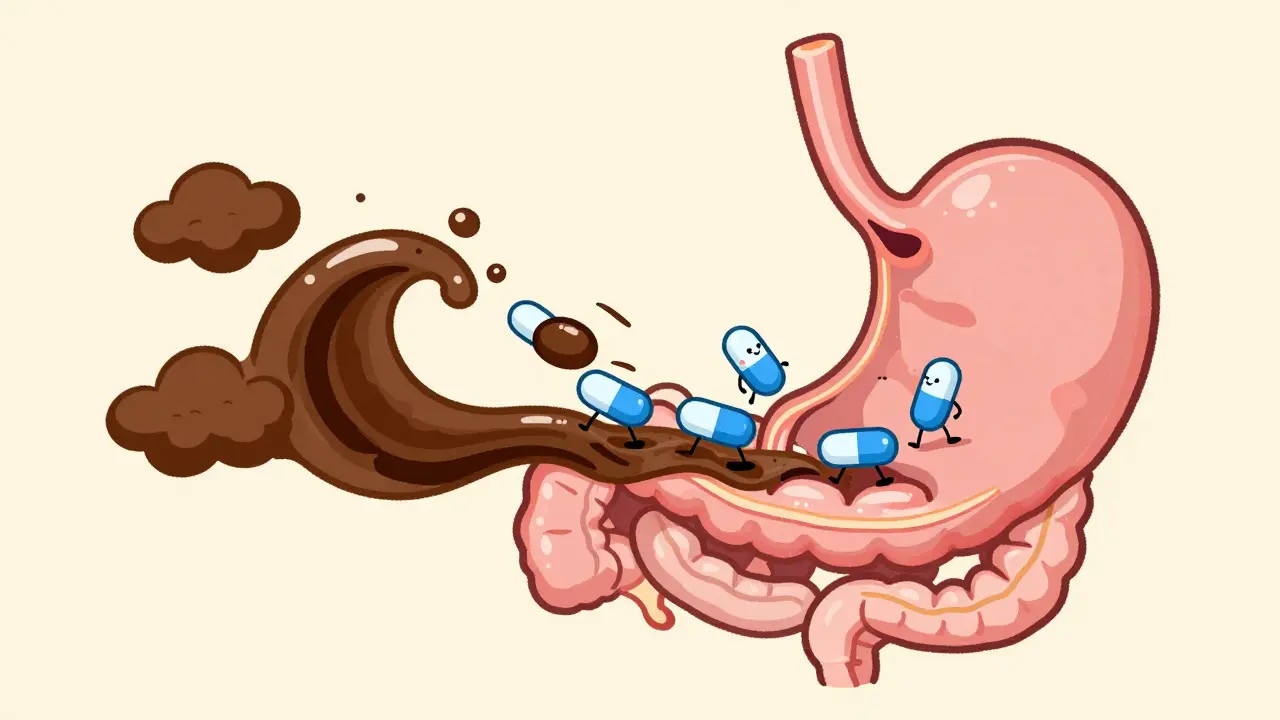
Levothyroxine is not like most other medications. It has a very narrow therapeutic window, meaning the difference between an effective dose and an ineffective one is tiny. When you swallow a tablet, it needs specific conditions in your stomach and small intestine to dissolve and enter your bloodstream efficiently. Coffee interferes with this process in two main ways. First, compounds in coffee called chlorogenic acids bind to the levothyroxine molecule in your gastrointestinal tract. This binding reduces the drug's solubility, making it harder for your body to absorb it.
Second, coffee stimulates colonic motility. In simpler terms, it speeds up the movement of food through your digestive system. If your gut moves faster, the levothyroxine spends less time in the small intestine where absorption happens. A pivotal study published in the American Thyroid Association journal in 2008 found that consuming espresso simultaneously with levothyroxine reduced serum T4 levels by nearly 36%. That is a massive drop in effectiveness. Even decaffeinated coffee shows similar interference patterns because the issue lies partly in the physical properties of the liquid and its effect on gut transit, not just the caffeine content.
| Substance | Absorption Reduction | Recommended Separation Time |
|---|---|---|
| Coffee (Caffeinated) | 25% - 57% | 60 minutes minimum |
| Coffee (Decaffeinated) | 15% - 30% | 60 minutes minimum |
| Calcium Supplements | Up to 90% | 4 hours |
| Iron Supplements | Up to 90% | 4 hours |
| Soy Products | 15% - 20% | 4 hours |
Why Timing Matters More Than You Think
The consensus among endocrinologists is clear: you need a buffer zone. Most guidelines recommend waiting at least 60 minutes after taking your levothyroxine before sipping any coffee. Some experts, including researchers from the Mayo Clinic, suggest extending this window to 45-60 minutes strictly, while others advise up to four hours for patients who are particularly sensitive or have unstable thyroid levels. Why such a wide range? Individual metabolism varies. Your gut health, the specific brand of medication, and even your daily stress levels can influence how quickly your body processes the drug.
If you drink coffee within that critical one-hour window, you risk having elevated TSH (Thyroid Stimulating Hormone) levels. TSH is the signal your pituitary gland sends to your thyroid. When your thyroid isn't producing enough hormone, TSH rises. If your levothyroxine isn't absorbing properly due to coffee, your TSH stays high, and your symptoms persist. A 2022 study in Frontiers in Endocrinology showed that patients who consumed coffee within one hour of their medication had average TSH levels of 6.62 mIU/L, compared to a healthy 0.75 mIU/L for those who waited four hours. That difference means the distinction between feeling normal and feeling chronically unwell.
Tablets vs. Liquid Formulations
Not all levothyroxine products are created equal. The traditional tablet forms-like Synthroid, Levoxyl, or generic versions-are highly susceptible to food and drink interactions. However, newer formulations offer a lifeline for coffee lovers. Liquid levothyroxine, such as Tirosint, comes in a gel cap filled with liquid solution. Because it is already dissolved, it bypasses the dissolution step that coffee interferes with. Clinical trials have demonstrated that liquid levothyroxine maintains 98.7% bioavailability even when taken with coffee, tea, or orange juice. This is a game-changer for patients who struggle to change their morning routines.
Soft gel capsules also show improved resistance to interference compared to tablets, though they are not as immune as the liquid form. If you find yourself constantly battling fatigue despite adhering to the one-hour rule, ask your doctor about switching to a liquid or soft gel formulation. It might eliminate the need for strict timing altogether.
Practical Tips for Morning Routine Adjustments
Changing a long-standing habit is hard. For many, the ritual of coffee is non-negotiable. Here are some practical strategies to bridge the gap between medical advice and real life:
- Set a visual timer: Use a kitchen timer or a phone alarm labeled "Coffee Ready" that goes off exactly 60 minutes after you take your pill. This removes the guesswork and anxiety of checking the clock constantly.
- Pre-brew your coffee: If you have a programmable coffee maker, set it to brew right before you wake up. Then, wait until the 60-minute mark to pour and drink. Alternatively, keep a separate mug labeled "Medication First" to serve as a psychological cue.
- Hydrate first: Drink a full glass of plain water with your levothyroxine. Water helps move the pill down and starts the hydration process without interfering with absorption. Save the flavored beverages for later.
- Consider evening dosing: Recent research suggests that taking levothyroxine at bedtime, at least three to four hours after your last meal, may improve absorption consistency. This completely sidesteps the morning coffee conflict. Discuss this option with your endocrinologist, as it requires adjusting your schedule significantly.

What About Other Drinks?
Coffee isn't the only beverage that causes trouble. Tea contains tannins, which can also bind to levothyroxine and reduce absorption. While the effect is generally weaker than coffee, it is still significant enough to warrant caution. Orange juice and other acidic drinks can alter stomach pH, potentially affecting how the tablet dissolves. Stick to water in the morning. If you crave flavor, wait until your post-medication window has passed. Remember, the goal is to get the maximum benefit from your medication so you can feel your best throughout the day.
When to Consult Your Doctor
If you have been following the one-hour rule but still experience symptoms like persistent tiredness, hair loss, or unexplained weight gain, do not assume your dosage is wrong. It might be time to review your entire routine. Are you taking calcium or iron supplements? Are you eating high-fiber foods like oatmeal or bran muffins immediately after your pill? All of these factors compound the problem. Bring a detailed log of your morning habits to your next appointment. Your doctor may adjust your dose based on blood tests that reflect your actual absorption rates, rather than theoretical ones.
How long should I wait after taking levothyroxine before drinking coffee?
You should wait at least 60 minutes after taking levothyroxine before consuming coffee. Some endocrinologists recommend waiting up to 4 hours for optimal absorption, especially if you have experienced unstable thyroid levels in the past. This separation allows the medication to be fully absorbed in your small intestine before coffee alters your gut motility or binds to the drug molecules.
Does decaf coffee interfere with levothyroxine absorption?
Yes, decaffeinated coffee can still interfere with levothyroxine absorption. Studies show that decaf reduces absorption by 15-30%, similar to caffeinated varieties. The interference is caused by compounds like chlorogenic acids and the physical effect of coffee on intestinal transit time, not just caffeine. Therefore, the same 60-minute waiting period applies to decaf.
Can I take liquid levothyroxine with coffee?
Yes, liquid levothyroxine formulations like Tirosint are designed to minimize food and drink interactions. Clinical studies indicate that liquid levothyroxine maintains nearly 99% bioavailability even when taken with coffee, tea, or juice. This makes it an excellent option for patients who cannot easily delay their coffee consumption.
Why does coffee affect my thyroid medication?
Coffee affects levothyroxine in two primary ways. First, polyphenols in coffee bind to the medication in the stomach, reducing its solubility. Second, coffee speeds up gut motility, meaning the medication passes through the small intestine too quickly to be fully absorbed. This results in lower serum T4 levels and potentially higher TSH readings.
Is it better to take levothyroxine in the morning or at night?
While morning administration on an empty stomach is the traditional standard, recent evidence supports bedtime dosing. Taking levothyroxine at least 3-4 hours after your last meal can improve absorption consistency and eliminates conflicts with morning coffee. However, you must discuss this change with your doctor, as it may require adjusting your dosage based on follow-up blood tests.





Tumble Farm
June 24, 2026 AT 11:05 AMIt is genuinely frustrating that basic pharmacokinetics are still debated by the general public when the data has been clear for over a decade. The interaction between chlorogenic acids and levothyroxine solubility is not a matter of opinion but of chemical fact. If patients want to optimize their TSH levels, they must adhere to the separation protocols outlined in clinical guidelines rather than relying on anecdotal morning routines.
Alyssa Smith
June 25, 2026 AT 08:27 AMI was so relieved to read this because I have been feeling sluggish despite my doctor saying my dose was fine. It turns out I was drinking my latte right after my pill every single day! I am going to start setting a timer immediately and see if my energy levels improve. Thank you for sharing this helpful information! ☕️✨
Frank Polster
June 26, 2026 AT 02:37 AMOh wow, imagine having to wait an hour for your coffee. What is next, do we need a permit to breathe? I drink mine with my pill and feel just fine, thanks very much. Probably just another way to make simple things complicated and stressful for everyone.
alexander barrera
June 28, 2026 AT 01:48 AMThis article is typical of the low-effort content flooding the internet today. 🙄 Real professionals know that bioavailability varies wildly based on individual gut microbiome composition, which this piece completely ignores in favor of simplistic tables. It is insulting to suggest that a one-size-fits-all waiting period applies to everyone without considering genetic polymorphisms in drug transporters. Truly pathetic journalism. 💩
Bruno Sarri
June 28, 2026 AT 19:04 PMI appreciate the detailed breakdown here. As someone who mentors others through health transitions, I find it crucial to emphasize that changing habits is difficult. The suggestion to use a visual timer or pre-brew coffee is excellent practical advice. We should support each other in making these small adjustments rather than judging those who struggle with the routine. Let us be kind to ourselves as we navigate these health challenges.
Tucker Brown
June 29, 2026 AT 00:03 AMThey want you to believe it is just the coffee. They do not tell you about the heavy metals in the water supply or the fluoride in the tap water that blocks absorption even more. The pharmaceutical industry profits from keeping you confused and dependent on higher doses. Wake up people. Control your own narrative and stop letting them dictate your morning routine with their fake science.
ankit agarwal
June 30, 2026 AT 07:03 AMThe epistemological framework surrounding thyroid hormone replacement therapy requires a nuanced understanding of gastrointestinal transit kinetics. When we analyze the synergistic effect of polyphenols and motility acceleration, we observe a significant deviation in therapeutic efficacy. It is imperative that we deconstruct our habitual behaviors and reconstruct them based on empirical evidence rather than cultural conditioning. The liquid formulation represents a paradigm shift in bioavailability optimization.
Stephanie Cree
June 30, 2026 AT 19:17 PMYou really should be ashamed of yourself for not reading the entire article before posting such ignorant comments!!! It is absolutely scandalous that people ignore medical advice just to satisfy their caffeine addiction!!! Your health is YOUR responsibility!!! Do not come crying to me when your TSH levels are out of control!!! 😡📉💔