
When a life-saving drug runs out, hospitals don’t just wait for more to arrive. In the U.S., the FDA has a quiet but powerful tool to keep critical medications flowing: extending their expiration dates. This isn’t a loophole or a gamble-it’s a science-backed, tightly controlled process used only when patients would otherwise go without. As of December 2025, over 343 drug lots have been granted extended use dates by the FDA to bridge gaps in supply. These aren’t blanket extensions. They’re precise, lot-specific, and backed by real stability data.
How the FDA Decides Which Drugs Get Extra Time
Not every drug in shortage gets an extension. The FDA only approves them for medications that are both critically needed and stable enough to last longer than their printed date. Think epinephrine for anaphylaxis, propofol for anesthesia, or IV fluids during a nationwide shortage. If a drug isn’t essential-if there are safe, effective alternatives-it won’t qualify. The process starts with the manufacturer. They run stability tests: storing samples under controlled conditions for months or years, then checking if the drug still has the right strength, purity, and effectiveness. If the data shows the product hasn’t degraded, they submit it to the FDA. The agency reviews every piece-no shortcuts. Only then do they approve an extension, usually adding one year to the original expiration date. In rare cases, like with certain Baxter IV solutions in 2024, the FDA allowed extensions up to 24 months.What the Extension Actually Means for Hospitals and Pharmacies
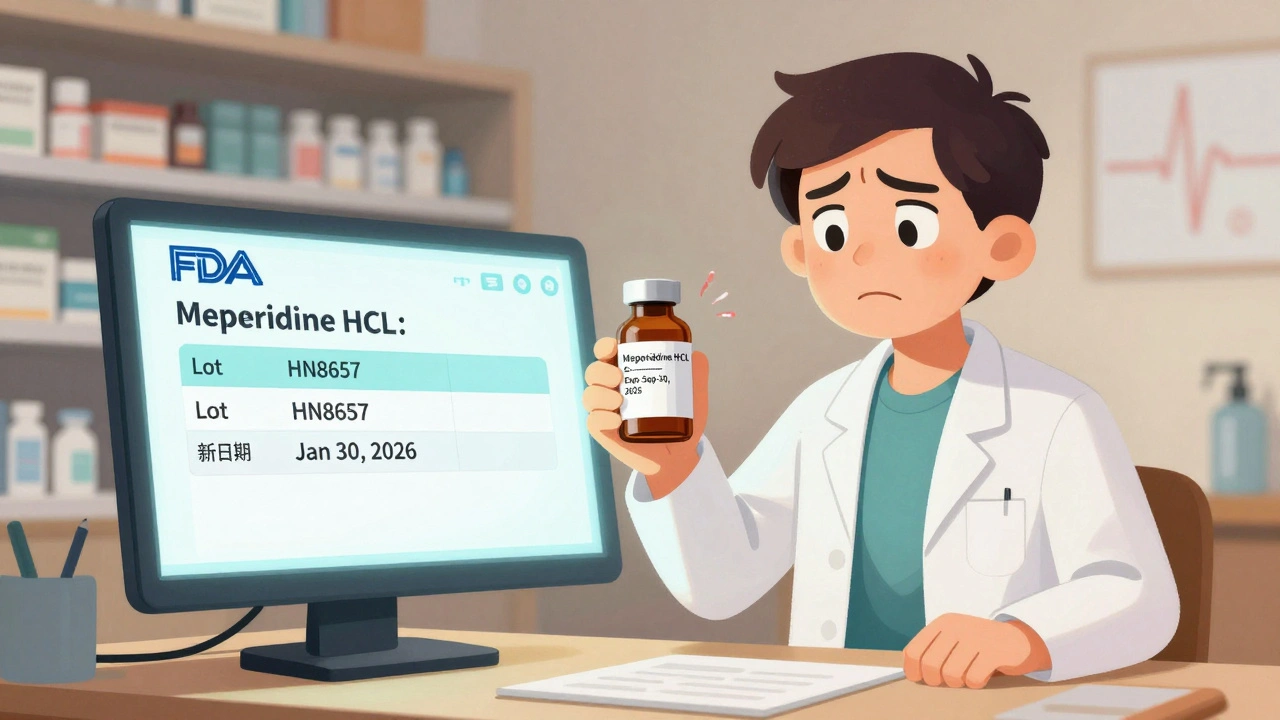
If you work in a hospital pharmacy, this isn’t just policy-it’s daily reality. The FDA doesn’t require manufacturers to relabel bottles or vials with new dates. That means a box of Meperidine hydrochloride injection might still say "Expires: September 30, 2025," but the FDA has officially approved its use until January 30, 2026. The lot number (like HN8657) is the key. Pharmacists must cross-check every lot against the FDA’s public list before administering it. This creates a real operational burden. Pharmacies now need systems that track not just drug names, but specific lot numbers and their extended expiration dates. Staff training becomes critical. One mistake-giving a patient a truly expired drug-could be dangerous. But giving a drug that’s been legally extended? That’s saving a life. The FDA is clear: once new supply arrives, those extended lots must be taken out of circulation and properly disposed of. This isn’t about hoarding. It’s about using what’s safe and available right now, while waiting for the next shipment.Which Drugs Are Most Often Extended?
Some drugs show up on the extension list over and over. According to data from Lachman Consultants, propofol leads the pack. It’s used in nearly every operating room, and shortages can delay surgeries and put patients at risk. Epinephrine injections are another top category-essential for emergency rooms and ambulances. Dantrolene, used to treat malignant hyperthermia, and ethiodized oil for imaging procedures also appear frequently. In October 2024, the FDA extended the use of several lots of Baxter’s IV solutions-normal saline, dextrose, and others-by up to two years. That’s unusual. Most extensions are for 12 months. But when hospitals are running out of IV bags and fluids, the FDA acts fast. The same happened with antiviral drugs like Tamiflu and Relenza in mid-2024, when the Department of Health and Human Services declared a public health emergency.
Why This System Exists: The Law Behind the Extensions
This isn’t something the FDA made up. It’s written into law. The Food and Drug Administration Safety and Innovation Act (FDASIA) of 2012 forced manufacturers to notify the FDA early when they might face a shortage. Before that, the agency often found out too late. Now, if a company sees a production delay, they have to tell the FDA-giving regulators time to step in. The Project BioShield Reauthorization Act (PAHPRA) of 2013 gave the FDA even more power, specifically for medical countermeasures-drugs stockpiled for bioterrorism, pandemics, or chemical threats. That’s why antivirals and antibiotics used in emergencies can get extended dates even faster. The goal isn’t to fix the broken supply chain. It’s to keep patients alive while the system catches up. The FDA doesn’t control manufacturing. It can’t force a factory to produce more. But it can make sure what’s already made doesn’t go to waste.What Patients and Providers Should Know
If you’re a patient, you don’t need to do anything. Your doctor or pharmacist will handle it. But you should know: if your medication looks older than expected, it doesn’t mean it’s unsafe. It might have been approved for extended use. Providers must verify. Don’t assume a drug is okay just because it’s in stock. Always check the FDA’s Drug Shortages Database. The list is updated daily. You can search by drug name, NDC number, or lot number. The American Medical Association and the American Hospital Association both direct clinicians to this resource. The FDA doesn’t tell you what to prescribe. It doesn’t regulate medical practice. But it does give you the facts: which lots are safe to use, and until when. That’s all you need to make the right call.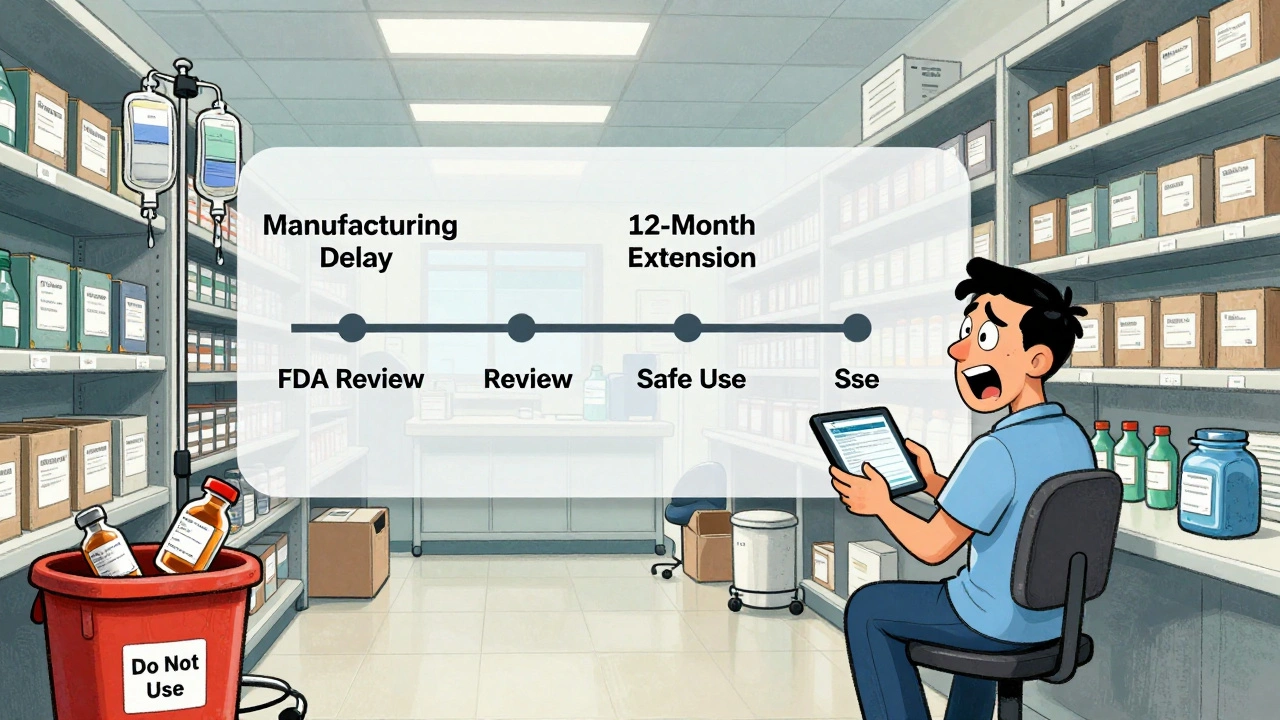






Sangram Lavte
December 6, 2025 AT 14:36 PMThe FDA’s extension program is a brilliant stopgap, but it’s insane that we’re relying on this at all. One factory makes 90% of the IV fluids in the US? That’s not supply chain management-it’s a national security risk. We need diversified production, not emergency date stamps.
Louis Llaine
December 8, 2025 AT 13:26 PMSo let me get this straight-we’re stretching expiration dates because factories can’t make enough stuff, but we’re still mad when the meds cost $500? 😂
Nicholas Heer
December 9, 2025 AT 18:57 PMTHEY’RE HIDING THE TRUTH. You think this is about safety? Nah. Big Pharma and the FDA are in bed together. They let drugs sit in warehouses for years, then slap on a new date like it’s magic. I’ve seen vials that looked like they’d been in a desert for a decade. And now they say it’s ‘stable’? That’s not science-that’s cover-up. They don’t want you to know how broken this system is.
Stacy here
December 9, 2025 AT 22:07 PMLet’s be real-this isn’t just about drugs. It’s about trust. We’re being told to believe in a system that’s clearly creaking at the seams. Why does a single plant failure bring the entire country to its knees? Why aren’t we building redundancy? Why do we treat life-saving meds like collectible trading cards? This isn’t healthcare-it’s a hostage situation, and we’re all paying the ransom with our lives. The FDA’s extension list isn’t a solution. It’s a confession.
Wesley Phillips
December 10, 2025 AT 13:51 PMPropofol extensions? Wow. I didn’t know we were living in a post-apocalyptic medical drama. Guess I’ll just trust the FDA’s lot number spreadsheet instead of my own eyes. Also, ‘stability data’-such a sexy phrase. Sounds like something a chemist whispered to a lobbyist at a golf retreat.
Olivia Hand
December 11, 2025 AT 08:09 AMThere’s something quietly heroic about pharmacists cross-referencing lot numbers like detectives. Imagine being the one who catches the wrong vial before it hits a patient. That’s not just protocol-that’s moral courage in scrubs. And yet, no one talks about the burnout in pharmacy departments. We’re asking people to be both scientists and soldiers in a war they didn’t sign up for.
Desmond Khoo
December 11, 2025 AT 16:27 PMJust saw a nurse post a pic of her IV bag with a sticky note that says ‘EXTENDED TO JAN 2026’ 🙌. That’s the kind of low-key heroism we need more of. The system’s broken, but the people? Still showing up. 🙏❤️
Kurt Russell
December 12, 2025 AT 00:07 AMLet me tell you something-this is why I respect the FDA. They’re not politicians. They’re not CEOs. They’re scientists with a mission: keep people alive when the system fails. They don’t have a magic wand to fix factories, but they’ve got data, rigor, and grit. That’s why propofol gets extended, not because it’s convenient-but because someone’s life depends on it. This isn’t a loophole. It’s a lifeline. And if you’re mad about it? Go lobby Congress to fund more manufacturers. Until then, shut up and be grateful someone’s still thinking ahead.