
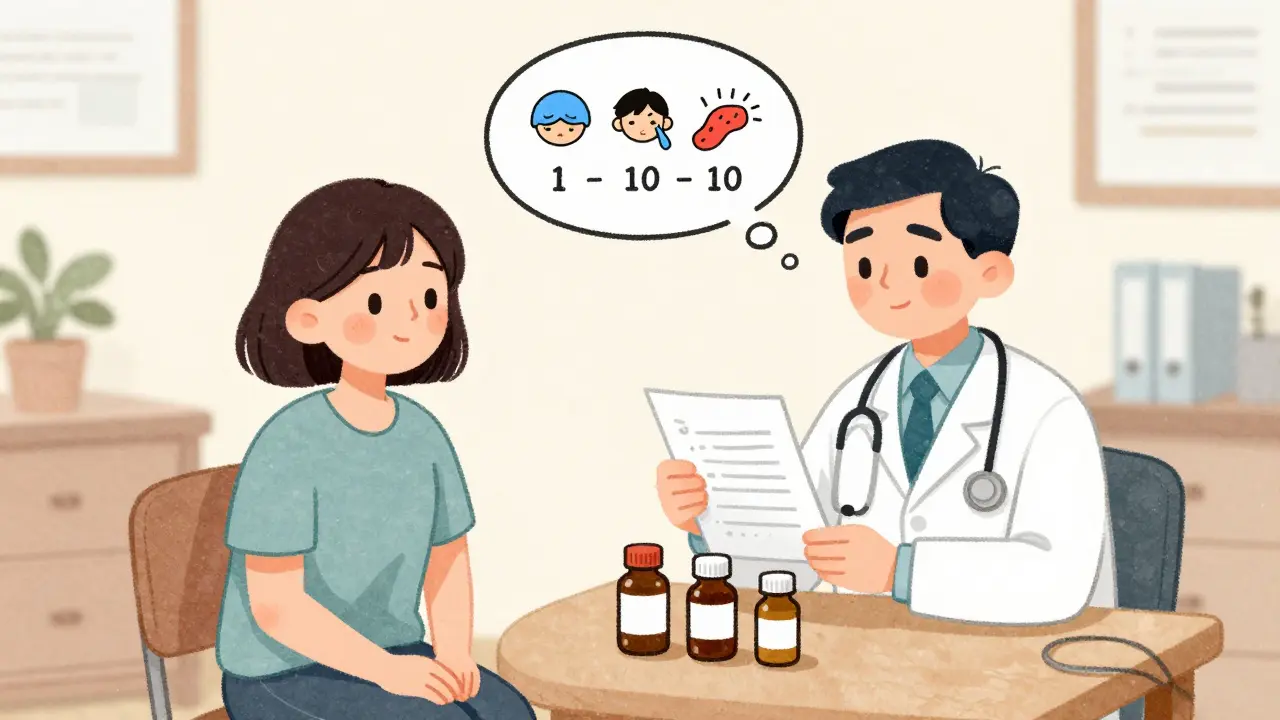
If your medication isn’t doing what it’s supposed to, you’re not alone. About 25% of people stop taking their prescriptions because they don’t feel better-or because side effects make things worse. But here’s the truth: your doctor can’t fix what they don’t know. If you’re sitting there wondering whether to speak up, the answer is yes. Asking for alternatives isn’t being difficult. It’s being smart.
Start with Your Symptoms, Not Just Your Frustration
Don’t walk into an appointment saying, “This medicine isn’t working.” That’s too vague. Instead, bring details. What exactly changed? When did it start? Did the pain get worse after 10 days? Did you feel dizzy every time you stood up? Did your sleep improve for a week, then crash again?Studies show that patients who write down their symptoms before the visit are 68% more likely to get a meaningful response. Keep a simple log: date, time, symptom, severity (1-10), and whether you took the med as directed. Even a note on your phone works. Bring it. Your doctor will thank you.
Bring Your Medication Bottles
This one is simple but often skipped. Bring every pill, capsule, supplement, and over-the-counter product you’re taking-including the ones you only use once a week. Many drug interactions happen because patients forget to mention ginkgo, magnesium, or that herbal tea they swear by.University Health found that bringing physical bottles to appointments reduces medication errors by 22%. Why? Because labels show dosages, expiration dates, and pharmacy info-things your doctor might not have in your chart. If you’re unsure what something is, show the bottle. Don’t guess.
Ask These Five Questions
You don’t need to be a medical expert to ask the right questions. These are the ones that actually move the needle:- “Why am I taking this medication?” Sometimes, a drug was started years ago and never re-evaluated. You might not even need it anymore.
- “What are the alternatives?” Don’t settle for “Let’s try a higher dose.” Ask for other options-different classes, non-drug approaches, or generics.
- “What are the pros and cons of each option?” Every treatment has trade-offs. One might help your anxiety but make you gain weight. Another might be cheaper but require daily check-ins.
- “Can I stop or reduce this?” Especially if you’re on multiple meds, deprescribing (safely stopping unnecessary drugs) can be the best move.
- “Will this affect my memory, balance, or risk of falling?” This matters more than you think. The American Geriatrics Society lists 34 medications that increase fall risk in older adults. If you’re over 65, this question alone could save you from a hospital visit.
Be Specific About Your Goals
Your doctor isn’t mind-reading. If you’re taking an antidepressant but still can’t go to work, say that. If you’re on a sleep aid but still wake up at 3 a.m., say that. If you want to avoid weight gain, say that.Harvard Health Publishing says patients who describe their personal goals-like “I need to drive my grandkids to school without dizziness” or “I want to stop feeling foggy by noon”-get better, faster results. You’re not just reporting symptoms. You’re helping your doctor tailor the solution.
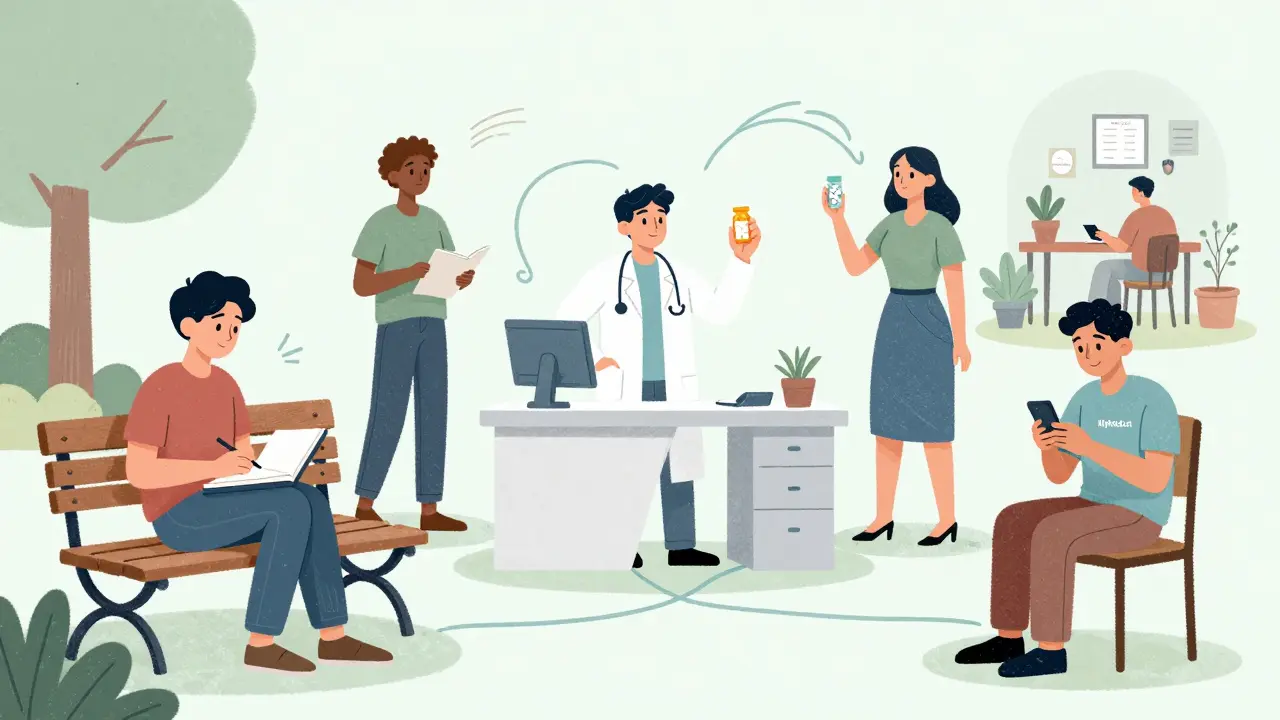
Consider Non-Drug Alternatives
Not every problem needs a new pill. In fact, sometimes the best alternative is no pill at all.- For sleep issues: Cognitive behavioral therapy for insomnia (CBT-I) works as well as sleeping pills-but without the risk of dependency or memory problems.
- For type 2 diabetes: A 2022 study in Diabetes Care showed that regular walking, healthy eating, and losing just 5% of body weight helped 68% of patients control blood sugar as well as metformin.
- For acid reflux: Avoiding late-night meals, cutting out spicy foods, and losing weight helped 55% of people stop needing proton-pump inhibitors.
- For back pain: The American College of Physicians now recommends exercise, physical therapy, and acupuncture before reaching for NSAIDs. Studies show these work just as well-and without stomach bleeding or kidney damage.
- For anxiety: A 2022 meta-analysis in The Lancet Psychiatry found that cognitive behavioral therapy was just as effective as SSRIs for mild to moderate anxiety.
These aren’t “nice-to-have” options. They’re evidence-backed, often cheaper, and usually safer. Ask your doctor: “Is there a non-drug option I could try first?”
Ask About Cost and Generics
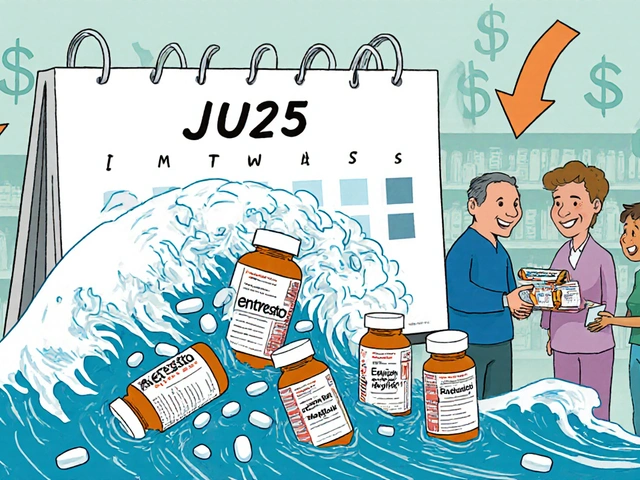
If your medication is too expensive, you’re not being unreasonable for asking. You’re being realistic.Many brand-name drugs have generic versions that work identically. Even if you’re on a brand, there might be a different drug in the same class that’s covered by your insurance. Ask: “Is there a cheaper alternative that works just as well?”
AARP found that 62% of patients who asked this question were able to switch to a lower-cost option. You might also ask about patient assistance programs, mail-order pharmacies, or using a pharmacy discount card like GoodRx.
Request Written Instructions
If your doctor suggests a new medication, a change in dose, or a stoppage, ask for it in writing. A printed handout, a note in your patient portal, or even an email summary makes a huge difference.MedlinePlus reports that patients who get written instructions understand their treatment plan 40% better than those who only hear it out loud. It’s easy to forget details when you’re stressed or overwhelmed. Having it in writing helps you follow through-and gives you something to refer back to later.
Don’t Wait for Your Next Appointment
If something’s wrong now, don’t wait three months. Call your doctor’s office. Use your patient portal. Send a message. Many clinics now offer quick “medication check-in” slots-10 minutes, no appointment needed.A 2022 study in JAMA Network Open found that patients who waited until their next scheduled visit were 32% more likely to keep taking a medication that wasn’t working. That’s dangerous. If you’re having side effects or no improvement, speak up now. It’s not a burden. It’s part of your care.
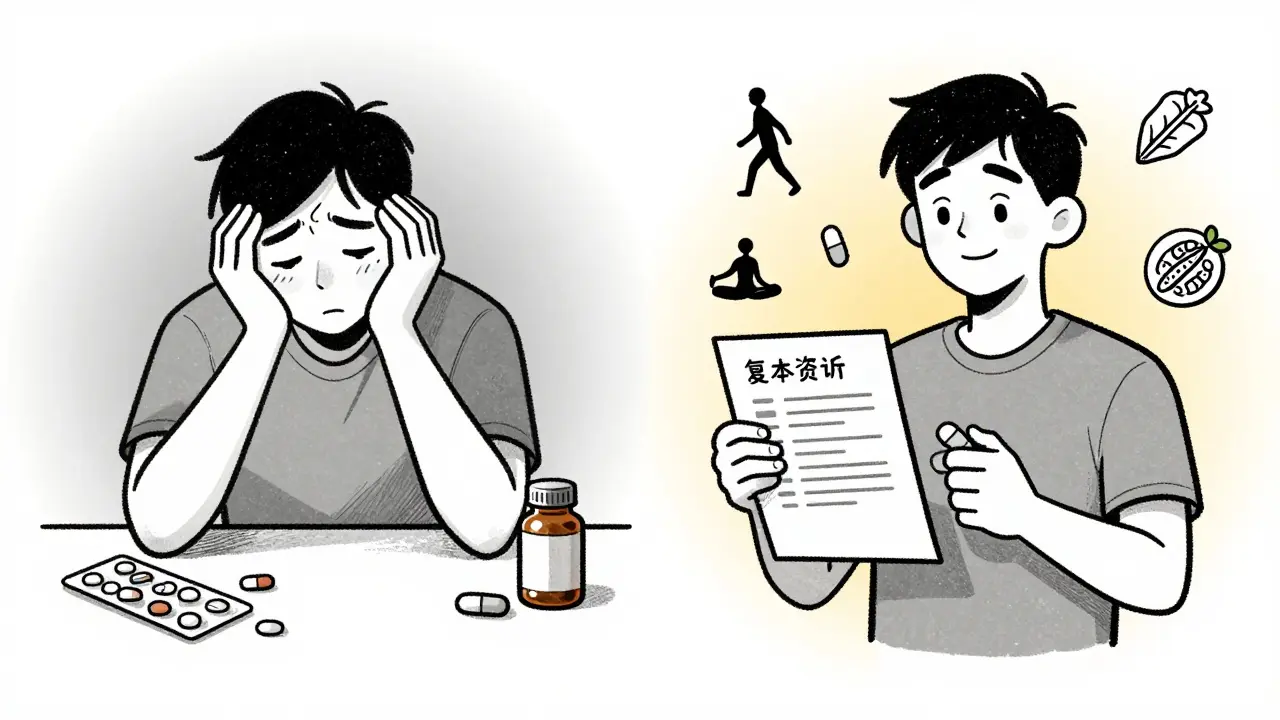
Use Technology to Your Advantage
Many health systems now have tools designed for this exact situation. Epic Systems’ “MyMedList” lets you log concerns directly into your portal before your appointment. Your doctor sees it ahead of time and comes prepared.Also, check if your pharmacy app offers medication reviews. Some will flag potential interactions or suggest alternatives based on your history. These aren’t replacements for your doctor-but they’re great conversation starters.
What If Your Doctor Says No?
Sometimes, you’ll get a flat “No, this is the best option.” That’s okay. It doesn’t mean you’re wrong. It means you need more information.Ask: “Can I get a second opinion?” or “Could we try this for four weeks and then reassess?” Most doctors will agree. If they push back hard, consider asking for a referral to a specialist-like a geriatrician, pain specialist, or pharmacist trained in medication management.
Remember: You’re not arguing. You’re collaborating. Your input is part of the treatment plan.
Final Thought: You’re the Expert on Your Body
Your doctor knows medicine. You know how you feel. That’s why teamwork works. The Deprescribing Network found that patients who actively asked questions were 3.2 times more likely to safely stop unnecessary medications. The National Institute on Aging says patients who understand their options have 35% higher adherence rates.You’re not asking for a favor. You’re exercising your right to safe, effective care. And the system is designed for this. More than 47 U.S. healthcare systems now use structured medication review protocols. Medicare is paying doctors extra to have these conversations. The tools are here. The data is clear.
So next time you feel like a medication isn’t working-don’t just stop taking it. Don’t just suffer through it. Ask. Prepare. Bring your bottles. Write your notes. Ask for alternatives. You’ve got more power than you think.
What should I do if my medication isn’t working but my doctor says it’s fine?
If your doctor dismisses your concerns, ask for a written explanation of why this medication is still the best choice. Request a follow-up in four weeks to re-evaluate. If you still feel unheard, ask for a referral to a pharmacist specializing in medication management or a specialist in your condition. You’re not overstepping-you’re protecting your health.
Can I stop my medication on my own if it’s not working?
No. Some medications, like antidepressants, blood pressure pills, or steroids, can cause serious withdrawal effects if stopped suddenly. Always talk to your provider first. They may recommend gradually lowering the dose or switching to a different drug. Never stop without guidance.
Are generic drugs as effective as brand-name ones?
Yes. Generic drugs must meet the same FDA standards as brand-name drugs for dosage, safety, strength, and how they work. The only differences are usually in inactive ingredients (like fillers) or cost. If your doctor says a generic won’t work for you, ask why-and whether there’s evidence to support that claim.
How do I know if I’m taking too many medications?
If you’re taking five or more prescription drugs daily, you’re at higher risk for interactions and side effects. Ask your doctor for a full medication review. Tools like the Beers Criteria help identify drugs that are risky for older adults. Also, if you’ve been taking a drug for years without a clear reason, it’s worth questioning whether you still need it.
Can pharmacists help me with medication alternatives?
Yes. Many pharmacies now offer medication therapy management (MTM) services at no extra cost if you’re on Medicare or have certain insurance. Pharmacists can review all your meds, spot interactions, suggest cheaper alternatives, and even call your doctor on your behalf. Ask your pharmacist if they offer this service.
Next Steps
- Before your next appointment, write down your top three concerns about your medication.
- Bring your pill bottles or a complete list of everything you take.
- Practice saying: “I’m not feeling better, and I’d like to talk about other options.”
- If you’re on multiple meds, ask for a medication review every six months.
- Use your patient portal to send questions ahead of time-it gives your doctor time to prepare.
Medication isn’t magic. It’s a tool. And like any tool, it only works if it fits the job. If yours doesn’t, it’s time to ask for a better one.



Emma Deasy
March 16, 2026 AT 06:26 AMLet me just say-this article is a MASTERCLASS in patient empowerment. I’ve been on six different SSRIs over eight years, and not once did a doctor ask me to log symptoms. Not once. I started a Google Sheet. Color-coded severity. Time-stamped triggers. Now my psychiatrist brings it up first. I’m not ‘difficult.’ I’m just the only one who bothered to document the chaos.
Also-bringing pill bottles? GENIUS. I once showed up with a Ziploc full of supplements, including ‘energy crystals’ I’d bought on Etsy. The pharmacist laughed, then pointed out a dangerous interaction with my blood pressure med. I almost died. Don’t be me. Bring the bottles.
tamilan Nadar
March 17, 2026 AT 23:12 PMIn India, many take medicine without prescription. But this advice is universal. Bring bottles. Ask questions. Write down. Simple. Effective.
Rosemary Chude-Sokei
March 19, 2026 AT 13:38 PMI appreciate the nuance here. The emphasis on collaboration over confrontation is precisely what’s missing in modern healthcare. I work in patient advocacy, and I’ve seen too many individuals dismissed because they framed their concerns as complaints rather than observations.
One of my clients, a 72-year-old woman, stopped her statin because she felt ‘numb’-but didn’t know how to articulate it. Once she started journaling sleep patterns, muscle fatigue, and timing relative to meals, her provider realized it was a B12 deficiency, not the statin. She’s been off it for a year. No side effects. No hospitalizations. Just better communication.
Noluthando Devour Mamabolo
March 19, 2026 AT 16:40 PMOMG YES 🙌 I was on 7 meds last year. 7. 🤯 My pharmacist literally did a full audit during MTM and cut 3. One was a daily antacid I’d been taking since 2017 because ‘it helped my heartburn.’ Turns out I had silent reflux from sleeping on my back. Changed my pillow. No more meds. 🎉
Also-CBT-I for insomnia? LIFE CHANGER. I used to rely on zolpidem. Now I use sleep restriction + stimulus control. Slept better than I have since college. No pills. No grogginess. Just… peace. 🌙
Leah Dobbin
March 20, 2026 AT 09:26 AMIt’s fascinating how this piece assumes the reader has access to patient portals, pharmacists trained in MTM, and doctors who aren’t overworked. In rural America, or in underfunded clinics, these recommendations are luxuries. I’m not disputing their value-I’m just asking: who gets to be this empowered?
For every person who can log symptoms on an app, there are ten who can’t afford the data plan, can’t read the labels, or can’t take time off work to bring bottles. The system is designed for the privileged. The advice? Excellent. The context? Missing.
Aaron Leib
March 21, 2026 AT 05:21 AMSolid piece. I’m a nurse practitioner, and this is exactly what I tell my patients. The bottle trick? Game changer. I’ve caught so many duplicates, expired meds, and herbal interactions just by seeing the physical labels. And asking ‘Why am I on this?’-that’s the golden question. So many are on autopilot. One guy was still on a 2010 antidepressant after his divorce ended. He didn’t even remember why he started it. We weaned him off. He’s been happier since.
Kathy Leslie
March 21, 2026 AT 23:04 PMI just started a new med last month and already hate it. I was scared to say anything. But I wrote down my symptoms like this said-headaches at 3 p.m., nausea after lunch-and brought my bottles. My doctor said, ‘Oh wow, you’re right. Let’s switch.’ It was that easy. I feel so stupid for waiting.
Elsa Rodriguez
March 23, 2026 AT 18:52 PMWHY DO PEOPLE STILL TRUST DOCTORS LIKE THEY’RE ORACLES?? 🤡
I had a cardiologist tell me my BP meds were ‘fine’ even though I was dizzy, fainting, and my legs were swelling. I asked for alternatives. He said, ‘You’re just being dramatic.’ So I went to a second doctor. She looked at my bottles, asked me three questions, and switched me to a cheaper generic that WORKED. I’ve been fine for 14 months.
Doctors don’t know you. YOU know you. Stop asking permission to speak up. You’re not being difficult. You’re being alive.
Serena Petrie
March 25, 2026 AT 17:15 PMBring bottles. Ask questions. Done.
mir yasir
March 26, 2026 AT 12:05 PMThe methodology presented here is commendable, yet it presupposes a level of health literacy and institutional access that is not universally available. In many developing nations, patients are expected to comply without recourse to documentation, let alone patient portals or pharmacist consultations. The efficacy of such protocols is contingent upon systemic infrastructure-which, regrettably, remains a privilege rather than a right.
One must also consider the sociocultural dynamics of authority in medical hierarchies. In some contexts, questioning a physician is perceived not as empowerment, but as insubordination. The very act of ‘bringing bottles’ may be met with suspicion or hostility.
While the recommendations are evidence-based, their universal applicability remains questionable.
Stephanie Paluch
March 27, 2026 AT 22:35 PMI love this. I’ve been using the MyMedList feature on my portal for months now. Last week I typed: ‘Still feel foggy after 3 p.m. Can we talk about alternatives?’ My doctor responded within 2 hours. We switched me from a benzo to a low-dose nortriptyline. No more brain fog. No more dependency fears.
Also-yes to the ‘why am I on this?’ question. I found out I was still taking a thyroid med I didn’t need. My TSH had normalized 5 years ago. No one ever checked. I’m so glad I asked.
PS: I use emojis in my portal notes. My doctor says it helps her understand me better. 🤷♀️❤️