
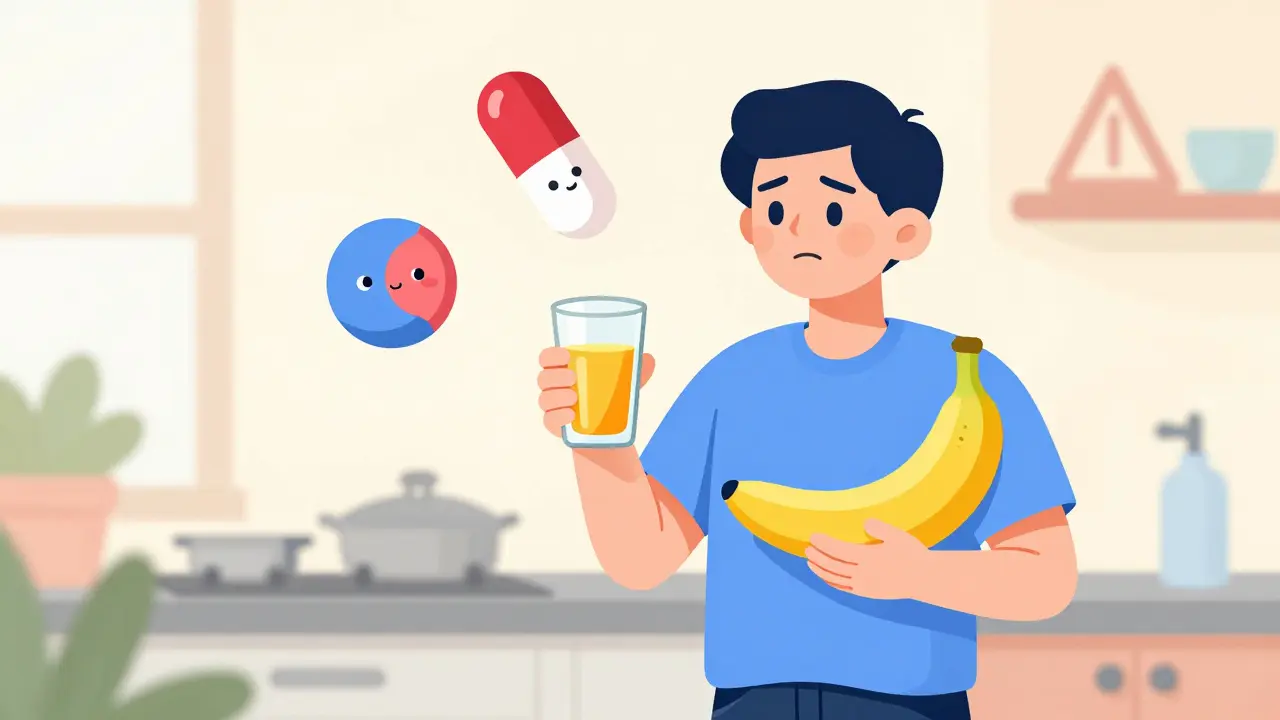
Imagine you’re taking your morning blood pressure pill, washing it down with a glass of orange juice, and eating a banana for breakfast. It sounds like the perfect heart-healthy routine. But if that pill is an ACE inhibitor or a potassium-sparing diuretic, this simple habit could be quietly pushing your potassium levels into dangerous territory. This isn’t just theoretical fear-mongering; it’s a real clinical risk that affects millions of people managing hypertension every day.
Potassium is essential for life. It helps your muscles contract, your nerves fire, and yes, it helps lower blood pressure by balancing out sodium in your body. However, when certain medications block your kidneys’ ability to excrete excess potassium, eating high-potassium foods can lead to hyperkalemia, which is a condition characterized by dangerously high levels of potassium in the blood. This condition can cause irregular heartbeats, muscle weakness, and in severe cases, cardiac arrest. The goal isn’t to avoid potassium entirely-it’s to understand the balance between what you eat and what you take.
Why Potassium Matters for Blood Pressure
To understand the interaction, we first need to look at why doctors often encourage potassium-rich diets. Potassium acts as a natural vasodilator, meaning it relaxes the walls of your blood vessels. When your vessels relax, blood flows more easily, and your blood pressure drops. Studies have shown that increasing dietary potassium can reduce systolic blood pressure by up to 5.3 mm Hg. For many people, this reduction is significant enough to delay or reduce the need for medication.
The American Heart Association recommends an intake of 3,500 to 5,000 mg of potassium daily for adults. Most people fall short of this, consuming only about 2,400 mg on average. This deficiency is partly why hypertension is so prevalent. However, this recommendation assumes your kidneys are functioning normally and that you aren’t taking medications that interfere with potassium regulation. If those assumptions don’t hold true, the "more is better" rule flips to "less might be safer."
| Food Item | Serving Size | Potassium (mg) |
|---|---|---|
| Spinach (cooked) | 1 cup | 839 |
| Avocado | 1 whole | 975 |
| Sweet Potato | 1 medium | 542 |
| Banana | 1 medium | 422 |
| Coconut Water | 1 cup | 600 |
| Salmon | 3 oz | 534 |
Medications That Interact With Potassium
Not all blood pressure medications interact with potassium. In fact, some diuretics, known as loop diuretics or thiazide diuretics, actually cause you to lose potassium, which means you might need *more* potassium in your diet. The danger lies with specific classes of drugs that tell your kidneys to hold onto potassium. These include:
- ACE Inhibitors: Drugs ending in "-pril," such as lisinopril, enalapril, and ramipril. These block the formation of angiotensin II, a substance that narrows blood vessels, but they also reduce aldosterone production, leading to potassium retention.
- ARBs (Angiotensin II Receptor Blockers): Drugs ending in "-sartan," such as losartan, valsartan, and irbesartan. They work similarly to ACE inhibitors by blocking the action of angiotensin II.
- Potassium-Sparing Diuretics: Medications like spironolactone, eplerenone, amiloride, and triamterene. These are explicitly designed to remove water without losing potassium.
- NSAIDs: While not blood pressure meds, frequent use of non-steroidal anti-inflammatory drugs like ibuprofen or naproxen can reduce kidney function and increase potassium levels, compounding the risk when combined with the above medications.
If you are taking any of these, your kidneys are essentially putting the brakes on potassium excretion. Adding large amounts of dietary potassium on top of this can overwhelm the system.
Recognizing the Signs of Hyperkalemia
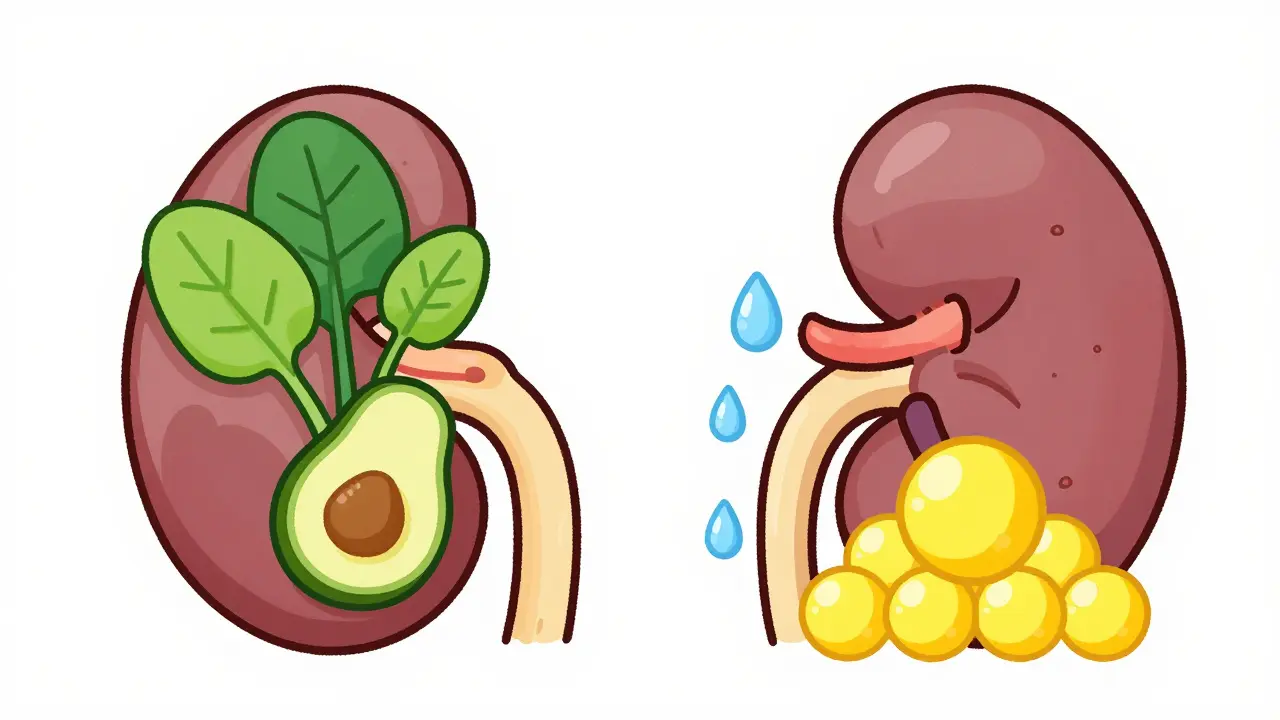
One of the most insidious aspects of hyperkalemia is that it often presents no symptoms until it becomes severe. Many patients feel perfectly fine while their potassium levels creep from a safe 4.5 mmol/L to a dangerous 6.0 mmol/L. However, there are subtle warning signs to watch for, especially if you’ve recently changed your diet or started a new medication.
Early symptoms may include mild muscle weakness, fatigue, or tingling sensations in the hands and feet (paresthesia). As levels rise further, you might experience nausea, an irregular heartbeat, or palpitations. A study published in the European Heart Journal noted that severe hyperkalemia (>6.0 mmol/L) can lead to fatal arrhythmias within minutes. Because the consequences are so severe, relying on symptoms alone is risky. Regular blood tests are the only reliable way to monitor your levels.
Navigating Diet Changes Safely
You don’t need to eliminate potassium from your diet unless your doctor specifically instructs you to do so due to chronic kidney disease (CKD) or consistently high lab results. Instead, focus on moderation and consistency. Sudden spikes in potassium intake are more dangerous than steady, moderate consumption.
Here are practical steps to manage your intake:
- Avoid Salt Substitutes: Many low-sodium salt substitutes contain potassium chloride. A single teaspoon can contain up to 700 mg of potassium. If you are on an ACE inhibitor, using these substitutes regularly can quickly push your levels too high. Check labels carefully.
- Be Cautious with Supplements: Dietary potassium from food is generally safer because your body absorbs it slowly. Potassium supplements, however, deliver a concentrated dose that hits your bloodstream quickly. Never take potassium supplements without explicit medical supervision.
- Rotate Your Fruits and Vegetables: Instead of eating bananas or avocados every day, rotate them with lower-potassium options like apples, berries, cabbage, and cucumbers. This prevents cumulative buildup.
- Leaching Vegetables: If you have been told to restrict potassium, you can leach vegetables by peeling, slicing, and soaking them in warm water for two hours before cooking. This can remove up to 50% of the potassium content.
The Role of Kidney Function
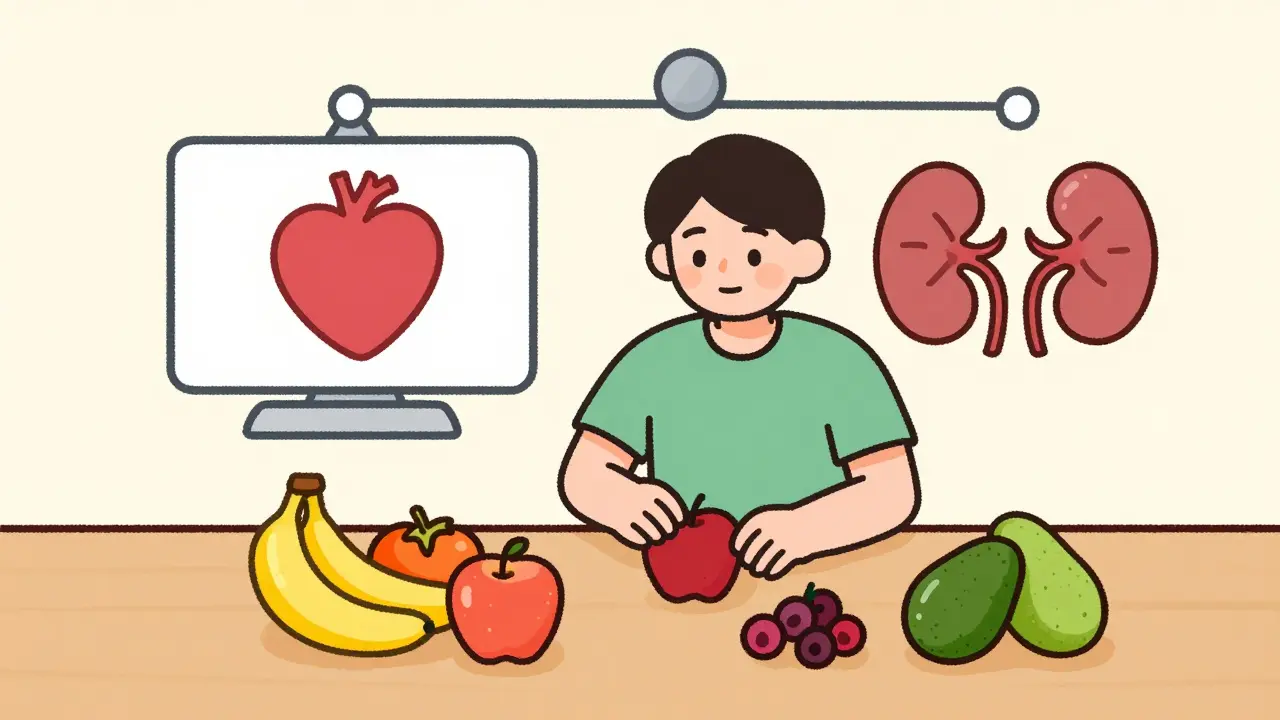
Your kidneys are the primary regulators of potassium. In healthy individuals, even a high-potassium diet rarely causes issues because the kidneys efficiently filter out the excess. The risk skyrockets when kidney function declines. Chronic Kidney Disease (CKD) affects nearly 15% of the adult population, and many people are unaware they have it until it progresses.
If your estimated Glomerular Filtration Rate (eGFR) is below 60 mL/min/1.73m², your ability to excrete potassium is compromised. In this scenario, the combination of CKD and RAAS inhibitors (ACE inhibitors/ARBs) creates a perfect storm for hyperkalemia. A 2019 study found that 28% of patients with renal impairment developed hyperkalemia under these conditions. If you have diabetes or long-standing hypertension, ask your doctor for regular kidney function tests alongside your blood pressure checks.
Monitoring and Communication
The most effective strategy is open communication with your healthcare provider. Do not assume that because a food is "healthy," it is safe for your specific medical profile. Bring a list of your current medications and typical diet to your appointments.
Your doctor may recommend monitoring serum potassium levels every 3 to 6 months if you are stable on RAAS inhibitors. If you start a new medication, check your levels within 1 to 2 weeks. New treatments like patiromer (Veltassa), a potassium binder approved in recent years, offer a solution for patients who need both RAAS inhibitors and a higher potassium diet, allowing them to maintain normal levels despite dietary intake.
Technology is also helping. Apps like the National Kidney Foundation’s "Potassium Counts" allow users to track their daily intake against personalized limits. While these tools are helpful, they should complement, not replace, medical advice. Remember, the goal is not to fear food, but to respect the powerful interaction between what you eat and the medicines you take.
Can I eat bananas if I take lisinopril?
Yes, but in moderation. One medium banana contains about 422 mg of potassium. If you eat one occasionally, it is likely safe. However, eating multiple bananas daily while on lisinopril can increase your risk of hyperkalemia. Monitor your blood work and consult your doctor for personalized advice.
What are the symptoms of high potassium?
Symptoms can include muscle weakness, fatigue, tingling in the extremities, nausea, and irregular heartbeat. In severe cases, it can lead to cardiac arrest. Often, there are no obvious symptoms until levels are critically high, making regular blood tests essential.
Do all blood pressure medications affect potassium?
No. ACE inhibitors, ARBs, and potassium-sparing diuretics tend to raise potassium levels. Conversely, thiazide and loop diuretics (like furosemide or hydrochlorothiazide) often lower potassium levels, potentially requiring supplementation or increased dietary intake.
Is coconut water safe for people on blood pressure meds?
Coconut water is very high in potassium, containing about 600 mg per cup. If you are on an ACE inhibitor or ARB, drinking large amounts regularly can be risky. Occasional small servings are usually fine, but it should not be a daily staple without medical clearance.
How often should I get my potassium levels checked?
If you are starting a new medication that affects potassium, check within 1-2 weeks. Once stable, the European Society of Cardiology recommends monitoring every 3-6 months for patients on RAAS inhibitors. More frequent checks are needed if you have kidney disease.


Earl Oleary
July 12, 2026 AT 21:17 PMYou people are literally walking around with loaded guns in your pockets and wondering why you keep getting shot. It is not rocket science, it is basic physiology. If your kidneys are compromised or you are on an ACE inhibitor, your body cannot excrete potassium efficiently. The result is hyperkalemia, which causes cardiac arrest. Simple cause and effect. Yet here we are, reading another article explaining what should be common sense. Stop eating bananas like they are candy if you are on Lisinopril. Your doctor told you this. You ignored him. Now you are surprised?
ANINDA GHOSH
July 12, 2026 AT 22:56 PMOh my stars, such harsh words! :) But seriously, the balance between nature's gifts and modern medicine is a delicate dance, isn't it? In India, we often rely on traditional wisdom alongside allopathic treatments, so understanding these interactions is crucial for our holistic well-being. We must respect both the power of the herb and the pill.
Crystal Tadlock
July 14, 2026 AT 11:52 AMIt is all a big lie to sell more tests. They want you scared me into thinking I was dying from a banana when I am perfectly fine. The government wants us weak and dependent on their labs. I stopped taking my meds because of this nonsense and I feel great now. Wake up sheeple.
Sinead Doyle
July 15, 2026 AT 10:15 AMtypical fear mongering by the medical industrial complex. they dont care about your health, they care about profit margins. i have been eating avocados daily while on valsartan for years and never had a blood test done once. look at me, im still alive. its just propaganda to control the population. stop listening to them.
Bobby Christiansen
July 16, 2026 AT 15:35 PMUgh, everyone is so dramatic about everything. One banana won't kill you. People need to relax and stop living in constant fear of food. It's ridiculous how we've turned eating into a minefield. Just eat what you want and deal with the consequences later. Life is too short to worry about every single milligram of potassium.
Jamie Rogers
July 17, 2026 AT 10:15 AMHey there! I totally get where you're coming from, but please don't take that risk! My uncle actually went into arrhythmia after switching to salt substitutes without telling his cardiologist. It was a huge scare for the whole family. Please talk to your doctor before making any changes. It's better to be safe than sorry, right? Let's keep each other healthy!
Najmunisa Govender
July 18, 2026 AT 05:14 AMI really appreciate this detailed explanation!; it helps so much to understand the 'why' behind the advice.; I have been feeling tired lately and maybe this is why.; I will definitely ask my doctor about checking my levels.; Thank you for sharing this important information!;
MiMi Stanley
July 19, 2026 AT 05:30 AMI always thought coconut water was the ultimate health drink. I guess I need to rethink my morning routine. Does anyone know if diluted coconut water is safer? I really love the taste but I'm on losartan.
Jasmine Agito
July 19, 2026 AT 20:25 PMIf you dilute it significantly, you reduce the potassium load per serving, but you also lose some of the electrolyte benefits. However, if you are on an ARB like losartan, even small amounts can add up over time if consumed daily. I would suggest swapping it for apple juice or cucumber water occasionally to keep your intake variable and lower. It's all about moderation and tracking your total daily intake against your lab results.
Sean Allwurden
July 21, 2026 AT 00:39 AMGreat point about the RAAS inhibitors. From a clinical pharmacology perspective, the mechanism involves the suppression of aldosterone secretion, which directly impacts the distal convoluted tubule's ability to secrete potassium. When patients combine this with high dietary loads, the serum potassium concentration rises exponentially rather than linearly. It is crucial to monitor eGFR trends as well, since renal impairment exacerbates this retention effect. Collaboration between dietitians and nephrologists is key here.
Arun Krishnan
July 21, 2026 AT 12:40 PMThis is very helpful information for many of us who are managing high blood pressure. It is easy to forget that natural foods can interact with medicines. I will share this with my community group so everyone stays informed and safe.
anna arifiana
July 23, 2026 AT 11:52 AMWhile the article provides a comprehensive overview of the physiological mechanisms involved in potassium regulation, it somewhat overlooks the nuanced role of genetic polymorphisms in drug metabolism; furthermore, the suggestion to leach vegetables, although effective for reducing potassium content, may also lead to significant losses of water-soluble vitamins such as vitamin C and B-complex vitamins, thereby creating a different nutritional deficit that could potentially compromise overall immune function and metabolic health in the long term.
Marie-Gladys Darcelin
July 23, 2026 AT 23:33 PMIt is truly disheartening to see how little regard most individuals have for their own bodily integrity. The human heart is a precise instrument, not a toy to be tested with reckless dietary habits. One must adhere strictly to medical guidance. To ignore the warnings regarding hyperkalemia is an act of negligence towards oneself and one's loved ones. Respect the science.
Tony Malvagna
July 24, 2026 AT 09:16 AMhey guys, just wanted to say that life is about balance and joy too! dont let fear rule your plate. sure check your levels but also enjoy that sweet potato. i made a typo earlier but meant to say stay positive! health is mental too lol
Emily Schor
July 25, 2026 AT 08:01 AMI have been using the Potassium Counts app mentioned in the article and it has been quite useful for tracking my intake. It helps to visualize where the hidden sources of potassium are, especially in processed foods and salt substitutes. Highly recommend giving it a try if you are unsure about your daily consumption.