
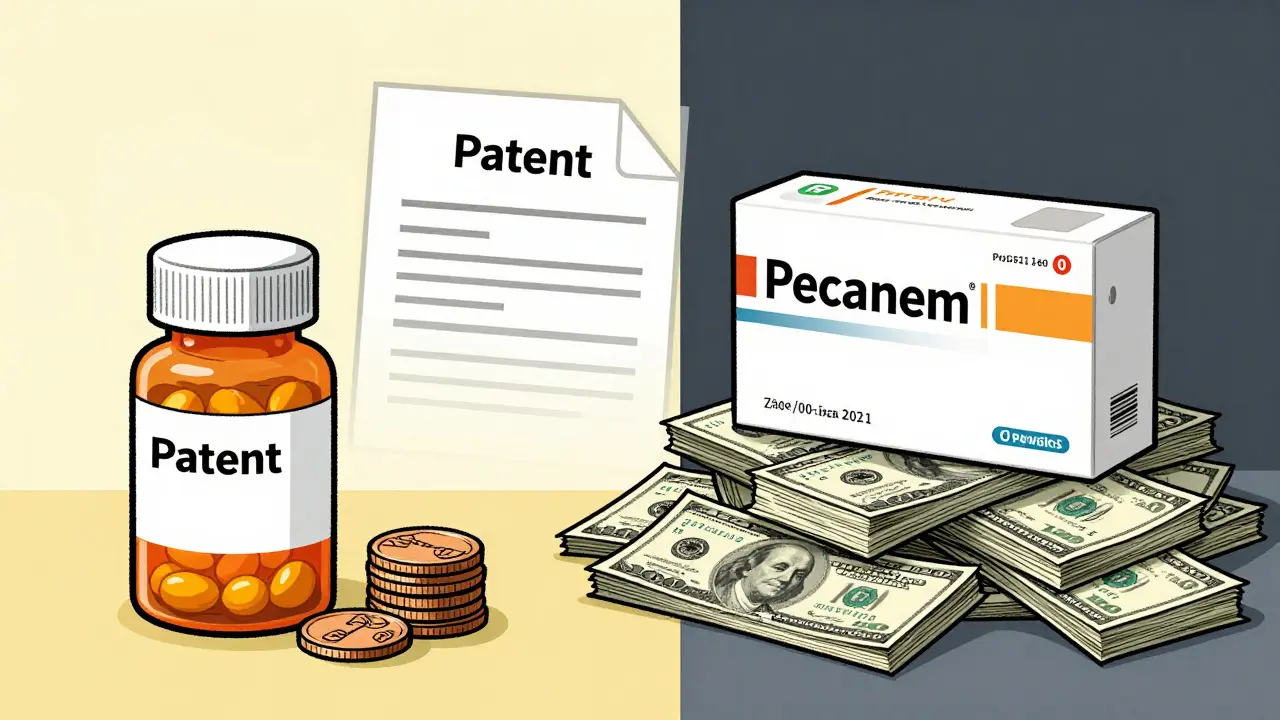
Why does a life-saving medication cost pennies in one country while costing hundreds of dollars in another, even when the chemical formula is identical? The answer isn't just about manufacturing costs. It’s about generic drug patents, which are legal tools that control exactly when cheaper alternatives can hit the market.
We often hear that patents protect innovation. That’s true. But there’s a second layer of protection called "exclusivity" that operates independently of patents. This system determines how long a brand-name company holds a monopoly before generic competitors can enter. These rules vary wildly from the United States to Europe, Japan, and emerging markets. Understanding these differences is key to grasping why drug prices fluctuate so dramatically across borders.
The Core Difference: Patents vs. Exclusivity
To understand the landscape, you first need to separate two concepts that people often mix up: patents and regulatory exclusivity.
A patent is an intellectual property right granted by a government. It gives the inventor exclusive rights to make, use, or sell their invention for a set period. Under the global TRIPS Agreement, this standard duration is 20 years from the filing date. However, developing a new drug takes time-often 10 to 15 years of research and clinical trials. By the time the drug gets approved for sale, only 6 to 10 years of actual market protection remain.
Regulatory exclusivity is different. It’s a period during which regulators (like the FDA or EMA) simply won’t accept applications for generic versions of the drug, regardless of whether a patent exists. This creates a "data lockout." Even if a competitor has reverse-engineered the drug, they can’t reference the original manufacturer’s safety and efficacy data to get approval until this period expires. This dual system-patents plus exclusivity-is what keeps generic competition at bay.
United States: The Complex Hatch-Waxman Framework
The U.S. system is arguably the most complex in the world, built around the landmark Hatch-Waxman Act of 1984. Its goal was to balance incentives for innovation with timely access to generics. The result is a patchwork of overlapping protections.
Here’s how it breaks down:
- New Chemical Entity (NCE) Exclusivity: If a drug contains a new active ingredient never before approved, it gets 5 years of market exclusivity. During this time, no generic application can even be filed unless it includes a certification challenging existing patents.
- Orphan Drug Exclusivity: For drugs treating rare diseases (affecting fewer than 200,000 people in the U.S.), companies get 7 years of exclusivity. This has spurred development for conditions like multiple myeloma.
- Pediatric Exclusivity: If a company agrees to conduct pediatric studies, they get an extra 6 months added to all existing exclusivities and patents.
- Patent Term Extension (PTE): To compensate for time lost during FDA review, the U.S. allows extending the patent term. The cap is 5 years, but the total post-approval patent life cannot exceed 14 years.
The most unique feature of the U.S. system is the 180-day exclusivity for generic manufacturers. The first generic company to file an ANDA (Abbreviated New Drug Application) and successfully challenge a brand-name patent gets a 180-day head start on all other generics. This creates a fierce race among generic firms to sue brand manufacturers, effectively privatizing the enforcement of patent laws.
European Union: The Structured 8+2(+1) Model
Europe takes a more streamlined approach. Instead of multiple overlapping types, the EU relies heavily on a single, predictable framework known as 8+2(+1).
- 8 Years of Data Exclusivity: For the first 8 years after a drug is authorized, no generic can be submitted because they cannot rely on the originator’s data.
- 2 Years of Market Exclusivity: Generics can be submitted after year 8, but they cannot be marketed for another 2 years.
- +1 Year Extension: If the holder obtains authorization for a new therapeutic indication with significant clinical benefit within the first 8 years, they get an additional year of market exclusivity.
Alongside this, the EU uses Supplementary Protection Certificates (SPCs). Like the U.S. PTE, SPCs extend patent protection to compensate for regulatory delay. The maximum extension is 5 years, but the total combined protection (patent + SPC) cannot exceed 15 years from the first marketing authorization in the EU. Orphan drugs in the EU get 10 years of exclusivity, extendable by 2 years if pediatric indications are met.
Regional Variations: Canada, Japan, and Emerging Markets
Not every country follows the U.S. or EU model. Some align closely with Europe, while others are tightening their rules to attract investment.
| Region | Data Exclusivity | Market Exclusivity | Patent Extension Mechanism |
|---|---|---|---|
| United States | 5 years (NCE) | Varies (3-7 years depending on type) | Patent Term Extension (max 5 yrs, 14 yr cap) |
| European Union | 8 years | 2 years (+1 possible) | SPC (max 5 yrs, 15 yr total cap) |
| Canada | 8 years | 2 years | Patent Term Restoration (complex calculation) |
| Japan | 8 years | 4 years | Invention Patent Extension (up to 5 yrs) |
| China | 12 years (updated 2020) | N/A (Integrated into data protection) | Patent Term Compensation (up to 5 yrs) |
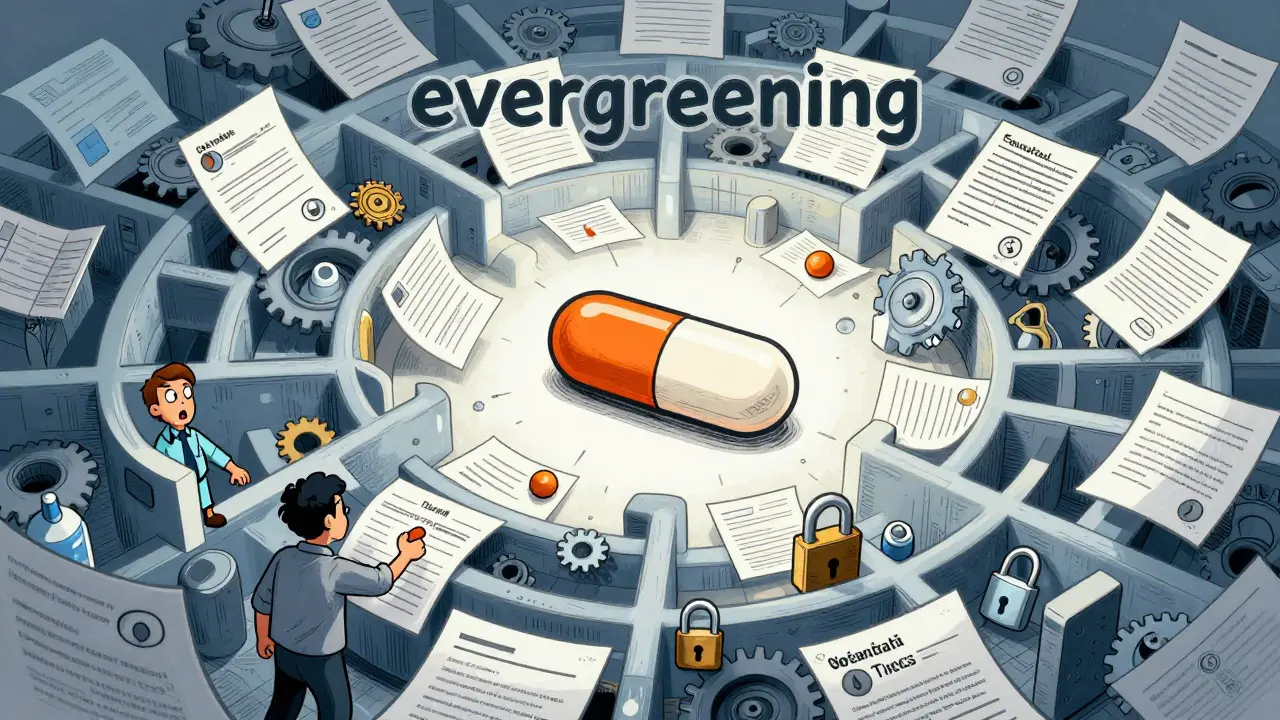
Canada mirrors the EU’s 8+2 structure closely. Japan offers 8 years of data exclusivity but adds 4 years of market exclusivity, totaling 12 years of protection for new chemical entities. China recently overhauled its system, extending data exclusivity from 6 to 12 years in 2020 to boost domestic innovation. Brazil implemented 10 years of data protection in 2021. These shifts show a global trend: countries are lengthening exclusivity periods to encourage pharmaceutical R&D within their borders.
The Business Impact: Patent Cliffs and Evergreening
For pharmaceutical companies, the end of exclusivity is known as the patent cliff. When generics enter, brand revenues typically drop by 80% to 90% within 12 months. With $356 billion in branded sales facing expiration between 2023 and 2028, the stakes are enormous.
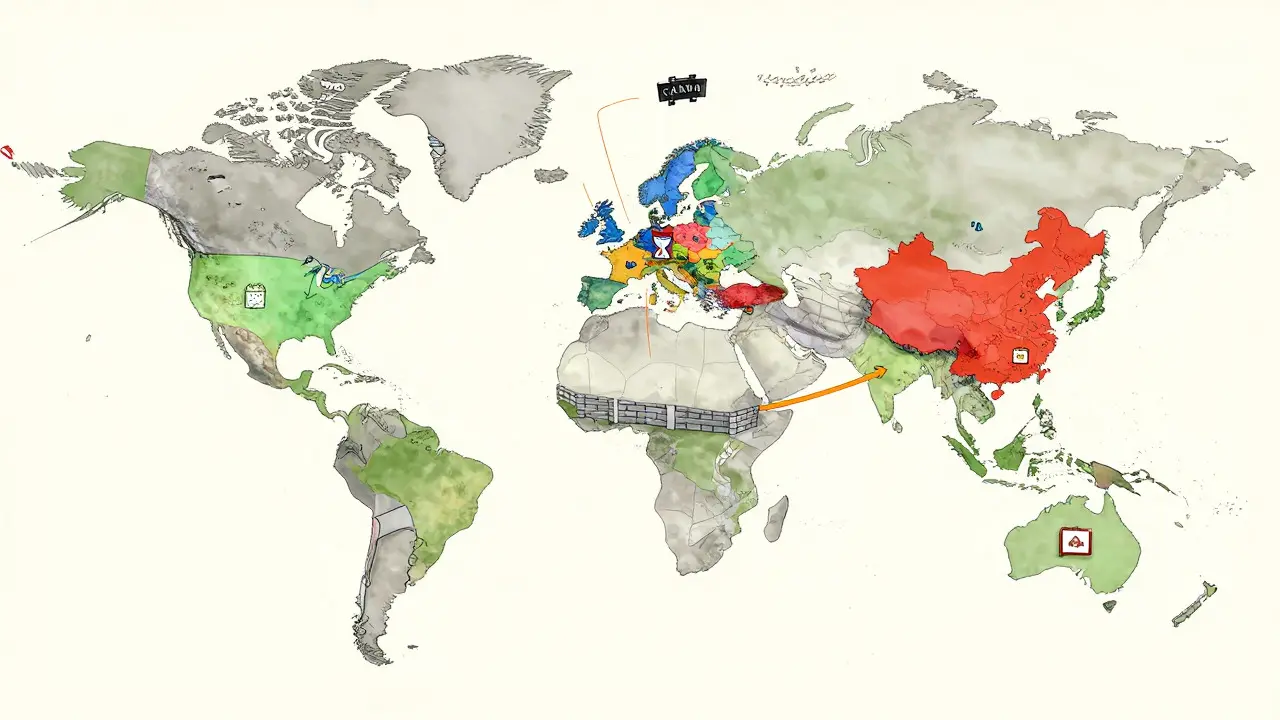
To combat this, originator companies use a strategy called evergreening. They don’t just patent the molecule; they patent the delivery mechanism, the dosage form, the manufacturing process, and even specific medical uses. According to Harvard Medical School researcher Dr. Aaron Kesselheim, originator companies now obtain an average of 38 additional patents per drug. This creates a "patent thicket" that generic manufacturers must navigate.
In the U.S., this leads to "pay-for-delay" settlements. Brand companies pay generic challengers to stay out of the market longer than the patent would legally allow. While controversial, this practice remains common because the 180-day exclusivity reward makes it financially viable for generics to accept delayed entry.
Challenges for Generic Manufacturers
Entering the market isn’t just about making a cheap pill. It’s a legal and regulatory minefield. Generic companies face several hurdles:
- Paragraph IV Certification: In the U.S., generics must certify that their product doesn’t infringe on listed patents or that the patents are invalid. This triggers a 30-month stay on FDA approval while litigation occurs.
- High Costs: Developing a comprehensive patent challenge strategy costs $2-5 million per product. Only large players like Teva or Mylan can easily absorb these risks.
- Complex Linkage: The average originator drug lists 142 patents in the FDA Orange Book. Identifying which patents are weak enough to challenge requires specialized expertise.
Success often involves dual strategies: challenging weak patents while designing around stronger ones. For example, Mylan’s successful launch of a generic EpiPen involved challenging six of twelve listed patents while modifying the delivery device to avoid infringement on the remaining ones.
Global Access and Future Reforms
The current system creates stark disparities. High-income countries see generic entry after a median of 12.7 years, while low-income countries wait 19.3 years, largely due to stricter data exclusivity provisions in trade agreements. Experts like Dr. Ellen 't Hoen argue that these provisions block access to essential medicines, such as HIV treatments, long after patents expire.
Reform efforts are underway. The U.S. Preserve Access to Affordable Generics and Biosimilars Act aims to curb pay-for-delay settlements. The EU is proposing to reduce data exclusivity to 5 years for some drugs while strengthening protections for truly innovative therapies. As the industry evolves, the tension between rewarding innovation and ensuring affordability will continue to shape global health policy.
What is the difference between a patent and exclusivity?
A patent is an intellectual property right that prevents others from making, using, or selling the invention. Exclusivity is a regulatory period where the government agency (like the FDA) refuses to approve generic applications based on the originator's data. Patents can be challenged in court; exclusivity periods are strict deadlines set by law.
How long is data exclusivity in the US compared to the EU?
In the US, new chemical entities typically receive 5 years of data exclusivity. In the EU, the standard is 8 years of data exclusivity followed by 2 years of market exclusivity, totaling 10 years before generics can be sold.
What is the 180-day exclusivity period?
This is a US-specific incentive under the Hatch-Waxman Act. The first generic manufacturer to file an application and successfully challenge a brand-name patent gets 180 days of sole generic market access. This encourages generics to take on expensive patent litigation.
Can patent terms be extended?
Yes. Both the US (via Patent Term Extension) and the EU (via Supplementary Protection Certificates) allow extensions to compensate for time lost during regulatory review. The US caps this at 5 years with a 14-year post-approval limit, while the EU caps it at 5 years with a 15-year total protection limit.
What is evergreening in pharmaceuticals?
Evergreening is a strategy where brand-name companies obtain multiple secondary patents on minor aspects of a drug (like dosage or packaging) to extend market monopoly beyond the expiration of the primary compound patent. This creates barriers for generic entry.




Morikeoluwa Ayodeji
August 9, 2026 AT 13:44 PMYo this breakdown is actually super helpful for understanding why meds are so pricey back home in Nigeria 😤 The whole data lockout thing is wild. You basically have to wait years just because some big pharma company filed paperwork first. It’s not even about the science anymore it’s about legal maneuvering. 🙄
Mathew Stuckey
August 10, 2026 AT 20:09 PMNice summary! 👍 Really clears up the confusion between patents and exclusivity.
John Divers
August 12, 2026 AT 09:41 AMThe distinction between intellectual property rights and regulatory hurdles is crucial here. One protects invention, the other protects market position through bureaucratic delay. Both serve different philosophical purposes in our economic system.
Ambria St louis
August 13, 2026 AT 10:35 AMI find it fascinating how the EU model is so much more streamlined; don't you think? The 8+2 structure makes perfect sense when you consider the need for predictability in healthcare planning. Plus, the extra year for new indications seems like a fair compromise for innovation. What do you all think about that approach?
Traci Bobbitt
August 14, 2026 AT 04:43 AMlol everyone acts like they didn't know this but let me tell you something the US system is a mess because of lobbying. Hatch-Waxman was supposed to help generics but instead it created this weird race where generic companies sue each other for the right to sell cheap pills. It's absurd really. The 180 day exclusivity is basically bribery legalized.
Sansaray Jones
August 16, 2026 AT 00:55 AMinteresting read. i never realized japan had such long protection periods compared to the us. makes sense though given their tech focus.
Michelle Alavaski
August 16, 2026 AT 08:35 AMOne must consider the deeper implications of these regulatory frameworks, which are undoubtedly designed to maintain the hegemony of Western pharmaceutical conglomerates over global health outcomes. The narrative of 'innovation' is merely a facade for monopolistic control, obscuring the fact that many 'new' drugs are trivial modifications of existing compounds. This systemic exploitation ensures that life-saving treatments remain inaccessible to the majority of the world's population, serving only the interests of shareholders rather than humanity.
Veronica Agbanyim
August 17, 2026 AT 02:08 AMIt is morally indefensible that we allow companies to extend monopolies through evergreening tactics. Patients suffer while executives get bonuses. We need stricter laws to prevent this abuse of power. The current system prioritizes profit over human life, and that is a failure of our ethical compass. Reform is not just an economic issue; it is a moral imperative that we can no longer ignore.
jackie healey
August 18, 2026 AT 08:04 AMGreat points everyone! I work in regulatory affairs and can confirm that the complexity of the Orange Book is real. Companies list hundreds of patents just to create confusion. It’s a nightmare for generics to navigate. Hope this helps clarify things!
Anna Salamon
August 18, 2026 AT 19:26 PMIn my experience working with international health NGOs, the disparity in access is heartbreaking. While Europe has a structured approach, countries in Africa and Asia often face trade agreements that force them to adopt these long exclusivity periods. It stifles local generic production and keeps prices high. We need global policies that prioritize health equity over corporate profits.
Fenton Quinn
August 20, 2026 AT 11:05 AMThe patent cliff concept is intriguing. Does it affect smaller biotech firms differently than large pharma?
Lilith Stepanyan
August 22, 2026 AT 08:07 AMThis article is superficial at best. It ignores the massive role of insurance rebates and pharmacy benefit managers (PBMs) in keeping drug prices artificially high even after generics enter the market. Generic competition doesn't always mean lower out-of-pocket costs for patients because PBMs capture most of the savings. The real villains aren't just patent laws but the opaque rebate system that distorts price signals entirely. You're missing half the picture by focusing solely on IP law.