
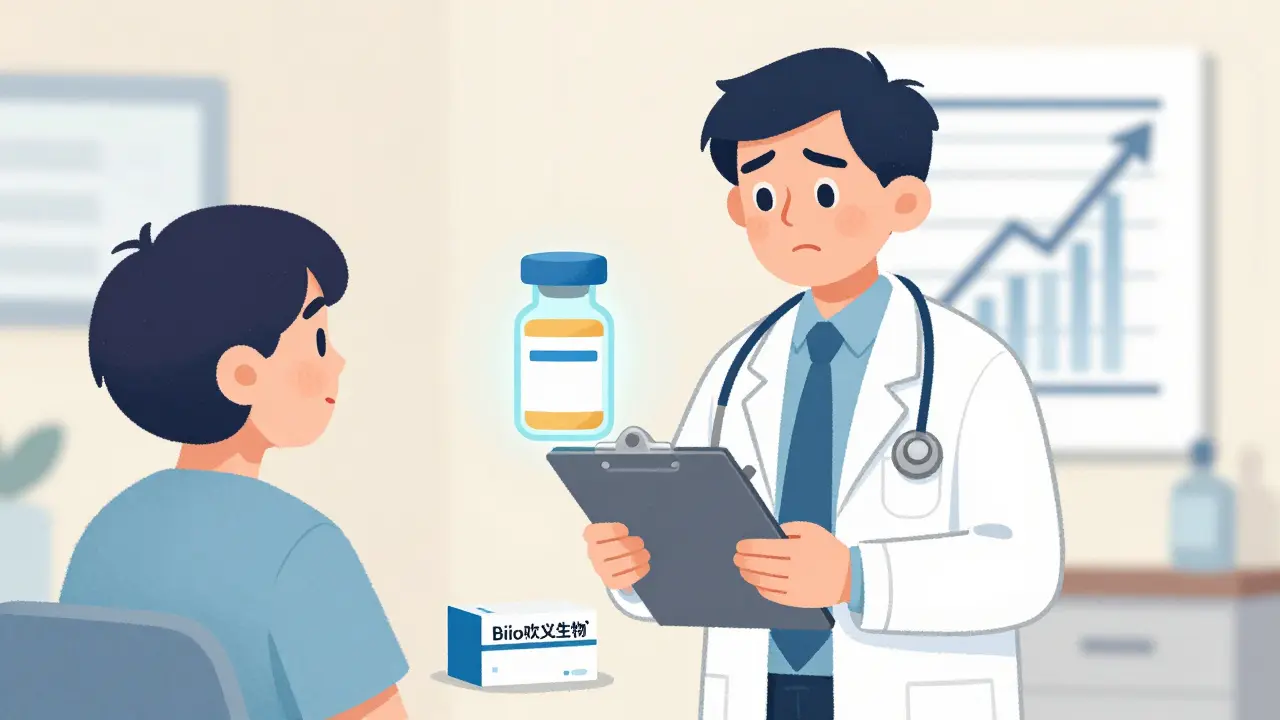
Imagine you are a rheumatologist. You have a patient with severe psoriasis that covers 20% of their body. The standard treatments have failed. There is one biologic drug left on the table that has worked for similar cases in your clinic for years. It costs $850 a month after insurance. There is a cheaper generic alternative, but it hasn't been tested extensively for this specific mutation. Do you switch? Most specialists say no. They stick with the brand.
This decision might seem like simple name-brand loyalty to an outsider, but for providers, it is often about clinical certainty. Specialty drugs are not just expensive pills; they are complex therapies for serious conditions like cancer, multiple sclerosis, and rheumatoid arthritis. When specialists prefer brand-name versions over generics or biosimilars, they are usually weighing the risk of treatment failure against the cost. But as prices skyrocket, that balance is tipping, creating a crisis for patients, payers, and providers alike.
The High Stakes of Specialty Prescribing
To understand why doctors choose brands, we first need to define what makes a specialty drug. These are medications that treat rare or complex chronic conditions and require special handling, administration, or monitoring. According to the Centers for Medicare & Medicaid Services (CMS), these drugs typically cost more than $670 per month. In reality, many exceed $100,000 annually.
The numbers are staggering. In 2019, specialty drugs made up only 0.5% of all prescriptions filled, yet they accounted for 54% of net spending on brand-name drugs under Medicare Part D. By 2021, that share had grown to 71.1% of total prescription drug spending, despite representing just 6.2% of prescriptions. This isn't just inflation; it's a structural shift in how we treat disease. We are moving away from mass-market antibiotics and toward highly targeted, high-cost biologics.
For a provider, the stakes are personal. If a patient stops working because a medication causes side effects, or if a cancer progresses because a biosimilar didn't work as well as the original, the doctor bears the professional and emotional weight of that outcome. Brand-name drugs offer a known track record. Generics and biosimilars, while legally required to be bioequivalent, can still vary slightly in non-active ingredients or manufacturing processes. For a fragile immune system, those slight variations matter.
Clinical Certainty vs. Cost Containment
Why do specialists resist switching? The answer lies in the concept of therapeutic inertia. Once a patient stabilizes on a specific brand-name biologic, changing them introduces uncertainty. Dr. Peter Bach, Director of the Center for Health Policy and Outcomes at Memorial Sloan Kettering Cancer Center, points out that manufacturers set prices without meaningful competition, especially when there are limited alternatives. For a doctor, the "alternative" might not just be cheaper; it might be less effective.
Consider the case of Ocrevus, a treatment for multiple sclerosis. A Reddit user shared their experience paying $1,200 monthly out-of-pocket despite having insurance. Their specialist insisted there were no alternatives that worked as well for their specific genetic mutation. This is a common scenario. Oncologists and rheumatologists report the highest frustration rates with prior authorization requirements, with 82% and 79% respectively citing frequent administrative hurdles. They aren't fighting for profit; they are fighting for efficacy.
However, the financial impact is undeniable. A study published in JAMA Network Open found that prescriber-requested branded dispensing incurred an incremental annual cost of $1.67 billion to Medicare and $270 million to patients compared to switching to generics. That is a massive burden. Yet, for the individual patient in front of the doctor, the abstract national cost feels distant compared to the immediate risk of their disease progressing.
The PBM Problem: Hidden Markups and Lack of Transparency
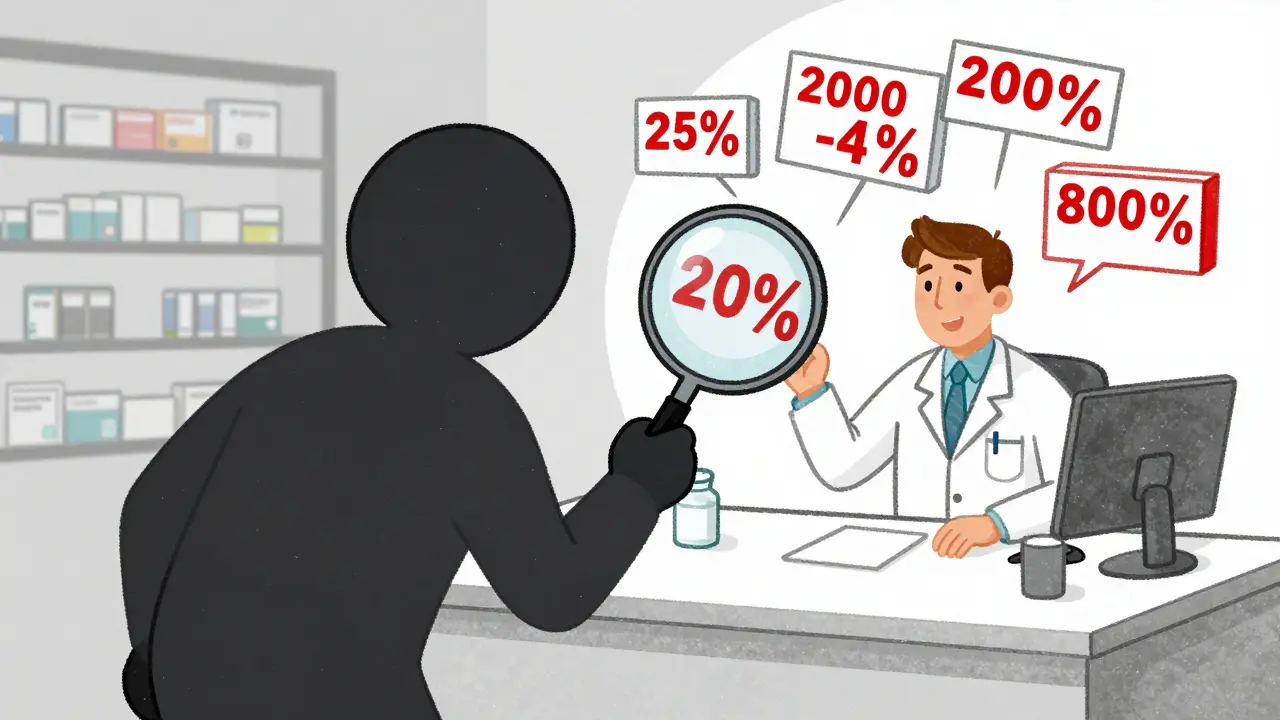
If the doctor wants the best care and the patient needs the drug, who benefits from the high price? Enter the Pharmacy Benefit Managers (PBMs). These middlemen negotiate prices between insurers and pharmacies, but their role in specialty drug pricing has come under intense scrutiny. The Federal Trade Commission (FTC) released a damning interim staff report in January 2025, revealing that the "Big 3 PBMs"-Caremark Rx (CVS), Express Scripts (ESI), and OptumRx-generated over $7.3 billion in revenue from dispensing drugs in excess of estimated acquisition costs between 2017 and 2022.
Here is the kicker: PBMs imposed markups on specialty generic drugs by thousands of percent. While traditional generic drugs see prices drop due to competition, specialty generics are being marked up aggressively. The FTC noted that PBM-affiliated pharmacy dispensing revenue in excess of the National Average Drug Acquisition Cost (NADAC) grew at a compound annual rate of 42% from 2017 to 2021. This creates a perverse incentive. Even if a doctor tries to prescribe a cheaper generic specialty drug, the PBM might charge the insurer far more than the actual acquisition cost, negating any savings.
Dr. Stephen Schondelmeyer, Professor Emeritus at the University of Minnesota College of Pharmacy, called these markups a "fundamental distortion in the drug pricing system." For providers, this lack of transparency is maddening. They cannot know the true cost of the drug they are prescribing, making it impossible to make truly informed decisions about value-based care.
| Metric | Traditional Pharmaceuticals | Specialty Pharmaceuticals |
|---|---|---|
| Share of Prescriptions | ~93.8% | ~6.2% |
| Share of Total Spending | ~28.9% | ~71.1% |
| Average Annual Cost per Patient | $492 | $38,000+ |
| Pricing Competition | High (Generics drive prices down) | Low (Limited alternatives, PBM markups) |
| Administration Complexity | Low (Oral, self-administered) | High (Injection/Infusion, REMS required) |

The Administrative Burden on Providers
Prescribing specialty drugs is not just a clinical decision; it is an administrative marathon. Doctors spend an average of 13.4 hours per week on prior authorizations, with 78% of that time dedicated to specialty medications. This is time taken away from patient care. The American Medical Association reported this data in 2024, highlighting a system that is broken by design.
Getting started with a new specialty drug involves enrolling in specialty pharmacy networks, which can take 2-4 weeks. A 2024 study in the Journal of Managed Care & Specialty Pharmacy found that 42% of specialty drug starts experience delays of seven days or more due to administrative hurdles. Imagine telling a cancer patient they have to wait a week for their life-saving medication because of paperwork. This friction leads to burnout among specialists and poor outcomes for patients.
Furthermore, documentation quality varies wildly. An FDA review in 2023 found that only 65% of specialty drug manufacturers provided comprehensive Risk Evaluation and Mitigation Strategy (REMS) implementation guides. Doctors are left to piece together safety protocols, adding to the cognitive load. Resources like the National Organization of Rare Disorders (NORD) help, assisting 45,000 patients in 2023, but they cannot replace systemic efficiency.
Future Outlook: Regulation and Reform
Is there hope for change? The regulatory landscape is shifting. The Inflation Reduction Act of 2022 allowed Medicare to negotiate prices for certain high-cost drugs. Drugs like Jakafi, Ofev, and Xtandi are expected to be included in future negotiations. This could finally introduce some price discipline into the specialty market. Additionally, the CMS proposed rule changes in March 2025 to increase transparency in specialty drug pricing, directly targeting the $7.3 billion in excess PBM revenue identified by the FTC.
Senator Bernie Sanders introduced the 'Specialty Drug Price Transparency Act' in February 2025, aiming to curb the 42% annual growth in PBM excess revenue. If passed, this could reshape the distribution landscape. However, industry analysts project continued growth. Evaluate Pharma forecasts that specialty drugs will account for 73% of total global prescription drug spending by 2028. The pipeline is full, with 2,700+ investigational agents in development, 45% targeting rare diseases.
For providers, the immediate strategy remains cautious. They will continue to prefer brand-name drugs when clinical certainty outweighs cost concerns. But as pressure mounts from payers and regulators, the conversation is changing. Doctors are now being asked to justify every brand choice with robust clinical data. The era of unchecked specialty prescribing is ending, replaced by a more transparent, albeit still challenging, model of care.
What defines a specialty drug?
A specialty drug is defined by three main criteria: high cost (typically exceeding $670 per month), complexity of use (requiring special handling, administration, or monitoring), and treatment of rare or complex chronic conditions such as cancer, HIV, or rheumatoid arthritis. They often require injection or infusion rather than oral delivery.
Why do specialists prefer brand-name drugs over generics?
Specialists prefer brand-name drugs primarily for clinical certainty. Brand-name biologics have a proven track record of efficacy and safety for specific patient profiles. Switching to a generic or biosimilar introduces variability that could lead to treatment failure or adverse reactions, which is a significant risk for patients with serious, chronic conditions.
How much do specialty drugs cost the healthcare system?
In 2021, specialty drugs accounted for 71.1% of total prescription drug spending in the U.S., despite representing only 6.2% of prescriptions. The average annual cost per specialty patient is approximately $38,000, compared to $492 for non-specialty patients. Global specialty drug spending reached $229 billion in 2023.
What is the role of PBMs in specialty drug pricing?
Pharmacy Benefit Managers (PBMs) negotiate prices between insurers and pharmacies. However, recent FTC reports reveal that PBMs impose significant markups on specialty drugs, sometimes by thousands of percent. The "Big 3 PBMs" generated over $7.3 billion in excess revenue between 2017 and 2022, creating a lack of transparency that distorts pricing for providers and patients.
How does prior authorization affect specialty prescribing?
Prior authorization adds significant administrative burden to specialty prescribing. Physicians spend an average of 13.4 hours per week on these tasks, with 78% related to specialty meds. Delays of seven days or more occur in 42% of specialty drug starts, causing frustration for both providers and patients and potentially delaying critical care.
Are there regulations coming to control specialty drug prices?
Yes. The Inflation Reduction Act allows Medicare to negotiate prices for high-cost drugs, including several specialty medications. Additionally, the CMS proposed rules in March 2025 to increase pricing transparency, and legislation like the Specialty Drug Price Transparency Act aims to curb excessive PBM markups. These measures seek to reduce the unsustainable growth in specialty drug spending.

Paul Lyons
July 14, 2026 AT 16:59 PMTHIS IS AN OUTRIGHT ASSAULT ON AMERICAN INNOVATION!!! You think we want high prices? We want the best drugs for our people, not cheap knockoffs from overseas that fail when it matters most! The system is rigged by bureaucrats who don't understand medicine. We need to stop listening to these globalist price-cutters and support our domestic pharma giants who are saving lives right here in the USA!
Scott Colter
July 15, 2026 AT 22:52 PMThe essence of the matter isn't just money, my friends. It is the profound human fear of the unknown. When a doctor prescribes a brand, they are prescribing certainty in an uncertain universe. To switch is to gamble with a life, and the soul cannot afford such stakes.
Ambarish Pal
July 16, 2026 AT 21:32 PMOh, please. Spare me the tears about 'clinical certainty.' It is nothing but corporate greed wrapped in a white coat! Doctors love the kickbacks and the comfort of the status quo. If a generic works, use it! Stop acting like you are gods deciding fate. It's just chemistry, not magic! The whole industry is a scam designed to bleed patients dry while pretending to care!
Ed Ostrego
July 16, 2026 AT 22:08 PMHey everyone! Let's keep this discussion positive and constructive! We all want the best outcomes for patients, right? I know it's frustrating, but let's focus on solutions rather than blame! Together we can push for better transparency and more affordable options! Keep the faith, team!
Andrew Donovan
July 18, 2026 AT 01:28 AMI've spent years navigating the labyrinthine corridors of specialty pharmacy, and the situation is dire yet nuanced. The issue isn't merely cost; it's the intricate dance between efficacy, safety profiles, and the opaque machinations of PBMs. When we talk about biosimilars, we must acknowledge that while bioequivalence is legally mandated, the immunogenicity risks remain a shadow over every prescription. It is a delicate balance, akin to walking a tightrope without a net. We need systemic reform, not just finger-pointing. The data suggests that therapeutic inertia is real, but so is the financial toxicity crushing families. We must advocate for transparent pricing models that reflect true value, not arbitrary markups. Only then can we hope to heal both the patient and the system.
Autumn LW
July 18, 2026 AT 05:25 AMTypical whining from people who don't understand how the free market actually functions. If you can't afford the drug, that's your problem, not society's. These specialists are elitists who refuse to adapt to modern cost-containment strategies. They should be fired if they can't manage their patients' budgets. It's simple economics, really. Supply and demand. If they want cheaper drugs, they should prescribe them. But no, they'd rather play God and charge you an arm and a leg for the privilege. Disgusting.
Patrick Meyer
July 19, 2026 AT 12:51 PMlook, its obvious the pbms are the real villains here, but lets not pretend doctors are saints either. theyre addicted to the brand names because its easier. lazy. the whole system is broken beyond repair and only a few enlightened minds can see that. rest of u are just sheep following the herd. pathetic.
Prashant Shishodia
July 21, 2026 AT 12:31 PMYou need to look at the facts. The cost is too high. Patients suffer. Doctors are stuck in the middle. We must change this now. No more excuses. Fix the system.
Deva Vidya
July 23, 2026 AT 02:52 AMI completely agree with the need for transparency! It is absolutely crucial that we empower patients with information. When we work together as a community, we can demand better from these pharmaceutical companies. Let's stay hopeful and keep pushing for change! We have the power to make a difference!
ANINDA GHOSH
July 23, 2026 AT 17:56 PMIn my culture, we believe that healing is a holistic process, encompassing not just the body but also the spirit and the community. The current pharmaceutical model seems to ignore this interconnectedness, focusing solely on profit margins. It is deeply troubling. We must remember that behind every statistic is a human being suffering. May we find a way to restore balance and compassion to healthcare. :)
MiMi Stanley
July 23, 2026 AT 20:07 PMI just read through the article quietly. It makes sense why doctors hesitate. I guess I'm just observing how complicated everything has become. It's sad really. I wonder if there's any hope left for normal pricing?
Najmunisa Govender
July 25, 2026 AT 17:34 PMThis is truly heartbreaking!! As someone who has watched loved ones struggle with chronic illness, I can only imagine the stress doctors face!! The lack of transparency is unacceptable!!! We deserve better!!! Please, let us unite to demand accountability!!!
Tad Cronn
July 26, 2026 AT 21:37 PMLet's cut the crap. You're all missing the point. The PBM markup is a symptom, not the disease. The disease is the FDA's approval process which creates monopolies. Once a patent expires, the competition doesn't work because the barriers to entry are artificial. I've analyzed the supply chain data myself. It's clear. The generics aren't failing; the system is rigged to prevent them from succeeding. Wake up.
Sean Allwurden
July 28, 2026 AT 17:09 PMFrom a clinical operations standpoint, the prior authorization workflow is a nightmare. We need to leverage interoperable EHR systems to streamline this. The KPIs show that administrative burden directly correlates with provider burnout. We should collaborate on standardized protocols for biosimilar switching. It's doable if we align our stakeholders.
Earl Oleary
July 29, 2026 AT 03:26 AMYou are all idiots. The JAMA study clearly shows the cost impact. If you think biosimilars are risky, you are ignorant. Bioequivalence is strict. The reason specialists stick to brands is because they are lazy and want to avoid liability. It's that simple. Stop making excuses for incompetence. The data is irrefutable. Get educated before posting nonsense.