

The Battle Between Budget and Safety
The prescription pad is where the battle between budget and safety plays out every single day. You have patients waiting, pharmacy budgets tightening, and a constant stream of new studies about drug costs. Generic prescribing is the practice of using the International Non-proprietary Name (INN) of a medication rather than a proprietary brand name when writing prescriptions. Also known as INN prescribing, it has become the backbone of modern healthcare economics. While the concept sounds straightforward-write the chemical name, save money-the reality is far more nuanced for us as providers. We aren't just talking about saving pennies here. In 2026, the landscape has shifted significantly from when these protocols were first introduced. The UK's National Health Service (NHS) estimates that increased generic substitution could unlock £1.3 billion annually. That is enough to fund entire hospital departments. But if you swap a patient's medication and their condition worsens because of formulation differences, that efficiency vanishes instantly. The central question isn't "should we prescribe generics," but rather "when exactly is the brand name non-negotiable?" Let's walk through the actual guidelines that dictate those decisions right now.
Understanding the Core Principles
When regulatory bodies like the World Health Organization launched their INN program in 1950, they set a global standard. Every active pharmaceutical ingredient gets one official non-proprietary name. In the United States, the Food and Drug Administration (FDA) maintains the Orange Book to identify therapeutically equivalent generic products. This system requires generics to demonstrate strict bioequivalence to the reference listed drug.
Bioequivalence is the measure of how similar a generic drug performs compared to its branded counterpart in the body. The standard acceptance range is usually 80% to 125%. It sounds like a wide margin until you remember that for most drugs, small variations don't change clinical outcomes. A study published in the Journal of the American Medical Association found that generic prescribing improves medication adherence by up to 12% because lower costs mean patients actually fill the scripts. However, this logic breaks down completely when we enter the territory of Narrow Therapeutic Index (NTI) drugs.
| Factor | Standard Medication | Narrow Therapeutic Index Drug |
|---|---|---|
| Bioequivalence Range | 80-125% | Requires tighter monitoring |
| Risk of Switch | Minimal to None | Potential toxicity or failure |
| Patient Monitoring | Routine Checks | Frequent Lab Work Required |
The Three Categories of Exceptions
If you spend time reviewing the British National Formulary (BNF), you'll see that guidance boils down to three specific categories where brand-name prescribing remains the rule. These aren't just suggestions; they are critical safety buffers.
Category 1: Drugs with Narrow Therapeutic Indices
This is the big one. For medications like carbamazepine, digoxin, levothyroxine, phenytoin, and warfarin, minor variations in blood levels can lead to serious adverse events. A meta-analysis in Epilepsia showed a 1.5 to 2.3% higher seizure recurrence rate with generic substitutions for antiepileptic drugs. If a patient is stabilized on a specific brand of carbamazepine, switching brands without a plan to re-stabilize doses is risky. The American Epilepsy Society explicitly recommends avoiding multiple generic switches for these patients. We must document why we are choosing the brand-if you can show it's necessary to avoid INR fluctuations or seizures-that protects both the patient and your license.
Category 2: Modified-Release Preparations
Theophylline is the classic example here. The active ingredient might be the same, but the release mechanism determines the drug's half-life. If you switch from a brand that releases slowly over 12 hours to a generic that pulses faster, a patient could overdose within an hour before the next dose is due. The Royal Pharmaceutical Society noted in 2022 that 41% of community pharmacists encounter difficulties with substitution in this category. Always check the release kinetics in the product monograph before swapping.
Category 3: Biological Products
This is where the science gets complex. Unlike small molecules, biologics (and their biosimilars) are manufactured in living cells. They aren't identical copies; they are "highly similar." The MHRA guidance from 2021 specifically states that biological medicines should be prescribed by brand name to ensure the same product is dispensed consistently. Immunogenicity-where the body develops antibodies against the drug-is a real risk if you keep changing the manufacturer. A patient on an originator biologic should generally stay on that specific brand unless there is a compelling economic reason to switch, handled with extreme caution.
The Human Element of Prescribing
Data tells us generics save billions, but patients tell us different stories. A survey of 12,500 GPs found that 34% expressed concerns about patient acceptance. Why does this happen? Often, it's the nocebo effect. Patients expect something cheaper to work less well, so they perceive side effects even if the chemistry is identical. Dr. Emily Chen noted that explaining the rationale increases acceptance from 67% to 89%.
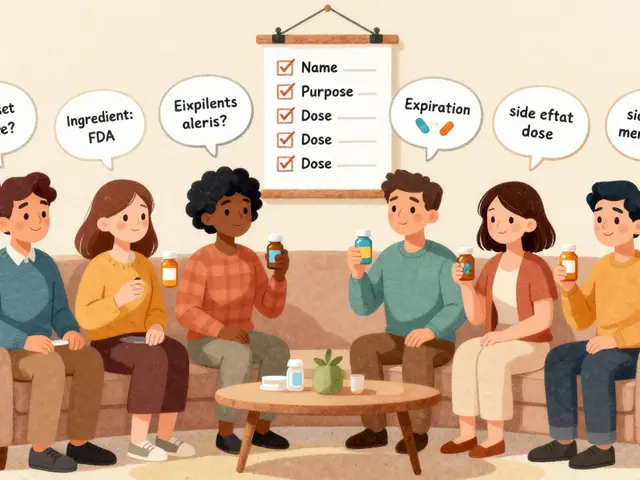
The trick is communication. You cannot just hand over a slip that says "Atorvastatin 20mg" without context if they've been taking Lipitor for years. Use the 'Explain, Empower, Engage' framework: explain the active ingredient is the same, empower them to ask questions, and engage them in the decision. This doesn't add much time to a consultation but prevents them from returning a week later complaining of 'different results.'

Clinical Implementation Strategies
How do you actually manage this in a busy clinic? Electronic prescribing systems are our biggest lever. Most NHS trusts have updated their defaults to generic names since 2023. However, relying solely on system defaults creates blind spots.
- Audit Your List: Start by pulling a report of all patients currently on the Category 1 exceptions list.
- Verify Stability: Check the last lab result for thyroid patients on levothyroxine or coagulation reports for warfarin users.
- Document the Logic: In your notes, explicitly state whether you are prescribing generically or by brand and why.
- Educate Continuously: Even senior staff sometimes miss newer biosimilar restrictions. Regular updates help keep everyone aligned on the latest MHRA guidance.
Looking Ahead in 2026 and Beyond
The market is shifting again. By 2025, forecasts suggest 75% of small-molecule drugs will have generic alternatives. However, biologics remain a gray zone. The FDA's Generic Drug User Fee Amendments (GDUFA III) implemented recently strengthens post-market surveillance. This means if a specific generic batch causes issues, manufacturers must report it faster.
We are moving toward intelligent substitution-using real-world evidence to decide which patients can safely switch. In rural areas where access is limited, we may still default to brand names due to stock availability. In urban settings with multiple pharmacies, the risk of switching increases if the patient uses different shops. Consistency is key. Whether it is the cheapest version or the newest biologic, the goal is uninterrupted therapy.




Michael Kinkoph
March 31, 2026 AT 21:10 PMThe clinical implications are multifaceted; indeed, the oversight on biological variations is egregious!!
Angel Ahumada
April 2, 2026 AT 00:06 AMyou are missing the bigger picture of systemic decay in healthcare delivery systems
sanatan kaushik
April 3, 2026 AT 02:23 AMDoctors always ignore the cheap option. Safety comes first always.
dPhanen DhrubRaaj
April 4, 2026 AT 13:30 PMit seems reasonable for most cases yes
Debbie Fradin
April 4, 2026 AT 17:49 PMAnother set of rules designed to confuse the already confused practitioners today.
Kendell Callaway Mooney
April 5, 2026 AT 12:19 PMGeneric prescribing is actually quite complex when you dig into the details. Most people think it is just about saving money but that is not entirely true. There are specific drugs where changing brands causes real harm to patients quickly. We need to look at things like thyroid medication carefully. Levothyroxine levels can shift enough to cause major heart issues. Warfarin is another huge category that needs consistent sources for dosing. Bioequivalence ranges allow for differences that might seem small clinically. Small molecules behave differently than biologics in the human body usually. You have to understand the release mechanisms before making any switches. Modified release pills depend heavily on how the manufacturer constructs them. Swapping these without checking monographs leads to overdose risks easily. Biologic products are not exact copies because they are made in living cells. Immunogenicity becomes a problem when you switch manufacturers repeatedly. Patients often report feeling worse due to the nocebo effect alone sometimes. Documentation is the key protection against liability when brand names are chosen. Everyone involved needs to read the latest guidance before acting blindly.
Carolyn Kask
April 7, 2026 AT 05:05 AMobviously the regulations change every year to favor large corporate interests exclusively
RONALD FOWLER
April 8, 2026 AT 09:39 AMBalance between cost savings and patient safety remains the critical goal for all providers moving forward.
Ruth Wambui
April 10, 2026 AT 06:07 AMthe supply chains are controlled by shadow groups manipulating drug access globally
Jonathan Sanders
April 11, 2026 AT 22:17 PMyour optimism about safety protocols is frankly naive given current failures
emma ruth rodriguez
April 12, 2026 AT 13:35 PMadherence to the BNF guidelines ensures appropriate therapeutic outcomes for vulnerable populations.
Rick Jackson
April 13, 2026 AT 23:40 PMethical considerations weigh heavily on prescription decisions daily.
Beccy Smart
April 14, 2026 AT 14:44 PMlooks dry but important stuff 💤