

Imagine waking up to a tender, pea-sized lump under your arm that feels like it’s on fire. It’s not just a pimple; it’s deep, stubborn, and refuses to leave. For millions of people, this is the daily reality of Hidradenitis Suppurativa, or HS. This chronic skin condition doesn’t just affect your skin-it disrupts your sleep, your confidence, and often, your ability to move freely. If you’ve been struggling with recurrent abscesses in your armpits, groin, or under your breasts, you know the frustration of trying creams and antibiotics that barely scratch the surface.
The good news? The treatment landscape has shifted dramatically in the last decade. We’ve moved beyond guessing games and temporary fixes. Today, biologic therapy offers a targeted way to calm the internal storm causing those painful nodules. But biologics aren’t a one-size-fits-all magic bullet. They are powerful tools, and knowing how they work, what they cost, and who benefits most can save you months of trial and error. Let’s break down exactly how these medications tackle HS and what you need to know before starting them.
Why Your Skin Is Attacking Itself
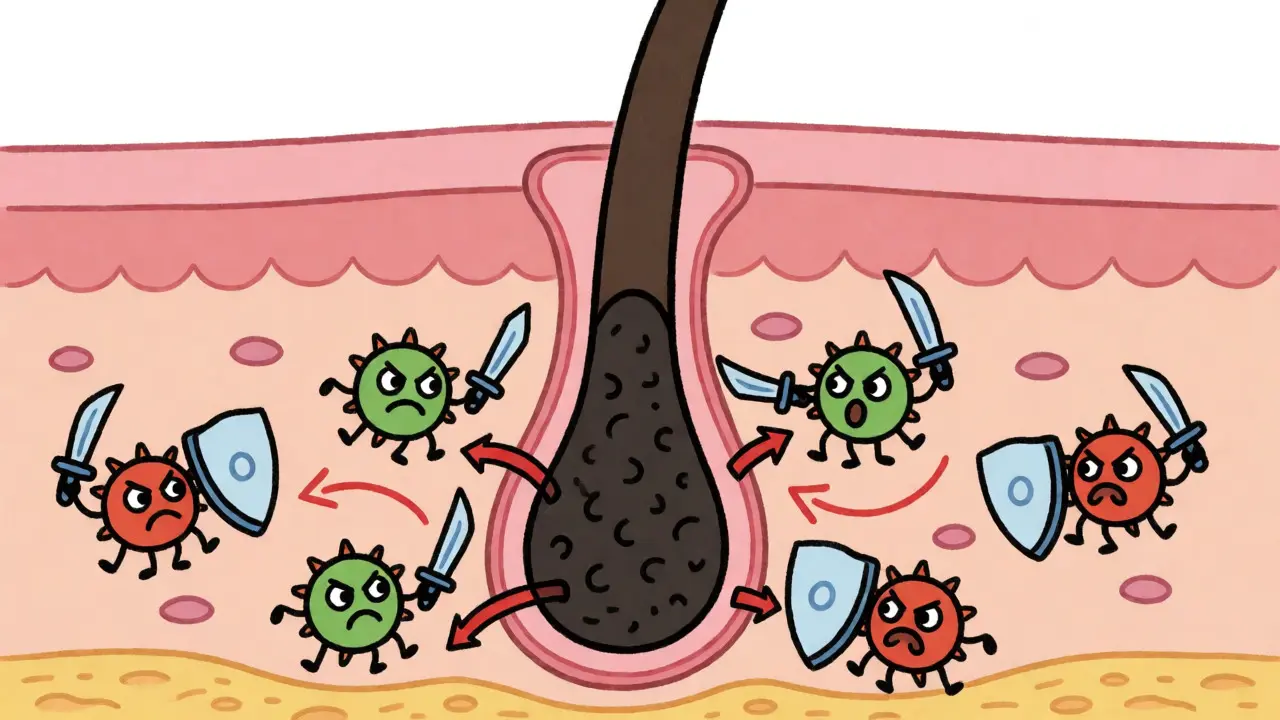
To understand why biologics work, you first have to understand what’s going wrong under your skin. HS isn’t caused by poor hygiene or an infection from the outside. It starts inside the hair follicle. In healthy skin, dead cells shed naturally. In HS, the follicle gets clogged because the lining thickens-a process called hyperkeratinization. Think of it as a drain getting blocked by too much debris. Once blocked, the follicle ruptures beneath the skin, spilling its contents into the surrounding tissue.
This rupture triggers a massive immune response. Your body sends inflammatory signals-specifically cytokines like TNF-α, IL-17, and IL-23-to fight what it thinks is an injury. These chemicals cause swelling, pain, and pus formation. Over time, repeated cycles of blockage and inflammation create tunnels under the skin, known as sinus tracts, which connect abscesses together. This is why HS lesions often appear in clusters and why they’re so hard to treat with topical ointments alone. The problem is systemic, driven by an overactive immune system, which is precisely where biologics come in.
The Rise of Biologics: A Game Changer for Moderate-to-Severe HS
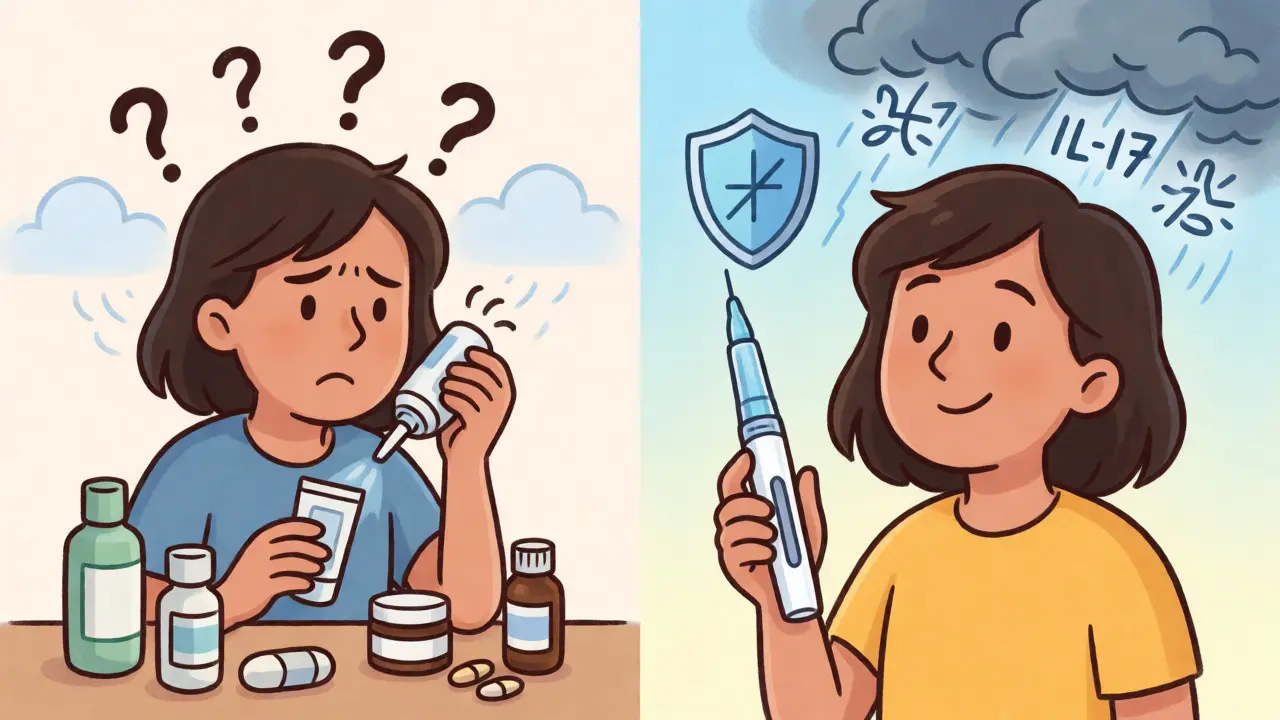
For years, doctors relied on antibiotics (like clindamycin or tetracyclines) or hormonal pills (like spironolactone) to manage HS. While helpful for mild cases, these treatments often fail when the disease progresses to Hurley Stage II or III-the stages marked by multiple interconnected abscesses and scarring. Enter biologics. Unlike broad-spectrum antibiotics, biologics are engineered antibodies that target specific parts of the immune system.
The FDA approved the first biologic for HS, adalimumab (Humira), in 2015. Since then, we’ve seen two major additions: secukinumab (Cosentyx) and bimekizumab (Bimzelx). These drugs don’t just suppress inflammation broadly; they shut down specific inflammatory pathways. Adalimumab blocks TNF-alpha, while secukinumab targets IL-17A. Bimekizumab goes a step further, blocking both IL-17A and IL-17F. This precision means fewer side effects compared to older systemic steroids and a higher chance of clearing active lesions.
Comparing the Heavy Hitters: Efficacy and Administration
Not all biologics are created equal. Choosing the right one depends on your specific symptoms, medical history, and how quickly you need relief. Recent clinical trials provide clear data on how well each drug performs. The standard measure for success is HiSCR50, which stands for Hidradenitis Suppurativa Clinical Response 50%. Essentially, this means half of your inflammatory nodules and abscesses have cleared up, with no new ones forming.
| Drug Name | Target Mechanism | HiSCR50 Rate (Week 16) | Dosing Schedule | Estimated Monthly Cost (US) |
|---|---|---|---|---|
| Adalimumab (Humira) | Inhibits TNF-α | 41.8% | Weekly injection after loading dose | $5,800 |
| Secukinumab (Cosentyx) | Inhibits IL-17A | 44.5% | Monthly injection after initial phase | $6,200 |
| Bimekizumab (Bimzelx) | Inhibits IL-17A & IL-17F | 66.9% | Every 4 weeks after loading dose | $6,900 |
Data from the BE HEARD I trial showed bimekizumab achieving nearly 67% response rates, significantly higher than the other options at the same timeframe. However, adalimumab has the longest track record. Doctors often start patients on adalimumab because insurance companies are more familiar with its approval history. Secukinumab is gaining ground, especially for patients who also have psoriasis, since it’s approved for both conditions. Bimekizumab is newer but shows impressive speed in clearing lesions, making it a strong candidate for those with severe, rapidly progressing inflammation.
What to Expect During Treatment: Timeline and Side Effects
If you decide to try a biologic, patience is key. You won’t see results overnight. Most patients notice a reduction in pain and size of existing nodules within 8 to 12 weeks. Full clearance of active lesions might take up to 16 weeks or longer. During this time, you’ll likely continue using topical washes or oral antibiotics to bridge the gap until the biologic takes full effect.
Side effects are generally manageable but require monitoring. Because biologics dampen the immune system, you’re slightly more prone to infections. Upper respiratory infections and yeast infections are common complaints among users. Injection site reactions-redness, itching, or mild swelling-are reported by about 40% of adalimumab users, though these usually fade after the first few shots.
Before starting any biologic, your doctor will run blood tests to check for tuberculosis, hepatitis B and C, and assess your heart health. This screening is non-negotiable. Biologics can reactivate latent TB or worsen certain heart conditions. Regular follow-ups every 12 weeks allow your dermatologist to monitor your lipid profile. Interestingly, studies show that effective HS treatment often improves cholesterol levels, suggesting a link between skin inflammation and cardiovascular health.
The Financial Reality: Insurance and Access
Let’s address the elephant in the room: cost. Without insurance, these medications can run between $5,800 and $6,900 per month. Even with commercial insurance, out-of-pocket costs can average $1,200 monthly. For many patients, this financial burden leads to skipped doses or discontinuation. Medicaid coverage varies widely, with only about 45% of eligible patients getting approved for biologics compared to 82% of those with private insurance.
Don’t let sticker shock stop you. Most pharmaceutical manufacturers offer copay assistance programs that can reduce your cost to near zero if you qualify. Additionally, dedicated HS clinics are becoming more common in academic medical centers. These clinics often have social workers or nurse navigators who specialize in helping patients navigate prior authorizations and find manufacturer savings cards. Always ask your dermatologist’s office to handle the prior authorization paperwork early; delays here are the most common reason for treatment interruption.
Beyond the Needle: Lifestyle and Combination Therapies
Biologics are powerful, but they work best when paired with lifestyle changes. Smoking is a major trigger for HS flares. Nicotine affects the immune system and damages blood vessels, worsening inflammation. Quitting smoking can enhance the effectiveness of your medication. Weight management is another critical factor. Excess weight increases friction in skin folds and promotes insulin resistance, which fuels inflammation. Losing even 5-10% of body weight can reduce symptom severity.
Surgery still plays a role, particularly for established scars and sinus tracts. Biologics stop new damage but don’t erase old scar tissue. Combining biologic therapy with surgical debridement (removing damaged tissue) has shown superior results, with some studies reporting near 90% clearance rates when both approaches are used together. If you have extensive scarring, ask your doctor about a coordinated plan involving both medical and surgical teams.
Frequently Asked Questions
How long does it take for biologic therapy to work for hidradenitis suppurativa?
Most patients begin to notice a reduction in pain and inflammation within 8 to 12 weeks. Significant clearance of nodules and abscesses typically occurs by week 16. Some individuals may respond faster, while others require several months of consistent treatment to achieve optimal results.
Can I use biologics if I have mild hidradenitis suppurativa?
Biologics are primarily indicated for moderate-to-severe HS (Hurley Stage II and III). For mild cases (Stage I), doctors usually start with topical treatments, oral antibiotics, or hormonal therapies. Biologics are considered when these conventional treatments fail or if the disease is rapidly progressing.
What are the most common side effects of HS biologics?
Common side effects include upper respiratory infections, headache, and injection site reactions such as redness or swelling. Less commonly, patients may experience yeast infections or gastrointestinal issues. Serious risks include reactivation of tuberculosis or hepatitis, which is why pre-treatment screening is essential.
Is biologic therapy a cure for hidradenitis suppurativa?
No, there is currently no cure for HS. Biologics manage the condition by suppressing the underlying inflammation and preventing new lesions. Symptoms often return if treatment is stopped, so most patients require ongoing maintenance therapy to keep the disease under control.
How much do biologics cost without insurance?
Without insurance, the list price for HS biologics ranges from approximately $5,800 to $6,900 per month depending on the specific drug. Manufacturer copay assistance programs can significantly reduce this cost for eligible commercially insured patients, sometimes bringing out-of-pocket expenses down to $0-$50 per month.
Next Steps for Patients
If you suspect you have HS or are struggling with current treatments, schedule an appointment with a dermatologist who specializes in HS. Bring a log of your flare-ups, including photos if possible, to help demonstrate the pattern and severity. Ask specifically about biologic eligibility based on your Hurley stage. Before your visit, research local patient support groups online-they are invaluable resources for navigating insurance hurdles and sharing real-world experiences with specific medications. Early intervention prevents permanent scarring, so don’t wait for the next big flare to seek advanced care.




Terrence spry
I'm a pharmaceutical scientist specializing in clinical pharmacology and drug safety. I publish concise, evidence-based articles that unpack disease mechanisms and compare medications with viable alternatives to help readers have informed conversations with their clinicians. In my day job, I lead cross-functional teams advancing small-molecule therapies from IND through late-stage trials.
view all posts