
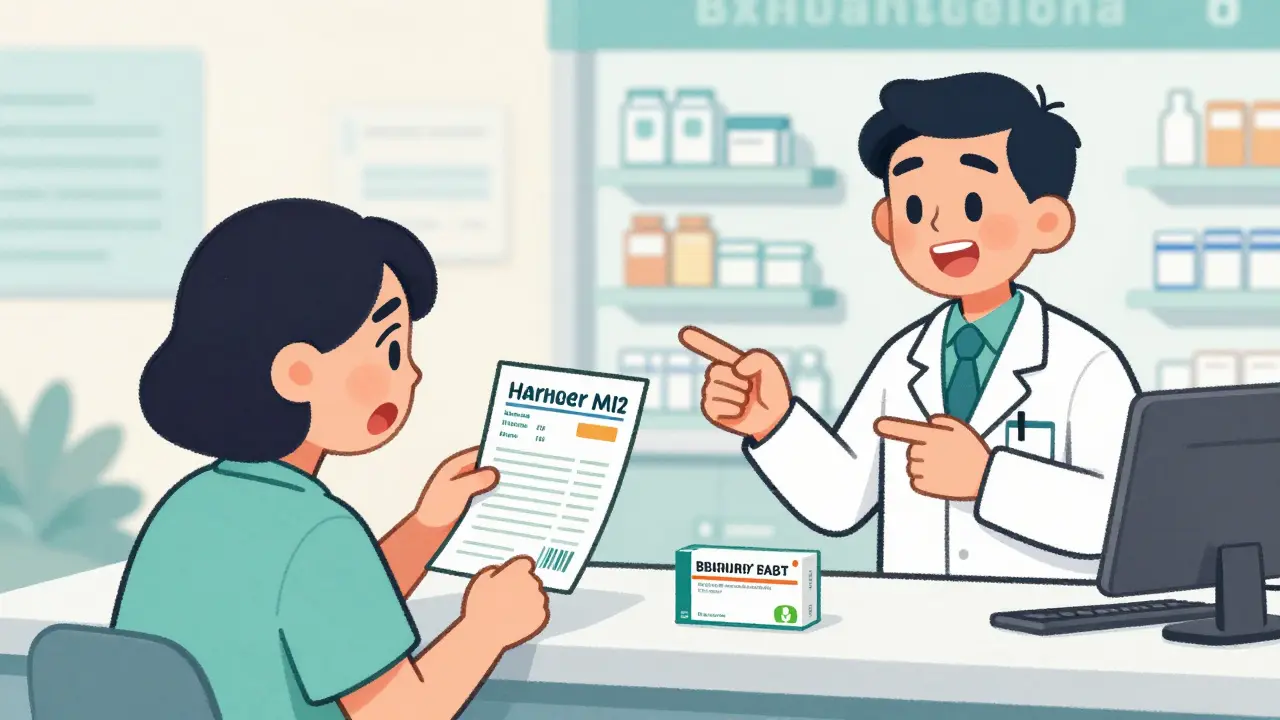
If you've ever looked at your pharmacy bill and wondered why some medications cost a few dollars while others cost thousands, you're likely seeing the divide between traditional generics and biologics. While we often talk about "generics" as a single group, the world of high-tech medicine has a different set of rules. For those dealing with complex conditions, switching from a brand-name biologic to a biosimilar isn't just about saving a few bucks-it can be the difference between paying $2,000 a month or under $1,000.
The core issue is that brand biologics are incredibly expensive to make, but they dominate our healthcare spending. Even though they make up only 5% of all prescriptions in the U.S., they account for over half of all drug spending. That's a massive gap. The good news is that biosimilars are stepping in to break that monopoly, offering a way to get the same clinical results without the eye-watering price tag.
What Exactly Is a Biosimilar?
Before we talk money, we have to clear up a common misconception. You can't just make a "generic" version of a biologic drug the way you do with a pill like Ibuprofen. Traditional generics are chemically identical copies. Biologics, however, are made from living organisms, making them massive, complex molecules. Because they are grown, not just mixed in a lab, you can't make an exact clone.
Biosimilars are highly similar versions of an original biologic drug that show no clinically meaningful differences in safety, purity, and potency. While they aren't identical clones, the FDA ensures they work the same way in your body. Think of it like a professional cover song: it might not be the original recording, but if the notes and tempo are the same, the experience for the listener is identical.
Breaking Down the Price Gap: Brand vs. Biosimilar
The price difference isn't just a small discount; it's often a cliff. When a brand biologic first hits the market, it usually carries a premium price because the company is recouping research and development costs. Once a biosimilar enters the scene, the pricing structure shifts dramatically.
Recent data from 2025 shows that a 30-day prescription for a brand reference biologic averages around $2,104. In contrast, the biosimilar version for the same treatment averages about $919. That is a 56.3% reduction in cost. For the patient, these savings are even more direct, with out-of-pocket costs typically dropping by about 23% when switching to a biosimilar.
| Metric | Brand Reference Biologic | Biosimilar Alternative | Difference (%) |
|---|---|---|---|
| Avg. 30-Day Cost | $2,104 | $919 | -56.3% |
| Launch Price Discount | Reference Point | 40% - 50% Lower | Varies |
| Patient Out-of-Pocket | Higher | ~23% Lower | -23% |
Real-World Example: The Humira Effect
To see how this works in the real world, look at Humira, which is used to treat autoimmune diseases like rheumatoid arthritis. At its peak, Humira was a juggernaut, generating over $21 billion in global sales. For some patients, the annual list price was roughly $80,000.
Once the patents expired in 2023, the floodgates opened. Biosimilars like Hyrimoz entered the market, and competition soared. Within a short window, biosimilars captured about 65% of the market share. More importantly, they did so at an average discount of 80% compared to the original list price. This shift didn't just help people switching drugs; it forced the original brand to lower its own prices by an average of 25% just to stay competitive.
Why Aren't All Biologics Cheaper?
If the savings are this huge, why aren't we using biosimilars for everything? The truth is that the path to a cheaper drug is blocked by several "corporate hurdles." First, there are Patent Thickets, which are essentially webs of overlapping patents that brand companies use to delay competitors from entering the market for years.
Then there are Pharmacy Benefit Managers (PBMs). These middle-men often create "rebate walls." Essentially, a PBM might get a huge rebate from a brand-name manufacturer, which makes the expensive drug more attractive to the PBM than a cheaper biosimilar that doesn't offer the same rebate. This keeps the expensive drug on the "preferred" list, even if it costs the healthcare system more in the long run.
Additionally, developing a biosimilar is a massive gamble. It's not like making a generic pill; it costs between $100 million and $250 million just to get one biosimilar through the development and approval process. This high barrier to entry means fewer companies are willing to take the risk.
The Long-Term Impact on Your Wallet
Despite these hurdles, the trend is moving toward affordability. The U.S. Department of Health and Human Services noted that biosimilars have already saved the healthcare system about $56 billion since 2015. In 2024 alone, that figure was $20 billion.
When you look at the broader picture, including both traditional generics and biosimilars, the savings are staggering. In 2023, these alternatives saved a total of $445 billion. To put that in perspective, generic and biosimilar medicines make up 90% of all prescriptions but only 13% of the total money spent on drugs. This shows that while biologics are a huge part of the spending, the savings are driven by the shift away from brand-name monopolies.
What to Expect in the Next Few Years
The landscape is shifting. The FDA is currently working on new guidance to simplify the studies required for biosimilar approval, which should make them faster and cheaper to produce. There is also a push from the government through the "Biosimilars Action Plan" to tear down those rebate walls and patent thickets.
Analysts expect that by 2030, biosimilar market penetration will jump from the current 15-20% to around 35-40%. For the average person, this means more options at the pharmacy counter and a higher likelihood that your insurance will cover a lower-cost alternative that works just as well as the brand name.
Are biosimilars exactly the same as brand-name biologics?
Not exactly, but they are "highly similar." Because biologics are made from living cells, they can't be identical copies like traditional generic drugs. However, the FDA requires them to have the same safety, purity, and potency, meaning they provide the same clinical result as the brand-name drug.
Why is there such a big price difference between the two?
Brand biologics have high prices to cover the initial cost of inventing the drug and the massive R&D expenses. Biosimilars enter the market later, after the original patents expire. Since they don't have to "invent" the molecule from scratch, they can be sold at a significant discount-often 40% to 80% lower than the original list price.
Will my insurance company let me switch to a biosimilar?
In many cases, yes. Many insurance plans are now encouraging or even requiring the use of biosimilars to save costs. However, some may still prefer brand-name drugs due to agreements with Pharmacy Benefit Managers (PBMs). It's best to ask your doctor if a biosimilar is available and if your insurance prefers it.
Does switching to a biosimilar affect how the drug works?
According to the FDA and medical experts, approved biosimilars are as safe and effective as the branded versions. They are designed to treat the same condition and produce the same clinical response in the patient.
How many biosimilars are currently available in the US?
As of late 2025, the FDA has approved approximately 76 biosimilars. While this is a growing number, it is still a small fraction of the roughly 600 biologic drugs currently available on the U.S. market.
Next Steps for Patients and Caregivers
If you're currently on a high-cost brand biologic, here is how to navigate the cost conversation:
- Ask your doctor: "Is there an FDA-approved biosimilar for this medication?"
- Check your formulary: Look at your insurance provider's list of covered drugs to see if the biosimilar is listed as a "preferred" option.
- Compare out-of-pocket costs: Ask your pharmacist for the price difference between the brand and the biosimilar with your specific insurance plan.
- Discuss the transition: If you switch, ask your healthcare provider how they will monitor your response to the new medication to ensure it's working as expected.


melissa mac
April 16, 2026 AT 06:36 AMIt's really encouraging to see more options becoming available for people who might be struggling with these costs. Finding a balance between innovation and accessibility is so important for public health.
Haley Moore
April 17, 2026 AT 05:57 AMUgh please 🙄 the way people act like a 23% drop in out-of-pocket costs is some kind of miracle is just so quaint. Like honey, if you're still paying hundreds of dollars for a drug, you're still being fleeced, just slightly less efficiently than before. It's honestly embarrassing how low the bar is for "affordability" in this country 💅
john chiong
April 19, 2026 AT 03:10 AMabsolute highway robbery if i ever saw it the sheer audacity of these corporate vampires sucking the lifeblood out of sick people just to pad their gold-plated portfolios is a goddamn crime against humanity and a stain on the soul of modern medicine
Tabatha Pugh
April 19, 2026 AT 22:17 PMActually, the part about PBMs is barely scratching the surface because most people don't even realize that the "list price" is a complete fiction designed to facilitate the rebate game and if you're using a specific insurance provider you're probably paying a premium for a drug that the PBM is getting a kickback on which makes the whole "biosimilar" transition a logistical nightmare for the patient who is just stuck in the middle of a corporate tug-of-war over who gets the biggest slice of the pharmacy spend pie.
Ikram Khan
April 20, 2026 AT 02:20 AMThis is such a game changer! 🚀 The fact that we can get the same results for half the price is just incredible news for everyone! I wonder how many more of these will hit the market soon! 🌟
Shaylia Helland
April 20, 2026 AT 11:51 AMi just think it's really wild how we have to navigate all these weird layers of insurance and corporate greed just to get the medicine that keeps us functioning and i've heard from a few people in my circle that the transition to biosimilars can be a bit of a headache with the paperwork but honestly as long as the drug works it's just a win for the wallet in the long run and we should all just be more patient with each other while we figure out this broken system without getting too stressed out over the tiny details
David Snyder
April 20, 2026 AT 17:08 PMKeep pushing for these changes!