
GAHT Drug Interaction Checker
Select your hormone therapy type and any other medications you are taking to see potential interaction risks based on current clinical guidelines.
Interaction Assessment
Risk LevelYou’re finally on the path to feeling like yourself. The hormones are flowing, the changes are starting, and life feels more aligned. Then your doctor mentions that your new medication might clash with something else you take. Or maybe you start a new antidepressant and suddenly your energy dips. It’s confusing, right? You didn’t sign up for a chemistry experiment when you started Gender-Affirming Hormone Therapy (GAHT). But understanding how these drugs play together is crucial for staying safe and effective.
Here’s the good news: for most people, GAHT is incredibly safe. A massive review in 2023 looked at over 12,000 transgender patients and found serious adverse events were exceedingly rare. But "rare" doesn't mean "never," and it certainly doesn't mean "ignore." If you take medications for HIV, mental health, or chronic pain, there are specific interactions you need to know about. This guide breaks down what actually happens in your body when GAHT meets other meds, based on the latest clinical data from 2024 and 2025.
The Core Mechanisms: Why Interactions Happen
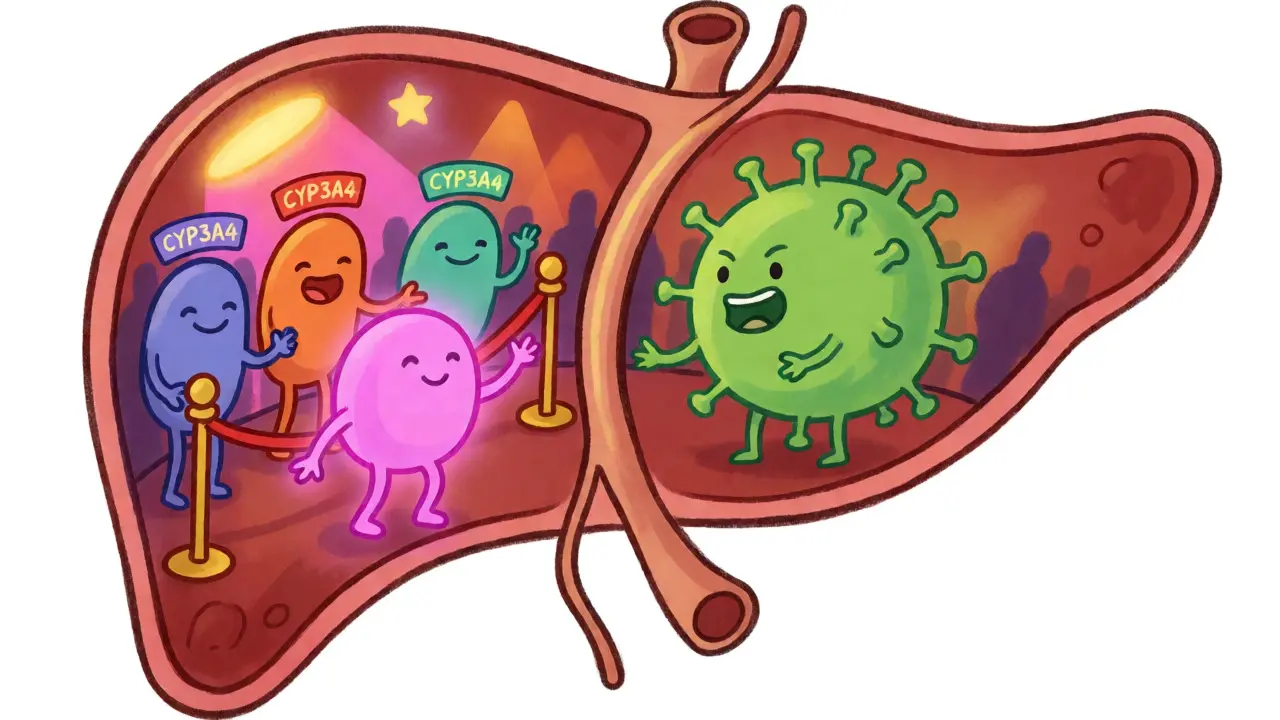
To understand interactions, you have to look at how your liver processes drugs. Most medications, including hormones, are broken down by enzymes in your liver. Think of these enzymes as bouncers at a club. Some bouncers (like CYP3A4) are very busy. If one drug invites itself in and hogs the bouncer, another drug gets stuck outside, building up to dangerous levels. Or, if a drug kicks the bouncer out, the other drug passes through too quickly, losing its effect.
Estradiol, the primary hormone in feminizing therapy, relies heavily on the CYP3A4 enzyme pathway. This makes it sensitive to anything that speeds up or slows down this enzyme. On the flip side, Testosterone, used in masculinizing therapy, is metabolized differently, primarily through 5-alpha reductase and aromatase pathways. This difference is why an interaction warning for estrogen might not apply to testosterone, and vice versa.
It’s also worth noting that many transgender individuals face higher rates of co-occurring conditions. National survey data suggests transgender people experience psychiatric conditions at 2.5 times the rate of cisgender peers. This means you’re statistically more likely to be on multiple medications simultaneously, increasing the complexity of your regimen.
Feminizing Hormone Therapy: Key Interaction Risks
If you’re taking estradiol (whether via patches, gels, or pills), pay close attention to medications that affect liver enzymes. Here is where things get tricky:
- Antiretrovirals (HIV Meds): This is one of the most well-studied areas. Older HIV drugs like efavirenz can speed up the breakdown of estradiol, potentially lowering your hormone levels by 30-50%. Conversely, newer booster drugs like cobicistat can slow down metabolism, causing estradiol levels to spike by up to 60%. High estradiol isn't always better; it can increase clotting risks.
- Psychiatric Medications: SSRIs like fluoxetine (Prozac) can inhibit certain liver enzymes, which might raise estradiol levels. Meanwhile, mood stabilizers like carbamazepine are known enzyme inducers-they rev up the liver’s processing power, potentially flushing your hormones out before they do their job.
- Antibiotics: Rifampin, often used for tuberculosis, is a powerful enzyme inducer. It can drastically reduce estradiol efficacy. If you’re prescribed rifampin, talk to your endocrinologist immediately.
A common myth is that birth control pills interact badly with GAHT. They don’t necessarily interact dangerously, but they aren’t needed for contraception if you’ve had bottom surgery or are infertile due to HRT, and adding them unnecessarily adds clot risk without benefit.
Masculinizing Hormone Therapy: What to Watch For
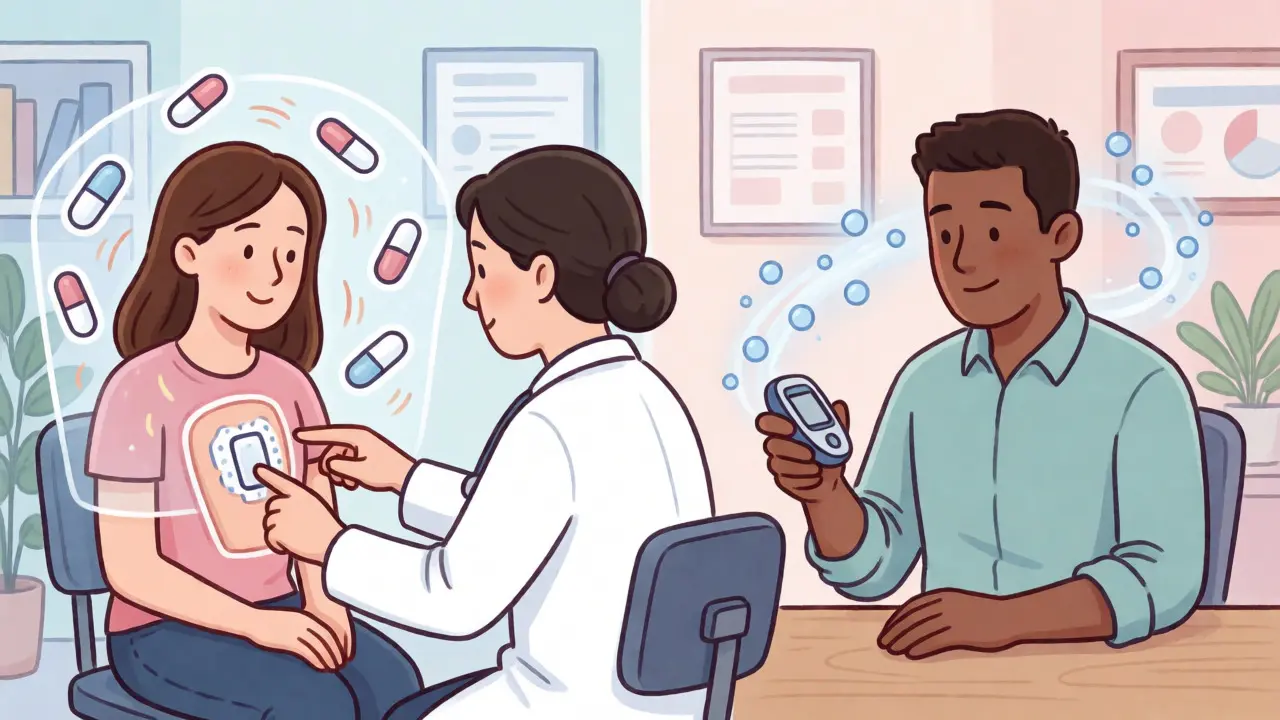
Testosterone is generally considered more forgiving regarding drug interactions than estradiol. However, it’s not immune to issues. Testosterone can influence blood sugar levels, so if you’re diabetic, monitor your glucose closely when starting or changing doses. Insulin requirements may shift.
There is emerging evidence that testosterone can affect the metabolism of some psychiatric medications. While concrete pharmacokinetic data is still catching up, clinicians report cases where antidepressant efficacy dropped after starting testosterone. In some instances, patients needed a 25-50% dose increase of their antidepressants within six weeks. This isn't universal, but it’s a real phenomenon that requires monitoring.
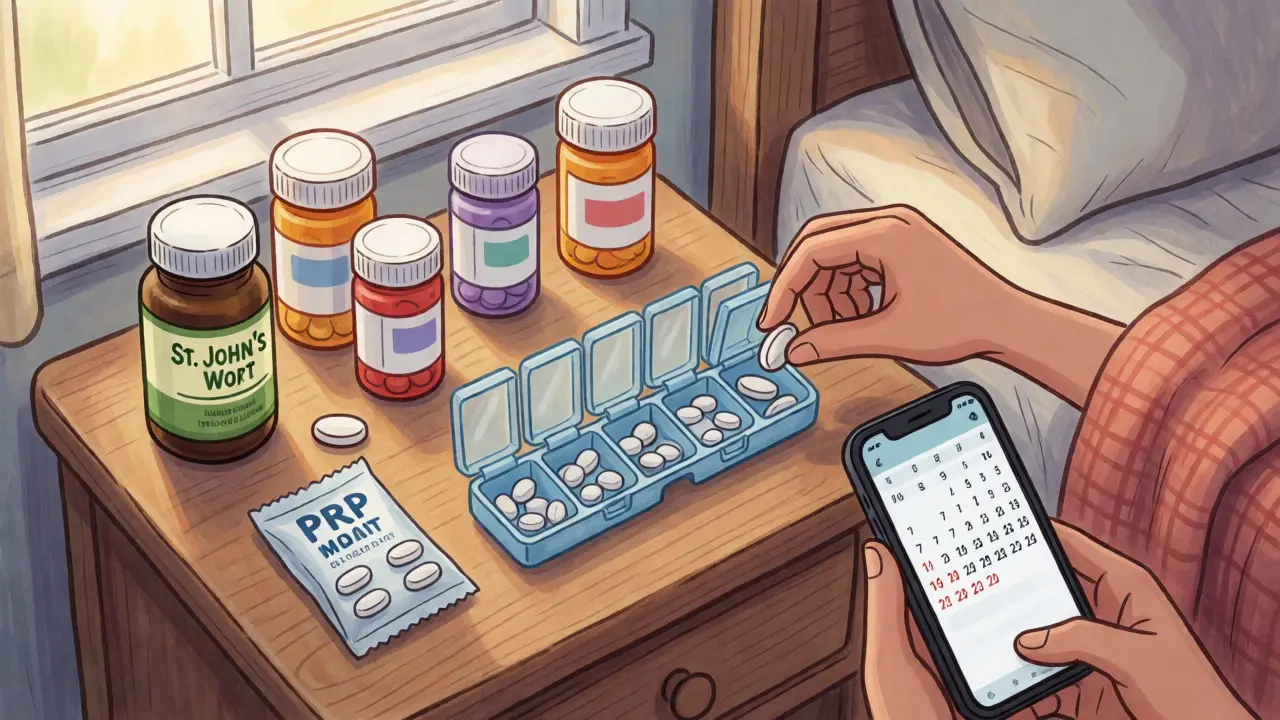
Also, consider supplements. St. John’s Wort is a notorious enzyme inducer. If you take it for mild depression, it could lower your testosterone levels significantly. Always check with your provider before adding herbal supplements to your routine.
HIV Medications and PrEP: Specific Considerations
For transgender women living with HIV or using PrEP (Pre-Exposure Prophylaxis), the stakes feel higher because adherence is critical. The good news? Modern PrEP drugs like TDF/FTC (Truvada) show no clinically meaningful interaction with GAHT. A landmark 2022 study confirmed that hormone levels changed by less than 5% when combined with PrEP. You don’t need to adjust your dose just because you’re on PrEP.
However, if you are living with HIV and on antiretroviral therapy (ART), the story is more nuanced. As mentioned earlier, NNRTIs (non-nucleoside reverse transcriptase inhibitors) can lower hormone levels. The general rule of thumb from recent guidelines is to stabilize your HIV treatment first. Once your viral load is undetectable and your ART regimen is steady, then introduce GAHT. This allows doctors to isolate any side effects or interactions clearly.
| Drug Class | Effect on Estradiol (FHT) | Effect on Testosterone (MHT) | Action Required |
|---|---|---|---|
| Cobicistat-boosted ART | Increase levels by ~60% | Minimal impact | Monitor for high E2 symptoms; potential dose reduction. |
| Rifampin (Antibiotic) | Decrease levels significantly | Decrease levels | Often requires higher HRT dose during course. |
| SSRIs (e.g., Fluoxetine) | Potential slight increase | Variable; monitor mood | Standard dosing usually fine; watch for mood shifts. |
| Carbamazepine | Decrease levels | Decrease levels | Therapeutic drug monitoring recommended. |
| PrEP (TDF/FTC) | No significant change | No significant change | No adjustment needed. |
Side Effects vs. Interactions: Knowing the Difference
It’s easy to blame every weird sensation on a drug interaction. But sometimes, it’s just the hormone doing its job. Let’s separate the two.
Common Side Effects (Not Interactions):
- Feminizing: Breast tenderness, mood swings, decreased libido, fatigue. These are part of the transition process.
- Masculinizing: Acne, increased oil production, voice cracking, increased muscle mass, hair thinning (if predisposed).
Signs of Potential Interaction or Dose Issue:
- Sudden return of previous hormonal patterns (e.g., unexpected menstruation while on blockers, or loss of facial hair growth progress).
- Unexplained weight gain or loss despite diet stability.
- Severe headaches or visual changes (could indicate high estrogen/prolactin issues).
- Changes in blood pressure or heart rate that don’t match your baseline.
If you notice these, don’t panic. Just document them. Bring a list of all supplements, prescriptions, and over-the-counter meds to your next appointment. Doctors rely on this full picture to spot patterns.
Best Practices for Managing Multiple Medications
So, how do you stay safe without becoming a pharmacist? Here is a practical checklist derived from current WPATH Standards of Care Version 8 and Endocrine Society guidelines:
- The One-Doctor Rule (or Close Communication): Ideally, your endocrinologist knows everything you take. If you see different specialists, ensure they share records. Don’t assume your psychiatrist knows you’re on testosterone, or vice versa.
- Regular Blood Work: This is non-negotiable. Monitor estradiol, testosterone, prolactin, liver enzymes, and lipids. Frequency varies, but typically every 3-6 months during the first year, then annually.
- Start Low, Go Slow: When adding a new medication, wait a few weeks before judging how it affects your hormones. Changes take time.
- Watch for Liver Stress: Oral estradiol passes through the liver first. If you have liver issues or drink alcohol heavily, transdermal patches or gels might be safer choices as they bypass initial liver metabolism.
- Ask About New Drugs: Before starting any new prescription-even for a short-term infection-ask, "Does this interact with my hormone therapy?" Pharmacists are excellent resources for quick checks.
Remember, the field is evolving. Studies like the NIH-funded Tangerine Study are actively looking at these interactions right now. By 2026, we’ll have even clearer data. Until then, personalized care and open communication with your healthcare team are your best defenses.
Do I need to stop my birth control if I start feminizing hormone therapy?
Usually, yes, unless specifically advised otherwise. Birth control pills contain ethinyl estradiol, which is synthetic and carries a higher risk of blood clots compared to bioidentical estradiol used in GAHT. Taking both increases clot risk without added benefit. Discuss switching to a progestin-only method or discontinuing entirely with your doctor.
Can testosterone make my antidepressants less effective?
It can, though it's not guaranteed. Some studies suggest testosterone may alter the metabolism of certain SSRIs or SNRIs. If you notice your mood worsening shortly after starting testosterone, tell your prescriber. You may need a dosage adjustment rather than stopping either medication.
Are herbal supplements safe with gender-affirming hormones?
Not always. St. John’s Wort is a major red flag as it induces liver enzymes and can lower hormone levels. Black cohosh and soy products have weak estrogenic effects that might interfere with precise dosing. Always clear supplements with your provider before adding them.
What if I miss a dose of my HIV medication while on GAHT?
Missed doses of antiretrovirals can lead to resistance, which complicates future treatment. While missing one dose of GAHT is less risky acutely, consistency is key for both. Set alarms or use pill organizers. If you frequently miss doses, discuss simpler regimens or long-acting injectables with your doctor.
Do smoking or vaping affect hormone interactions?
Smoking significantly increases the risk of blood clots, especially when combined with oral estradiol. Vaping has fewer known direct metabolic interactions but still impacts cardiovascular health. Quitting smoking is one of the best ways to improve the safety profile of your hormone therapy.



Terrence spry
I'm a pharmaceutical scientist specializing in clinical pharmacology and drug safety. I publish concise, evidence-based articles that unpack disease mechanisms and compare medications with viable alternatives to help readers have informed conversations with their clinicians. In my day job, I lead cross-functional teams advancing small-molecule therapies from IND through late-stage trials.
view all posts