
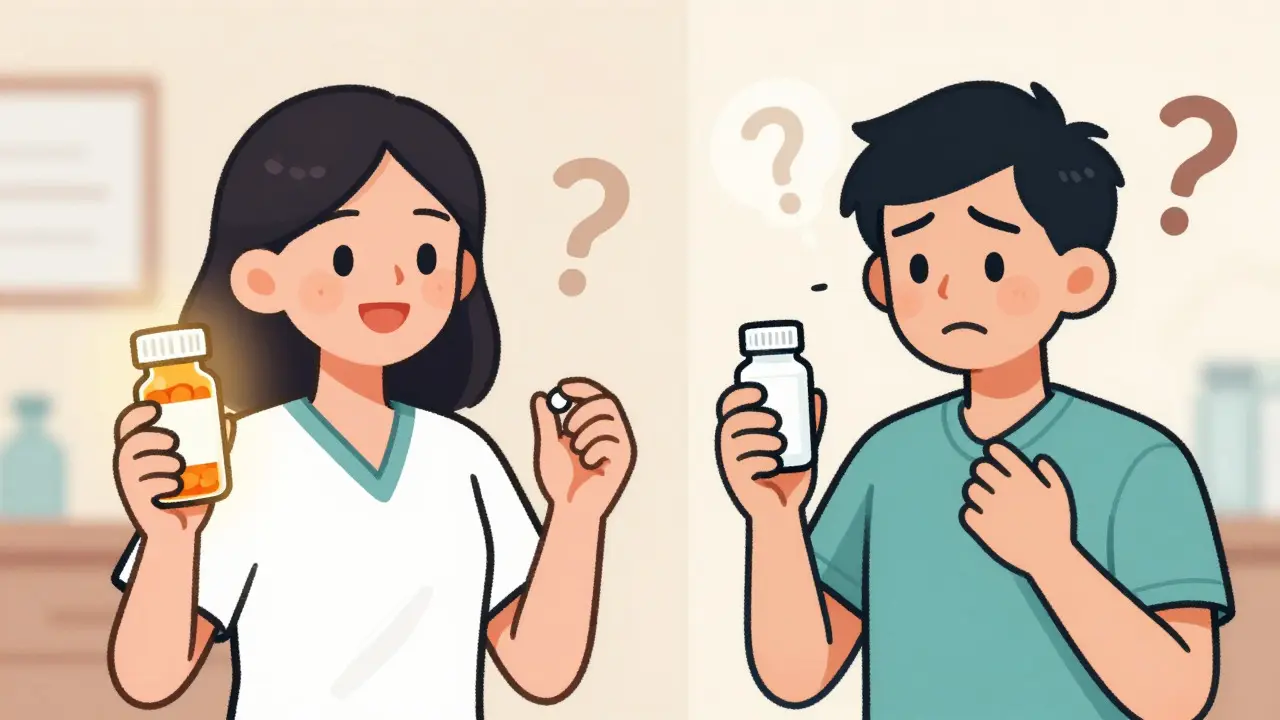
Imagine switching from your usual brand-name pill to a generic version. The active ingredient is the same, the price is lower, but does it feel right? For many patients, that gut feeling matters as much as the chemistry. While generic medications are pharmaceutical products containing the same active ingredients as their brand-name counterparts, approved after rigorous bioequivalence testing, patient happiness isn't just about efficacy. It's a complex mix of trust, habit, and perceived quality. Understanding how we measure this satisfaction helps explain why some people stick with generics while others quietly switch back.
The Core of Satisfaction Measurement
So, what exactly are researchers measuring when they ask if you're "happy" with a generic? It’s not a simple thumbs-up or down. The primary goal is to identify drivers of medication adherence. When patients aren't satisfied, they stop taking their meds, which costs the U.S. healthcare system roughly $300 billion annually. To capture this, experts use standardized tools like the Generic Drug Satisfaction Questionnaire (GDSQ). This instrument doesn't just ask "is it working?" It breaks down satisfaction into specific buckets: effectiveness, convenience, and side effects. By isolating these factors, we can see if a patient is unhappy because the drug feels weaker, or simply because the packaging looks different.
Modern measurement goes beyond basic surveys. Researchers now use path analysis to weigh how much each factor contributes to overall happiness. In recent studies, effectiveness and convenience emerged as the top two predictors, with statistical weights showing they drive nearly half of the variance in patient satisfaction. This tells us that if a generic works well and fits into a patient's routine, they are likely to be happy, regardless of the label color.
Why Perception Often Overrides Fact
Here’s the tricky part: science says generics are equivalent, but perception often disagrees. A study published in Nature Communications found that 72% of patients expressed dissatisfaction with at least one generic medication. Why? Mostly due to perceived ineffectiveness. This gap between clinical reality and patient experience is where brand psychology comes into play. Humans are pattern recognizers. If a pill looks different, tastes different, or comes from an unfamiliar company, our brains flag it as "risky."
This psychological hurdle is particularly high for narrow therapeutic index drugs-medications where a small change in dose can have big consequences, like thyroid hormones or anti-seizure meds. For these, 37.4% of patients report hesitancy. It’s not that the generic is bad; it’s that the margin for error feels too small. Dr. Aaron S. Kesselheim from Harvard Medical School notes that while data shows equivalence, the perception gap remains stubbornly wide. Until we bridge that trust deficit, satisfaction scores will lag behind clinical performance.

How Doctors Shape Patient Happiness
You might think satisfaction is purely internal, but external voices carry heavy weight. Professor Dimitrios T. Boumpas from the University of Athens points out that healthcare providers are the primary information source for patients regarding generics. When a doctor explains the FDA’s bioequivalence standards-the rule that a generic must perform within 80-125% of the brand name-it changes the narrative. In one study, explaining these standards led to a 34.2% increase in patient satisfaction. It turns an unknown variable into a regulated, safe choice.
Pharmacists also play a crucial role. They are often the last line of defense before a patient takes the pill. If a pharmacist proactively discusses potential differences or reassures the patient about quality, the anxiety drops. Conversely, silence can breed doubt. The message needs to be clear: the switch is intentional, cost-effective, and scientifically sound. Without this communication, patients rely on anecdotal evidence from friends or social media, which is rarely reassuring.
Demographics and Cultural Nuances
Satisfaction isn't uniform across all groups. Age, employment status, and even culture shift the numbers. Research indicates that employed participants showed higher safety acceptance rates compared to those who were unemployed or retired. Similarly, patients over 60 often show higher acceptance, possibly due to greater familiarity with the healthcare system or lower sensitivity to minor changes. However, cultural context plays a massive role. Studies show that satisfaction scores can vary by up to 32% between collectivist and individualist cultures. In some regions, trust in institutional authority (like government-approved generics) is higher, leading to better satisfaction metrics than in cultures where personal brand loyalty is stronger.
| Factor | Impact on Satisfaction | Key Insight |
|---|---|---|
| Effectiveness | High (Weight: 0.254) | Primary driver; patients need to feel the drug works. |
| Convenience | High (Weight: 0.237) | Cost savings and access significantly boost approval. |
| Side Effects | Moderate | Perceived or actual adverse effects quickly erode trust. |
| Physician Communication | Significant (+34.2%) | Explanation of bioequivalence directly increases satisfaction. |
| Cultural Context | Variable (±32%) | Collectivist cultures often show higher baseline trust in generics. |

Methodological Challenges in Measurement
Measuring happiness is harder than it sounds. One major issue is the Hawthorne effect: when patients know they are being studied, they tend to report higher satisfaction. This can inflate results by nearly 19%. Another challenge is recall bias. Chronic users might conflate experiences from different months or different generic manufacturers, leading to inaccurate self-reports. Prospective studies (tracking patients in real-time) show much lower error rates than retrospective ones, suggesting that capturing satisfaction immediately after a switch is more reliable.
Additionally, Western-developed survey tools sometimes underestimate satisfaction in Asian populations by over 20%. This highlights a blind spot in global research. As we move toward personalized medicine, we need measurement tools that account for local nuances and genetic variations. The Mayo Clinic is already piloting assessments that consider pharmacogenomics, aiming to predict satisfaction based on how a patient's body actually processes the drug, rather than just their opinion.
The Bottom Line for Patients and Providers
Are patients happy with generics? For many, yes-especially when cost savings allow consistent access to care. But for others, the answer is hesitant. The path to universal satisfaction isn't just about making better pills; it's about better communication. When providers actively explain the science, address fears, and validate patient concerns, the gap between clinical equivalence and patient happiness narrows. The future of satisfaction measurement lies in combining hard data with human insight, ensuring that the switch to generics feels like a smart choice, not a compromise.
What is the main reason patients dislike generic drugs?
The primary driver of dissatisfaction is perceived ineffectiveness. Even when clinical trials show equivalence, patients often feel the generic doesn't work as well as the brand name, largely due to psychological factors and lack of prior explanation from healthcare providers.
How do doctors influence patient satisfaction with generics?
Doctors act as key influencers by providing information. Studies show that when physicians explain the regulatory standards (like bioequivalence), patient satisfaction increases significantly. Their endorsement serves as a trust signal that reduces anxiety about the switch.
Do cultural differences affect how patients view generics?
Yes, cultural context plays a major role. Satisfaction scores can vary by up to 32% depending on whether a culture is collectivist or individualist. In some regions, trust in institutional regulation leads to higher acceptance of generics, while in others, brand loyalty is stronger.
What is the Hawthorne effect in satisfaction studies?
The Hawthorne effect refers to the tendency of patients to report higher satisfaction levels when they know they are being observed or surveyed. This can lead to inflated data, so researchers must account for this bias to get an accurate picture of true patient sentiment.
Which medication classes have the highest generic satisfaction?
Antibiotics generally show the highest satisfaction rates, often exceeding 85%. Conversely, antiepileptics and other narrow therapeutic index drugs tend to have lower satisfaction due to heightened concerns about precise dosing and efficacy.




Terrence spry
I'm a pharmaceutical scientist specializing in clinical pharmacology and drug safety. I publish concise, evidence-based articles that unpack disease mechanisms and compare medications with viable alternatives to help readers have informed conversations with their clinicians. In my day job, I lead cross-functional teams advancing small-molecule therapies from IND through late-stage trials.
view all posts