
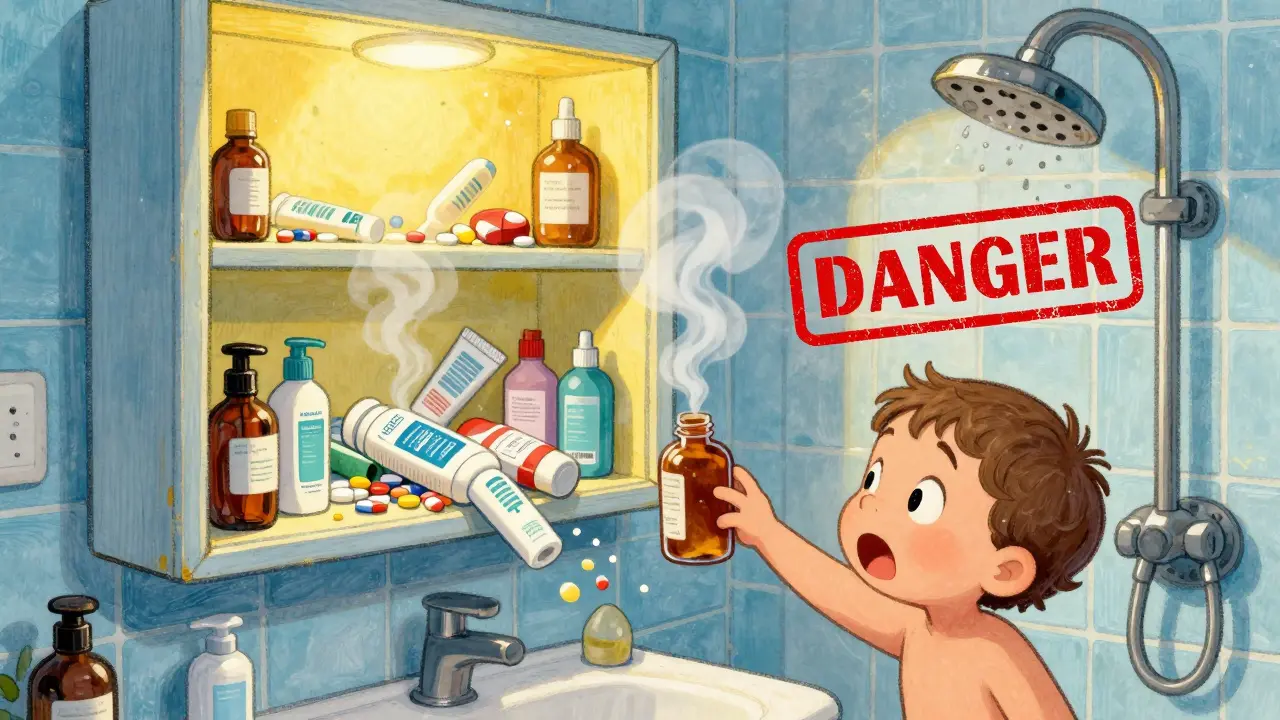
Every year, over 59,000 children under five are treated for accidental medication poisoning in the U.S. Most of these incidents happen because medicines were left within reach - not because parents were careless, but because no one ever made a simple plan to keep them safe. If you’ve ever opened a medicine cabinet and found a jumble of pills, creams, inhalers, and old prescriptions all mixed together, you’re not alone. But that chaos isn’t just messy - it’s dangerous.
Why Your Medicine Cabinet Is the Wrong Place
The bathroom medicine cabinet is the most common storage spot, but it’s also the worst. Showers spike humidity to 80-90%, and the temperature swings 10-15 degrees every time you turn on the water. That’s enough to make your insulin, thyroid meds, or antibiotics lose potency by 30-50% within months. The FDA says light exposure - like from a bright bathroom bulb - can degrade some drugs by 40% in just 30 days. And if your cabinet isn’t locked? A curious toddler can grab something in under 10 seconds.Instead, pick a cool, dry, out-of-sight spot. A locked closet in the hallway, a high shelf in the bedroom, or even a small lockbox on a top shelf works best. The key is consistency: same place every time, no exceptions.
What Belongs on Your Checklist
A good home medication storage checklist isn’t just a list - it’s a system. Here’s what it must include:- Location: Where exactly are meds stored? (e.g., “Locked cabinet in linen closet, 5 feet off floor”)
- Temperature: Which meds need refrigeration? (Insulin: 36-46°F. Others: room temp, 68-77°F)
- Separation: Are each person’s meds kept apart? (No mixing prescriptions - even if they look similar)
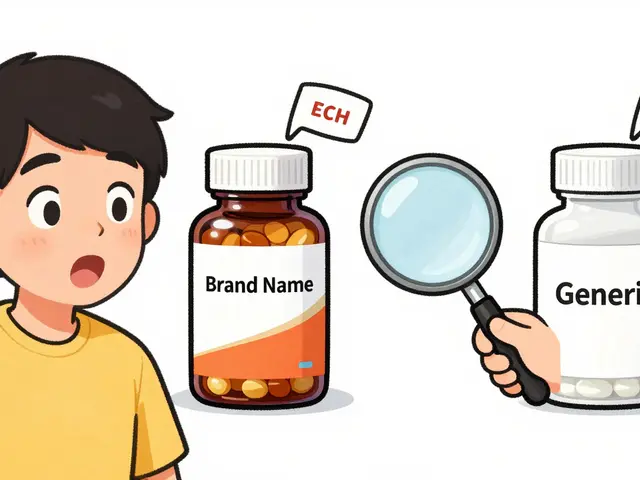
- Containers: Are all meds in original bottles with labels? (No dumping pills into pill organizers unless labeled daily)
- Security: Is everything locked? (Even OTC painkillers - teens get 30% of misused drugs from home cabinets)
- Expiration tracking: Are dates checked every six months? (Expired meds lose effectiveness - some by up to 50%)
- Special items: Are inhalers stored in protective cases? Are insulin pens labeled with opening date? Are topical creams kept away from oral meds?
Don’t forget: topical ointments, insect repellents, and even nutritional supplements count as medications under Kaitlyn’s Law and need the same care.
Organize by Type, Not by Name
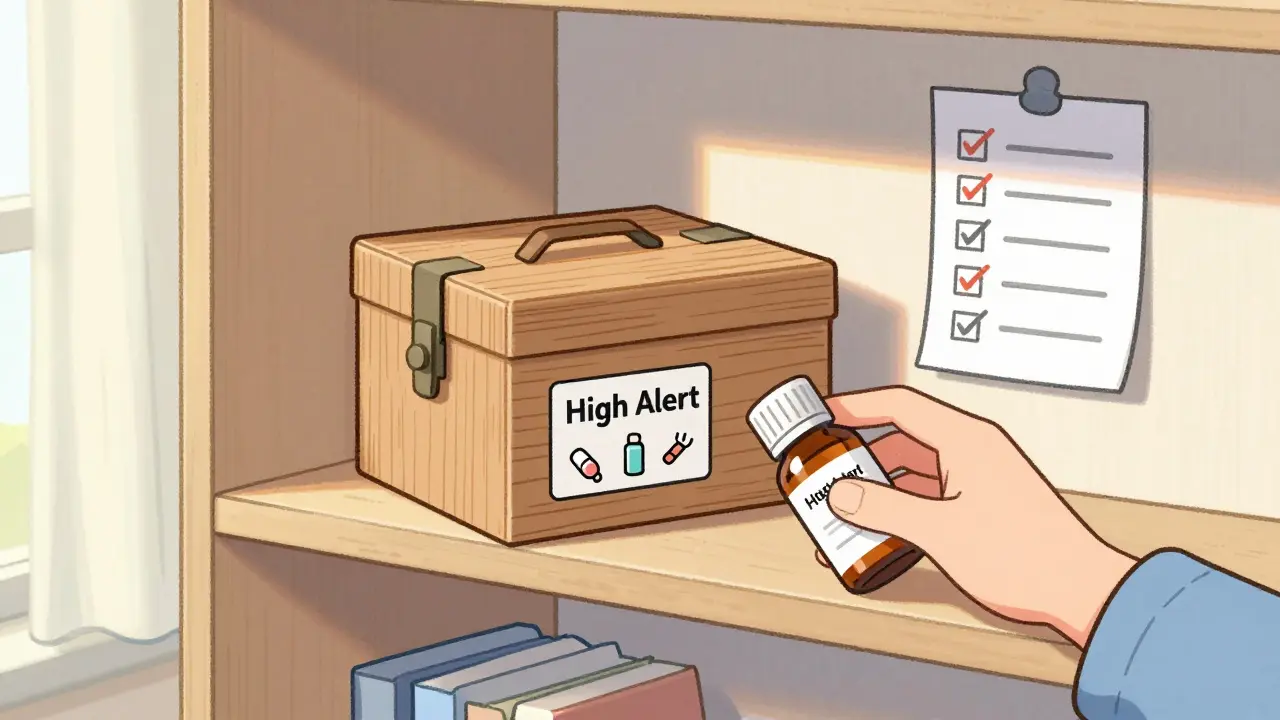
Grouping meds by who they belong to helps - but grouping by how they’re used prevents deadly mistakes. Keep oral pills on one shelf, injectables in a separate locked box, and topical creams in a clearly labeled bin. The Institute for Safe Medication Practices found that separating by route of administration cuts medication errors by 63%.High-risk drugs like warfarin, insulin, or opioids? Store them in their own locked container with a bold “High Alert” label. A 2020 Ontario study showed this single step reduced errors by 78%.
Lock It Down - No Exceptions
Standard medicine cabinets? They stop only 12% of kids. A locked box? It stops 92%. That’s not a suggestion - it’s science.Use a lockbox with a combination lock. Key locks get lost. Combination locks? Kids can’t guess them, and adults don’t forget. The American Academy of Pediatrics says 70% of childhood poisonings happen when meds are left unattended for less than 10 minutes. If you have toddlers, grandchildren, or visiting teens, treat every pill like it’s a loaded gun.
And if you keep opioids or benzodiazepines? Double lock them. Even if they’re refrigerated. Health Canada’s 2020 guidelines say this reduces misuse by 78% - and it’s not just for addicts. Teens who get their first high from a parent’s painkiller often don’t realize how dangerous it is.
Check Expirations - Every Six Months
Most people don’t know that 68% of households still have expired meds. The FDA says 82% of pills are still 90% potent one year past expiration - if stored right. But after two years? That drops to 65%. After three? Just 42%. And if they’ve been in a steamy bathroom? Who knows.Set a calendar reminder: every April 1 and October 1 - right after daylight saving time changes. That’s when you:
- Take out every bottle, box, and tube
- Check expiration dates
- Look for color changes (yellowed pills, cloudy liquids)
- Smell them - if it smells weird, toss it
- Check texture - if pills are crumbling or ointments are separating, they’re bad
BeMedWise says 53% of people can’t tell when a med is degraded. Don’t guess. If it looks off, throw it out.
Dispose of Expired Meds the Right Way
Never flush pills. Never toss them in the trash without mixing them up. The EPA says 60-80% of pharmaceuticals end up in waterways when flushed. Even in landfills, they can leach into groundwater.Here’s the right way:
- Use a drug take-back program - find one near you via the DEA’s National Prescription Drug Take Back Day (held April and October)
- If no take-back is available: mix pills with used coffee grounds or cat litter (1:3 ratio), seal in a plastic bag, and toss in the trash
- For inhalers: check with your pharmacy - some have special recycling programs
- For syringes or needles: use a sharps container (many pharmacies give them free)
Proper disposal isn’t just eco-friendly - it stops someone from digging through your trash and finding a bottle of oxycodone.
Special Cases: Insulin, Inhalers, and More
Some meds need extra care:- Insulin: Refrigerate unopened vials. Once opened, store at room temp (up to 56 days, depending on type). Mark the opening date on the bottle.
- Inhalers: Keep in a plastic case or box to prevent accidental presses. Moisture ruins the mechanism.
- Eye drops and nasal sprays: Discard 28 days after opening, even if the bottle says “expires in 2027.”
- Transdermal patches: Fold them in half with sticky sides together before tossing - this prevents accidental skin contact.
A 2022 American Diabetes Association study found 38% of insulin users store in-use vials wrong - leading to 30% loss in potency. Don’t be one of them.
Make It a Habit
A checklist only works if you use it. Do this:- Every morning: Put meds in your pill organizer - but never leave the main bottle out
- Every month: Do a quick visual check - any spills? Any bottles moved?
- Every six months: Full inventory + expiration check
- Every time someone new comes to stay: Show them where meds are stored - and that they’re locked
Households with a formal storage system have 89% fewer medication errors, according to Consumer Reports. That’s not luck. That’s structure.
What If You’re Caring for Someone Else?
If you’re helping an aging parent, a child with special needs, or a partner with multiple prescriptions:- Use color-coded labels (red = heart meds, blue = pain, green = vitamins)
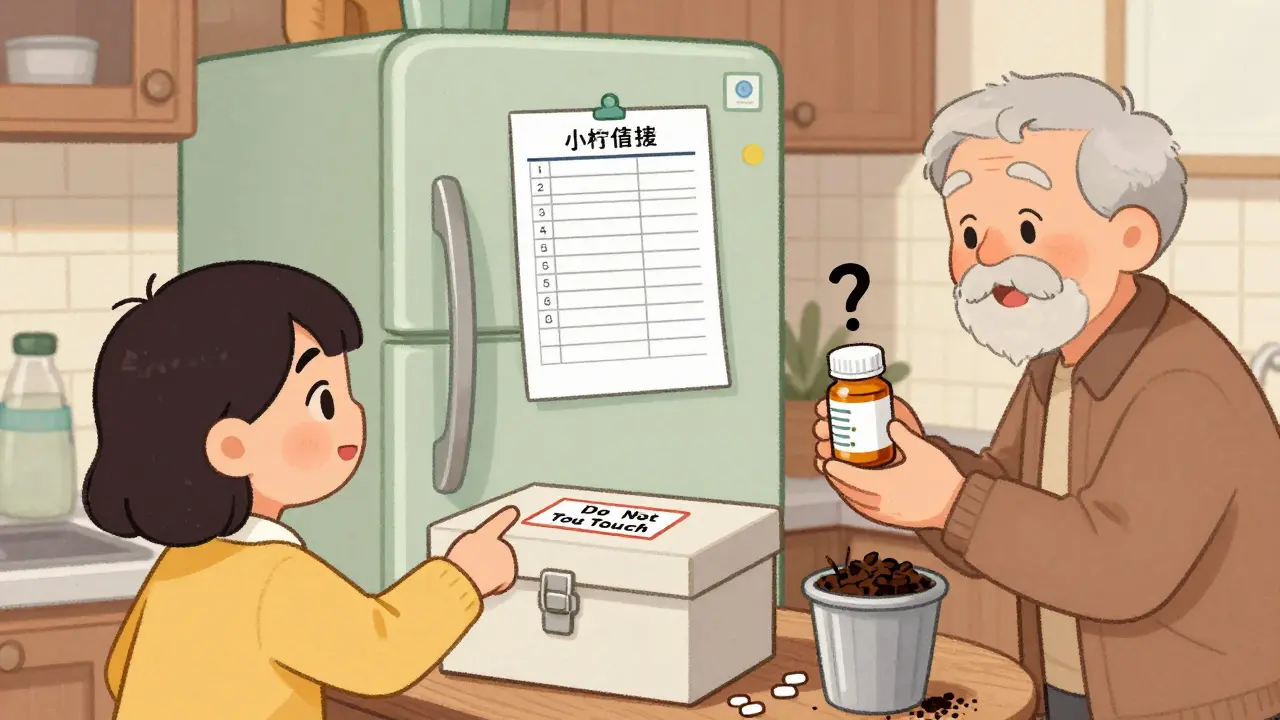
- Keep a printed list of all meds, doses, and times - tape it to the fridge
- Never let someone take meds from a different person’s container - even if they look alike
- For dementia patients: Use a locked box with a timer alarm - not a pill organizer with 7 slots
North Carolina’s Kaitlyn’s Law says all meds - even OTC - must be stored in original containers with labels. That’s not bureaucracy - it’s protection.
Final Thought: It’s Not About Perfection - It’s About Prevention
You don’t need a fancy safe or a professional organizer. You just need to stop treating medicine like groceries. Pills aren’t snacks. Creams aren’t lotions. Inhalers aren’t decorations.Make your checklist. Print it. Tape it to the fridge. Do the six-month check. Lock the box. Throw out the old stuff. That’s it.
One less accident. One less ER visit. One less moment of panic.
Can I store all my meds in one pill organizer?
No. Pill organizers are for daily use only - not long-term storage. Keep all medications in their original bottles with labels, because the bottle has the expiration date, dosage, and warnings. Only transfer pills to an organizer if you’re taking them that day, and label the organizer clearly with the date and time.
What if I don’t have a lockbox?
Use a locked drawer, a high cabinet with a childproof latch, or even a small lockable toolbox. The goal is to make it hard for kids, teens, or confused seniors to access meds. A simple key lock on a high shelf is better than leaving pills on the counter. You don’t need expensive gear - just intention.
Are vitamins and supplements considered medications?
Yes. Under Kaitlyn’s Law and FDA guidelines, any substance taken to affect the body - including vitamins, herbal supplements, and probiotics - counts as a medication. They can interact with prescriptions, cause overdose, or be mistaken for real drugs. Store them the same way: locked, labeled, and separated.
How do I know if a medicine has gone bad?
Look for changes: pills that are cracked, discolored, or smell funny. Liquids that are cloudy or have particles. Creams that separate or smell rancid. If you’re unsure, throw it out. The FDA says 27% of degraded meds show visible color changes, and 34% change texture. Don’t risk it.
Can I flush old pills if there’s no take-back program nearby?
Only as a last resort. The EPA says flushing leaves 60-80% of drugs in water systems. Instead, mix pills with used coffee grounds or cat litter in a sealed bag, then throw it in the trash. This makes them unappealing and hard to recover. It’s safer for kids, pets, and the environment.
How often should I check my medication storage?
Do a full inventory every six months - ideally in April and October. Check refrigerator temps daily if you store insulin or other cold meds. Do a quick visual check every month. And always check before you give someone a pill - even if you gave it to them yesterday.

Rob Deneke
January 17, 2026 AT 08:25 AMThis is gold. I never thought about humidity killing my insulin until now. Locked cabinet in the hallway it is. No more bathroom cabinet for anything.
Thanks for laying it out so simple.
brooke wright
January 18, 2026 AT 16:41 PMI used to keep all my meds in a shoebox under the bed because my kid kept opening the cabinet and I was too lazy to lock it but now I get it i need to stop being lazy because my 2 year old is basically a tiny detective with tiny hands and i almost lost her to a bottle of ibuprofen last year so now its a lockbox on the top shelf and i feel like a better parent
Allen Davidson
January 19, 2026 AT 16:16 PMThe part about grouping by route of administration instead of by person is genius. I’ve been mixing my mom’s pills with mine because they both have blue capsules and it’s a miracle we haven’t had a disaster. Going to redo everything this weekend. Also, coffee grounds + pills in a sealed bag? That’s a hack I’ll actually use. No more flushing.
And yes, vitamins count. I’m guilty of treating them like candy.
evelyn wellding
January 20, 2026 AT 01:23 AMOMG YES THIS! 🙌 I just did my 6-month check and found 3 expired inhalers and a bottle of gummy vitamins that looked like they’d been through a war. Threw it all out. Also bought a lockbox for $12 at Target. Best $12 I’ve ever spent. My toddler can’t even reach the shelf now 😅
Chelsea Harton
January 20, 2026 AT 13:07 PMkaitlyns law is real? i thought that was a meme. turns out its real. and i was wrong about supplements. oops.
Corey Chrisinger
January 21, 2026 AT 06:26 AMIt’s funny how we treat medicine like it’s just stuff. Like it’s not life or death. We store it next to shampoo and toothpaste like it’s a grocery item. But a pill can kill you faster than a knife if you don’t respect it. This checklist isn’t about organization. It’s about humility. We’re not in control. The drugs are. And we’re just the caretakers.
Also, yes. Coffee grounds. I’m doing it.
Bianca Leonhardt
January 21, 2026 AT 12:16 PMYou people are so behind. I’ve had a biometric lockbox since 2018. It logs every access. I even have a camera pointed at it. If you’re still using a combination lock, you’re one toddler away from a funeral. And yes, I know you think you’re safe because your kid is "good." Kids aren’t good. They’re curious. And curiosity kills.
Travis Craw
January 22, 2026 AT 01:04 AMi didnt know you were supposed to mark the opening date on insulin bottles. i just put them in the fridge and forgot. thanks for the reminder. also i think i might have a little bit of a problem with my pain meds... gonna lock those up tonight. no excuses.
Christina Bilotti
January 22, 2026 AT 17:31 PMOh wow. A checklist. How quaint. I suppose you also brush your teeth with a toothbrush and don’t drink bleach. I mean, really? We need a 12-point plan to not poison our children? Maybe the real problem is that we treat medicine like it’s not a controlled substance. But hey, at least you’re not flushing them. Progress?
Henry Ip
January 24, 2026 AT 03:55 AMThis is the most practical thing I’ve read all year. I’m printing this out and taping it to my fridge next to the grocery list. Also, I just realized I’ve been storing my wife’s thyroid meds next to my ADHD pills because they’re both small white pills. That’s terrifying. Going to fix it tonight. No more "looks similar" thinking. Safety first.